
Read the first chapter
The whole of chapter one, free. About 8 min. Turn the pages with the arrows, your keyboard, or a swipe.
Chapter 1
Reclaiming Identity Beyond Trauma
When the Old Story Meets the Next Choice
At 7:42 on a Tuesday morning, Mara stood outside the office where she’d once been humiliated in front of her coworkers. Her hand rested on the door handle. She had been offered a new role inside the same building, one that matched her skills and paid better. Still, her chest tightened as if the old meeting were happening again.
She noticed the familiar thought: This place proves I’m not safe. It proves I’m not capable. Then she felt both feet against the pavement. She named five things she could see: a blue delivery van, a cracked planter, a silver railing, a cloud shaped like a sail, and the brass number on the door. The past was still part of her story. It wasn’t the whole truth about who she was.
What if the event that shaped your story doesn’t get to be the author of your identity?
The Person Beneath the Wound
Mara - the capable person who learned to doubt herself. After being publicly shamed at work, Mara began treating every mistake as evidence that she was fundamentally flawed. Through grounding and quiet spiritual reflection, she started separating the event from her identity. She could say, “I was mistreated,” instead of, “I am defective.” That small change gave her room to recognize qualities the experience hadn’t erased: preparation, honesty, persistence, and care for others.
Darius - the protector who forgot he was more than protection. After years of living in a threatening home, Darius became alert to every sound and responsible for everyone’s mood. He saw his watchfulness as proof that he was damaged. During a daily breathing practice, he placed one hand over his heart and asked, “What did this response help me survive?” The answer wasn’t an excuse for every reaction. It was compassion. His vigilance had once served a purpose. It also revealed courage, loyalty, and a deep desire for safety.
Leena - the spiritual person carrying someone else’s blame. Leena had been told that what happened to her reflected weak faith or poor choices. She began to believe that pain was a verdict from God. In prayer, she stopped asking, “What’s wrong with me?” and began asking, “What is still true about me?” She wrote down three answers: “I am worthy of care. I can learn. I still belong to myself.” Her faith became a place to meet herself, not a courtroom where she had to defend her existence.
What all these have in common:
• They name what happened without turning it into a definition of who they are. - They use the body and the present moment to interrupt the pull of the past. - They approach spiritual reflection with compassion rather than blame. - They look for strengths that survived, even if those strengths changed shape.
Trauma often creates a powerful shortcut in the mind: Something happened to me, therefore something is wrong with me. That shortcut can feel like truth because it has been repeated through fear, shame, or helplessness. But an experience and an identity are not the same thing.
The Inner Witness Practice helps you notice the difference. The Inner Witness is the steady part of you that can observe a thought, sensation, or memory without becoming completely swallowed by it. You don’t have to feel peaceful to practice it. You only need a small pause: This is what I’m noticing. This is what happened. And I am still here, witnessing it.
That pause isn’t denial. It’s a way of telling the truth with more than one sentence.
Why Separation Creates Room to Heal
Your nervous system learned to connect certain places, words, tones, or choices with danger. That connection may have protected you once. Today, though, it can make an old threat feel present even when you’re standing in a safe room. Grounding gives your body fresh information. The floor is holding you. The room has an exit. The date is different. You have choices now.
Compassionate spiritual reflection adds another kind of information: your worth isn’t cancelled by what happened. Whether you pray, meditate, sit in silence, or speak with a trusted spiritual guide, the purpose isn’t to force a beautiful meaning onto pain. It’s to create enough gentleness to see yourself clearly. You can ask, “What remains?” instead of demanding, “Why did this happen?”
The Inner Witness Practice brings these pieces together. First, you notice the present. Then you name the experience without merging with it. Finally, you listen for a strength that is still alive. Maybe it’s your ability to tell the truth, your instinct to protect a child, your willingness to begin again, or your tenderness toward people who are hurting. Strength doesn’t always look heroic. Sometimes it looks like making one honest phone call.
You may need this practice if:
1. You describe yourself mainly through what happened to you: “I’m the abandoned one,” “I’m the broken one,” or “I’m the person nobody protects.” 2. A present-day situation triggers an old reaction, and afterward you judge yourself instead of getting curious. 3. You feel guilty when you notice your abilities, joy, faith, or hope returning. 4. Your spiritual reflection sounds more like punishment than support.
What happened to you may explain some of your patterns, but it does not have the authority to name your whole self.
Questions for the Inner Witness
1. When I say, “I am,” what part of that sentence is actually describing something that happened? Write the sentence exactly as it appears in your mind. Then rewrite it with more accurate language: “I experienced,” or “I learned to ___ in order to cope.” For example, “I am unlovable” might become, “I experienced rejection, and I learned to expect people to leave.”
2. What does my body do when an old memory feels close? Name three sensations, such as a tight throat, hot face, clenched hands, or shallow breathing. Then place both feet on the floor and describe five neutral things you can see. This isn’t about making the feeling disappear. It’s about reminding your body that this moment has its own facts.
3. Which strength helped me endure, even if it now needs a gentler form? Perhaps alertness helped you notice danger, but it now keeps you exhausted. Perhaps independence helped you survive, but it now makes receiving care difficult. Try writing, “This strength protected me by. Today I want to use it for.”
4. What would a compassionate spiritual presence say about my worth? Use the language that feels honest to you. You might write a prayer, a letter from a loving ancestor, or a few words from the quiet presence you trust. Keep it grounded: “You didn’t deserve that. You’re allowed to rest. You are more than the worst thing done to you.”
5. What choice would I make today if the past were information, not a command? Choose one small decision, not a dramatic life overhaul. You might answer a message tomorrow instead of immediately, accept a compliment without arguing, or enter a room while reminding yourself, “I can leave if I need to.”
Read your answers slowly. If a prompt brings up more than you can hold, stop and return to the room around you. Healing doesn’t require forcing yourself through a memory.
The Seven-Day Inner Witness Reset
Challenge name: Seven Days of “I Am Still Here”
For seven days, take ten minutes at roughly the same time each day. Use a chair, a glass of water, and a notebook. Consistency helps your body recognize this as a safe, predictable practice rather than another demand.
• Day 1: Locate the present. Sit with both feet on the floor. Name five things you see, four things you feel physically, and three sounds you hear. Write the date and your location. - Day 2: Name the event accurately. Complete this sentence: “Something happened to me, and it was not the whole of me.” Add one plain, truthful sentence about what occurred. Avoid labels about your character. - Day 3: Meet the response with respect. Notice one reaction you dislike. Ask, “How did this once try to protect me?” Thank the response for its effort, while reminding yourself that you can choose what happens next. - Day 4: Practice compassionate reflection. Spend five quiet minutes in prayer, meditation, or stillness. Ask, “What is still true about my worth?” Write the first honest answer, even if it’s small. - Day 5: Find surviving strengths. List three qualities that remained or developed through hardship. Beside each one, write a present-day use. For example: “Persistence - I can keep one appointment with myself.” - Day 6: Take one identity-supporting action. Do something that reflects who you are beyond the trauma: cook a meal, make art, repair something, call a safe friend, or complete a task you value. - Day 7: Speak the distinction aloud. Say, “This happened. I was affected. I am still more than this.” Then write one boundary, hope, or next choice you want to carry forward.
Difficulty level: Gentle but emotionally meaningful. About 10 minutes a day, with permission to pause.
Celebrate when...
• You can name your location and the present date during a trigger. - You replace one identity label with an accurate description of an experience. - You identify at least three strengths that remain available to you. - You make one choice based on your values rather than an old fear.
The goal isn’t to feel transformed by the seventh day. The goal is to collect evidence that you can witness your story without disappearing inside it.
Carrying Your Name Forward
Your trauma is part of your history, but it is not the final definition of your identity.
• Grounding helps you separate past danger from present reality. - The Inner Witness Practice lets you observe painful thoughts without treating them as your whole self. - Compassionate spiritual reflection can restore worth without forcing meaning onto suffering. - Recognizing surviving strengths turns healing into a lived choice, not just an idea.
You may still have difficult days. A memory may still tighten your chest. That doesn’t mean the practice failed. It means you’re human, and your body is learning through repetition. Each time you return to the room, the breath, the truth, and the strength that remains, you make your identity larger than what happened.
The next step is learning how to trust that returning - to yourself, to safe connection, and to the guidance that helps you move forward.
End of chapter one. 4 more chapters and about 7,551 words in the full book.
Swipe or use the arrows to turn the page
What's inside: 5 chapters
- 1. Reclaiming Identity Beyond Trauma
- 2. Loosening Shame-Fueled Beliefs
- 3. Building Boundaries Without Guilt
- 4. Creating Steady Healing Rituals
- 5. Finding Purpose at Your Own Pace
About this book
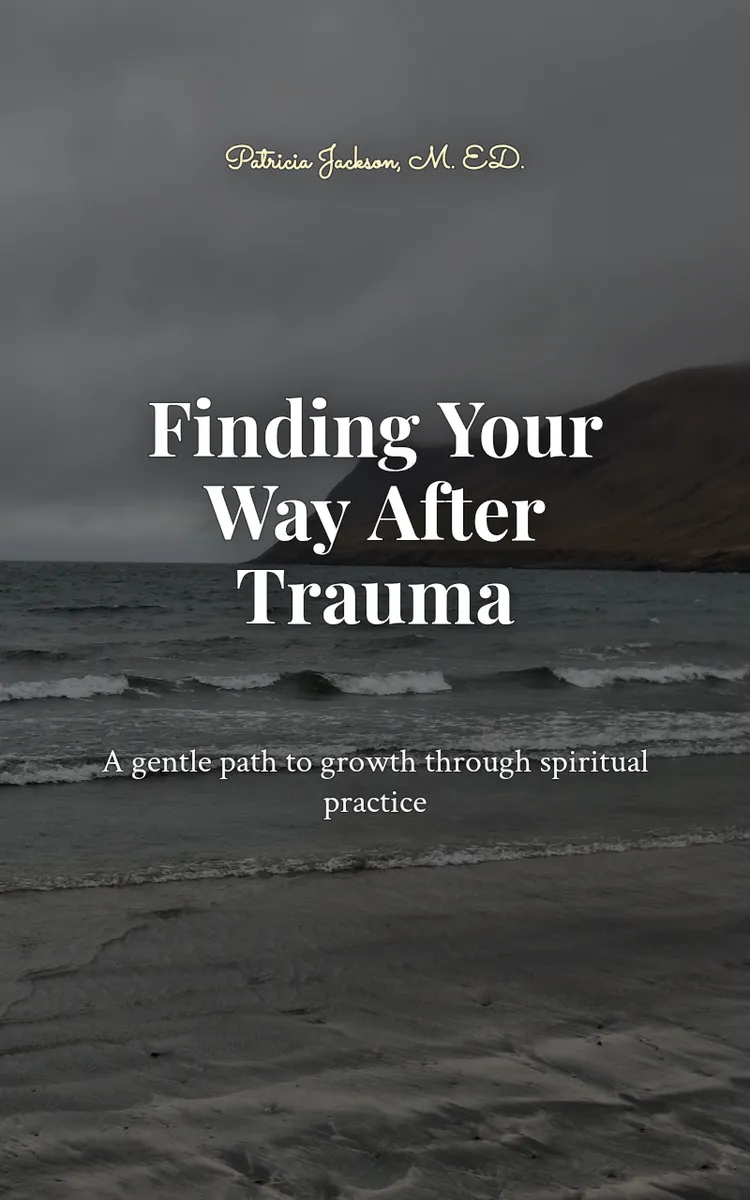
"Finding Your Way After Trauma" is a self-help book by Patricia Jackson, M. ED. with 5 chapters and approximately 7,551 words. At 7:42 on a Tuesday morning, Mara stands outside the office where she was humiliated, hand on the door handle. A better role is waiting inside.
This book was created using Inkfluence AI, an AI-powered book generation platform that helps authors write, design, and publish complete books. It was made with the AI Self-Help Book Writer.
Frequently Asked Questions
What is "Finding Your Way After Trauma" about?
At 7:42 on a Tuesday morning, Mara stands outside the office where she was humiliated, hand on the door handle. A better role is waiting inside. Her body remembers the old meeting, but she plants both feet and names five things she can see. Finding Your Way After Trauma follows the work of separating what happened from who you are. You’ll meet people like Mara, who learns to say “I was mistreated” instead of “I am defective,” and explore how shame turns an unanswered message into a verdict, or a boundary into something to feel guilty about. Across five chapters, spiritual reflection and grounding practices offer ways to loosen old beliefs and make room for a truer story. The past remains part of your life, but it does not have to hold the pen.
How many chapters are in "Finding Your Way After Trauma"?
The book contains 5 chapters and approximately 7,551 words. Topics covered include Reclaiming Identity Beyond Trauma, Loosening Shame-Fueled Beliefs, Building Boundaries Without Guilt, Creating Steady Healing Rituals, and more.
Who wrote "Finding Your Way After Trauma"?
This book was written by Patricia Jackson, M. ED. and created using Inkfluence AI, an AI book generation platform that helps authors write, design, and publish books.
How can I create a similar self-help book?
You can create your own self-help book using Inkfluence AI. Describe your idea, choose your style, and the AI writes the full book for you. It's free to start.
Write your own self-help book with AI
Describe your idea and Inkfluence writes the whole thing. Free to start.
Start writingCreated with Inkfluence AI


