
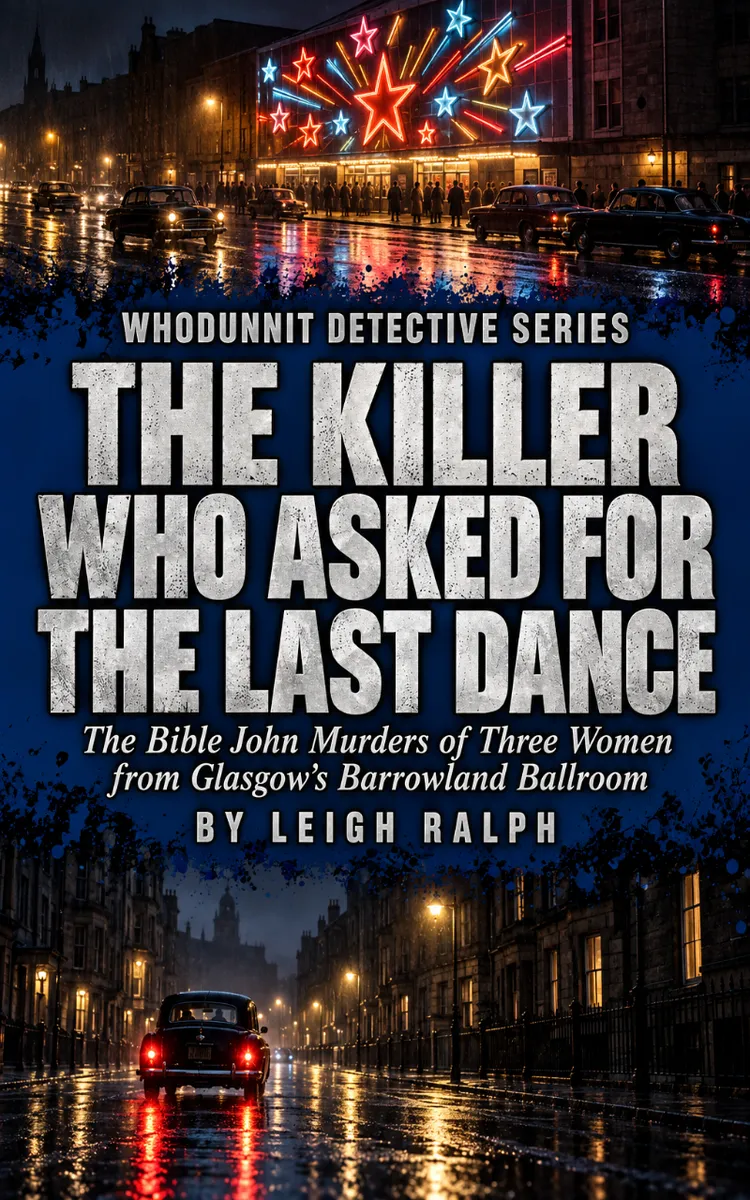

Read the first chapter
The whole of chapter one, free. About 3 min. Turn the pages with the arrows, your keyboard, or a swipe.
Chapter 1
GLASGOW AFTER DARK
Glasgow in the late 1960s was a hard city. It had been built on shipbuilding and heavy industry, and for a long time it had done very well out of it. Ships made in the yards along the River Clyde had sailed all over the world. But by the 1960s, the good times were fading. The yards were struggling, and the factories were closing one by one.
Hundreds of thousands of Glaswegians still lived in old tenements, tall blocks of flats built of dark stone, many of them crowded, damp and falling apart. Whole families lived in one or two rooms, and often shared a toilet on the landing with their neighbours. The council was busy knocking the worst of them down and moving people out to big new housing schemes on the edges of the city, places like Castlemilk and Easterhouse. Remember Castlemilk. It'll come up again.
It was a tough place, with a tough reputation. Gangs fought in the streets of the East End, and plenty of people carried a blade. But it was also a city full of warmth and humour, where neighbours looked out for each other, and where people worked hard all week and wanted a good night out at the end of it.
And in Glasgow, a good night out meant one thing. The dancing.
Dancing was part of life in Glasgow in a way that's hard to imagine now. It was often said the city had more dance halls for its size than anywhere else in Britain. There was the Plaza, the Locarno, the Majestic, the Dennistoun Palais and many more. Young people met their future husbands and wives on dance floors all over the city. Before television took over people's evenings, before nightclubs and discos, the dance hall was where everyone went to see and be seen.
And the most famous of them all was the Barrowland.
The Barrowland Ballroom stood on the Gallowgate, in the Calton area of Glasgow's East End. It had been built by a remarkable woman called Maggie McIver, known to everyone as the Barras Queen. Maggie had started out renting horses and carts to street traders, and ended up running the Barras, the huge weekend market that gave the whole area its name. In 1934, she built a ballroom on top of the market, so her stallholders would have somewhere to hold their Christmas dances. It opened on Christmas Eve that year, and it wasn't long before the whole of Glasgow was queuing to get in.
In 1958, just months after Maggie died, the Barrowland was destroyed by fire. Her family rebuilt it, bigger and better, and it reopened on Christmas Eve 1960. It had a sprung dance floor that bounced gently under the dancers' feet, room for well over a thousand people, and a house band called Billy McGregor and the Gaybirds. Out the front, a huge neon sign lit up the Gallowgate at night.
The Barrowland didn't sell alcohol back then. Bouncers on the door searched people for bottles, and for weapons too. But that didn't stop anyone having a good time.
Different nights attracted different crowds. Thursday nights were known as the over-25s nights, and they were popular with an older crowd, many of them married. Women came with their sisters, their friends and their workmates. Some of them had husbands at home looking after the children. Some had husbands working away, or husbands they were separated from. For a few hours, they could put on their best dress, do their hair, forget about the bills and the washing, and dance.
Not everyone approved. There was a lot of gossip about what went on at the dancing. It was said that some married men and women slipped their wedding rings into their pockets before they went in. Whether that was true or not, the Barrowland had a reputation, and some people in Glasgow looked down their noses at the women who went there.
I want you to hold on to that, because it matters. When these murders happened, some people were quick to judge the women who died, simply because they'd been out dancing. As if a night at the Barrowland meant they'd somehow brought it on themselves.
They hadn't. They were ordinary women having an ordinary night out. The kind of night thousands of women in Glasgow enjoyed every week, and went home safe afterwards.
Three of them didn't go home.
The first was a young nurse called Patricia Docker. And in February 1968, when she told her parents she was going out dancing, nobody had any reason to worry at all.
End of chapter one. 11 more chapters in the full book.
Swipe or use the arrows to turn the page

THE KILLER WHO TURNED CABIN 28 INTO A SLAUGHTERHOUSE

THE KILLER WHO WORE A WHITE MASK

Color My Little Pooch
What's inside: 12 chapters
- 1. GLASGOW AFTER DARK
- 2. PATRICIA
- 3. MIMA
- 4. THE LAST DANCE
- 5. THE TAXI
- 6. EARL STREET
- 7. THE FACE ON EVERY WALL
- 8. THE OTHER JOHN
- 9. THE POLICEMAN'S COUSIN
- 10. THE MAN WHO KILLED AGAIN
- 11. WAS THERE EVER A BIBLE JOHN?
- 12. THE WOMEN BEHIND THE NAME
About this book
"THE KILLER WHO ASKED FOR THE LAST DANCE" is a general book by Leigh Ralph with 12 chapters and approximately 10,724 words. It covers key insights and practical takeaways on the topic.
This book was created using Inkfluence AI, an AI-powered book generation platform that helps authors write, design, and publish complete books.
Frequently Asked Questions
What is "THE KILLER WHO ASKED FOR THE LAST DANCE" about?
"THE KILLER WHO ASKED FOR THE LAST DANCE" is a general book by Leigh Ralph covering key insights and practical takeaways on the topic.
How many chapters are in "THE KILLER WHO ASKED FOR THE LAST DANCE"?
The book contains 12 chapters and approximately 10,724 words. Topics covered include GLASGOW AFTER DARK, PATRICIA, MIMA, THE LAST DANCE, and more.
Who wrote "THE KILLER WHO ASKED FOR THE LAST DANCE"?
This book was written by Leigh Ralph and created using Inkfluence AI, an AI book generation platform that helps authors write, design, and publish books.
Write your own book with AI
Describe your idea and Inkfluence writes the whole thing. Free to start.
Start writingCreated with Inkfluence AI


