
Read the first chapter
The whole of chapter one, free. About 4 min. Turn the pages with the arrows, your keyboard, or a swipe.
Chapter 1
Chicken Adobo with Vinegar-Garlic
At a Glance
Prep: 15 min | Cook: 55 min | Total: 1 hr 10 min | Serves: 4 | Difficulty: Easy
Introduction
Chicken adobo gives you tender meat, a sharp vinegar bite, and a dark, savory sauce made from a short list of pantry staples. The classic vinegar-garlic method depends on one important step: let the vinegar simmer with the chicken without stirring at first. This softens its raw edge and builds the tangy base that defines the dish.
The finished chicken should be fully cooked and tender, with garlic, soy sauce, and black pepper balanced by vinegar. The sauce will be thin during the simmer, then turn glossy as it reduces around the chicken. Serve it with hot rice so every spoonful of sauce has somewhere to go. The key takeaway is simple: patience with the vinegar and careful reduction create the deepest flavor.
Ingredients
Protein - 2 1/2 pounds bone-in, skin-on chicken thighs, about 6 to 8 pieces
Produce - 10 garlic cloves, peeled and lightly crushed - 1 small yellow onion, thinly sliced - 2 bay leaves
Pantry - 1/2 cup cane vinegar or distilled white vinegar - 1/2 cup regular soy sauce - 1 cup water - 1 tablespoon brown sugar - 1 tablespoon neutral cooking oil
Spices - 1 teaspoon whole black peppercorns - 1/2 teaspoon freshly ground black pepper - 1/2 teaspoon salt, only if needed
For serving, prepare 4 cups cooked white rice. Keep the rice separate so it stays fluffy while you spoon the glossy adobo sauce over it.
Instructions
1. Pat the chicken dry with paper towels. Season lightly with the ground black pepper; hold back on salt because soy sauce is already salty. Set a wide, heavy pot or Dutch oven over medium heat and add the oil. A wide pot helps the sauce reduce evenly.
2. Place the chicken skin-side down in the hot oil. Cook for 6 to 8 minutes, without moving the pieces, until the skin is golden brown and some fat has rendered. Turn the chicken and brown the second side for 3 minutes. It does not need to be cooked through yet.
3. Transfer the chicken to a plate, leaving about 1 tablespoon of fat in the pot. Add the onion and crushed garlic. Cook over medium-low heat for 2 to 3 minutes, stirring often, until the onion begins to soften and the garlic is fragrant but not brown.
4. Return the chicken to the pot. Pour in the vinegar, soy sauce, and water, then add the bay leaves, whole peppercorns, and brown sugar. Bring the liquid to a steady simmer over medium heat.
Pro Tip: Once the vinegar goes into the pot, do not stir for the first 5 minutes. Letting it boil uncovered helps its sharp, raw smell cook off. Stirring later is fine.
5. Reduce the heat to low, cover the pot, and simmer for 30 minutes. Turn the chicken once halfway through. The liquid should bubble gently, not boil hard. The chicken is ready for the next step when a knife slides easily into the thickest thigh and the meat is no longer pink near the bone.
6. Remove the lid and continue simmering for 10 to 15 minutes. Turn the chicken every few minutes so the sauce coats both sides. The sauce should reduce to about 1 cup and lightly cling to a spoon. If it becomes too thick before the chicken is tender, add 2 tablespoons of water.
7. For a more polished finish, move the chicken to a serving platter and simmer the sauce alone for 2 to 4 minutes over medium heat. Taste it. Add salt only if needed; if the flavor is too sharp, stir in 1 teaspoon more brown sugar. Return the chicken to the pot and turn it in the sauce.
8. Check the thickest piece with an instant-read thermometer if desired; it should register at least 165°F. Remove the bay leaves before serving. Spoon the chicken and sauce over hot rice, making sure each portion gets garlic, peppercorns, and pan juices.
Chef Notes & Variations
Bone-in, skin-on thighs stay moist during the long simmer and give the sauce extra richness. If the skin becomes soft from braising, place the chicken skin-side up under a broiler for 2 to 3 minutes before serving, watching closely until it is lightly crisp. Store cooled adobo in a covered container in the refrigerator for up to 4 days. The flavor often becomes rounder after a night in the refrigerator. Reheat gently in a saucepan with a splash of water, then serve with fresh rice and sliced green onions if desired.
For a practical variation, use a mixture of chicken thighs and drumsticks, keeping the total weight near 2 1/2 pounds. Drumsticks may need an extra 5 minutes of simmering. You can also add 1 inch of sliced fresh ginger with the garlic for a warmer, more aromatic sauce without changing the vinegar-garlic foundation.
Swap It: If cane vinegar is unavailable, use distilled white vinegar in the same amount. For a softer tang, replace 2 tablespoons of the vinegar with water.
The best adobo is not defined by a thick sauce alone. It is ready when the chicken is tender, the vinegar tastes balanced, and the reduced sauce clings lightly to every piece.
Quick Version
Brown 2 1/2 pounds chicken thighs, soften garlic and onion, then simmer with 1/2 cup vinegar, 1/2 cup soy sauce, 1 cup water, bay leaves, peppercorns, and sugar for 30 minutes covered. Uncover and reduce 10 to 15 minutes until glossy; serve over rice.
End of chapter one. 4 more chapters in the full book.
Swipe or use the arrows to turn the page
What's inside: 5 chapters
- 1. Chicken Adobo with Vinegar-Garlic
- 2. Crispy Pork Sinigang with Tamarind
- 3. Garlic Butter Shrimp with Ginisang Rice
- 4. Baked Bangus with Mango Salsa
- 5. Beef Caldereta with Tomato-Pepper Sauce
About this book
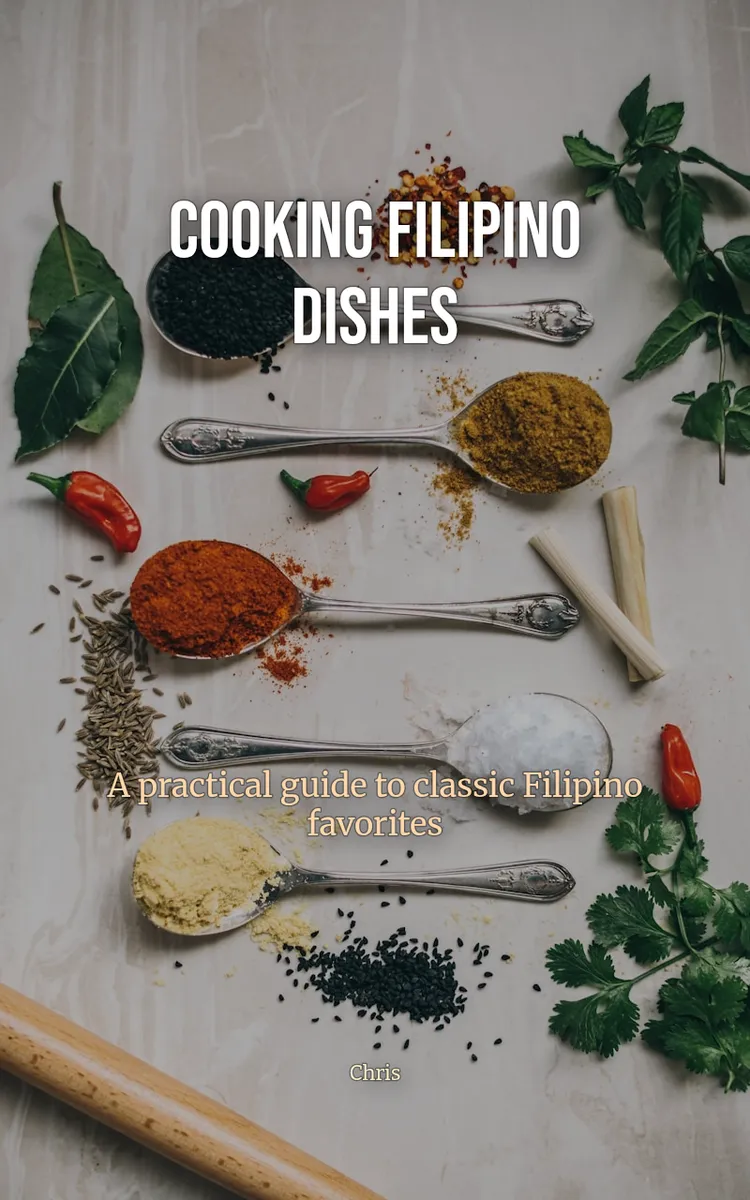
"Cooking Filipino Dishes" is a cookbook by Chris with 5 chapters and approximately 5,079 words. Recipes and cooking methods for Filipino dishes.
This book was created using Inkfluence AI, an AI-powered book generation platform that helps authors write, design, and publish complete books. It was made with the AI Cookbook Generator.
Frequently Asked Questions
What is "Cooking Filipino Dishes" about?
Recipes and cooking methods for Filipino dishes
How many chapters are in "Cooking Filipino Dishes"?
The book contains 5 chapters and approximately 5,079 words. Topics covered include Chicken Adobo with Vinegar-Garlic, Crispy Pork Sinigang with Tamarind, Garlic Butter Shrimp with Ginisang Rice, Baked Bangus with Mango Salsa, and more.
Who wrote "Cooking Filipino Dishes"?
This book was written by Chris and created using Inkfluence AI, an AI book generation platform that helps authors write, design, and publish books.
How can I create a similar cookbook?
You can create your own cookbook using Inkfluence AI. Describe your idea, choose your style, and the AI writes the full book for you. It's free to start.
Write your own cookbook with AI
Describe your idea and Inkfluence writes the whole thing. Free to start.
Start writingCreated with Inkfluence AI


