
Read the first chapter
The whole of chapter one, free. About 7 min. Turn the pages with the arrows, your keyboard, or a swipe.
Chapter 1
Noticing the Life You Have
When the Ordinary Comes Into Focus
A man once told me he had missed most of his morning coffee for years. Not the drinking of it - the noticing. He answered messages while the machine ran, checked the weather while the cup filled, and carried the first sip to his desk without tasting it. One day, he left his phone in another room. The coffee was hot, slightly bitter, and better than he remembered. Nothing in his life had changed. His attention had.
That small shift matters because life rarely announces its meaning with a trumpet. More often, it appears in the warm mug between your hands, the sound of a familiar voice, the quiet after closing a shop, or the few minutes before the house wakes. If you keep waiting for a major change before you feel fully alive, you may overlook the life already asking to be noticed.
The Present-Moment Lantern is a simple way to turn your attention toward what is here. A lantern doesn’t create the landscape. It helps you see what was already around you. You’ll use it to pause, notice, and respond to ordinary moments with more care.
This Chapter Is For You If...
• Your days feel full, but you struggle to remember what actually happened in them. - You keep postponing attention until work slows down, the house is quieter, or life feels more settled. - You want meaning to feel practical rather than distant or overly philosophical. - You’re ready to notice one real detail at a time and let that change how you move through the day.
The Meaning Is Often Already Here
Meaning becomes easier to recognize when you give ordinary moments your full attention.
This doesn’t mean every moment must feel profound. Washing dishes can still be boring. A traffic light can still be annoying. The point isn’t to decorate daily life with forced gratitude. It’s to stop rushing past your own experience so quickly that you never discover what it contains.
The Present-Moment Lantern has three parts: pause, notice, and receive. Pause long enough to interrupt automatic motion. Notice one concrete detail through your senses. Then receive the moment by asking what it shows you about your needs, relationships, values, or direction.
Consider a midday repair call. You arrive tired, expecting a quick fix, and find that the customer is anxious because the problem has disrupted their work. You could focus only on the faulty part and leave as soon as the job is done. Or you could notice the tightness in your own shoulders, hear the customer’s repeated questions, and recognize that a calm explanation is part of the service. The repair still matters. So does the way the person feels when you leave.
Attention doesn’t turn every task into a ceremony. It helps you choose your response instead of letting hurry choose for you. A two-minute conversation with a child, a careful meal, or the last sweep of the floor can carry significance when you’re actually present for it.
In Practice, This Means...
• Put your phone out of reach during one ordinary activity each day. - Name one physical detail before making a quick decision: “My jaw is tight,” or “The room is louder than usual.” - Ask, “What matters here?” before moving to the next task. - Treat small acts of care - listening, preparing, repairing, showing up - as meaningful choices rather than background chores.
Lighting the Lantern Through the Day
The practice works best when it is small enough to repeat. You don’t need a silent retreat or an empty schedule. You need a few reliable moments when you remember to look.
1. Morning: choose one anchor. Before checking messages, notice one ordinary thing for thirty seconds. Feel your feet on the floor, listen for the first sound outside, or take three unhurried sips of water. Then name the quality you want to bring into the day: patience, steadiness, or care.
2. Midday: interrupt the rush. Set a reminder for a specific time, such as 12:30 p.m. When it sounds, stop for one minute. Look around and identify three details: one you see, one you hear, and one you feel. Ask, “Am I present for what I’m doing, or only trying to finish it?”
3. During transitions: close one moment before beginning another. Before entering the house, starting the next appointment, or sitting down to eat, take one breath and recognize the change. Say quietly, “Work is finished for now,” or “This conversation needs my attention.” A transition gives your mind somewhere to land.
4. Evening: record one noticed moment. Write a single sentence, not a full diary entry. Try: “The best part of today was hearing my brother laugh,” or “I noticed how much calmer the room became when I stopped interrupting.” Be specific. “It was a good day” is less useful than naming what made it good.
5. Once a week: follow the clue. Review your seven sentences. Look for repetition. If you keep noticing quiet meals, hands-on work, or unhurried conversations, that pattern may point toward something your schedule has been neglecting. Make one small adjustment for the coming week.
These habits are not tests of discipline. Missing a day doesn’t cancel the practice. The aim is to build a dependable return. Whenever you realize you’ve drifted, that realization is already the lantern coming back on.
A Quiet Shift at the End of the Day
Before
A small-business owner finishes the last customer call at 6:15 p.m. Their mind is still at work while they drive home. At dinner, they answer two messages, check tomorrow’s schedule, and barely hear the details of the conversation at the table. Later, they think, “I was home all evening, but I wasn’t really there.”
Action
The next evening, they use a simple transition rule: no phone for the first ten minutes after entering the house. Before opening the door, they pause and notice three things - the cool air, the weight of the keys, and the sound of dishes inside. At dinner, they ask one question and listen through the answer without preparing a reply.
Nothing dramatic happens. The meal is still ordinary. There’s a complaint about the day, a spill, and a reminder about tomorrow. But the owner notices the child’s excitement about a school project and sees that their partner looks worn out. They offer to handle cleanup.
Result
The evening feels fuller, not because it becomes perfect, but because it is no longer blurred. The owner learns something useful: the problem wasn’t a lack of love or appreciation. It was attention being spent elsewhere. The ten-minute boundary becomes a practical way to protect what matters.
This is the kind of change the Present-Moment Lantern creates. It doesn’t require you to abandon responsibilities. It helps you meet them with your whole self.
Questions That Bring the Present Closer
1. Which ordinary part of my day do I rush through most often? Look for a repeated transition: getting dressed, eating lunch, driving home, or closing the business. Your answer may show where your attention disappears by habit.
2. What am I waiting for before I allow life to feel meaningful? Perhaps you’re waiting for more money, a different job, a quieter home, or a finished project. Ask whether one small piece of the desired experience is available today. If you want connection, could you give someone five undivided minutes?
3. What do I notice when I stop trying to improve the moment? This can reveal the difference between attention and control. You might find tiredness, tenderness, irritation, or simple pleasure. None of these needs to be fixed before it can be honestly acknowledged.
4. Which people receive my leftover attention? Think about who gets the distracted version of you. A practical next move might be putting your phone away during one conversation or asking a question you usually skip.
5. What did today quietly teach me about what matters? Don’t search for a grand lesson. Maybe you learned that you need a slower morning, that clear instructions prevent conflict, or that a ten-minute walk restores your patience. Write the lesson in one sentence, then choose one way to honor it tomorrow.
Reflection becomes useful when it changes what you do next. You’re not collecting insights for display. You’re learning how to recognize the signals your actual life is already sending.
Light One Small Area Today
Set a timer for ten minutes today. Put your phone in another room, choose one ordinary activity - drinking tea, washing dishes, walking to your car, or speaking with someone - and use the Present-Moment Lantern: pause, notice, receive.
You will know it worked when you can describe three specific details from those ten minutes and name one thing the moment revealed about what matters to you. That is enough for today. A life becomes visible one attentive moment at a time, and once you begin seeing it, you can begin meeting it with intention.
End of chapter one. 7 more chapters and about 12,350 words in the full book.
Swipe or use the arrows to turn the page
What's inside: 8 chapters
- 1. Noticing the Life You Have
- 2. Choosing Your Own Definition of Enough
- 3. Practicing Gratitude Without Denial
- 4. Making Room for Uncertainty
- 5. Living by Your Core Values
- 6. Finding Purpose in Small Acts
- 7. Turning Hardship into Wisdom
- 8. Becoming a Steward of Your Days
About this book
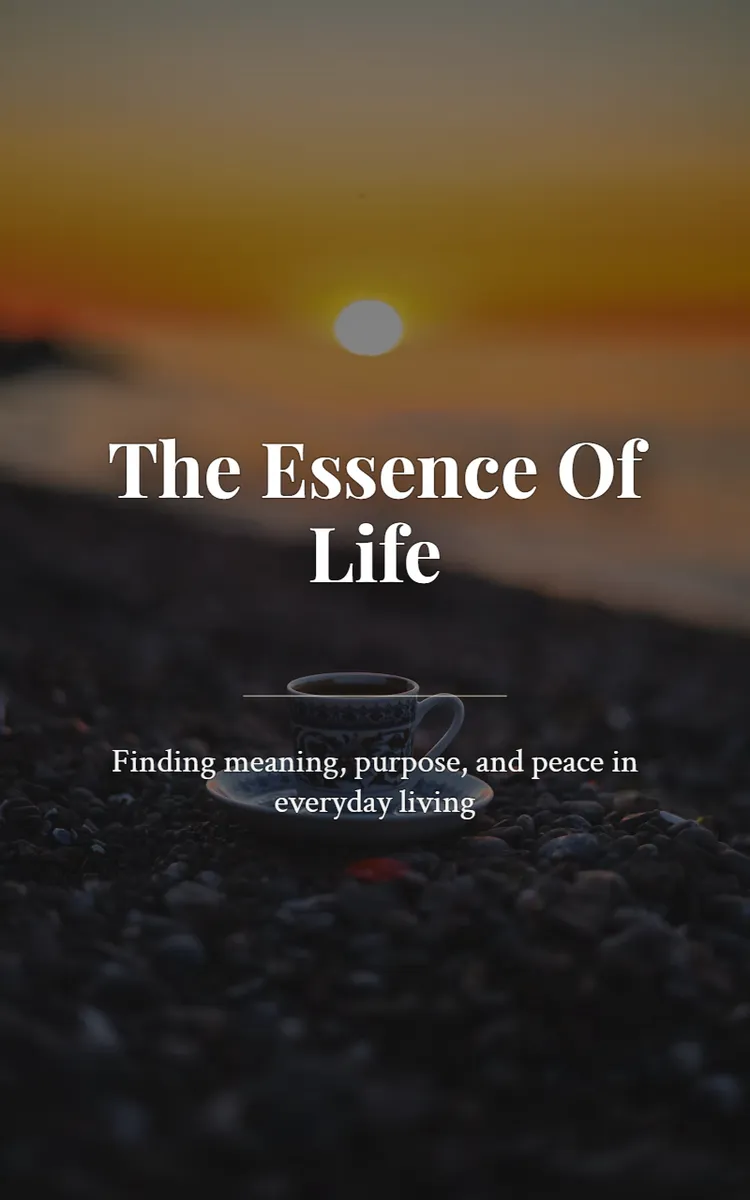
"The Essence Of Life" is a inspirational book by Anonymous with 8 chapters and approximately 12,350 words. Reflective exploration of life’s meaning, purpose, and everyday significance.
This book was created using Inkfluence AI, an AI-powered book generation platform that helps authors write, design, and publish complete books. It was made with the AI Inspirational Book Writer.
Frequently Asked Questions
What is "The Essence Of Life" about?
Reflective exploration of life’s meaning, purpose, and everyday significance
How many chapters are in "The Essence Of Life"?
The book contains 8 chapters and approximately 12,350 words. Topics covered include Noticing the Life You Have, Choosing Your Own Definition of Enough, Practicing Gratitude Without Denial, Making Room for Uncertainty, and more.
Who wrote "The Essence Of Life"?
This book was written by Anonymous and created using Inkfluence AI, an AI book generation platform that helps authors write, design, and publish books.
How can I create a similar inspirational book?
You can create your own inspirational book using Inkfluence AI. Describe your idea, choose your style, and the AI writes the full book for you. It's free to start.
Write your own inspirational book with AI
Describe your idea and Inkfluence writes the whole thing. Free to start.
Start writingCreated with Inkfluence AI


