
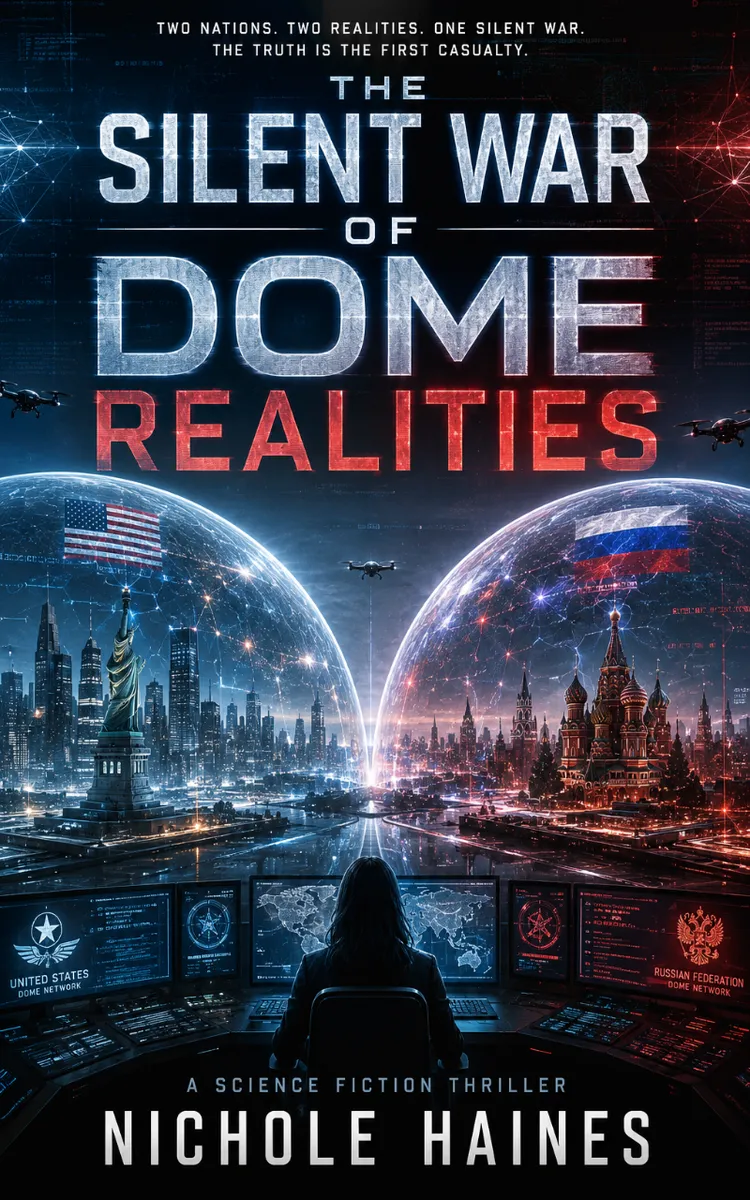

U.S. and Russia wage a silent war via hacked realities
Table of Contents
- 1. The Dome That Lied to Me
- 2. A Patch That Opened a Door
- 3. Following the Fake Footprints
- 4. The Elevator to Nowhere
- 5. My Memory Was the Payload
- 6. The Uplink That Refused Her
- 7. The Operator’s Signature in Static
- 8. The Artifact Room Changed Rules
- 9. Choosing the Lie That Saves Others
- 10. The Rescue Team Was Already Hacked
- 11. The Timeline That Rewrote Itself
- 12. Running Out of Real Time
- 13. The Face I Never Saw
- 14. The Proof Burned in Silence
- 15. Decrypting the Fragment’s Real Meaning
- 16. The Corridor That Wouldn’t Connect
- 17. Trusting the Enemy’s Courtesy
- 18. The Bargain That Broke Containment
- 19. Finding the Breach’s Hidden Anchor
- 20. The Midpoint Proof That Changes Everything
- 21. My Choice, Their Leverage
- 22. The Forged Intent Triggered a Purge
- 23. A Map Made of Lies
- 24. The Safe Corridor Was a Trapdoor
- 25. Forging a Self to Bypass Keys
- 26. The Operator’s Counter-Hack Arrives
- 27. Listening to the Dome’s Hidden Rules
- 28. The Artifact That Only Exists Inside
- 29. Severing the Anchor Without Entering
- 30. When the World Becomes One Lie
- 31. The Only Path Through the Merge
- 32. Chasing the Handshake Through Ruins
- 33. Becoming the Key the Operator Wants
- 34. The Truth Behind Dome Realities
- 35. Severing the Mirror for Everyone
- 36. The Aftermath That Still Watches
- 37. A Door Back to the Old Lie
- 38. Refusing the Offer That Saves Me
- 39. The Audit Trail Names the Hidden Hands
- 40. A New Treaty Written in Code
- 41. Chapter 41
- 42. Chapter 42
- 43. Chapter 43
- 44. The Mirror Remade
Preview: The Dome That Lied to Me
A short excerpt from “The Dome That Lied to Me”. The full book contains 44 chapters and 73,613 words.
The corridor lights blinked in a sequence Mara Kline had never seen: three white pulses, one red, then darkness long enough for the emergency strips to paint the floor in blood.
“Control, confirm visual integrity,” she said.
Her voice returned from the walls half a second late.
Mara stopped beside Hatch Seven, one gloved hand hovering over the access plate. The secure U.S.-linked dome facility was supposed to be boring at 03:17, the hour when automated monitors did most of the work and human operators watched numbers crawl across glass. Its corridors were pressure-sealed, climate-stable, and mapped down to the millimeter. Nothing echoed. Nothing flickered. Nothing waited before answering.
The lights pulsed again.
Three white. One red.
The access plate displayed her clearance before she touched it.
Mara pulled her hand back. “Control?”
A second voice answered through the corridor speakers.
“Confirm visual integrity.”
It was her voice, but not the recording from a moment earlier. This one sounded frightened.
She turned toward the nearest camera. Its black lens tracked her with a tiny mechanical click.
“I need a hardline status,” she said. “Now.”
The corridor stretched away in both directions, identical doors set into matte-gray walls. She knew the route to the monitoring pit: forty-two meters forward, left at the coolant junction, down one flight, then through the biometric gate. She had walked it hundreds of times. Her body carried the map without thought.
The floor shifted beneath her boot.
Not moved. Shifted.
For an instant, the corridor sloped upward at an impossible angle, and her stomach lurched as if she were falling sideways. The handrail rose out of reach. The doors became narrow black slits.
Then everything snapped back.
Mara struck the wall with her shoulder. Cold composite pressed through her suit. Somewhere behind the panels, pumps hammered in an uneven rhythm.
“Control, I’m in Corridor C-Nine. Reality integrity has failed.”
Silence.
She tapped the emergency comm at her collar. The indicator glowed green, then blue, then a color her visor identified as amber while her eyes saw violet.
A memory surfaced.
She was six years old, standing beneath a yellow kitchen light while her mother peeled an apple in one unbroken spiral. Her mother had said, Never trust a room that knows where you’re going.
Mara blinked hard.
Her mother had been dead for eleven years. She had never said that. The memory was false, and yet Mara could feel the apple’s waxy skin beneath her fingertips. She could hear the knife scraping porcelain.
The corridor speakers crackled.
“Never trust a room that knows where you’re going,” they whispered.
Mara drew her sidearm.
The pistol’s weight steadied her. Real mass. Real metal. She thumbed the safety and checked the chamber by touch.
“Control,” she said. “If you can hear me, lock every internal door except Hatch Seven.”
The lights went out.
A door slammed somewhere ahead.
Mara moved toward it, counting steps. Her visor painted the darkness with thermal overlays, but the heat signatures were wrong. The walls glowed like warm bodies. The floor showed a trail of footprints leading toward her, each one registering a temperature lower than the last.
She stopped at step twelve.
The footprints stopped too.
A shape stood at the far end of the corridor. Human height. Motionless.
Mara raised the pistol. “Identify.”
The shape lifted an arm.
Her visor tagged it as Mara Kline.
The figure’s face resolved in the dark. Her own face stared back, pale and distorted behind a transparent helmet.
Mara fired.
The shot cracked through the corridor. The figure vanished. The round struck the wall and dropped with a bright metallic ping.
Every door opened at once.
The sound rolled through the facility like a breath drawn by a hundred sleeping machines.
Mara backed toward Hatch Seven. Behind the open doors, rooms flickered in and out of existence. A server bay. A hospital room. A snow-covered field beneath a red sky. Each appeared for less than a second, but each left something behind: the sting of antiseptic, the dry rasp of wind, the distant boom of artillery.
Russia, she thought.
The conclusion arrived with the force of instinct. Not a malfunction. Not an ordinary intrusion. Russian reality warfare had been a rumor inside classified briefings, a phrase spoken only behind layered encryption: hostile perceptual edits, environmental substitutions, memory seeding. The United States had done the same to Russian domes. Everyone denied it in public. Everyone built better tools in private.
The silent war had found her corridor.
Her collar comm chirped.
“Operator Kline,” said a man’s voice. “Do not proceed to Hatch Seven.”
Mara knew the voice. Deputy Director Vale. He was in Washington, three time zones away.
“Authenticate.”
“Your left hand is injured,” Vale said. “You’re bleeding.”
She looked down. Her glove was clean.
“Authenticate,” she repeated.
...
About this book
"The Silent War Of Dome Realities" is a fiction book by Nichole Haines with 44 chapters and approximately 73,613 words. U.S.
This book was created using Inkfluence AI, an AI-powered book generation platform that helps authors write, design, and publish complete books. It was made with the AI Novel Writer.
Frequently Asked Questions
What is "The Silent War Of Dome Realities" about?
U.S. and Russia wage a silent war via hacked realities
How many chapters are in "The Silent War Of Dome Realities"?
The book contains 44 chapters and approximately 73,613 words. Topics covered include The Dome That Lied to Me, A Patch That Opened a Door, Following the Fake Footprints, The Elevator to Nowhere, and more.
Who wrote "The Silent War Of Dome Realities"?
This book was written by Nichole Haines and created using Inkfluence AI, an AI book generation platform that helps authors write, design, and publish books.
How can I create a similar fiction book?
You can create your own fiction book using Inkfluence AI. Describe your idea, choose your style, and the AI writes the full book for you. It's free to start.
Write your own fiction book with AI
Describe your idea and Inkfluence writes the whole thing. Free to start.
Start writingCreated with Inkfluence AI


