

Read the first chapter
The whole of chapter one, free. About 7 min. Turn the pages with the arrows, your keyboard, or a swipe.
Chapter 1
Hardship on the Road to Bizlink
The rain had soaked through the shoulders of my jacket by the time I reached the Bizlink service setting. Water gathered at the edge of the pavement, turning the entrance into a narrow crossing between the street and a future I could not yet picture. I paused beneath the awning, feeling the damp fabric cling to my skin, and checked the papers in my folder for the third time.
They were still there. The pages were creased, the corners softened from being handled too often, but nothing had fallen out.
I had reached that point in life when stability felt less like a destination than a door I kept trying to find. Hardship had narrowed my choices. It had affected the way I planned, the way I spent money, and the way I judged every opportunity. I could not afford to waste time, but I also could not afford to walk away from anything that might help me build a more secure future.
The building was unfamiliar. Its glass doors reflected the grey morning and my own tired face. Inside, voices moved through the reception area, mixed with the soft ringing of phones and the hum of machines. People carried folders, bags, and expressions of purpose. I stood there for a moment, aware of how easily I could turn around and return to the certainty of what I already knew, even if that certainty had brought me very little comfort.
Then I pushed open the door.
Warm air met me first, followed by the smell of paper, coffee, and damp coats. I stepped inside and tried to make sense of the signs posted along the walls. Several notices pointed toward different service areas. The words were clear, but my confidence was not. I had entered the building; I had not yet found my place in it.
At the reception desk, I opened my folder and held it close.
“I’m here to find out how I can become a Bizlink client,” I said.
The person at the desk looked at the papers and then back at me. “Have you had an appointment?”
“No. I was hoping someone could tell me where to begin.”
The answer sounded simple when I had rehearsed it privately. In the room, surrounded by people who seemed to understand the process, it made me feel exposed. I had no established business behind me, no polished presentation, and no proof that my plans could become anything more than plans. I had only persistence, a willingness to learn, and the conviction that I could not remain where I was.
I was directed toward a waiting area. The chairs were arranged in neat rows, their hard surfaces cool beneath my hands. I sat with my folder on my lap and listened as names were called. Each time someone stood and walked through an interior door, I wondered whether they had arrived with more certainty than I had.
The waiting gave my doubts room to speak. I thought about the years that had brought me there, about the pressure of trying to move forward while carrying circumstances that had already taken so much energy. Hardship did not always announce itself in one dramatic event. Sometimes it appeared as a series of limits: a delayed decision, an unpaid obligation, a plan postponed because the money was needed elsewhere. Sometimes it was the exhaustion of having to remain hopeful while practical problems continued to ask for immediate attention.
I had learned to keep going, but I had not yet learned how to make progress feel ordinary.
A staff member eventually called me into a small room. The space contained a desk, two chairs, and a computer screen filled with forms. The room was quieter than the reception area. I could hear the faint movement of people outside and the steady clicking of a keyboard.
The staff member asked about my circumstances, my goals, and the kind of support I needed. I answered carefully. I spoke about wanting a practical path forward and about my interest in building something of my own. I did not present my life as neat or complete because it was neither. I explained that I was searching for a foothold, a place from which I could begin rather than another promise that required me to already be established.
“What do you hope to do with the opportunity?” the staff member asked.
I looked down at my folder. “I want to build a future that is more stable. I want to use what I’ve lived through instead of allowing it to define the limits of my life.”
The words surprised me. I had thought I was there to ask for access to a service. Instead, I found myself describing a deeper need: the chance to turn experience into direction.
The staff member listened without rushing me. That mattered. I had grown accustomed to measuring my words against the possibility of being dismissed. In that room, I began to understand that being heard did not mean my difficulties had disappeared. It meant I no longer had to carry them entirely in silence.
There were forms to complete and questions I could not answer immediately. Some details required thought. Others reminded me how little structure I had around the future I was trying to create. I felt embarrassed when I had to admit that I did not understand part of the process.
“I’m not sure what that section means,” I said.
“It is all right,” the staff member replied. “We can go through it together.”
That sentence did not solve my problems, but it changed the atmosphere around them. I had expected the system to test whether I was ready. Instead, I encountered a process that required me to participate, to be honest, and to take responsibility for the next step. Support was available, but it was not a substitute for effort.
As we continued, the practical demands became clearer. Becoming a client meant providing information, keeping track of commitments, and remaining engaged. The opportunity I had hoped would open a door also brought obligations through it. I would have to show up, respond, learn, and make use of what was offered.
Part of me wanted the reassurance that everything would now become easier. Another part understood that no service could create a future on my behalf. Bizlink could provide a foothold, but I would still have to stand on it.
When the meeting ended, I returned to the reception area with additional papers and a date for the next step. The folder felt heavier than before. It contained evidence that something had begun, but also reminders of what I had agreed to do.
Outside, the rain had weakened to a fine mist. I stood beneath the awning again, looking at the traffic moving along the road. Nothing in the street had changed because I had entered the building. Bills still waited. Uncertainty still accompanied me. The hardship that had brought me there had not been lifted by a conversation and a completed form.
Yet I was no longer shut out.
I had become a Bizlink client.
The fact was modest, almost too ordinary to mark the importance it held for me. There was no public announcement, no immediate transformation, and no guarantee that I would succeed. I was supported, but unproven. I had gained access, but access alone could not become progress unless I learned how to use it.
On the journey home, I kept thinking about the question I had been asked: What did I hope to do with the opportunity? My answer had started with stability, but it had moved toward something more personal. I wanted to build a life in which my experiences could be shaped into work, meaning, and service. I did not yet know that this would lead me toward authorship, podcasting, and entrepreneurship. I only knew that the old way of surviving was no longer enough.
Looking back, I understand that becoming a Bizlink client was not the moment hardship ended. It was the moment I began to meet hardship with structure. The support gave me somewhere to begin, but it also required me to become more accountable to the future I said I wanted.
That was the cost of the opportunity. I could no longer describe myself only as someone waiting for circumstances to improve. I had been given a place in the process, and from then on, my choices would matter.
I walked away from the building with the papers protected beneath my jacket. The pages were still creased, and the road ahead remained uncertain. But they now carried something different: not proof that I had already made it, but proof that I had entered.
The next part would depend on whether I could make the opportunity count.
End of chapter one. 4 more chapters and about 9,689 words in the full book.
Swipe or use the arrows to turn the page
What's inside: 5 chapters
- 1. Hardship on the Road to Bizlink
- 2. Choosing to Write My Story
- 3. Finding the Voice Behind the Mic
- 4. Building a Business from the Story
- 5. Growing Beyond the First Milestone
About this book
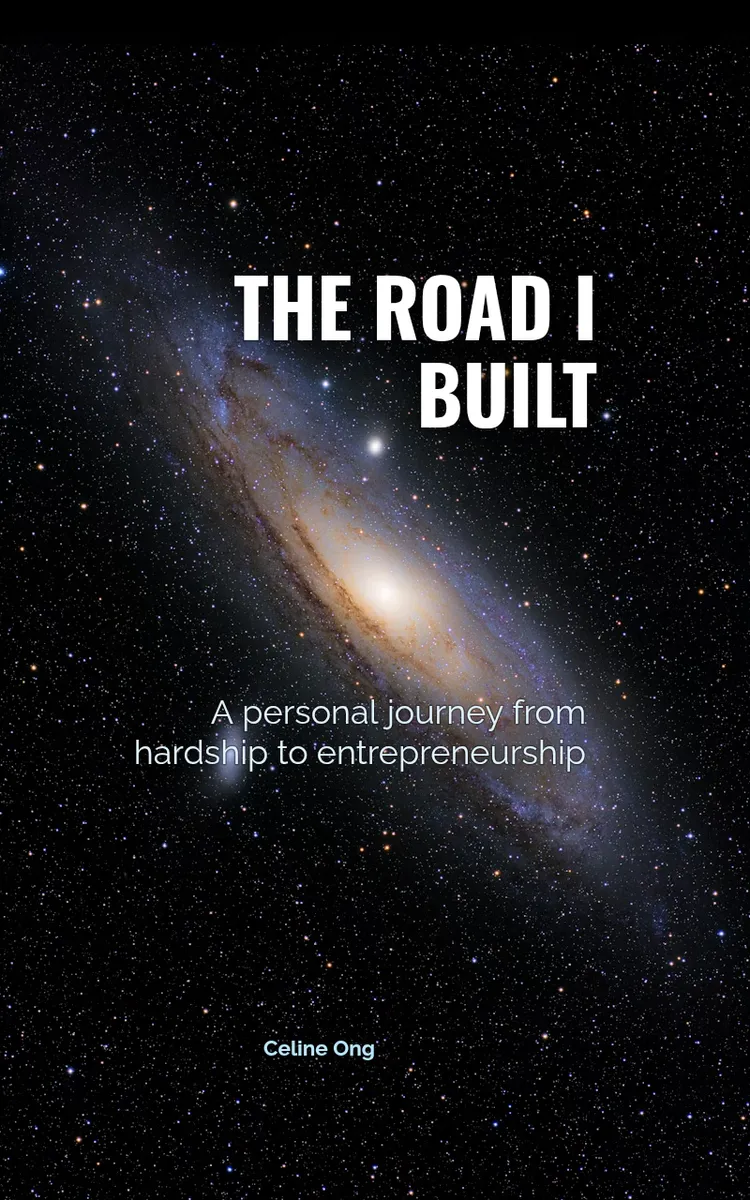
"The Road I Built" is a biography book by Celine Ong with 5 chapters and approximately 9,689 words. A personal journey through hardship toward authorship, podcasting, and entrepreneurship.
This book was created using Inkfluence AI, an AI-powered book generation platform that helps authors write, design, and publish complete books. It was made with the AI Biography Writer.
Frequently Asked Questions
What is "The Road I Built" about?
A personal journey through hardship toward authorship, podcasting, and entrepreneurship
How many chapters are in "The Road I Built"?
The book contains 5 chapters and approximately 9,689 words. Topics covered include Hardship on the Road to Bizlink, Choosing to Write My Story, Finding the Voice Behind the Mic, Building a Business from the Story, and more.
Who wrote "The Road I Built"?
This book was written by Celine Ong and created using Inkfluence AI, an AI book generation platform that helps authors write, design, and publish books.
How can I create a similar biography book?
You can create your own biography book using Inkfluence AI. Describe your idea, choose your style, and the AI writes the full book for you. It's free to start.
Write your own biography book with AI
Describe your idea and Inkfluence writes the whole thing. Free to start.
Start writingCreated with Inkfluence AI


