

Read the first chapter
The whole of chapter one, free. About 9 min. Turn the pages with the arrows, your keyboard, or a swipe.
Chapter 1
The Pass Gives Way
The rope around Ingrid Halvorsen’s pack had frozen stiff, so she worked it loose with her teeth while the trail climbed beneath her boots. Above, the Chilkoot Pass narrowed to a white notch between black rocks. Men and women moved toward it in a slow, crooked line, each bent beneath a burden, each guarding a piece of a future that could not yet be seen.
“Keep the blanket under the flour,” Anders called.
“It is under the flour.”
“The snow will soak through.”
“Then carry the flour yourself.”
He looked back at her, startled, and then smiled despite the cold. Their infant son stirred inside the wool-lined carrier against Ingrid’s chest. His small face was tucked beneath her scarf, his breath warming the cloth in quick, soft bursts.
Behind them, the trail was crowded with abandoned freight. Sacks of beans lay split open beside the path. A stove rested on its side, half buried in snow. Someone had left a crate of boots, and the boots had frozen together in a dark wooden cage. The stampeders stepped around such things without looking. There was no room to stop, and no safe place to set anything down.
Ingrid tightened the strap across her shoulder. The pack held flour, coffee, a little salt pork, wool cloth, a tin cup, and the few tools Anders had refused to abandon. Their whole life had been reduced to bundles small enough to drag uphill.
She had wanted one thing since they left the coast: to get her family and their supplies over the pass before the weather closed it. Beyond the summit lay the long descent toward the lakes, then the route west toward the Yukon. Beyond that, perhaps, a house of their own. A riverbank. Soil that might accept a seed.
“Do not stop,” Anders said. “Not here.”
“I am not stopping.”
“You are looking.”
“I am making sure we still have a way through.”
The wind came hard over the ridge. It lifted loose snow from the rocks and drove it across the trail. The world turned white at the edges. Ingrid could no longer see the people above them clearly. Their bodies appeared and vanished like figures behind thin cloth.
A man ahead slipped. His pack swung sideways, striking the woman behind him. She cried out, and both went down. Others shouted. A mule screamed somewhere higher on the slope.
Anders reached for Ingrid’s arm. “Take the boy.”
“I have him.”
“Give him to me.”
“The carrier is fastened.”
“Then unfasten it.”
The baby began to cry. The sound was small, but it cut through the wind. Ingrid pressed him closer and felt the tremor of his body against her ribs.
“He is cold,” she said.
“He is alive.”
“That is not enough.”
Anders’s face tightened. He had grown lean since they joined the northbound stream, his beard crusted with ice, his eyes fixed on the next rise. He had spoken of Alaska as if it were a door. Walk through it, he had said, and a man could begin again. He had not spoken of the thousands of pounds that had to be carried over the pass by hand, or of the storms that could erase the trail in minutes.
“We reach the top,” he said. “Then we shelter him.”
“There is no shelter.”
“There will be.”
“That is a promise, not a place.”
He glanced toward the summit. “It is the only thing I have.”
The line lurched forward. Ingrid followed, placing each boot where the person ahead had stepped. The snow hid stones and holes. The pack cut into her shoulders. Beneath the blanket, the flour shifted, and she felt one of the sacks tear against the edge of the stove.
She stopped.
Anders turned. “What now?”
“The flour.”
A gust struck them. Snow filled the space between their faces.
“We cannot fix it here,” he said.
“If it spills, we cannot eat it.”
“If we stay, we may not reach the top.”
Ingrid lowered her pack. Her fingers had lost their feeling, but she forced them beneath the blanket. The sack had opened along one seam. White flour dusted the wool and the inside of the pack.
She took the tin cup and scooped flour from the bottom. Her hands shook so badly that half fell through her gloves.
A woman passing above called down, “Leave it! The trail is closing!”
Ingrid looked up. The woman wore a red scarf and carried a bundle of axes tied across her back. Her cheeks were raw from the wind.
“Not my food,” Ingrid answered.
The woman gave a sharp laugh. “Not mine either, but the mountain has claimed plenty today.”
Anders crouched beside Ingrid. “Tie it with the cloth.”
“The cloth is for the baby.”
“Use the corner.”
She stared at him.
“For the moment,” he said. “We need both.”
Ingrid tore the corner from the wool cloth. The sound seemed louder than the wind. She pressed the fabric over the split and tied it tight. The flour still leaked in a thin stream, but less than before.
Then the trail moved again, and they moved with it.
The storm thickened as they climbed. Men shouted directions that were swallowed before they reached the next person. A sled broke loose above them and came skidding down, dragging a coil of rope. Anders shoved Ingrid against the rock wall and threw himself over the pack. The sled struck his shoulder and spun away.
“Are you hurt?” Ingrid asked.
He rose slowly.
“Are you hurt?”
“My arm.”
“Can you move it?”
He lifted it halfway and winced. “Enough.”
She wanted to tell him they should turn back. The words rose to her mouth and stayed there. Below them lay the same steep trail, the same abandoned freight, the same people pressing upward because retreat would cost as much as continuing. Above them was the summit, hidden in snow.
Anders reached for the pack.
“No,” Ingrid said.
“I can carry it.”
“You can carry the boy.”
He looked at her.
“The pack is mine,” she said. “You said the boy needed shelter.”
For a moment he seemed ready to argue. Then he nodded. Ingrid shifted the carrier from her chest. Anders took their son carefully, holding him beneath his coat. The baby’s crying faded to a weak whimper.
“Keep his head covered,” Ingrid said.
“I know.”
“You do not know. You keep leaving his cheek open.”
Anders tucked the scarf around the child. “Like this?”
“More.”
He obeyed. The tenderness of it struck her harder than the cold. His injured arm hung close to his side, but he used the other hand to hold the baby against his heart.
Ingrid lifted the pack and climbed.
The slope steepened until every step became a pull of the whole body. The trail was no longer a trail. It was a stairway of ice cut by boots and broken by heaps of freight. She passed a barrel of nails, a sack of oats, and a wooden rocker with one runner missing. Someone had carried each thing this far. Someone had believed it necessary.
At last the woman in the red scarf appeared beside her.
“Your husband is bleeding,” she said.
Ingrid looked down. A dark line ran from Anders’s sleeve to his glove.
“He can walk.”
“That was not what I said.”
“Can you help him?”
The woman nodded toward a ledge above. “There is a hollow behind those rocks. Get him there when the line stops.”
“What is your name?”
“Annie Rusk.”
“Ingrid Halvorsen.”
“Then, Ingrid Halvorsen, do not let the mountain make decisions for you.”
The words stayed with Ingrid as she climbed.
The line stopped without warning. People pressed close, shoulder to shoulder. Somewhere ahead, a man cursed. Somewhere behind, a child sobbed. Snow slid from the rock face in a soft rush, gathering at their boots.
Ingrid looked toward the hollow Annie had pointed out. It was no more than a shallow pocket beneath an overhang, but it offered protection from the wind.
“Anders,” she called.
He turned, pale beneath his beard.
“The rocks.”
He followed her gaze. “We cannot leave the line.”
“The line has left us.”
The people ahead had vanished into the storm. Those behind were blocked by a fallen load. Ingrid caught Anders by the sleeve and pulled him toward the hollow.
Inside, the wind dropped to a low moan. Anders lowered himself against the rock and opened his coat. Their son slept against him, warm enough for now.
Ingrid removed his glove. Blood had frozen along his wrist where the sled had struck him. She wiped it with snow, then pressed the torn wool cloth against the wound.
“You used the baby’s cloth,” Anders said.
“I used the corner.”
“He will need it.”
“He needs a father who can lift him.”
Anders looked at her for a long moment. “You are angry.”
“I am cold.”
“You are both.”
She tied the cloth around his wrist. “You brought us here.”
“Yes.”
“You said there would be work.”
“There will be.”
“You said we could make a home.”
“We can.”
“What if the mountain does not let us pass?”
Anders looked down at the sleeping child. “Then we make a home here.”
She almost laughed, but the sound broke before it formed. The thought was absurd. Around them, people were abandoning freight because the mountain demanded payment. Yet Anders spoke as if a house might be built from ice and rope.
A deep crack rolled across the slope.
Annie Rusk shouted from outside. “Move! Move now!”
Ingrid thrust the pack onto her back. Anders stood, gripping their son with his good arm. Above them, a sheet of snow had broken loose. It came down in a broad white rush, carrying stones, crates, and pieces of the trail.
“Run!” Ingrid cried.
They climbed toward the summit. Anders stumbled. Ingrid seized the back of his coat and shoved him upward. Annie grabbed his elbow from the other side. The snow swept past their boots, striking their legs with the force of thrown sand.
Their son began to cry.
“I have him!” Anders called.
“Keep climbing!”
They reached the final rise as the slide poured across the trail below. It buried the hollow, the broken freight, and the pack Ingrid had set down for one breath too long. Her stove disappeared first. Then the sack of beans. Then the flour, sealed in its torn cloth.
The snow settled in a trembling heap.
Ingrid stood bent over, her hands on her knees. Her empty shoulders felt strangely light. She looked at the place where their supplies had vanished.
Anders came beside her. His face was white with pain, but he held the baby close. The child’s cries softened against his chest.
“We are at the top,” Anders said.
Ingrid lifted her head. Beyond the ridge, the land fell away toward a country of frozen lakes and distant water. The storm opened for one brief moment, revealing a pale strip of sky.
“At the top,” she repeated.
Annie Rusk joined them, breathing hard. “You lost much.”
“Most of it.”
“Enough to turn back?”
Ingrid looked down at the buried trail. Behind them lay the coast, the ships, and the life they had already spent. Ahead lay the descent, the Yukon, and whatever Alaska would demand next.
She touched the baby’s covered cheek. Then she placed her hand against Anders’s uninjured arm.
“No,” she said. “Not enough.”
Anders looked at her, waiting.
“We go on,” Ingrid said. “We find food. We find tools. We build somewhere the snow cannot take them.”
The wind pulled at her torn cloth and lifted it like a small white flag. Ingrid watched it snap above the pass, then turned toward the far side of the mountain with her husband and son beside her.
End of chapter one. 39 more chapters and about 91,654 words in the full book.
Swipe or use the arrows to turn the page


What's inside: 40 chapters
- 1. The Pass Gives Way
- 2. A Cabin Above the Yukon
- 3. The Claim in Anders’s Name
- 4. The River Takes the Survey
- 5. A Name for the Newborn
- 6. The Winter Cache Burns
- 7. The Missing Ledger Page
- 8. Across the Frozen Flats
- 9. The Prospecting Map
- 10. The Claim Stakes Move
- 11. Who Kept the Copy?
- 12. The Icebound Freight Sled
- 13. The Southbound Promise
- 14. The Ship Leaves Without Anders
- 15. The Warehouse Receipt
- 16. The Mountain Mail Route
- 17. The Life Beyond the Claim
- 18. The Letter Returned
- 19. The Federal File Room
- 20. The Boundary Was Forged
- 21. The Map Beneath the Floor
- 22. The Telegraph Goes Silent
- 23. The Clerk’s Initials
- 24. The Pass in Spring Flood
- 25. A Son Between Two Homes
- 26. The Winter Camp Collapses
- 27. The Second Claimant
- 28. The Broken Sled Trail
- 29. A Passage North at Last
- 30. The Cabin Stands Empty
- 31. The Sealed Testimony
- 32. The Harbor Without Shelter
- 33. The Prospect Map Confessed
- 34. The Clerk Denies Everything
- 35. The Hearing at Eagle
- 36. Anders Comes to the Door
- 37. The New Survey Stakes
- 38. Nils Chooses the River
- 39. The First Winter Without Anders
- 40. The Family Record
About this book
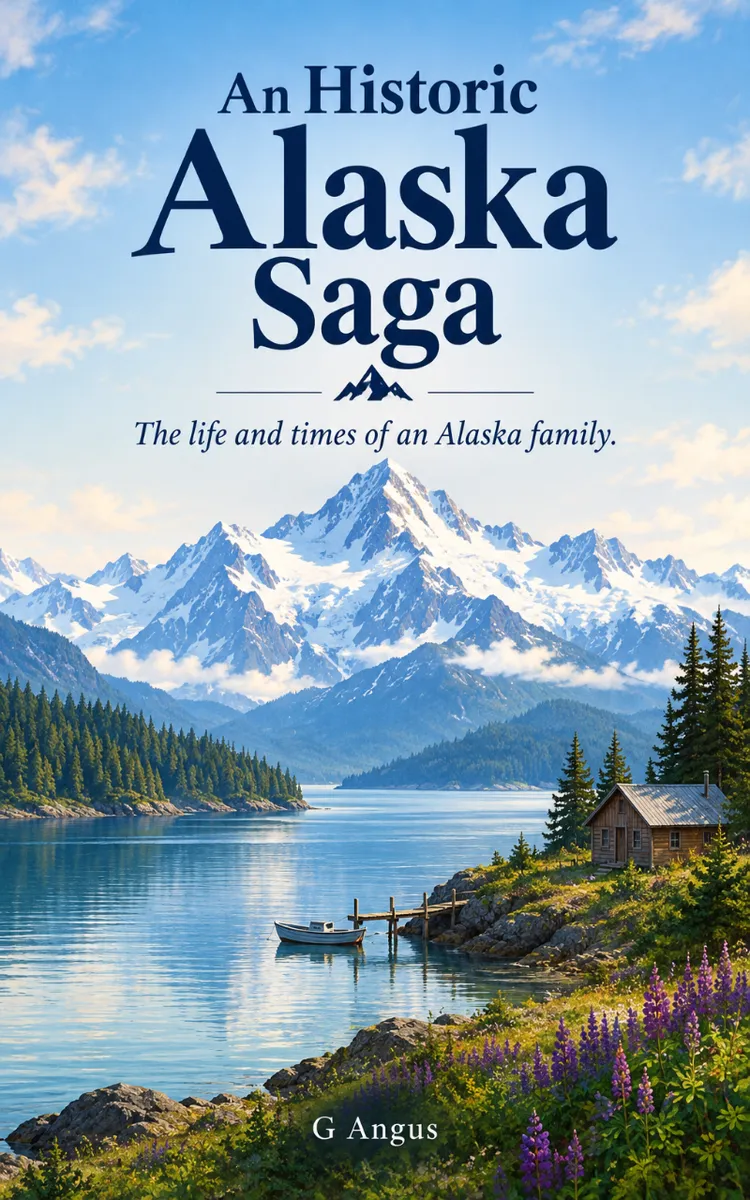
"An Historic Alaska Saga" is a fiction book by G Angus with 40 chapters and approximately 91,654 words. A multigenerational Alaska family navigating twentieth-century history, adventure, loss, heartbreak, and love.
This book was created using Inkfluence AI, an AI-powered book generation platform that helps authors write, design, and publish complete books. It was made with the AI Novel Writer.
Frequently Asked Questions
What is "An Historic Alaska Saga" about?
A multigenerational Alaska family navigating twentieth-century history, adventure, loss, heartbreak, and love
How many chapters are in "An Historic Alaska Saga"?
The book contains 40 chapters and approximately 91,654 words. Topics covered include The Pass Gives Way, A Cabin Above the Yukon, The Claim in Anders’s Name, The River Takes the Survey, and more.
Who wrote "An Historic Alaska Saga"?
This book was written by G Angus and created using Inkfluence AI, an AI book generation platform that helps authors write, design, and publish books.
How can I create a similar fiction book?
You can create your own fiction book using Inkfluence AI. Describe your idea, choose your style, and the AI writes the full book for you. It's free to start.
Write your own fiction book with AI
Describe your idea and Inkfluence writes the whole thing. Free to start.
Start writingCreated with Inkfluence AI


