
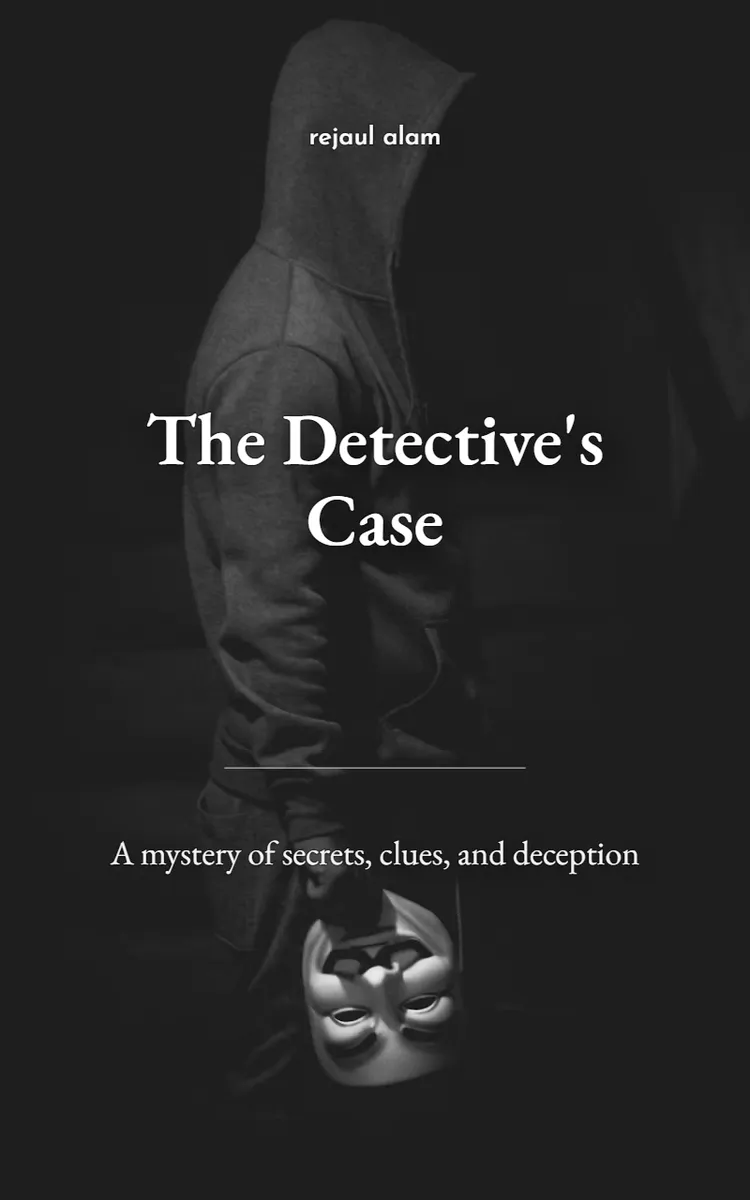
Read the first chapter
The whole of chapter one, free. About 9 min. Turn the pages with the arrows, your keyboard, or a swipe.
Chapter 1
The Body in the Flooded Archive
The archive’s basement clock had stopped at 2:17, its minute hand trembling above a face filmed with brown water.
Mara Voss noticed it as the outer door slammed behind her. The impact shuddered through the stone corridor, and somewhere below, a pipe burst with a hollow metallic bang. Water rushed beneath the door in a thin, widening sheet.
She lifted her coat clear of it and checked the folded request in her hand.
Case file 1847-B. Municipal rail accident. Sealed records room.
The request bore a clerk’s signature, a date from three days earlier, and the neat black stamp of the city archive. Routine, on its face. A retired judge had asked for the file through the proper channel, and Mara had come to retrieve it before the judge’s appointment at four.
Then the storm had broken over the city.
Now the basement lights flickered, and the water was already covering the first step down.
“Miss Voss?”
The voice came from behind the security grille.
Mara turned. A narrow-faced man stood on the other side, one hand wrapped around a ring of keys. His gray archive vest was buttoned to the throat. A plastic badge identified him as ELIAS WREN.
“Mr. Wren?” she called.
He nodded, though his eyes remained fixed on the water. “You shouldn’t be here.”
“I was told the file was ready.”
“The building should have been evacuated.”
“Then open the grille.”
A tremor passed through his expression. He looked toward the stairwell, where water slapped against the lowest landing. “The sealed room is below the old catalog stacks.”
“I know where it is.”
“You don’t know what’s happening down there.”
Mara stepped closer to the grille. Cold air moved through the bars, carrying the smell of wet paper and rust. “I know that if the file is in the basement, it won’t survive much longer.”
Wren’s fingers tightened around the keys. “The pump failed twenty minutes ago.”
“Then we have less than twenty minutes.”
He hesitated.
Mara held up her badge. “Open it.”
The lock clicked. Wren pulled the grille aside, and Mara slipped through. Before he could shut it, a louder surge struck the outer door. The corridor lights went dark.
For three seconds, there was only the hard rush of water.
Then the emergency lamps came on, bathing the archive in red.
Wren swore under his breath. “The power’s gone to the lower level.”
“Give me a flashlight.”
“I’m coming with you.”
“No.”
His gaze snapped to hers. “You don’t know the layout.”
“I know enough to find a sealed records room.”
“And I know which floors are rotten.”
Mara looked down at the request, then at the dark stairwell. The judge’s appointment was an hour away. The file had waited seventy-nine years in a locked room. It could wait no longer.
“Stay by the grille,” she said. “If the water reaches the main corridor, open the front doors and get out.”
Wren’s mouth tightened. “That’s not an instruction I intend to follow alone.”
“Then follow it with someone else.”
She took the flashlight he offered and descended.
The beam shook only when the steps did. Mara kept one palm against the wall, feeling vibrations travel through the stone. Water covered the lower landing to her ankles, icy enough to numb her boots within seconds. Loose index cards drifted past her - names, dates, addresses - each one softening at the edges.
At the bottom, the archive opened into a maze of iron shelving. The stacks rose nearly to the ceiling, their upper levels lost in darkness. Water streamed between them, carrying cardboard boxes and splintered wooden dividers.
“Sealed room is at the far end,” Wren called from above.
Mara swept the beam across the nearest aisle. A red line marked the floor: FLOOD BARRIER. Beyond it, the water was deeper.
She stepped over.
The narrow aisle forced her shoulders against the shelves. Files pressed through gaps in their boxes, their labels blurred into pale streaks. Every movement sent a small wave ahead of her. Somewhere inside the stacks, something struck metal again and again.
Mara stopped.
“What was that?” Wren called.
“Nothing.”
The sound came from her left. She angled the flashlight between two shelves.
A body floated face down beneath the lowest rack.
The man wore a gray archive vest.
Mara waded toward him. Her boot caught on a fallen box, and she went down hard against the shelving. The flashlight spun from her hand, its beam cutting wild arcs through the water.
“Damn it.”
She found it by touch and aimed it beneath the rack. The clerk’s hand drifted near her knee, fingers pale and curled. A plastic badge hung from his collar.
ELIAS WREN.
Mara stared at the name.
Above her, the other Wren shouted, “Miss Voss?”
She snatched the flashlight up. “Who are you?”
No answer.
The water surged around her thighs.
Mara shoved herself upright and turned toward the stairwell. The red emergency light at the far end flickered. A figure stood between the shelves, half-hidden by darkness.
“Wren?”
The figure moved.
Mara raised the flashlight. A man in a dark raincoat stood at the mouth of the next aisle. Water streamed from his sleeves. His face remained outside the beam.
“Stop,” she said.
He ran.
Mara followed for three steps, then stopped as the aisle buckled beneath her. A metal shelf groaned and leaned across the passage. The man vanished beyond it. She heard a door slam, followed by the sharp scrape of a bolt.
The sealed records room.
Mara pushed against the shelf. It shifted an inch, shedding boxes into the water. The current tugged at her legs, stronger now, flowing toward the stairwell.
She glanced back at the dead clerk.
A dark stain spread from his vest pocket, dissolving into the water.
The file.
She wedged the flashlight between her teeth and forced herself beneath the tilted shelf. Metal scraped her shoulder. Her coat snagged, and for one breath she was pinned, the water rising against her ribs.
She tore free, leaving a strip of fabric behind.
The sealed room door stood three yards away. Its brass plate read MUNICIPAL RECORDS - RESTRICTED. The lock had been forced. Splinters of wood floated around the threshold.
Inside, shelves lined the walls. The room was already half flooded.
Mara swept the light across the labels. Rail accidents. Missing persons. Coroner’s inquests. She found the 1847 section and reached for the gap where the file should have been.
Nothing.
The shelf held a single empty folder, its string ties cut.
“Looking for this?”
The voice came from behind her.
Mara turned.
The man in the raincoat stood in the doorway, blocking the aisle. In one hand he held a small oilskin packet. In the other, a knife.
“Put it down,” Mara said.
He glanced at the water. “It’s already too late.”
“Who are you?”
He smiled without warmth. “Ask the clerk.”
“He’s dead.”
The smile disappeared.
For a moment, neither moved. Water crept higher, cold against Mara’s waist. The man looked past her toward the shelf, calculating the room, the exits, the rising current.
Mara saw the answer before he did.
She kicked the loose empty folder into his knees.
He stumbled. The packet dropped. Mara lunged, caught it, and drove her shoulder into the door. The man struck her across the back with the knife hand. Pain flashed beneath her ribs, but his grip broke.
She ran.
The corridor had changed. Water roared through the stacks now, waist-deep and brown with paper. A shelf collapsed behind her, sending a wave down the aisle. Mara shoved through it, one hand gripping the oilskin packet beneath her coat.
The stairwell was ahead.
A hand caught her ankle.
She went under.
Water filled her ears. The flashlight slipped from her grasp and spun below, illuminating the dead clerk’s face as he drifted past. Mara kicked at the grip until her boot came free. Her lungs burned. She clawed upward and broke the surface beside the stair rail.
The man in the raincoat had disappeared.
She seized the rail and climbed. Each step was slick with mud and shredded paper. Behind her, the basement groaned. Above, the grille stood open, and daylight showed through the corridor windows.
Wren waited at the top.
Not the drowned clerk. The other one.
He reached for her arm. “What happened?”
“Where did you come from?”
His hand stopped.
Mara climbed the last step and pressed the flashlight against his face. His features were older than the dead man’s, his hair white at the temples, but the resemblance was close enough to make her stomach tighten.
“I asked where you came from.”
“Through the records office.”
“The door was locked.”
“I had a key.”
“Show me.”
He looked toward the entrance. “We need to leave.”
Mara drew her service pistol.
Wren raised both hands. “Detective - ”
“Show me the key.”
He reached slowly into his vest and produced a brass key on a black cord. The same kind used for the archive’s private lockers.
Mara took it from him.
“What was your brother doing downstairs?” she asked.
His face emptied.
The question had landed cleanly.
“He wasn’t my brother,” Wren said.
Mara looked at the badge on his vest. The printed name read ELIAS WREN. The drowned man had worn the same name.
A drop of water slid from the key onto her palm.
“Then why are you wearing his badge?”
Wren moved first. He seized the emergency lever beside the door and pulled it down. The archive’s fire shutters dropped with a thunderous crash, separating them from the street.
Mara fired once into the ceiling.
The shot cracked through the corridor. Wren flinched, and she drove him against the wall. His head struck stone. The brass key flew from her hand and skittered across the wet floor.
“Don’t move.”
He stared at her, breathing hard. “You don’t understand what you’ve opened.”
“I understand that a man is dead and a file is missing.”
“You came for the wrong file.”
Mara glanced toward the basement. Water spilled over the top stair and spread across the corridor. The oilskin packet pressed against her ribs.
She picked up the key and shoved Wren toward the outer door. “We’re going upstairs.”
He laughed once, softly. “The file isn’t in the packet.”
Mara stopped.
“What is it?”
“Something he wrote before they found him.”
She tore open the packet.
Inside was a single folded sheet, stained with black ink. The writing had run at the edges, but one line remained legible:
LOCKER 312. NOT THE CASE. FOLLOW THE TICKET.
A surge struck the basement door. Water burst through the seams and poured across the floor.
Mara folded the note against her palm.
Then the ink began to dissolve.
“No,” she whispered.
The black letters feathered into blue-gray threads. She pressed the paper flat, but the water soaked through it, taking the words with it. By the time she reached the outer doors, the note was blank.
Behind her, the archive groaned like a ship breaking apart.
Wren was gone.
Mara pushed through the doors into the rain, the brass key clenched in her fist. On its round head, barely visible beneath the tarnish, someone had scratched three digits.
312.
End of chapter one. 4 more chapters and about 9,874 words in the full book.
Swipe or use the arrows to turn the page
What's inside: 5 chapters
- 1. The Body in the Flooded Archive
- 2. The Key She Almost Buried
- 3. The Platform Without Witnesses
- 4. The Name on the Reel
- 5. The Courthouse Alarm
About this book
"The Detective's Case" is a fiction book by rejaul alam with 5 chapters and approximately 9,874 words. A detective investigates a mysterious case and uncovers hidden truths.
This book was created using Inkfluence AI, an AI-powered book generation platform that helps authors write, design, and publish complete books. It was made with the AI Novel Writer.
Frequently Asked Questions
What is "The Detective's Case" about?
A detective investigates a mysterious case and uncovers hidden truths
How many chapters are in "The Detective's Case"?
The book contains 5 chapters and approximately 9,874 words. Topics covered include The Body in the Flooded Archive, The Key She Almost Buried, The Platform Without Witnesses, The Name on the Reel, and more.
Who wrote "The Detective's Case"?
This book was written by rejaul alam and created using Inkfluence AI, an AI book generation platform that helps authors write, design, and publish books.
How can I create a similar fiction book?
You can create your own fiction book using Inkfluence AI. Describe your idea, choose your style, and the AI writes the full book for you. It's free to start.
Write your own fiction book with AI
Describe your idea and Inkfluence writes the whole thing. Free to start.
Start writingCreated with Inkfluence AI


