
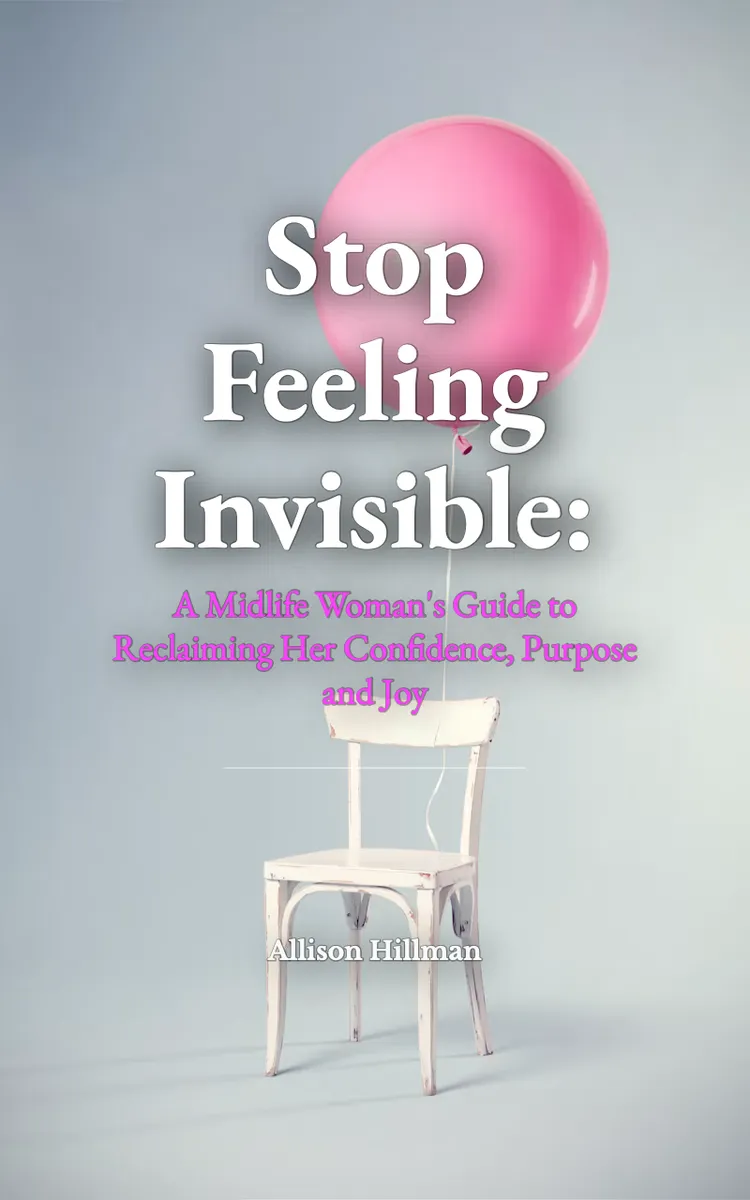
Read the first chapter
The whole of chapter one, free. About 6 min. Turn the pages with the arrows, your keyboard, or a swipe.
Chapter 1
Chapter 1
When Life No Longer Feels Like You
"One day you wake up and realise you've spent so much time taking care of everyone else's life that you've forgotten how to live your own."
There comes a moment for many women in midlife when something feels different.
Nothing dramatic has happened.
You may still have a family. You may still have a job. You may still be carrying out your daily responsibilities exactly as you always have.
From the outside, your life may look perfectly fine.
But inside, something feels missing.
You wake up each morning and move through your routine almost automatically. The days blur together. Weeks turn into months. Months turn into years.
And somewhere deep inside, a quiet question begins to surface:
"Is this all there is?"
It's not that you're unhappy all the time.
It's not that your life is terrible.
It's simply that the life you're living no longer feels like yours.
You look around and realise you've spent years building a life, yet somehow you've become disconnected from the woman living it.
If this sounds familiar, you're not alone.
In fact, millions of women experience this exact feeling during midlife.
Yet very few people talk about it.
Instead, many women suffer silently, believing there must be something wrong with them.
They wonder why they feel flat.
Why they're no longer excited about things they once enjoyed.
Why they feel restless despite having everything they thought they wanted.
Why they feel invisible.
This chapter is for that woman.
The woman who feels disconnected.
The woman who feels lost.
The woman who looks in the mirror and wonders where she went.
Because before you can reclaim your confidence, purpose and joy, you first need to understand what is happening.
And most importantly, you need to know that you are not broken.
The Invisible Identity Crisis
Many women reach midlife expecting certain changes.
They expect physical changes.
They expect their children to grow up.
They expect careers to evolve.
They expect ageing.
What they don't expect is the identity crisis that often arrives alongside these transitions.
For decades, you've been focused on fulfilling roles.
Daughter.
Partner.
Mother.
Employee.
Manager.
Caregiver.
Friend.
The list goes on.
For years, these roles gave your life structure and meaning.
They were important.
They mattered.
But somewhere along the way, something subtle happened.
You became so focused on fulfilling your responsibilities that you stopped asking yourself a very important question:
"What do I want?"
Not what everyone else needs.
Not what everyone else expects.
Not what makes everyone else comfortable.
What do you want?
For many women, that question feels surprisingly difficult to answer.
Not because they never had dreams.
Not because they never had desires.
But because they've spent so many years prioritising others that they've lost touch with themselves.
The result is what many experts refer to as an identity crisis.
But perhaps a better description is this:
You didn't lose yourself overnight.
You slowly drifted away from yourself.
When Everything Feels Flat
One of the most common experiences women describe during midlife is emotional flatness.
Life feels dull.
The excitement is gone.
The spark has faded.
You still function.
You still show up.
You still get things done.
But joy feels harder to access.
You remember a version of yourself who felt hopeful.
Curious.
Excited about possibilities.
Yet now it feels as though you're simply existing.
This can be frightening because there is often no obvious reason for it.
Nothing catastrophic has happened.
Yet life feels heavier than it used to.
The truth is that emotional disconnection rarely happens suddenly.
It develops gradually over years.
It develops when your own needs continually move to the bottom of the list.
It develops when exhaustion becomes normal.
It develops when survival replaces living.
Many women become so accustomed to coping that they don't realise how disconnected they've become.
Until one day they do.
And once they see it, they can't unsee it.
The Cost of Giving Everything to Everyone Else
Women are often praised for their ability to give.
To nurture.
To support.
To sacrifice.
To put others first.
And while these qualities are beautiful, they can come with a hidden cost.
Many women spend years taking care of everyone around them.
Children.
Partners.
Parents.
Friends.
Workplaces.
Communities.
Over time, this constant giving can create an imbalance.
You become an expert in meeting everyone else's needs while neglecting your own.
You know exactly what everyone else wants.
But you've forgotten what brings you alive.
You know how to support others.
But you've stopped supporting yourself.
You know how to encourage others.
But you've become your own harshest critic.
The problem isn't that you've cared too much.
The problem is that somewhere along the way, you stopped caring for yourself with the same devotion.
Why Feeling Invisible Hurts So Much
Feeling invisible is not just about being overlooked by others.
It's about losing sight of yourself.
Many women describe feeling unseen by family members, partners, workplaces or society.
But often the deepest pain comes from feeling unseen by themselves.
They stop listening to their own needs.
They stop honouring their own dreams.
They stop recognising their own value.
Over time, their confidence begins to fade.
Their self-trust weakens.
Their sense of identity becomes blurry.
The result is a painful feeling of invisibility.
Not because they have nothing to offer.
But because they've become disconnected from the truth of who they are.
The Grief No One Talks About
There is another part of this journey that often goes unspoken.
Grief.
Not grief over losing a person.
But grief over losing parts of yourself.
The adventurous version of you.
The creative version of you.
The confident version of you.
The woman who once had dreams she was excited about.
Many women carry this grief without realising it.
They mourn opportunities they never took.
Dreams they postponed.
Passions they abandoned.
Versions of themselves they left behind.
This grief is real.
And it deserves to be acknowledged.
Because healing begins when we stop pretending we're fine and start being honest about what we've lost.
Why This Can Be the Beginning of Something Beautiful
As painful as this experience can be, there is good news.
Feeling disconnected is not the end of your story.
It may actually be the beginning.
The very fact that you're questioning your life means something important is happening.
You're waking up.
You're becoming aware.
You're recognising that something needs to change.
Awareness is where every transformation begins.
You cannot create a new chapter while pretending the current one is working.
The discomfort you're feeling may be the invitation you've been waiting for.
An invitation to reconnect.
An invitation to rediscover yourself.
An invitation to finally ask what you want from the years ahead.
This is not a breakdown.
It is an awakening.
The woman you've been searching for isn't gone.
She is still there.
Beneath the responsibilities.
Beneath the expectations.
Beneath the years of putting everyone else first.
Waiting.
Patiently.
For you to come back to her.
Reflection Questions
• In what ways have you been feeling disconnected from yourself?
• When was the last time you felt genuinely excited about your life?
• What parts of yourself have you neglected or forgotten?
• What responsibilities have consumed most of your energy?
• If nothing were holding you back, what would you want more of in your life?
• What does feeling visible mean to you?
Chapter Takeaway
If life no longer feels like you, it doesn't mean you've failed.
It means you've outgrown a version of yourself.
The feelings you're experiencing are not proof that something is wrong with you.
They are signs that something within you is ready to evolve.
You are not lost.
You are being called home to yourself.
And this is where your journey begins.
End of chapter one. 10 more chapters and about 15,307 words in the full book.
Swipe or use the arrows to turn the page

What's inside: 11 chapters
- 1. Chapter 1
- 2. Chapter 2
- 3. Chapter 3
- 4. Chapter 4
- 5. Chapter 5
- 6. Chapter 6
- 7. Chapter 7
- 8. Chapter 8
- 9. Chapter 9
- 10. Chapter 10
- 11. Chapter 11
About this book
"Stop Feeling Invisible: A Midlife Woman's Guide to Reclaiming Her Confidence, Purpose and Joy" is a self-help book by Allison Hillman with 11 chapters and approximately 15,307 words. It covers key insights and practical takeaways on the topic.
This book was created using Inkfluence AI, an AI-powered book generation platform that helps authors write, design, and publish complete books. It was made with the AI Self-Help Book Writer.
Frequently Asked Questions
What is "Stop Feeling Invisible: A Midlife Woman's Guide to Reclaiming Her Confidence, Purpose and Joy" about?
"Stop Feeling Invisible: A Midlife Woman's Guide to Reclaiming Her Confidence, Purpose and Joy" is a self-help book by Allison Hillman covering key insights and practical takeaways on the topic.
How many chapters are in "Stop Feeling Invisible: A Midlife Woman's Guide to Reclaiming Her Confidence, Purpose and Joy"?
The book contains 11 chapters and approximately 15,307 words. Topics covered include Chapter 1, Chapter 2, Chapter 3, Chapter 4, and more.
Who wrote "Stop Feeling Invisible: A Midlife Woman's Guide to Reclaiming Her Confidence, Purpose and Joy"?
This book was written by Allison Hillman and created using Inkfluence AI, an AI book generation platform that helps authors write, design, and publish books.
How can I create a similar self-help book?
You can create your own self-help book using Inkfluence AI. Describe your idea, choose your style, and the AI writes the full book for you. It's free to start.
Write your own self-help book with AI
Describe your idea and Inkfluence writes the whole thing. Free to start.
Start writingCreated with Inkfluence AI


