
Read the first chapter
The whole of chapter one, free. About 6 min. Turn the pages with the arrows, your keyboard, or a swipe.
Chapter 1
Seeing Strength Beyond Hardship
When Survival Skills Are Mistaken for Shortcomings
A mother sits across from you with a folder of unpaid bills, a phone that keeps buzzing, and a work schedule that changes every week. She missed an appointment, so the easy story is that she isn’t organized. Then you learn she arranged a neighbor’s ride to dialysis, swapped shifts with her cousin, stretched groceries for six days, and found a cheaper child-care option before sunrise.
The same person who looks “inconsistent” on paper may be solving five problems before breakfast. If we only record what went wrong, we miss the skills that could help her move toward steadier income, safer housing, or training that fits her life.
Are we seeing a family’s hardship - or the strength they’ve been using to survive it?
The Strengths-First Lens Changes the Starting Point
Old Belief: Families facing economic hardship lack the skills needed to become stable.
New Reality: Families often have valuable skills, relationships, and survival strategies already in use; the work is to name them, strengthen them, and connect them to new opportunities.
The Strengths-First Lens doesn’t pretend hardship is harmless. An unreliable car still creates a real barrier. A shutoff notice still brings fear. But the lens asks a better first question: “What is this family already doing that could become a building block?”
Consider a parent who regularly borrows a neighbor’s car to get to work. That may look like dependence if we stop at the surface. Look closer, and you may find trust, negotiation, planning, and follow-through. Those skills could support a ride-share agreement, a job with a more predictable schedule, or a conversation with an employer about transportation needs.
A family’s network can work the same way. The aunt who watches children, the friend who shares job leads, or the church member who stores important documents may not appear in a formal intake. Yet these relationships can make training, employment, and budgeting possible. Your role isn’t to praise every survival strategy as perfect. It’s to understand what it accomplishes, what it costs, and how it might be adapted for greater stability.
The shift matters because people are more willing to build from a foundation they can see. When a caseworker says, “You’ve already shown you can plan under pressure,” the conversation changes. The family is no longer being treated as an empty container waiting for services. They’re partners bringing experience to the table.
What the Strengths-First Lens Helps You Notice
Economic hardship can make useful behavior look ordinary - or make it look like a problem. A parent who pays one bill at a time may be using careful prioritizing. A young adult who works several short-term jobs may have flexibility, customer service skills, and persistence, even if the work history looks scattered.
The lens has three parts: notice the skill, name the setting where it works, and connect it to a next opportunity. “You’re resourceful” is kind, but vague. “You found three ways to cover transportation this month; that shows planning and relationship-building” gives the family something they can recognize and use.
Watch for these signs this pattern is running your life:
1. You describe families mainly by missed appointments, overdue bills, or incomplete paperwork. 2. You offer resources before asking what the family has already tried. 3. You call a survival strategy “poor decision-making” without asking what problem it solved. 4. You leave meetings knowing the family’s needs but not their skills, trusted relationships, or sources of persistence.
The Strengths-First Lens turns “What’s wrong?” into “What’s working, and how can we build on it?”
That question is not soft or unrealistic. It is practical. If a parent keeps a detailed school calendar but loses track of benefit renewal dates, the issue may not be a lack of organization. The missing piece may be a reminder system connected to the calendar already in use. If a worker has strong relationships with coworkers but struggles with formal interviews, the plan might pair job-search networking with interview practice.
You’re looking for transfer. Which skill is already present in one part of life and could help in another?
Questions That Reveal Usable Strengths
1. What has this family done repeatedly to get through a difficult month? Look for patterns, not one-time heroics. Repeatedly negotiating payment dates, arranging child care, or finding work shows a skill that can be named and developed.
2. What problem does a current survival strategy solve, and what does it cost? Relying on a relative for rides may protect employment but create tension or missed appointments. An honest answer can point toward a less fragile transportation plan.
3. Who does this family call when something goes wrong? Ask about the person’s role, not just their name. A cousin may provide child care; a former coworker may share job openings; a neighbor may help with translation or transportation.
4. Where has the family already shown a skill connected to economic progress? A parent who tracks medication schedules may be ready to learn bill tracking. A worker who manages several customers at once may have the foundation for a more stable service job.
5. What would the family say is their strongest accomplishment from the past month? Their answer may not match your case notes - and that’s useful. If they mention keeping their children housed, protecting a work shift, or asking for help sooner, you’ve found a doorway into their own motivation.
After asking, resist the urge to fill the silence. People often need a moment to decide whether you truly want the answer or are waiting to move on. A short pause can uncover more than a polished checklist.
A Seven-Day Strengths-Spotting Challenge
Challenge: Keep a Strengths-to-Opportunity Log for seven days
For the next seven days, choose three family interactions and record one strength, one relationship, and one possible economic connection from each conversation.
• Ask one specific question: “How did you handle that when the first plan fell through?” - Write the family’s exact action before labeling it a strength. - Name the skill in plain language, such as planning, negotiating, persistence, problem-solving, or relationship-building. - Ask how that skill might support one next step, such as reliable transportation, job training, a benefits renewal, or a steadier work schedule. - Share your observation with the family and check whether it feels accurate to them. - Note one survival strategy that may need support because it is helping today but creating strain tomorrow.
Expected difficulty: Medium
You’ll know it’s working when...
• Your notes include abilities as well as barriers. - Families correct, add to, or expand your understanding of their strengths. - You can connect a real skill to a specific economic goal. - At least one plan uses an existing relationship or routine instead of adding another burden. - You notice yourself asking, “What’s already working?” before offering a solution.
The point isn’t to turn every hardship into a hidden gift. Some situations are simply painful and unfair. The point is to stop wasting the abilities people have already built. A family shouldn’t have to become a different kind of person before receiving useful support.
Build From What Is Already Strong
A family’s survival history is not proof that they are stuck; it is a map of skills you can help redirect toward stability.
You learned to look for:
• Skills hidden inside daily survival, including planning, negotiation, persistence, and problem-solving. - Relationships that make employment, child care, transportation, and training more possible. - Strategies that solve immediate problems but may need safer or more reliable alternatives. - Concrete ways to connect existing strengths to the family’s next economic goal.
When you use the Strengths-First Lens, your conversations become more accurate. You see the missed appointment, but you also ask what the family managed before arriving. You see the unpaid bill, but you look for the decisions that kept other essentials covered. That fuller picture leads to plans people can actually carry.
The next step is to turn those recognized strengths into practical choices, small wins, and growing confidence - because seeing strength is powerful, but using it is where change begins.
End of chapter one. 39 more chapters and about 60,229 words in the full book.
Swipe or use the arrows to turn the page


What's inside: 40 chapters
- 1. Seeing Strength Beyond Hardship
- 2. Separating Worth from Income
- 3. Replacing Scarcity with Possibility
- 4. Building Hope Through Small Wins
- 5. Setting Goals Families Choose
- 6. Mapping the Household Money Picture
- 7. Making a Flexible Spending Plan
- 8. Managing Bills Before Crisis
- 9. Building a Starter Emergency Fund
- 10. Choosing a Debt Paydown Path
- 11. Protecting Credit from Costly Errors
- 12. Finding Benefits Without Losing Them
- 13. Negotiating Bills with Confidence
- 14. Finding Work That Fits Real Life
- 15. Turning Experience into Marketable Skills
- 16. Preparing for Interviews with Practice
- 17. Growing Income Through Career Steps
- 18. Starting a Safe Side Income
- 19. Solving Transportation Barriers
- 20. Stabilizing Housing Before Moving Forward
- 21. Reducing Food Costs with Dignity
- 22. Planning Childcare Around Work
- 23. Using Technology to Access Opportunity
- 24. Avoiding Predatory Financial Products
- 25. Building Financial Habits That Last
- 26. Talking About Money Without Shame
- 27. Strengthening Family Decision-Making
- 28. Setting Boundaries with Financial Requests
- 29. Navigating Financial Abuse Safely
- 30. Advocating Across Complex Systems
- 31. Building a Reliable Support Network
- 32. Recovering After Financial Setbacks
- 33. Managing Stress During Money Crises
- 34. Tracking Progress Beyond Income
- 35. Adapting Plans When Circumstances Change
- 36. Preparing for Long-Term Financial Security
- 37. Practicing Culturally Responsive Support
- 38. Coaching Without Taking Over
- 39. Preventing Caseworker Burnout
- 40. Turning Stability into Family Power
About this book
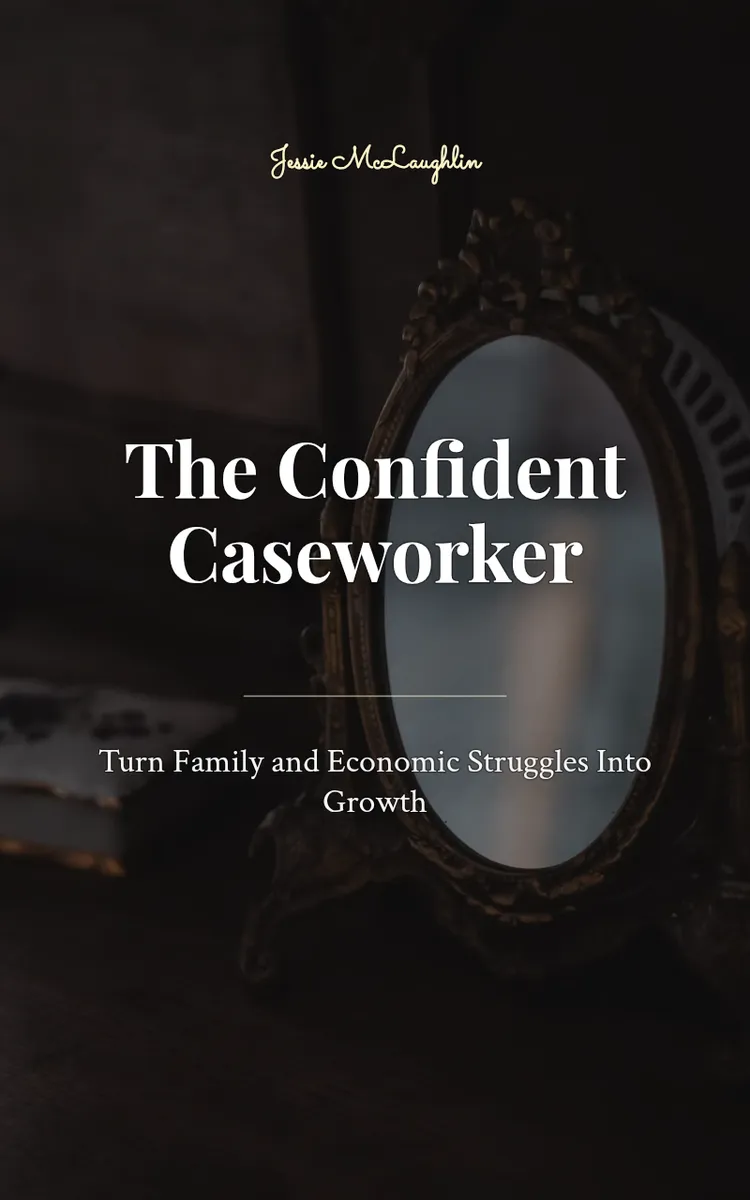
"The Confident Caseworker" is a nonfiction book by Jessie McLaughlin with 40 chapters and approximately 60,229 words. Helping caseworkers transform families’ economic struggles into growth and empowerment.
This book was created using Inkfluence AI, an AI-powered book generation platform that helps authors write, design, and publish complete books.
Frequently Asked Questions
What is "The Confident Caseworker" about?
Helping caseworkers transform families’ economic struggles into growth and empowerment
How many chapters are in "The Confident Caseworker"?
The book contains 40 chapters and approximately 60,229 words. Topics covered include Seeing Strength Beyond Hardship, Separating Worth from Income, Replacing Scarcity with Possibility, Building Hope Through Small Wins, and more.
Who wrote "The Confident Caseworker"?
This book was written by Jessie McLaughlin and created using Inkfluence AI, an AI book generation platform that helps authors write, design, and publish books.
Write your own nonfiction book with AI
Describe your idea and Inkfluence writes the whole thing. Free to start.
Start writingCreated with Inkfluence AI


