
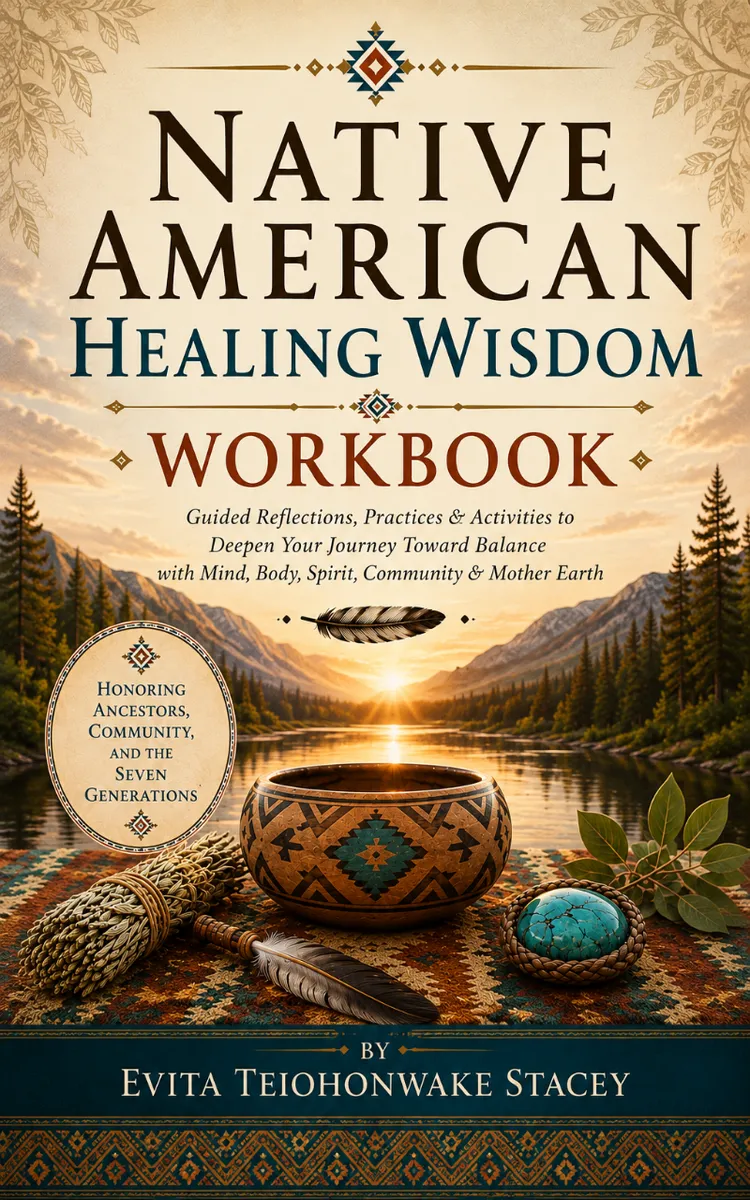
Read the first chapter
The whole of chapter one, free. About 7 min. Turn the pages with the arrows, your keyboard, or a swipe.
Chapter 1
Living Balance as Daily Relationship
Balance isn’t a fixed pose where nothing ever goes wrong. It’s the ongoing work of noticing relationships: with your body, your thoughts, your spirit, other people, and the living world around you. When one relationship is strained, the others often feel it too.
Indigenous Nations have distinct teachings, languages, histories, and ways of understanding wellness. There isn’t one universal Indigenous definition of balance. The approach here is a respectful, general reflection - not a ceremony or a substitute for learning from a specific Native community or knowledge keeper.
Learn Balance As an Ongoing Relationship Across Mind
Your mind, body, spirit, relationships, and surroundings don’t operate in separate rooms. A stressful week may show up as tight shoulders, poor sleep, irritability, or withdrawal. A lack of rest can make a small problem feel enormous. A lonely season can affect how you care for yourself.
Balance, then, is less about perfect equality and more about listening and responding. Some days your body needs rest. Other days your relationships need attention. Sometimes your spirit needs quiet, prayer, time outdoors, or guidance from a trusted person. You don’t have to solve every part at once. You do need to notice what is asking for care.
Your Turn: Five-Part Check-In
Set aside 10 minutes. Use a notebook and write one sentence for each area below. Be specific rather than dramatic. “My shoulders feel tight after work” is more useful than “I feel terrible.”
• Body: What physical signal have I noticed today? - Mind: What thought has taken up the most space? - Spirit: What gives me a sense of meaning, connection, or inner steadiness? - Community: Which relationship needs care, repair, or a clear boundary? - Place: How is my immediate environment affecting me?
After writing, circle one area that needs attention first. Choose one small response you can complete within 24 hours. For example: drink water and go to bed earlier, send a message asking for support, clear one stressful corner of your room, or take a quiet walk. You’re finished when you have written all five responses and chosen one action with a clear deadline.
Balance can also mean recognizing limits. A person who says yes to every request may look helpful while slowly becoming exhausted. A person who avoids every difficult conversation may feel peaceful for a moment while relationships weaken. Balance asks for both generosity and honesty. It includes knowing when to participate, when to rest, and when to say, “I can’t do that today.”
Reflect: Notice the Trade-Off
Think of one decision you’re facing this week. Write the decision at the top of a page. Then complete these sentences:
“If I choose this, my body may feel…”
“If I choose this, my mind may focus on…”
“If I choose this, my relationships may…”
“If I choose this, my connection to place or daily surroundings may…”
“The choice that supports the most balanced response is…”
Don’t search for a perfect answer. Complete every sentence, then name one next step and the date you’ll take it. This exercise is complete when all five sentences and one dated next step are written.
The Natural World
The natural world is not simply a background for human life. Many Indigenous teachings understand people as living in relationship with land, water, plants, animals, weather, and seasons, although the meaning and practice differ among Nations. A respectful starting point is humility: the land is not a prop, a possession, or a source of endless convenience.
You don’t need to borrow a ceremony or claim a teaching that isn’t yours. You can begin by paying attention to the place where you live and by considering how your choices affect it. Even a city contains relationships with water systems, soil, trees, birds, energy, and waste. The question is practical: How am I living here, and what responsibilities come with that?
Your Turn: Place-Based Attention
Choose a safe outdoor location you can visit without trespassing. It might be a sidewalk with trees, a park, a yard, or a public shoreline. Bring a notebook, a pen, and a phone only if you need it for safety. Spend 15 minutes there without headphones.
Record five observations. Include at least one detail about each category:
• something living - something changing - something you can hear - something connected to water, soil, or weather - something shaped by human activity
Then write two sentences: “This place supports my life by…” and “My current impact on this place may be…” Finish by choosing one action you can complete within seven days, such as carrying reusable items, staying on marked paths, reducing water waste, picking up litter safely, or learning whose traditional territory you live on through a reliable local source.
You’re done when you have spent the full 15 minutes, recorded five observations, written both sentences, and chosen one dated action. The goal isn’t to feel impressive. It’s to become more accurate about your relationship with place.
Modern life can make disconnection feel normal. Screens keep our attention indoors. Work schedules ignore daylight and seasons. Food arrives without showing the soil, water, labor, or animals connected to it. None of this makes you a bad person. It does mean that balance may require deliberate attention.
Try a small reality check before changing your whole life. For three days, notice when you use electricity, water, transportation, food, and disposable materials. You don’t need exact measurements. Write one sentence each evening about the largest use you noticed and one realistic reduction.
Apply It: Three-Day Relationship Log
Use one page for each of the next three days. At the end of each day, complete these lines:
“Today I depended on the natural world for…”
“One resource I used without much thought was…”
“One choice that reduced harm or showed care was…”
“One choice I can reconsider tomorrow is…”
Keep the action modest and measurable. “Use less water” is too broad. “Turn off the tap while brushing my teeth tomorrow morning” can be checked. The log is complete after three full entries and one completed action on the fourth day.
Balance also involves the places where we live and work. A noisy room, cluttered table, harsh light, or constant notifications can keep the nervous system on alert. Caring for your surroundings isn’t about making a perfect home. It’s about creating one small area that supports rest, focus, or connection.
Your Turn: Make One Resting Place
Choose an area no larger than a chair, bedside table, or corner of a desk. Set a timer for 12 minutes. Remove trash, return items to their proper places, and adjust one condition that affects your senses - light, noise, temperature, or visual clutter.
When the timer ends, stop. Sit or stand in that area for two minutes. Write three words describing how it feels now. Then decide how you’ll keep it usable for the next week. A simple plan might be “reset this surface before bed on Monday, Wednesday, and Friday.”
This exercise is complete when the timer has ended, the area has been changed, three words are written, and a maintenance plan is recorded. Small changes count because relationships are built through repeated contact, not one grand gesture.
Balance Needs Adjustment, Not Perfection
A balanced life can still include grief, conflict, illness, financial pressure, and uncertainty. Balance doesn’t mean pretending these experiences are easy. It means responding with enough awareness to avoid abandoning one part of yourself while trying to protect another.
Consider a caregiver who works long hours and keeps saying, “I’ll rest later.” Their care for family may be real, but their body is sending warnings. Or consider someone who spends all their time alone because solitude feels safe. Their quiet may be necessary, yet complete isolation can deepen pain. In both cases, balance is not a judgment. It’s an invitation to notice the cost of a pattern and make one honest adjustment.
Reflect: The Balance Wheel
Draw a circle and divide it into five sections labeled body, mind, spirit, community, and place. Rate each area from 1 to 5 based on the past seven days:
• 1: seriously neglected - 3: receiving some care - 5: receiving steady, healthy attention
Write the number in each section. Then answer these questions in complete sentences:
“Which area received the lowest number?”
“What evidence supports that rating?”
“What is one action that could raise it by one point - not to five, just one?”
“What might make that action difficult?”
“What support or boundary would help?”
Choose an action that takes 20 minutes or less and schedule it within the next three days. The exercise is complete when all five areas are rated, all four questions are answered, and the action appears on your calendar or written schedule.
If one area stays at 1 or 2 for several weeks, or if you’re dealing with serious physical or emotional distress, seek appropriate professional, community, medical, or spiritual support. Asking for help is part of relationship, not a failure of independence.
Key Teaching to Remember
Living in balance means staying in relationship with the parts of life that sustain you. Notice signals. Respect limits. Respond with a small, responsible action. Pay attention to your surroundings without claiming teachings that aren’t yours. Balance is not a performance you complete; it’s a relationship you keep tending.
Before you close this section, write one sentence:
“Today, balance asks me to __________________________________________.”
Keep that sentence somewhere you’ll see it tomorrow. Let it be practical. Let it be honest. And let it remind you that a life in balance is built through attention, one relationship at a time.
End of chapter one. 8 more chapters in the full book.
Swipe or use the arrows to turn the page
What's inside: 9 chapters
- 1. Living Balance as Daily Relationship
- 2. Choosing the Good Mind
- 3. Reciprocity With Mother Earth
- 4. Remembering Through Ancestors’ Stories
- 5. Gratitude That Changes Attention
- 6. Healing Through Community Connections
- 7. Seven Generations Long-Term Thinking
- 8. Becoming a Good Ancestor
- 9. Everyday Practices for Balance
About this book
"Native American Healing Wisdom" is a workbook by Anonymous with 9 chapters and approximately 14,974 words. Indigenous-inspired reflective workbook on healing, balance, gratitude, community.
This book was created using Inkfluence AI, an AI-powered book generation platform that helps authors write, design, and publish complete books. It was made with the Workbook Generator.
Frequently Asked Questions
What is "Native American Healing Wisdom" about?
Indigenous-inspired reflective workbook on healing, balance, gratitude, community
How many chapters are in "Native American Healing Wisdom"?
The book contains 9 chapters and approximately 14,974 words. Topics covered include Living Balance as Daily Relationship, Choosing the Good Mind, Reciprocity With Mother Earth, Remembering Through Ancestors’ Stories, and more.
Who wrote "Native American Healing Wisdom"?
This book was written by Anonymous and created using Inkfluence AI, an AI book generation platform that helps authors write, design, and publish books.
How can I create a similar workbook?
You can create your own workbook using Inkfluence AI. Describe your idea, choose your style, and the AI writes the full book for you. It's free to start.
Write your own workbook with AI
Describe your idea and Inkfluence writes the whole thing. Free to start.
Start writingCreated with Inkfluence AI


