

Read the first chapter
The whole of chapter one, free. About 6 min. Turn the pages with the arrows, your keyboard, or a swipe.
Chapter 1
Rewriting Your Money Identity
The Purchase That Was Never Just a Purchase
Last Tuesday, a reader told me she bought a $38 lunch after a difficult morning. She had food at home. She even knew what she’d planned to cook. But after a tense call at work, she opened a delivery app, chose the meal with the fastest arrival, and added dessert because “the day had already gone badly.”
That evening, she saw the charge and felt the familiar pinch. Not panic. She earned enough to cover it. The sharper feeling was disappointment. She had promised herself she’d save more this month, yet another small comfort had quietly taken its place.
Then came payday. She moved money into savings, saw the balance in her checking account, and immediately felt restricted. So she ordered new running shoes, upgraded a subscription, and suggested dinner out. None of these purchases looked reckless alone. Together, they told a story: money was for relief now, while saving was something she’d do once life became easier.
Maybe you recognise the pattern: earn, spend, feel briefly better, notice the damage, promise to be more disciplined, then repeat when the next emotional moment arrives. Do you recognise yourself in this cycle?
The Question Beneath Your Spending
What if your spending isn’t proving what you can afford, but what you believe you deserve?
That question can feel uncomfortable because it moves the conversation away from prices and toward identity. A purchase may look like a choice about coffee, clothes, travel, or convenience. Underneath, it may be carrying an old message: “People like us don’t get ahead,” “Money disappears anyway,” “Hard work should come with visible rewards,” or “If I don’t enjoy it now, what’s the point?”
These messages often begin at home. Maybe you watched a parent hide bills, argue over groceries, or spend freely after a tough week. Maybe saving was praised, but only when it meant going without. Maybe your family treated a full fridge, a newer car, or an expensive celebration as proof that things were finally okay. You didn’t sit down and choose these beliefs. You absorbed them through repetition.
Consider the reader from the opening. Before using the Money Script Audit, she described saving as “being good” and spending as “being kind to myself.” After writing down the messages behind her purchases, she noticed something important: she wasn’t buying lunch because she wanted lunch. She was buying a quick escape from feeling powerless. Her new rule became simple: before an emotional purchase, she would ask, “Am I caring for myself, or am I trying to change how I feel?” She still bought treats. But now they were chosen, not automatic. Saving stopped feeling like punishment. It became a way to keep a promise to herself.
That is the identity shift. Saving isn’t a public display of virtue. It’s private evidence that your future matters too.
The Money Script Audit: From Trigger to Identity
Use this chain to see how an inherited money story becomes a daily decision:
1. When you feel rejected, tired, bored, or behind... 2. You feel a strong need for comfort, control, or proof that you’re doing well... 3. So you spend in a way that gives you an immediate emotional lift... 4. Which leads to a lower balance, regret, and a renewed belief that saving means deprivation.
The purchase is only the visible part. The hidden script is doing the driving.
Now write the alternative chain:
1. When you notice the emotional trigger... 2. You name the old message: “I need to spend to feel okay,” or “I’ll never have enough anyway.” 3. So you pause for ten minutes and choose one act of self-respect that doesn’t erase your future. 4. Which leads to a deliberate purchase, a protected saving action, and stronger trust in yourself.
The Money Script Audit has three questions: What did I learn? What does it make me do? What do I choose now? Use them on one recent purchase. For example: “I learned that successful people should look successful. It makes me upgrade things when I feel insecure. I choose to let my savings balance - not my purchases - show me that I’m moving forward.”
Don’t try to uncover your entire childhood in one sitting. Start with one charge from the past seven days. Look for the sentence hiding behind it.
Saving becomes self-respect when your money starts reflecting your values instead of your old stories.
Rate the Story You’re Still Carrying
Answer these without trying to sound sensible. Your first honest answer is more useful than a polished one.
1. On a scale from 1 to 10, how strongly do you believe you must look successful to feel successful? A low score suggests you can separate appearance from progress. A high score may reveal that lifestyle spending is helping you manage comparison or insecurity.
2. Yes or no: When you spend after a difficult day, do you usually decide what you want before checking how you feel? “Yes” can show that spending has become your fastest comfort tool. “No” suggests you already have some space between emotion and action.
3. On a scale from 1 to 10, how much does saving feel like giving something up? A high score points to a deprivation story. A lower score suggests you’re beginning to see saving as protection, choice, and self-respect.
4. Yes or no: Can you name one money belief you inherited but no longer want to obey? “Yes” means you’ve started separating your voice from your family’s voice. “No” doesn’t mean you’re stuck. It means the Money Script Audit needs a closer look.
If most of your answers point toward pressure, comfort spending, or fear, don’t label yourself careless. You’ve found the emotional job your money is performing. That’s useful information. If your answers are mixed, focus on the situations with the highest emotional charge. Those are usually where the old script gets the loudest.
The Seven-Day Self-Respect Challenge
Name the script before it names your next purchase.
1. Write one money story tonight. Set a timer for ten minutes. Write three sentences: “Growing up, money meant...”; “When I spend under stress, I’m usually trying to feel...”; “The belief I want to practice instead is...” Expected difficulty: Medium.
2. Pause one emotional purchase tomorrow. When you feel the urge to buy something for relief, wait ten minutes. Put the item in your cart if needed, but don’t check out. Ask the three Money Script Audit questions: What did I learn? What does it make me do? What do I choose now? Expected difficulty: Easy to Medium.
3. Move a small amount toward your future on payday. Choose an amount that feels real but not punishing. Transfer it before lifestyle spending begins, then write “self-respect” beside the action in your notes app. The label matters. It trains your brain to connect saving with care, not loss. Expected difficulty: Medium.
You’ll know it’s working when...
• You can describe the feeling behind a purchase before making it. - You pause without feeling that you’re denying yourself everything. - Your savings action feels like a promise kept, not a punishment endured.
The goal isn’t to become someone who never spends. That would simply create a new identity built on pressure. The goal is to become someone who can spend consciously and save without resentment.
Your Future Is Part of Your Family Story
Your money habits may have been inherited, but your money identity is still yours to write.
• Old money stories often hide inside ordinary purchases. - Emotional spending is frequently an attempt to change a feeling, not obtain an item. - The Money Script Audit separates what you learned from what you choose. - Saving becomes easier when you treat it as care for your future self, not punishment for your present self.
You don’t need to reject your family to rewrite a money belief. You can respect where a story came from and still stop repeating it. Maybe scarcity once helped your family survive. Maybe visible success once helped them feel safe. But a script can be understandable and still be outdated.
The next time you reach for your card after a hard day, listen for the old sentence underneath the urge. Then ask a better question: What would someone who respects both their present and future self do next?
That answer will lead us toward the next shift: learning how modern comparison turns other people’s lives into instructions for spending your own money.
End of chapter one. 9 more chapters and about 14,008 words in the full book.
Swipe or use the arrows to turn the page
What's inside: 10 chapters
- 1. Rewriting Your Money Identity
- 2. Naming the Beliefs That Keep You Stuck
- 3. Escaping the Scarcity Alarm
- 4. Breaking the Comparison Spending Loop
- 5. Interrupting Emotional Spending
- 6. Designing Habits That Make Saving Easier
- 7. Setting Spending Boundaries Without Guilt
- 8. Turning Progress Into Lasting Confidence
- 9. Practicing Abundance Without Overspending
- 10. Aligning Wealth With the Life You Want
About this book
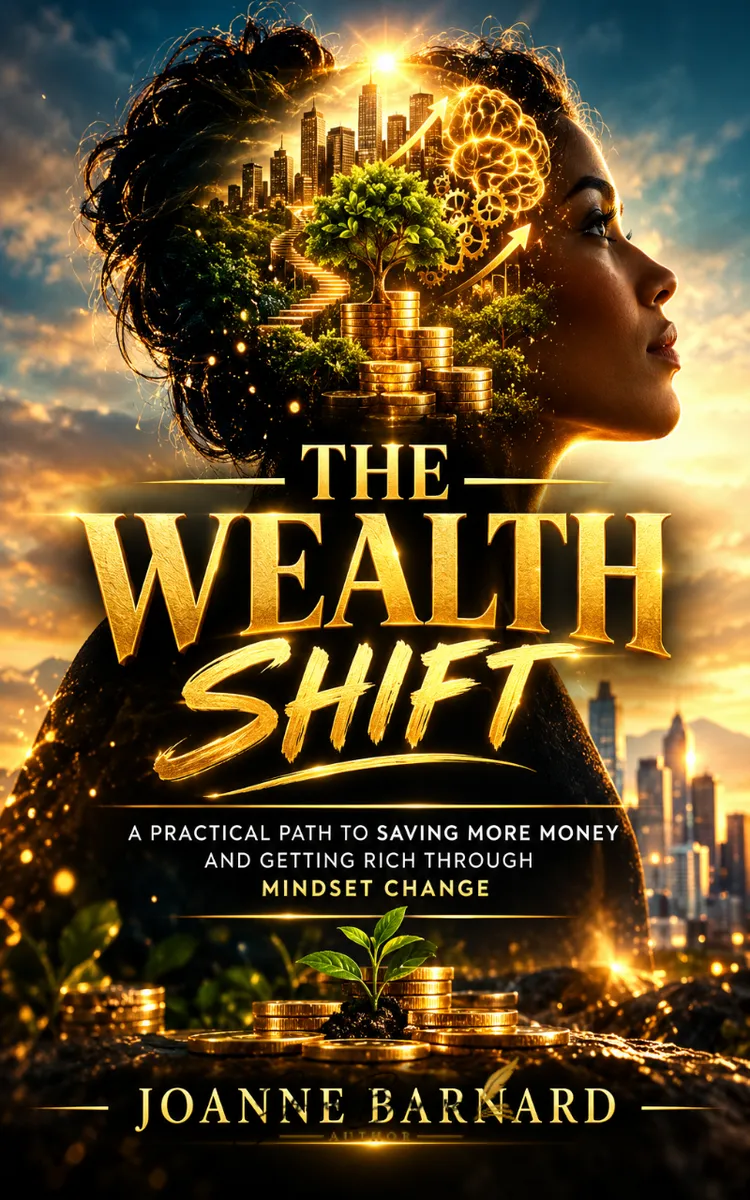
"The Wealth Shift" is a self-help book by Joanne Barnard with 10 chapters and approximately 14,008 words. Changing money beliefs and habits to overcome emotional spending and save more.
This book was created using Inkfluence AI, an AI-powered book generation platform that helps authors write, design, and publish complete books. It was made with the AI Self-Help Book Writer.
Frequently Asked Questions
What is "The Wealth Shift" about?
Changing money beliefs and habits to overcome emotional spending and save more
How many chapters are in "The Wealth Shift"?
The book contains 10 chapters and approximately 14,008 words. Topics covered include Rewriting Your Money Identity, Naming the Beliefs That Keep You Stuck, Escaping the Scarcity Alarm, Breaking the Comparison Spending Loop, and more.
Who wrote "The Wealth Shift"?
This book was written by Joanne Barnard and created using Inkfluence AI, an AI book generation platform that helps authors write, design, and publish books.
How can I create a similar self-help book?
You can create your own self-help book using Inkfluence AI. Describe your idea, choose your style, and the AI writes the full book for you. It's free to start.
Write your own self-help book with AI
Describe your idea and Inkfluence writes the whole thing. Free to start.
Start writingCreated with Inkfluence AI


