
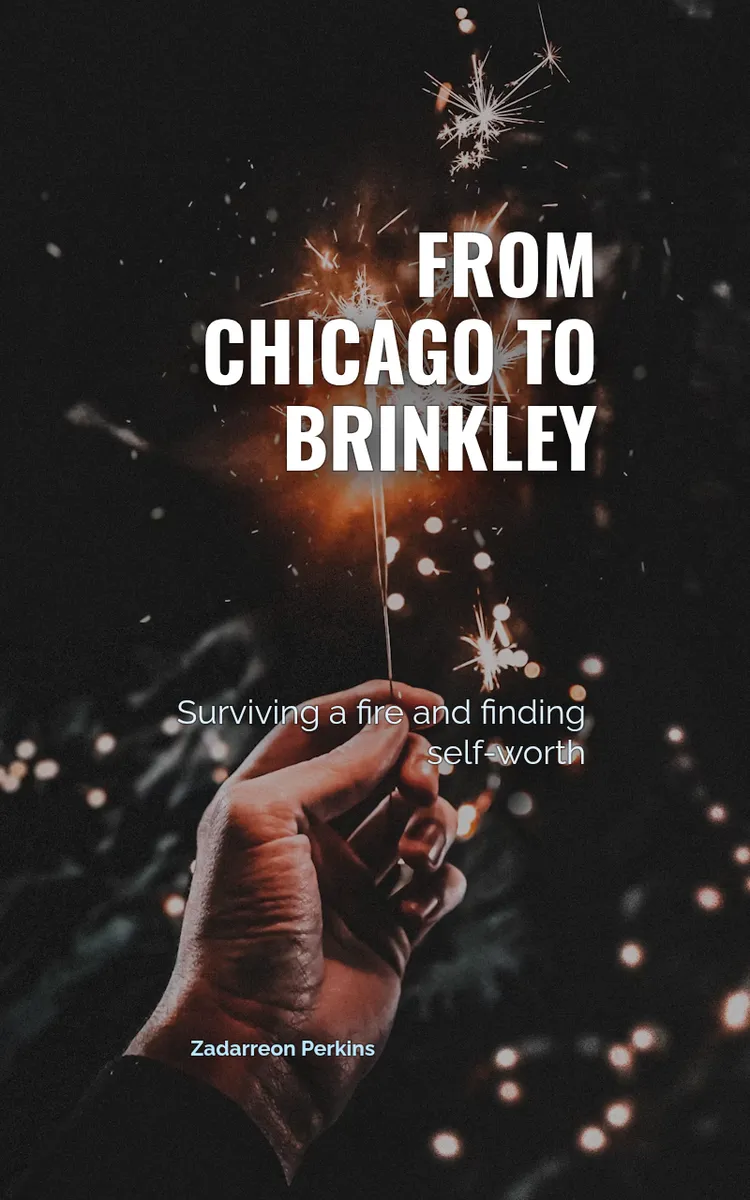
From Chicago To Brinkley
Created with Inkfluence AI
A boy’s life journey after a house fire and bullying
Table of Contents
- 1. The Chicago Fire That Changed Everything
- 2. Moving to Brinkley After the Scars
- 3. Following Rumors About His Burn Marks
- 4. The School Confrontation That Changes Rules
- 5. Choosing Confidence After Brinkley’s Cruelty
Preview: The Chicago Fire That Changed Everything
A short excerpt from “The Chicago Fire That Changed Everything”. The full book contains 5 chapters and 9,407 words.
Smoke pressed against Ethan Carver’s face before he understood that the house was burning.
He had been born in Chicago, and the house on the outskirts of the city had been one of the places he knew as home. That night, he was still a child, too young to understand how quickly an ordinary room could become dangerous. The air tasted bitter. Heat pushed through the walls, and the smell of smoke covered everything - the furniture, the blankets, even the clothes he wore.
Ethan tried to move, but the room had changed around him. The familiar doorway was difficult to see. Gray smoke filled the space, turning the house into a place he no longer recognized. He could hear noise outside the room, but the sounds seemed far away and mixed together. There was movement, shouting, and the hard crackling of the fire.
He wanted to get out. That was the only thought he could hold on to.
His hands searched for something solid. The floor felt rough beneath him, and the heat made every breath painful. He lowered himself as much as he could, trying to find cleaner air near the ground. He did not know what had started the fire. He did not know how much of the house had been damaged. He only knew that he was trapped inside a place that had once made him feel safe.
The smoke made his eyes water. He reached forward, feeling along the floor and toward the wall. His fingers touched objects he could not see clearly. Each movement took effort. The room seemed smaller than it had been before, not because the walls had moved, but because the smoke and heat had taken away the space around him.
For a child, the house fire was more than an emergency. It was confusion without an explanation. Ethan could not separate one sound from another or understand which direction promised safety. He was surrounded by a force he could not reason with. The fire did not care how young he was, what he had done, or what he still hoped to become.
He kept moving because stopping would have left him with nothing to do but breathe the smoke.
Somewhere in the confusion, people were trying to reach him. Ethan could hear voices, but he could not always understand the words. The noise outside grew louder, then faded beneath the roar of the fire. He was frightened, but the fear did not come as a single feeling. It came in pieces: the sting in his eyes, the heat against his skin, the rough floor under his hands, and the uncertainty of whether anyone could find him.
“Help,” he tried to call, though the smoke made his voice weak.
He waited for an answer. The only answer he could hear was the fire.
Ethan continued toward the place where he believed an exit might be. His body moved before his thoughts could catch up. He felt along the wall and tried to protect his face. The heat became stronger, and the air grew harder to take in. His clothes and skin began to suffer the consequences of the fire, though he could not yet understand what those injuries would mean for the rest of his life.
The house had once held ordinary things: rooms, belongings, and the routines of a family. Now it held smoke, heat, and fear. Ethan’s memory of it would never be separate from that night. The building would remain connected to the moment when he learned that home could be lost in a matter of minutes.
He did not know how long he had been inside. Time had stopped behaving normally. A few seconds felt long. A longer stretch passed without his knowing it. He focused on the next movement, then the next. He did not think about the years ahead. He thought about air, a way out, and the possibility that someone would reach him.
The rescue came through the same confusion that had surrounded him. Ethan was found and brought out of the burning house. The cold air outside touched him, but it did not erase what had happened. He was alive, and that mattered. At the same time, his injuries were visible, and the house fire had left marks that others could see.
People moved around him. Their voices were urgent. Their hands helped him, examined him, and carried him away from the damaged home. Ethan could feel the difference between the heat inside and the air outside, but he was too overwhelmed to understand what would happen next. He had escaped the fire, yet he had not escaped its effects.
The rescue gave him life, but it also began a new part of his life that he had not chosen.
Afterward, the fire remained in his body through the changes to his appearance. The injuries became part of the way people saw him. Before the fire, he had been a child living in Chicago. After the fire, he was still that child, but other people began to notice his face and skin before they noticed anything else about him.
That difference became painful.
Ethan had not asked to be changed. He had not caused the way he looked. The scars were the result of surviving a house fire, not a reflection of his character. Still, people often judged what they could see without knowing what had happened....
About this book
"From Chicago To Brinkley" is a biography book by Zadarreon Perkins with 5 chapters and approximately 9,407 words. A boy’s life journey after a house fire and bullying.
This book was created using Inkfluence AI, an AI-powered book generation platform that helps authors write, design, and publish complete books. It was made with the AI Biography Writer.
Frequently Asked Questions
What is "From Chicago To Brinkley" about?
A boy’s life journey after a house fire and bullying
How many chapters are in "From Chicago To Brinkley"?
The book contains 5 chapters and approximately 9,407 words. Topics covered include The Chicago Fire That Changed Everything, Moving to Brinkley After the Scars, Following Rumors About His Burn Marks, The School Confrontation That Changes Rules, and more.
Who wrote "From Chicago To Brinkley"?
This book was written by Zadarreon Perkins and created using Inkfluence AI, an AI book generation platform that helps authors write, design, and publish books.
How can I create a similar biography book?
You can create your own biography book using Inkfluence AI. Describe your idea, choose your style, and the AI writes the full book for you. It's free to start.
Write your own biography book with AI
Describe your idea and Inkfluence writes the whole thing. Free to start.
Start writingCreated with Inkfluence AI


