
Read the first chapter
The whole of chapter one, free. About 9 min. Turn the pages with the arrows, your keyboard, or a swipe.
Chapter 1
Who Owns the Everyday Brand?
The Shelf Is a Map of Power
You pick up a bottle of hair conditioner, scan a cereal aisle, or pay for a meal at a neighborhood restaurant. The product feels ordinary. Its ownership may be anything but. A familiar label can connect a local founder, a private-equity firm, a celebrity investor, a multinational distributor, and millions of shoppers without revealing the full chain on the package.
That hidden chain is the subject here: how Black entrepreneurs and investors have used everyday products to build influence, and how influence can be mistaken for ownership. The distinction matters because public recognition often travels faster than legal facts. A founder may still represent a brand after selling it. An investor may own a stake without controlling operations. A rumor may attach a famous name to a product simply because the association feels plausible.
The Shelf-to-Share Map follows that movement from the store shelf to the people, companies, contracts, and stories gathered around it. It asks who created the product, who financed it, who distributes it, who profits from it, and what consumers believe about those relationships.
When a brand feels familiar, how much of its ownership can an ordinary shopper actually see?
From Black Business Districts to National Shelves
Long before a product reached a national supermarket chain, Black commerce developed through places where ownership was visible because the community itself was close enough to see it. In Tulsa’s Greenwood district, often called Black Wall Street, Black-owned groceries, restaurants, theaters, hotels, and professional offices formed an interconnected commercial world before the 1921 massacre destroyed much of it. Similar business districts existed in cities such as Durham, Richmond, Atlanta, and Chicago.
These businesses did more than sell goods. They created circulation. Money moved from customer to shopkeeper, from shopkeeper to landlord, from landlord to local supplier. A grocery store could be a source of food, employment, credit, news, and social standing at the same time. Its influence was not measured only by revenue. It was also measured by how many daily decisions passed through its doors.
That older pattern still appears in modern form. Black entrepreneurs have built influence through beauty products, apparel, food, media, technology, and financial services - categories that sit close to ordinary habits. Madam C. J. Walker, who became one of the best-known Black business figures of the early twentieth century, built a hair-care enterprise through products, sales agents, training, and advertising. Her company was not merely a bottle of hair preparation. It was a distribution system that gave thousands of women a way to earn income and gave customers a recognizable Black-owned brand.
The same principle operates at a larger scale today. A product becomes influential when it enters repeated routines: the shampoo used every week, the seasoning kept beside the stove, the clothing brand worn in public, the streaming service watched at night. Repetition creates familiarity, and familiarity creates a form of authority. The item begins to feel like part of the household’s own history.
The Shelf-to-Share Map
The first point on the Shelf-to-Share Map is creation. Who developed the formula, name, design, recipe, or service? That question often leads to a founder whose identity remains central to the brand’s public image. The second point is capital: who supplied the money needed for manufacturing, inventory, staff, marketing, and expansion? The third is control: who has the legal power to appoint leaders, approve major decisions, or sell the company?
Those points are related but not identical. Fenty Beauty, launched by Rihanna in partnership with LVMH’s Kendo division in 2017, illustrates the difference. Rihanna’s public role and creative influence are unmistakable, while production, distribution, and corporate administration involve a much larger structure. Calling the brand simply “Rihanna’s company” captures its cultural identity but leaves out the machinery that makes global sales possible. Calling it only an LVMH enterprise erases the founder’s role in shaping its meaning and market.
The fourth point is distribution. A Black-owned brand may begin in a salon, church network, neighborhood store, website, or farmers’ market. Reaching a national retailer requires packaging standards, reliable production, insurance, shipping, barcodes, payment terms, and enough inventory to keep shelves filled. The product may remain Black-owned, become partly investor-owned, or be sold outright during that expansion.
Finally comes interpretation: what do shoppers think they are supporting? A label can signal cultural belonging even when legal ownership has changed. A founder’s face may remain in advertisements after a sale. A brand may retain its original name under a new parent company. Consumers often encounter the story of ownership through interviews, social media, and word of mouth rather than through corporate filings.
One surprising fact sits at the center of this map: the person most visible on a product is not necessarily the person who owns the company behind it.
That is not a technical footnote. It changes how influence works. Public identity can survive a change in equity, while legal control can move quietly through an acquisition, licensing agreement, or investment round. The result is a split between symbolic ownership - the feeling that a brand belongs to a community - and financial ownership, which is defined by contracts and corporate records.
Capital Behind the Familiar
The growth of a consumer brand usually requires more money than its packaging suggests. A jar of skin cream may depend on a contract manufacturer, a warehouse, laboratory testing, product liability coverage, retail fees, and months of inventory. The founder’s idea is essential, but the path from idea to shelf is crowded with financial decisions.
For Black entrepreneurs, access to capital has historically been shaped by discrimination in lending, real estate, employment, and investment. That history helps explain why community networks have mattered so much. Churches, professional associations, family savings, rotating credit groups, and local investors have often supplied forms of support that formal institutions did not provide easily.
Modern financing has widened the options without removing the underlying difficulty. A founder may use personal savings, bank loans, venture capital, private equity, crowdfunding, licensing, or a strategic partnership. Each source can change the company’s future. A loan leaves ownership intact but creates repayment obligations. Equity investment brings cash but gives investors a share of the business. Licensing can place a product in more stores while limiting the founder’s control over manufacturing or branding.
Essence Ventures, founded by Richelieu Dennis after his acquisition of Essence Communications, shows how media and consumer products can overlap. The company’s work has included investment in Black-owned businesses and media properties, linking capital to representation and distribution. This kind of ownership is influential partly because it operates behind the visible product. The power lies not only in selling an item but in deciding which founders receive attention, shelf space, advertising, and institutional support.
Celebrity investment adds another layer. A well-known person can provide attention that reduces the cost of introducing a product. Their name may attract customers, retailers, and potential partners. But celebrity participation can take several forms: endorsement, paid partnership, minority investment, co-founder status, or full ownership. Public discussion often compresses these differences into one phrase - “they own it” - even when the arrangement is more limited.
Rumor grows easily in this environment because the commercial structure is complicated and the cultural story is simple. A Black celebrity is seen promoting a beverage, cosmetics line, or fashion label; consumers infer ownership. Sometimes the inference is correct. Sometimes the person holds shares. Sometimes the connection is only promotional. The responsible question is not whether the association feels believable, but what records show.
When Ownership Becomes a Story
Documented ownership can be checked through corporate filings, acquisition announcements, trademark records, investor disclosures, company websites, and reputable business reporting. These sources are imperfect, but they are stronger than a reposted graphic or a confident claim repeated across social media. A brand’s official “about” page may identify its founder, while a parent company’s filings may reveal later changes in control.
The language used by companies also deserves attention. “Founded by” describes origin. “Owned by” describes equity or control. “Partnered with” may describe a commercial relationship without identifying who holds the shares. “Powered by” can refer to a manufacturing or distribution arrangement. These phrases are not interchangeable, even when marketing makes them sound similar.
The distinction becomes especially important when discussing alleged hidden practices. Large companies do use complex structures: holding companies, licensing agreements, brand portfolios, private investment vehicles, and subsidiaries. Complexity is not proof of wrongdoing. Nor is a founder’s wealth evidence of a secret network. A claim needs a source, a date, and a clear description of what is being alleged.
A useful comparison is a restaurant kitchen. The person whose name appears above the door may own the restaurant, lease the building, license the recipes, or simply lend the name. Customers can taste the result, but they cannot identify the ownership arrangement from the plate alone. The package on a store shelf works much the same way.
The danger is not only false rumor. Overstating Black ownership can also obscure the real achievements of Black founders who built brands and later sold them. A sale may create personal wealth, preserve jobs, and provide capital for new ventures. It may also shift control away from the original community. Both facts can be true at once. Treating a sale as either betrayal or triumph removes the economic reality from view.
A Founder, a Brand, and the Meaning of Control
The story of SheaMoisture makes this tension concrete. Richelieu Dennis and Nyema Tubman built the brand around products associated with African shea butter and Black consumers, while presenting the company as connected to family history and community development. The brand grew from a small operation into a major retail presence. In 2017, Unilever acquired Sundial Brands, the parent company associated with SheaMoisture, in a deal that brought the brand into a global corporation.
The acquisition did not erase the brand’s origin. Its name, products, and cultural associations continued to carry the history of Black entrepreneurship. Yet the transaction changed the ownership structure and placed the company inside a much larger system of manufacturing, distribution, and corporate decision-making. Public reactions reflected that complexity: some saw the sale as evidence that a Black-founded brand could achieve national scale; others worried that corporate ownership might weaken its connection to the community that made it valuable.
That tension is the heart of the Shelf-to-Share Map. A product can be Black-founded, Black-led for part of its history, Black-invested, culturally Black, or currently Black-owned. Those descriptions overlap, but they do not mean the same thing. The shelf shows the final object. The map reveals the movement of money, authority, identity, and expectation behind it.
The human stakes are visible in the shoppers who choose a product because its founder resembles them, its advertising recognizes them, or its origin story reflects a familiar community. They are not purchasing only a formula or a logo. They are responding to the possibility that their spending supports a different distribution of opportunity. When ownership changes, that expectation changes with it, even if the product remains unchanged.
The Question Behind the Label
Everyday brands reveal a quiet truth about power: control does not need to look like command. It can appear as a familiar name, a trusted package, a retail contract, or the decision to place one founder’s story in front of millions of people.
Ownership is therefore more than a line in a corporate document, but it is never less than that. The story surrounding a product may inspire loyalty, while the legal structure determines who can make the decisive choices. Between those two facts lies the hidden architecture of influence - and somewhere on the shelf, it is still waiting to be read.
End of chapter one. 39 more chapters and about 66,907 words in the full book.
Swipe or use the arrows to turn the page


What's inside: 40 chapters
- 1. Who Owns the Everyday Brand?
- 2. The Billionaire’s First Leverage
- 3. Who Gets to Define Luxury?
- 4. The Millionaire Next Door
- 5. The Deal Behind the Deal
- 6. When a Neighborhood Becomes an Asset
- 7. The Bank That Knows Your Name
- 8. Who Owns the Story on Screen?
- 9. The Sound That Moves Markets
- 10. Fashion’s Hidden Gatekeepers
- 11. The Beauty Standard’s Business
- 12. The Grocery Aisle’s Quiet Power
- 13. Who Controls the Checkout?
- 14. The Algorithm’s Blind Spots
- 15. The Data We Give Away
- 16. Who Shapes What We Believe?
- 17. The Influencer’s Invisible Contract
- 18. The Charity That Builds Power
- 19. Scholarships, Schools, and Access
- 20. The Boardroom’s Unwritten Rules
- 21. Political Access Has a Price
- 22. The Contract Nobody Sees
- 23. Sports’ Owners and Their Leverage
- 24. The Agent Behind the Icon
- 25. The Patent That Changes Everything
- 26. Health Care’s Unequal Marketplace
- 27. The Beauty of Cultural Translation
- 28. When Representation Sells
- 29. The Network Behind the Invitation
- 30. Inheritance Is More Than Money
- 31. The Cost of Being Visible
- 32. Rumor, Secrecy, and the Elite
- 33. The Closed-Door Club Myth
- 34. How Wealth Shapes Attention
- 35. The Mindset Market
- 36. Who Profits From Our Fears?
- 37. The Price of a Public Apology
- 38. When Success Becomes a Target
- 39. The Next Generation’s New Rules
- 40. Power Is What We Build Together
About this book
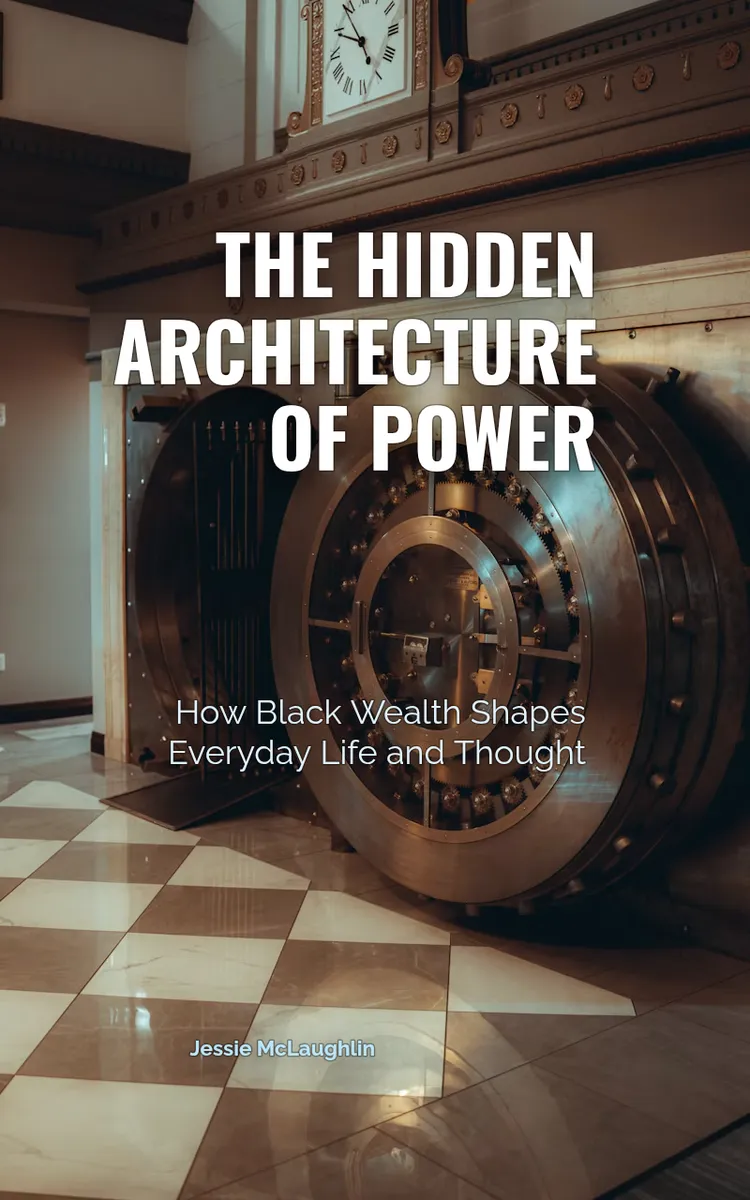
"The Hidden Architecture Of Power" is a nonfiction book by Jessie McLaughlin with 40 chapters and approximately 66,907 words. The influence, wealth, and alleged hidden practices of Black elites.
This book was created using Inkfluence AI, an AI-powered book generation platform that helps authors write, design, and publish complete books.
Frequently Asked Questions
What is "The Hidden Architecture Of Power" about?
The influence, wealth, and alleged hidden practices of Black elites
How many chapters are in "The Hidden Architecture Of Power"?
The book contains 40 chapters and approximately 66,907 words. Topics covered include Who Owns the Everyday Brand?, The Billionaire’s First Leverage, Who Gets to Define Luxury?, The Millionaire Next Door, and more.
Who wrote "The Hidden Architecture Of Power"?
This book was written by Jessie McLaughlin and created using Inkfluence AI, an AI book generation platform that helps authors write, design, and publish books.
Write your own nonfiction book with AI
Describe your idea and Inkfluence writes the whole thing. Free to start.
Start writingCreated with Inkfluence AI


