

Read the first chapter
The whole of chapter one, free. About 9 min. Turn the pages with the arrows, your keyboard, or a swipe.
Chapter 1
A Signal No Map Shows
The sonar screen blinked twice, then filled with a clean black band.
Elena leaned toward the console as the Caldera rolled beneath her boots. Outside the bridge windows, the Pacific had become a dark, heaving plain under a bruised sky. Rain hissed across the glass. Somewhere below the hull, eleven thousand feet of water pressed against the steel.
“Tell me that’s interference,” Jack said.
He stood behind her with one hand braced against the chart table, broad shoulders swaying with the ship. His eyes remained on the dead strip of display.
“It’s not interference.”
“That was not the answer I wanted.”
Elena enlarged the last surviving scan. The anomaly appeared as a thin vertical return beneath the trench floor, repeating at exact intervals. Every thirty-seven minutes, the signal had surfaced on their instruments, held for eleven seconds, and vanished.
It had done so six times.
A natural vent could pulse. A fault could shift. Neither should produce the same narrow frequency while moving against the current.
“Run the auxiliary array,” she said.
Jack gave her a flat look. “The auxiliary array is rated for a depth survey, not a full descent profile.”
“We don’t need a full profile. We need a bearing.”
“We need daylight, a stable sea state, and equipment that isn’t being pushed past its limits.”
Elena looked again at the black band. The missing data seemed to pull at her attention more strongly than the signal had.
“Before the next pulse.”
Jack’s jaw tightened. “You’ve been chasing this thing for eighteen hours.”
“Seventeen.”
“That correction is supposed to make me feel better?”
The bridge door opened behind them. A technician hurried in, clutching a waterproof tablet. “Primary sonar just dropped offline. We lost the forward transducer.”
Elena felt the deck tilt under her. “Lost how?”
“Power surge, maybe. The diagnostic says the array is drawing current, but it isn’t returning a signal.”
Jack glanced at the clock. “There’s your answer.”
“No,” Elena said. “That’s a failure.”
“It’s the answer when we’re two hours from our equipment limit.”
She turned from the console. “We have one chance to verify the source. If we leave without a reading, the next survey window is three months away.”
“And if we stay?”
“Then we use the drop before the storm reaches us.”
Jack stared at her. Beneath the hard lines of his face, she saw the calculation he never voiced: fuel, pressure, battery reserve, the distance to the nearest safe current. He had spent years in submarines and diving bells, where numbers were more honest than courage.
“Surface survey first,” he said. “Then we decide.”
Elena wanted to argue, but another thin line appeared on the auxiliary display.
The anomaly had returned.
This time, its signal rose from beneath the seafloor in three separate bands.
Jack saw it too. “That’s new.”
“No,” Elena whispered. “It’s answering.”
• * *
The Caldera lowered the survey drone just after noon.
Wind tore spray across the deck as the crane swung the compact submersible over the rail. Its yellow hull flashed between waves, tether cables straining like black tendons. Elena climbed into the forward seat while Jack secured the hatch behind her.
The cabin smelled of rubber seals, cold metal, and the faint electrical tang of overworked batteries. Instruments glowed along the narrow console. A small camera mast extended from the nose, its lens already filmed with rain.
Jack dropped into the pilot’s seat. “Last chance to call this a bad idea.”
“Elaborate.”
“We stay on the ship. Drink something hot. Pretend the signal is a whale with a very organized schedule.”
“Whales don’t reflect active sonar.”
“Some whales have surprised me.”
She strapped herself in. The harness cut across her chest. “You’ve never met one that built a tower.”
Jack’s hands paused over the controls.
They had found the first shape during the morning’s surface pass: a return too straight to be geological, too deep to be debris. The drone would descend through the trench, follow the anomaly’s bearing, and record whatever lay beneath the silt.
If the water allowed them to reach it.
“Caldera to drone,” came the captain’s voice through the headset. “You are clear to descend. Current is running east at two knots and building.”
“Copy,” Jack said.
The crane released them.
For three seconds, the drone hung in open air, rain striking its hull like handfuls of gravel. Then the cable paid out, and the Pacific closed over the viewports.
Gray water swallowed the world.
The drone sank through layers of turbulence. Sunlight faded to a green smear, then to blue, then to nothing. The hull creaked as pressure tightened around them. Elena watched the depth numbers climb while Jack made small corrections against the current.
At three hundred meters, clouds of silver fish scattered from the lights. Their bodies flashed and disappeared. At six hundred, the water turned black except for the beams ahead. A pale creature drifted through them, all ribbon fins and transparent bones, then folded itself into darkness.
Elena checked the auxiliary sonar. Its image was rough, broken by static, but the anomaly remained.
“Bearing two degrees east,” she said.
“Already correcting.”
“Depth?”
“Still descending.”
The number rolled past two thousand meters.
A tremor passed through the drone.
Jack glanced at the vibration monitor. “That wasn’t us.”
Elena placed her palm against the console. The tremor came again, low and heavy, traveling through the cabin.
The seafloor lay far below, but something beneath it had moved.
“Could be a slide,” Jack said.
“Then why is the signal still stable?”
The answer emerged in the water ahead.
At first Elena thought it was a cliff. The lights caught a dark plane rising from the trench, too smooth to be rock. As the drone descended, the plane resolved into a wall.
It climbed from the seafloor beyond the limits of their beams.
Jack reduced their speed. “That is not on the charts.”
“No.”
The wall carried no coral, no sediment scars, no fractures. Its surface was black and faintly reflective, segmented by long horizontal seams. A row of narrow lights burned beneath the silt, not bright enough to illuminate the structure but steady enough to prove it was powered.
Elena leaned closer to the viewport.
The material looked like stone until the drone’s lights crossed it. Then a fine pattern moved beneath the surface, lines shifting in coordinated pulses.
“Get a scan,” she said.
“I’m trying.”
The auxiliary sonar stuttered. The image broke into a fan of false echoes.
“Move closer.”
“Not with the current.”
“Jack.”
“I said I’m trying.”
He brought the drone along the wall. The tether marker showed them drifting east, faster now. The structure seemed to slide past the viewport, though Elena knew it was the drone moving.
A shape appeared above them.
It was enormous, a tower or bridge rising from the wall at an angle. Its upper edge vanished into black water. Along its side, recessed chambers glimmered with cold blue light. Tiny forms moved inside them - fishlike creatures with jointed fins, circling the illumination in disciplined loops.
Elena’s mouth went dry.
The tower was not merely standing on the seafloor. It was anchored into it with a series of broad supports, each one shaped like an inverted root. Between those supports, cables or pipes descended into the trench, disappearing beneath sediment.
“Record everything,” she said.
“Already recording.”
“Can we identify the material?”
“Not from here.”
Another tremor struck.
Silt erupted from below, rolling across the seafloor in a brown wall. Jack pulled back, but the current caught the drone broadside. Warning lights flared across the console.
“Thrusters are compensating,” he said.
The drone yawed thirty degrees.
Elena grabbed the edge of the console. “We’re drifting toward the wall.”
“I know.”
The auxiliary sonar vanished.
A sharp pop cracked through the cabin. The display went white, then dark.
Jack swore and fought the controls. “Primary sensor is gone.”
“The forward camera?”
“Still live.”
The black wall rushed toward them through the murk. Elena saw seams, lights, and a long recessed opening shaped like a vertical eye.
“Jack, left.”
“I’m on it.”
The drone shuddered as the current twisted it. Their tether pulled tight. Metal groaned behind Elena’s seat.
The wall grew closer.
Jack fired the lateral thrusters. The drone lurched sideways, missing the structure by perhaps three meters. A cloud of silt struck the viewport. For several seconds, there was nothing but brown darkness and the violent rattle of the frame.
Then the water cleared.
The wall was gone.
Not gone from the trench. Gone from their view.
The current had carried them beyond its edge, into a vast open basin. Elena swept the camera forward. The lights revealed scattered structures across the darkness: pillars, suspended walkways, domes half-buried in sediment. Farther away, a line of blue points curved into the distance until it disappeared beneath the black.
It was too large to be a single installation.
It was a settlement.
No - a city.
Elena forgot the pressure, the failing sonar, the tether pulling them east. The scale of it entered her mind in pieces and refused to fit. Structures rose in tiers along the trench walls. Arched transit tubes crossed empty water. Pale organisms moved through gardens of branching metal, their bodies glowing in soft pulses. Beyond them, something vast and slow passed between towers, its silhouette broader than the Caldera.
Jack’s voice came quietly through the cabin.
“Elena.”
She could not answer.
The camera caught a tower at the center of the basin. Its surface was covered in narrow vertical bands, each emitting a faint signal in sequence. The pattern matched the anomaly they had followed from the surface.
The signal was not coming from a buried object.
It was coming from the city.
“Elena, we have to go.”
She forced herself to look at the instruments. Battery reserve had fallen by nine percent. The tether angle was worsening. Their navigation system had lost the forward reference and was calculating position from the ship’s last known bearing.
“Mark the coordinates,” she said.
“Navigation’s degraded.”
“Use inertial.”
“It’s drifting.”
“Then log the drift.”
Jack turned the drone toward the ascent corridor. The city slipped behind them, its lights dimming through layers of silt. Elena kept the camera trained on the central tower until the last blue pulse disappeared.
On the return climb, the cabin remained silent except for the pumps and the ticking of cooling metal.
At one thousand meters, the surface ship’s voice crackled through the headset.
“Drone, we have your transponder. Your position is off by four hundred meters.”
Jack looked at Elena. “That’s not possible.”
“It is now,” she said.
The Caldera came into view as a wavering gray shape above them. The drone rose through cold water, trailing its damaged sensor cable. When the hatch opened on deck, rain struck Elena’s face and tasted of salt.
Jack climbed out behind her.
The technician met them with a tablet. “We recovered part of the data burst before the auxiliary array failed.”
Elena took it. The screen showed a distorted scan, broken into layers. Beneath the noise, the structure’s outline remained unmistakable: repeated supports, engineered walls, power conduits descending into the trench.
At the bottom of the file, a timestamp flickered beside a spectral reading.
Jack leaned over her shoulder. “What’s that?”
Elena enlarged the number.
The signature was not ancient in the way the sediment suggested. Its heat output, electromagnetic leakage, and active maintenance cycle placed it within a range of decades, perhaps less.
The city had been built long ago.
But something inside it was still operating.
A second line appeared as the damaged system completed its final reconstruction. The signal had changed during their approach.
It was no longer repeating from the tower.
It was following them.
Elena looked toward the black Pacific, where the trench lay hidden beneath the rain.
“Can we get back to the site?” Jack asked.
She watched the navigation display struggle to hold their position. The ship’s course marker wandered across the chart, sliding hundreds of meters with every update.
“Not accurately,” she said.
“Then we don’t go back tonight.”
The tablet pulsed once in her hand.
Far below, beneath miles of water, the city answered with another signal.
Elena closed her fingers around the device.
“We’re going back,” she said. “We just don’t know where it will let us arrive.”
End of chapter one. 35 more chapters in the full book.
Swipe or use the arrows to turn the page


What's inside: 36 chapters
- 1. A Signal No Map Shows
- 2. Jack’s Dive, Elena’s Doubt
- 3. The City’s Impossible Geometry
- 4. Bioluminescent Veins in the Rock
- 5. A Father’s Name in the Dust
- 6. Pressure Tests the Team’s Resolve
- 7. The Submarine That Won’t Listen
- 8. Giant Doors That Open Backward
- 9. Jack’s Beacon in a Silent Hall
- 10. The Map That Changes Its Lines
- 11. A Doorway That Demands Proof
- 12. Kai’s Footprints in the Foam
- 13. Kai Explains the City’s Rules
- 14. Listening Doors Reveal Elena’s Fear
- 15. Keeper Patrols Don’t Speak Human
- 16. A Biolight Census of the City
- 17. The Core That Breathes Through Stone
- 18. Kai’s Secret: He Wasn’t Found
- 19. A Library Written in Currents
- 20. The Gate Claimed Before Elena’s Time
- 21. Surface Maps Hide a Missing Century
- 22. A Keeper Offers Elena a Trade
- 23. Jack Found, But Not Free
- 24. The Wall That Breathes People
- 25. Surface Authorities Track the Sub Signal
- 26. The Keepers Demand Elena’s Silence
- 27. A Creature Herds the Trespassers
- 28. Elena Chooses to Break the Pact
- 29. The Hidden Human Timeline
- 30. Jack’s Escape Route Leads Elsewhere
- 31. The Emissary’s Real Name
- 32. Daniel Reyes in the Glass Vault
- 33. A Message That Rewrites History
- 34. The Surface Fleet Breaks the Seals
- 35. Kai Returns With a Key
- 36. What the Ocean Keeps From Us
About this book
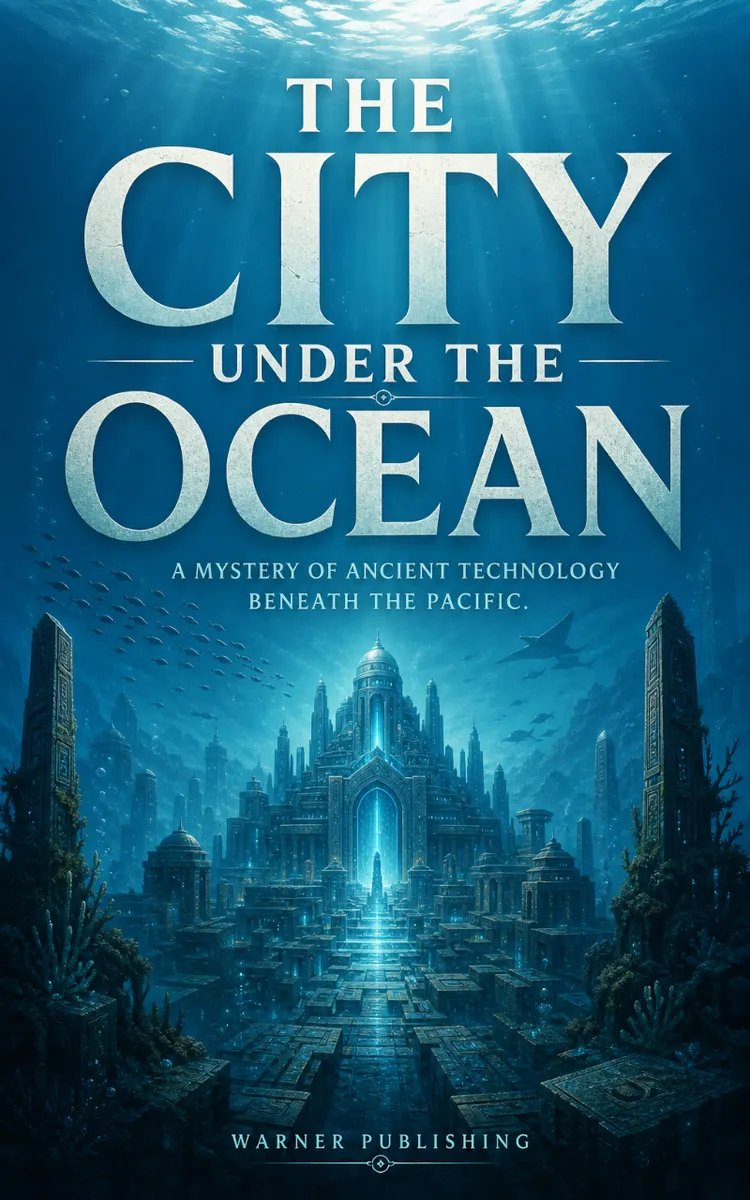
"The City Under The Ocean" is a fiction book by Warner Publishing with 36 chapters and approximately 75,719 words. A signal no map should ever show. Elena Mercer hears it pulse from the trench like a heartbeat, clean, precise, and impossible to explain.
This book was created using Inkfluence AI, an AI-powered book generation platform that helps authors write, design, and publish complete books. It was made with the AI Novel Writer.
Frequently Asked Questions
What is "The City Under The Ocean" about?
A signal no map should ever show. Elena Mercer hears it pulse from the trench like a heartbeat, clean, precise, and impossible to explain. Six times it appears, then vanishes, and each time the interval tightens until her instruments feel like they are being watched. When their best sensor fails and a drone returns with fragments of sloping stone and pale, drifting life, Jack decides they have one chance left. He descends toward an opening that looks rectangular until it moves, and then reality starts to refuse to stay put. The City Under The Ocean is waiting, and it might not be built for explorers. It is built for answers, and it is built to fight back.
How many chapters are in "The City Under The Ocean"?
The book contains 36 chapters and approximately 75,719 words. Topics covered include A Signal No Map Shows, Jack’s Dive, Elena’s Doubt, The City’s Impossible Geometry, Bioluminescent Veins in the Rock, and more.
Who wrote "The City Under The Ocean"?
This book was written by Warner Publishing and created using Inkfluence AI, an AI book generation platform that helps authors write, design, and publish books.
How can I create a similar fiction book?
You can create your own fiction book using Inkfluence AI. Describe your idea, choose your style, and the AI writes the full book for you. It's free to start.
Write your own fiction book with AI
Describe your idea and Inkfluence writes the whole thing. Free to start.
Start writingCreated with Inkfluence AI


