
Read the first chapter
The whole of chapter one, free. About 7 min. Turn the pages with the arrows, your keyboard, or a swipe.
Chapter 1
Cover Page
Cover Page Setup That Prop Firms Actually Respect
Your trading account does not fail because you picked the “wrong strategy.” It fails because you cannot control execution, risk, and rules under pressure. That is why your ebook needs a cover page that signals the same discipline you will use in the challenge: clear title, clear scope, and clear expectations. When you keep your materials tight and consistent, you remove friction from your daily routine. Less friction means faster decision-making and cleaner execution when the market gets loud.
This book, “The Complete Guide to Passing Prop Firm Challenges”, exists to help you handle prop firm evaluation rules with a trading plan you can run every day. You will learn how to set up your process, track your limits, and trade in a way that survives both your best days and your worst days. Your cover page should match that purpose: professional formatting, readable layout, and zero ambiguity about what the reader gets.
Book Title and Subtitle Placement
Place the full title at the top and keep it readable at a glance. Use “The Complete Guide to Passing Prop Firm Challenges” as the main title and keep your subtitle area simple so it does not compete with the title.
For professional formatting, use these rules:
• Use a bold font weight for the main title. - Keep the title centered and large enough to read on a phone screen. - Use one line only for the title when possible; if it wraps, keep it to two lines and do not shrink the font below your body text.
Then add the subtitle line right under it if you want one. If you add a subtitle, use plain language that matches what’s inside. Your subtitle should not promise “easy profits.” It should promise a process.
Author and Reader Focus Lines
Under the title, add a short line that tells the reader who this book is for. Your audience includes beginner and intermediate traders preparing for prop firm evaluation challenges. Use one sentence that makes that clear without sounding like marketing copy. Keep it direct and practical.
Add a second line that sets expectations. For example: this guide focuses on prop firm evaluation rules, trading plans, and risk management. Do not over-explain. Just state the scope.
If you include an “ebook type” line, keep it concrete. The goal of the cover page is not decoration; it is alignment. When you open the document later, you should instantly remember what you built and what you will practice.
Required Ebook Title and Format Details
You already have the exact ebook title you must use: “The Complete Guide to Passing Prop Firm Challenges”. Your cover page should repeat that title exactly, because readers and exporters rely on exact text. Consistency also helps you avoid mistakes when you copy the file into Google Docs and later export it to PDF.
To keep the file export-friendly, use a standard, readable font. You want a layout that does not break when you export to PDF. Stick to common fonts and avoid fancy spacing.
When you build the cover page, set your document margins and spacing so the title does not get clipped. Prop firm challenges test your execution; your document should not test your formatting.
Ready to Copy Into Google Docs and Export as PDF
Your cover page must be easy to place into a real workflow. Use a layout that survives copy-paste and PDF export.
Use these steps in Google Docs:
• Create a new Google Doc. - Set the page to letter or A4; pick one and stay consistent. - Insert a title text box or just type the title directly on the page. - Apply consistent font sizes and line spacing. - Export as PDF once you finish the cover page and any required front matter.
This matters because many traders do not fail the challenge because of trading skill. They fail because they cannot keep their process consistent. Formatting errors create delays, and delays create sloppy habits. You want your document ready, clean, and dependable.
Professional Cover Page Layout With Clear Scope
A prop firm evaluation forces you to make decisions under a time limit. Your cover page should remove decisions, not create them. That means simple hierarchy: title first, then scope, then author/reader lines, then the final production details.
Keep the cover page clean. Do not cram in every topic. The table of contents can do that later. The cover page should only do three jobs: identify the book, confirm the scope, and confirm who it is for.
Use the Exact Book Framework Names on the Cover
Your ebook content follows a clear set of chapters and themes. The cover page should reflect that structure through scope language, not by listing every chapter title. You can include a single line that hints the three pillars the book covers: prop firm challenge rules, trading plans, and risk management.
Do not turn the cover into a table of contents. You only need one compact sentence that locks the reader into the right expectations.
A strong scope line looks like this in plain English: the book teaches prop firm challenge rules, trading plans, and risk management. Keep it short and readable.
Keep the Cover Page Free of Unclear Claims
Avoid vague promises like “pass any challenge” or “guaranteed outcomes.” Prop firm evaluations do not reward hope. They reward execution under rules. Your cover page should match that reality.
Also avoid adding details that belong in other parts of the ebook. For example, do not explain profit targets, daily drawdown, maximum drawdown, or consistency rules on the cover page. Those belong in the chapter that covers challenge rules. Your cover page should point, not teach.
This keeps your document honest and helps you maintain clean separation between sections later.
Chapter Roadmap for the Table of Contents Mindset
Even though you do not need a full table of contents on the cover page, you should reflect the book’s roadmap in a way that helps the reader commit mentally. Traders who pass challenges do not treat trading as “random.” They treat it as a routine with rules.
Your cover page can include one short roadmap line that signals the book’s flow: rules, plan, risk, principles, psychology, routines, and checklists. That line gives the reader confidence that the book covers the full loop, not just entries and exits.
Include the Full Chapter List in a Cover Page Reference Block
To support professional formatting and quick reference, you can add a small “inside” list on the cover page or right under it. Keep it compact so it does not look like a second page.
Include these chapters exactly as written so the reader sees the full coverage:
• 1. Cover Page - 2. Disclaimer - 3. Introduction - 4. Understanding Prop Firms - How prop firms work - Benefits and risks - Choosing the right prop firm - 5. Understanding Challenge Rules - Profit targets - Daily drawdown - Maximum drawdown - Consistency rules - 6. Building a Winning Trading Plan - Choosing markets - Choosing trading sessions - Entry and exit rules - Creating a trading routine - 7. Risk Management - Position sizing - Risk per trade - Risk-to-reward ratios - Capital preservation - 8. High-Probability Trading Principles - Trend trading - Support and resistance - Supply and demand - Market structure - Confirmation techniques - 9. Trading Psychology - Fear and greed - FOMO - Revenge trading - Overtrading - Building discipline - 10. Daily Routine of Successful Traders - 11. 30-Day Prop Firm Challenge Plan - 12. Most Common Reasons Traders Fail Challenges - 13. Challenge Completion Checklist - 14. Final Advice for Long-Term Success
This block gives you a professional, complete feel without turning the cover into a cluttered document.
Practical Cover Page Checklist Before You Export
A cover page should not become a last-minute project. You should finish it early so you can focus on content. Use a quick checklist so you catch the common formatting issues before you export.
Before you export to PDF, confirm these items:
• The title reads correctly: “The Complete Guide to Passing Prop Firm Challenges” - The reader focus line clearly targets beginner and intermediate traders preparing for prop firm evaluation challenges - The spacing looks clean and consistent on both desktop and mobile view - The page margins do not clip any text - You can copy the page into Google Docs without losing formatting
If you fix these now, you prevent the kind of formatting scramble that wastes time later.
Closing Thought: Your Document Must Match Your Execution
Prop firm challenges test your ability to follow rules when the pressure spikes. Your ebook should teach the same behavior: clarity first, clean structure, and repeatable steps. A professional cover page is not just a design choice. It sets the tone for the discipline you will practice in every later chapter.
When you build the rest of the book, keep that same standard. In the next section, you will set the boundaries with the Disclaimer, then you will move into the Introduction and start building the process you will run during a real evaluation.
End of chapter one. 4 more chapters in the full book.
Swipe or use the arrows to turn the page
What's inside: 5 chapters
- 1. Cover Page
- 2. Disclaimer
- 3. Understanding Prop Firms
- 4. Understanding Challenge Rules
- 5. Building a Winning Trading Plan
About this book
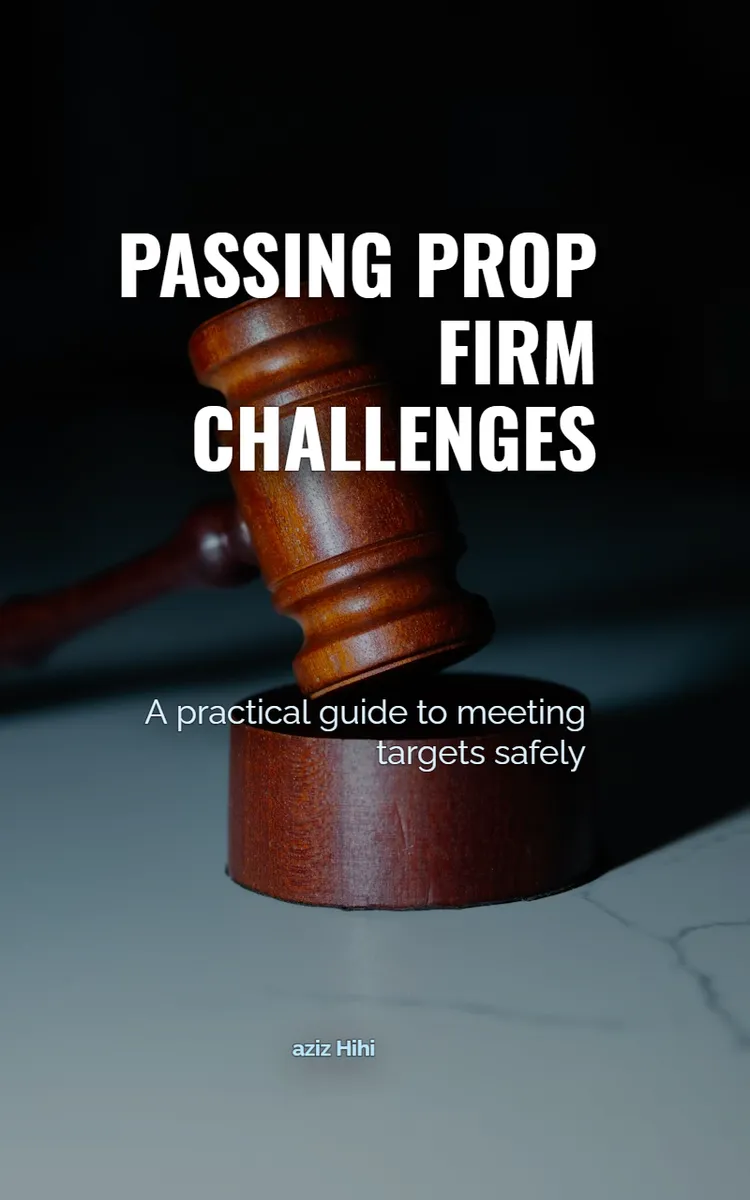
"Passing Prop Firm Challenges" is a finance book by aziz Hihi with 5 chapters and approximately 9,630 words. Prop firm challenge rules, trading plans, and risk management.
This book was created using Inkfluence AI, an AI-powered book generation platform that helps authors write, design, and publish complete books. It was made with the AI Ebook Generator.
Frequently Asked Questions
What is "Passing Prop Firm Challenges" about?
Prop firm challenge rules, trading plans, and risk management
How many chapters are in "Passing Prop Firm Challenges"?
The book contains 5 chapters and approximately 9,630 words. Topics covered include Cover Page, Disclaimer, Understanding Prop Firms, Understanding Challenge Rules, and more.
Who wrote "Passing Prop Firm Challenges"?
This book was written by aziz Hihi and created using Inkfluence AI, an AI book generation platform that helps authors write, design, and publish books.
How can I create a similar finance book?
You can create your own finance book using Inkfluence AI. Describe your idea, choose your style, and the AI writes the full book for you. It's free to start.
Write your own finance book with AI
Describe your idea and Inkfluence writes the whole thing. Free to start.
Start writingCreated with Inkfluence AI


