

Read the first chapter
The whole of chapter one, free. About 5 min. Turn the pages with the arrows, your keyboard, or a swipe.
Chapter 1
Days 1-7: Setting Your Fitness Baseline
A workout shirt is draped over a chair, your water bottle is still full, and your phone says you took 3,842 steps yesterday. That small snapshot tells a story - but not the whole one. Before you chase faster runs, heavier lifts, or a smaller waist, you need an honest starting point.
For the next seven days, use the Baseline Snapshot Method: record where you are, notice how you move and eat, then choose goals that fit your real life. No guessing, no punishment, and no pretending that one unusually energetic day represents your routine.
---
Day 1: Take the First Snapshot
Tip of the Day:
Start with your measurements before changing anything. Your body weight is only one piece of the picture, so record it alongside your waist, hips, chest, arms, and thighs if those measurements matter to you. Use the same conditions each time - ideally in the morning, after using the bathroom, before breakfast.
Write down the date, your measurements, and how you feel today. Add a simple note about sleep, energy, and soreness. These details help explain changes later. A number isn’t a grade. It’s simply your starting line.
Today's Action:
Record your body weight, chosen measurements, date, sleep quality, energy level, and current aches in your journal.
---
Day 2: Count Your Real Movement
Tip of the Day:
Today, pay attention to movement outside formal workouts. Walking to the car, carrying groceries, climbing stairs, cleaning the house, and standing at work all count. You don’t need to turn the day into a fitness test. You’re collecting useful information.
If your phone or watch tracks steps, check the total at the end of the day. If it doesn’t, make three quick notes: how long you sat, how much you walked, and whether you climbed stairs or did other active tasks. Your usual movement level will help you choose a workout plan you can actually repeat.
Today's Action:
Track your steps or write three notes about your everyday movement from morning until bedtime.
---
Day 3: Test Your Starting Strength
Tip of the Day:
A baseline strength check should leave you informed, not wiped out. Choose movements you can perform safely, such as body-weight squats, wall push-ups, regular push-ups, or a plank. Keep the test simple and stop when your form starts to break down.
For example, count controlled squats with your feet steady and your knees following the direction of your toes. For a plank, stop when your hips sag or your lower back takes over. Record the number of good repetitions or the number of seconds. If you’re new to exercise, use an easier version. That’s smart training, not taking the easy way out.
Today's Action:
Complete one safe strength check with squats, push-ups or wall push-ups, and a plank, then record your best controlled result for each.
---
Day 4: Notice How You Feel in Motion
Tip of the Day:
Fitness isn’t only about numbers. Today, notice how your body responds during a short, comfortable walk. Pay attention to your breathing, posture, pace, and joints. Can you speak in full sentences? Do your shoulders stay relaxed? Does one side feel tighter than the other?
Keep the walk easy enough that you could continue for a while. You’re checking your current comfort level, not proving anything. If you feel sharp pain, dizziness, chest discomfort, or unusual shortness of breath, stop and seek appropriate medical advice.
Today's Action:
Walk comfortably for 15 minutes and record your pace, breathing, energy before and after, and any discomfort.
---
Day 5: Audit One Ordinary Day of Food
Tip of the Day:
Don’t try to eat perfectly today. Instead, record what you normally eat and drink, including snacks, sauces, cooking oils, and the handful of food you grab while standing in the kitchen. Those small details often explain why your meals feel more or less satisfying.
Note when you ate and how hungry you felt before and after each meal. Look for patterns without judging them. Maybe breakfast is rushed, lunch is light, or afternoon hunger arrives because you skipped protein earlier. This information gives you something practical to work with.
Today's Action:
Write down every food and drink you have today, along with your hunger level before and after each meal.
---
Day 6: Turn Information Into Goals
Tip of the Day:
Now review the first five days and choose goals for the full 90 days. Keep them specific and realistic. “Get fit” is too vague to guide your week. “Complete three strength workouts each week” gives you a clear target. Other useful goals might include walking 7,000 steps on five days, eating a serving of vegetables with lunch, or improving your plank from 20 to 40 seconds.
Choose one main goal and up to two supporting goals. Make sure they fit your schedule, equipment, fitness level, and current responsibilities. A goal that works on your busiest week is more valuable than an ambitious plan that collapses after seven days.
Today's Action:
Write one main 90-day goal and two supporting goals, each with a number, frequency, or clear finish line.
---
Day 7: Build Your Starting Routine
Tip of the Day:
A goal becomes useful when it has a place on your calendar. Look at the coming week and choose exact times for your workouts, walks, meal planning, and progress tracking. Treat those appointments like commitments, but leave room for real life.
Plan a backup for each important session. If you can’t complete a full workout, do a 15-minute version. If weather ruins your walk, use stairs, march indoors, or follow a simple home routine. Your plan shouldn’t depend on perfect conditions. It should help you keep moving when the day gets messy.
Finish by reviewing your Baseline Snapshot Method notes from this week. You now have starting measurements, movement information, a strength check, a food record, and goals with clear targets. That’s a strong foundation - not because it’s flawless, but because it’s honest and usable.
Today's Action:
Schedule your first week of workouts, movement, meal planning, and progress checks, including one backup option for each workout.
---
Seven days ago, you had impressions about your fitness. Now you have information: measurements, habits, strengths, challenges, and a plan that belongs to your actual life. Keep that snapshot safe. It will give your future progress something meaningful to stand beside.
End of chapter one. 11 more chapters in the full book.
Swipe or use the arrows to turn the page


What's inside: 12 chapters
- 1. Days 1-7: Setting Your Fitness Baseline
- 2. Days 8-14: Building Workout Consistency
- 3. Days 15-21: Mastering Beginner Strength
- 4. Days 22-29: Fueling Everyday Training
- 5. Days 30-36: Planning Balanced Meals
- 6. Days 37-44: Growing Cardiovascular Stamina
- 7. Days 45-51: Recovering for Better Results
- 8. Days 52-59: Breaking Through Plateaus
- 9. Days 60-66: Tracking Meaningful Progress
- 10. Days 67-74: Training with Greater Confidence
- 11. Days 75-82: Staying Motivated Through Setbacks
- 12. Days 83-90: Celebrating and Continuing Progress
About this book
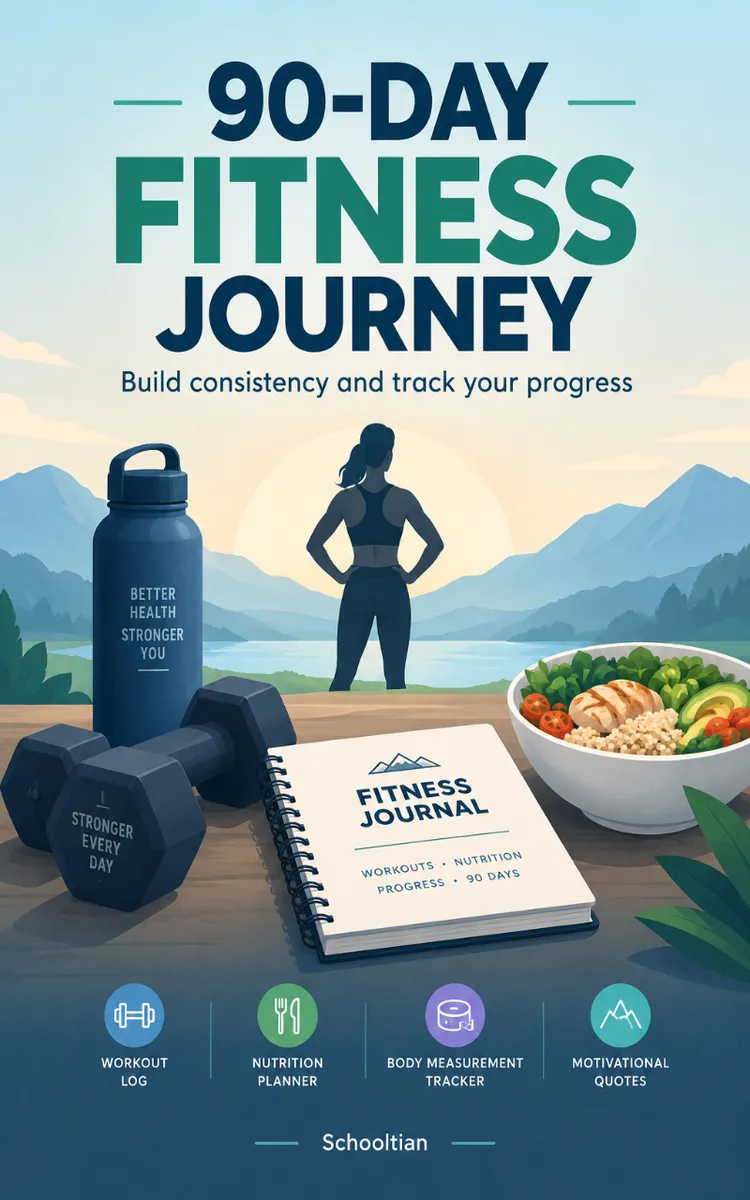
"90-Day Fitness Journey" is a day challenge book by Schooltian with 12 chapters and approximately 11,968 words. Yesterday’s 3,842 steps are a starting point, not a verdict. The first week asks you to record measurements, sleep, energy, aches, food, and everyday movement before changing your routine.
This book was created using Inkfluence AI, an AI-powered book generation platform that helps authors write, design, and publish complete books.
Frequently Asked Questions
What is "90-Day Fitness Journey" about?
Yesterday’s 3,842 steps are a starting point, not a verdict. The first week asks you to record measurements, sleep, energy, aches, food, and everyday movement before changing your routine. Then the Consistency Ladder helps you build a workout rhythm you can repeat. The Form-First Sequence puts controlled chair squats and well-scaled push-ups ahead of heavier weights. Each day, log what you did, how hard it felt, and what your body needs next. One unusually energetic day does not define your baseline, and a number is not a grade. Use 90 days of honest entries to set goals that fit real life and see what changes. Begin with the workout shirt on the chair, the full water bottle, and yesterday’s step count.
How many chapters are in "90-Day Fitness Journey"?
The book contains 12 chapters and approximately 11,968 words. Topics covered include Days 1-7: Setting Your Fitness Baseline, Days 8-14: Building Workout Consistency, Days 15-21: Mastering Beginner Strength, Days 22-29: Fueling Everyday Training, and more.
Who wrote "90-Day Fitness Journey"?
This book was written by Schooltian and created using Inkfluence AI, an AI book generation platform that helps authors write, design, and publish books.
Write your own day challenge book with AI
Describe your idea and Inkfluence writes the whole thing. Free to start.
Start writingCreated with Inkfluence AI


