
Read the first chapter
The whole of chapter one, free. About 5 min. Turn the pages with the arrows, your keyboard, or a swipe.
Chapter 1
Recognizing Your Inner Signals
Your body often notices pressure before your mind has words for it. A tight stomach, hot cheeks, a frozen feeling, or the sudden urge to agree can all be clues. These signals don’t automatically prove that someone is doing something wrong. They do tell you to pause and check what’s happening.
You don’t need to argue with your feelings or explain them perfectly. Start by noticing three things: what your body feels, what emotion is present, and what the other person is asking you to do. Your inner signal is information, not a command to ignore yourself.
When a situation feels confusing, pressuring, or unsafe, check these signals:
1. Body: What do you notice - tightness, shaking, nausea, heat, numbness, or a racing heart? 2. Emotion: Do you feel afraid, guilty, embarrassed, trapped, confused, or unusually responsible for someone else’s mood? 3. Pressure: Is someone rushing you, changing the story, demanding secrecy, or making you doubt what you remember? 4. Choice: Can you say no, ask questions, leave, or get help without being punished?
A calm body isn’t the only sign that something is safe, and an anxious body isn’t proof that someone is dangerous. Still, repeated discomfort deserves attention. Your signals are an invitation to slow down - not a reason to blame yourself.
Map the Signal Before You Answer
Materials needed: A notebook or notes app, and a quiet place. Time required: 8-10 minutes.
This exercise helps you separate facts from fear, guilt, and pressure. You’ll finish with one clear sentence you can use when you need more time.
Your Turn
1. Draw three columns and label them Body, Emotion, and What Happened. 2. Think of one recent moment when you felt pushed, confused, or uneasy. Choose a moment that is safe to write about. You don’t need to describe anything that could put you at risk. 3. In the Body column, write two or three sensations. Use plain words, such as “my chest felt tight” or “my hands went cold.” 4. In the Emotion column, choose up to three feelings. You might write “guilty,” “scared,” “confused,” or “angry.” 5. In the What Happened column, write only observable facts. Include what was said or requested, without guessing the person’s thoughts. 6. Circle any sign of pressure: rushing, guilt-tripping, secrecy, threats, repeated denial, or refusing to let you pause. 7. Complete this sentence: “Because I notice ______, I’m going to ______ before I decide.” 8. Read your sentence aloud once. You are finished when you have written two body sensations, one emotion, one factual description, and one next step.
Here’s a completed example:
> Body: My stomach tightened. My face felt hot. > Emotion: Guilty and confused. > What Happened: Maya asked to borrow my jacket. When I said I wanted it back by Friday, she said, “Wow, I guess you don’t trust me,” and told me to answer immediately. > Pressure sign: Guilt and rushing. > My sentence: “Because I feel pressured, I’m going to take ten minutes before I decide.”
Your next step doesn’t have to be dramatic. It might be taking a break, checking your memory with a trusted person, or saying, “I’ll answer tomorrow.” A pause gives your thinking brain room to catch up with your body.
If you feel in immediate danger, focus on getting to a safer place and contacting a trusted adult, local emergency service, or crisis resource. You never have to complete a worksheet before seeking help.
Use Your Signals in Real Moments
Suppose a friend says, “If you were really my friend, you’d keep this secret,” and your stomach drops. The body signal is worth noticing. The words also matter: the friend is connecting friendship to obedience and secrecy. You can answer, “I care about you, but I won’t keep a secret that could hurt someone. I’m going to talk to a trusted adult.”
Or imagine a family member insists that you promised something, but you remember agreeing to something different. Your confusion may be a signal to slow down. Instead of arguing about whose memory is perfect, say, “I remember it differently. I’m checking my messages before I agree.” The expected outcome is not necessarily that the other person admits fault. The outcome is that you protect your time and make a decision based on facts.
In a dating relationship, someone might demand your password, read your messages, or become angry when you ask for privacy. Notice the body response - perhaps shaking, dread, or feeling trapped. Then name the boundary: “My phone is private. I’m not giving you my password.” If the person threatens you, blocks you from leaving, or keeps escalating, move toward safety and contact someone you trust. A boundary is not successful only when the other person respects it. It also shows you what you need to do next.
Try the Pause - Name - Choose response:
• Pause: Take one slow breath, plant both feet, and avoid answering under pressure. - Name: Silently identify one body sensation and one emotion. - Choose: Pick a safe action: delay, ask for clarity, say no, leave, or contact support.
Use a short sentence if your mind goes blank: “I’m not deciding right now.” You can also say, “Please don’t rush me,” or “I need to check what happened.” These phrases are useful because they don’t require a long defense. You’re allowed to pause before explaining yourself.
Build Your Personal Signal Plan
Use the questions below to turn today’s observations into a plan. Answer with specific words, not perfect ones. If a question brings up a situation that feels unsafe, stop writing and reach out to a trusted adult or support person.
Reflect
1. Which two body sensations are your earliest warning signs when you feel pressured or confused? ________________________________________________ ________________________________________________
2. What is one sentence you can use when someone rushes you, guilt-trips you, or denies what happened? ________________________________________________ ________________________________________________
3. Who is one trusted person you can contact, and what exact words will you use to ask for help? ________________________________________________ ________________________________________________
Keep your completed page somewhere private and easy to find. You might save your pause sentence in your phone under a neutral name, or write it on a card in your bag. The goal isn’t to question every interaction. It’s to notice when your body and emotions are asking for care.
You don’t have to prove that your discomfort is “serious enough” before you pause. Notice the signal, check the facts, and choose the safest next step. That small pause can help you hear yourself clearly again.
End of chapter one. 4 more chapters in the full book.
Swipe or use the arrows to turn the page
What's inside: 5 chapters
- 1. Recognizing Your Inner Signals
- 2. Spotting Gaslighting and Manipulation
- 3. Checking Facts Without Self-Blame
- 4. Using Clear Boundary Statements
- 5. Finding Support and Making a Safety Plan
About this book
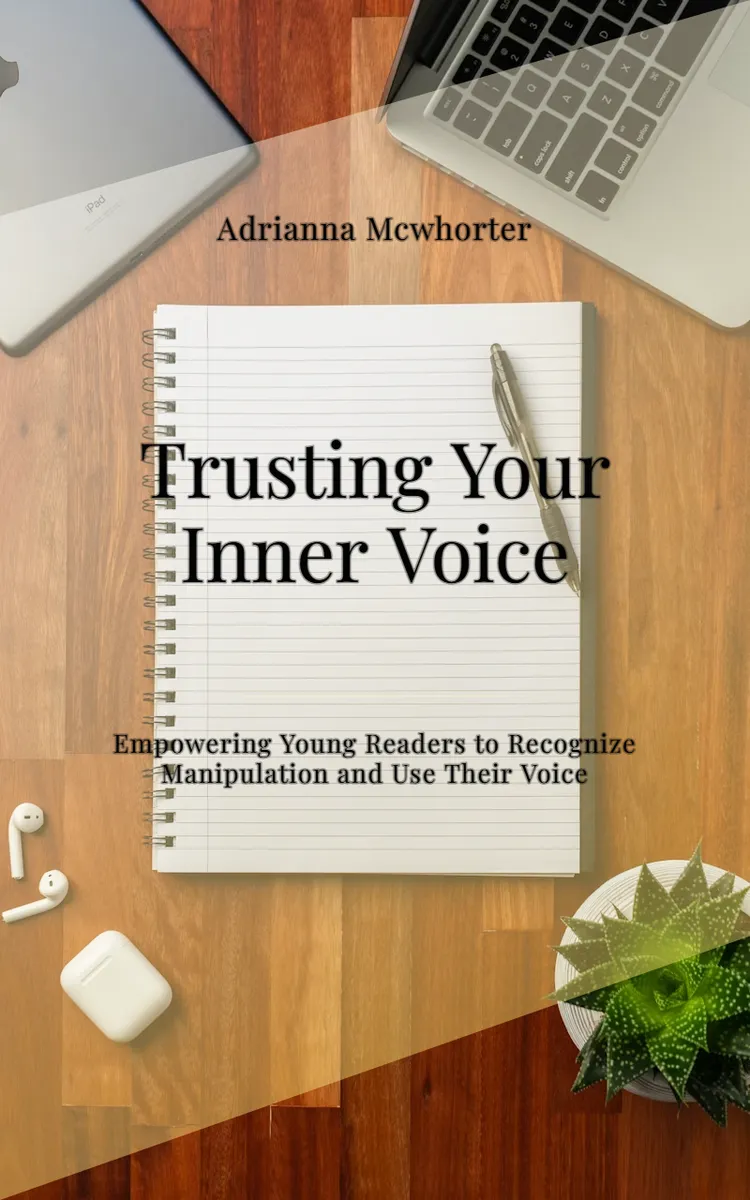
"Trusting Your Inner Voice" is a workbook by Adrianna Mcwhorter with 5 chapters and approximately 6,585 words. Recognizing manipulation and gaslighting, understanding feelings, and practicing assertive responses.
This book was created using Inkfluence AI, an AI-powered book generation platform that helps authors write, design, and publish complete books. It was made with the Workbook Generator.
Frequently Asked Questions
What is "Trusting Your Inner Voice" about?
Recognizing manipulation and gaslighting, understanding feelings, and practicing assertive responses
How many chapters are in "Trusting Your Inner Voice"?
The book contains 5 chapters and approximately 6,585 words. Topics covered include Recognizing Your Inner Signals, Spotting Gaslighting and Manipulation, Checking Facts Without Self-Blame, Using Clear Boundary Statements, and more.
Who wrote "Trusting Your Inner Voice"?
This book was written by Adrianna Mcwhorter and created using Inkfluence AI, an AI book generation platform that helps authors write, design, and publish books.
How can I create a similar workbook?
You can create your own workbook using Inkfluence AI. Describe your idea, choose your style, and the AI writes the full book for you. It's free to start.
Write your own workbook with AI
Describe your idea and Inkfluence writes the whole thing. Free to start.
Start writingCreated with Inkfluence AI


