
Read the first chapter
The whole of chapter one, free. About 33 min. Turn the pages with the arrows, your keyboard, or a swipe.
Chapter 1
Chapter 1- Wren
WREN
The jam was not, strictly speaking, to blame.
She had decided that at about a quarter to six in the morning, sitting on the edge of a very large bed in the east wing of the Obsidian Palace with her head between her knees and the whole room tilting gently round her like a ship at anchor. It was a perfectly good theory. She had eaten, the evening before, in the presence of two hundred witnesses, roughly half a jar of blackberry preserve off a bent tin spoon, on an empty stomach, after a month of road rations. Any reasonable stomach would have objected. It was a thing that happened to people.
It’s the jam, thought Wren, with enormous firmness.
It’s jam and travel and no sleep. It’s nothing.
She breathed in through her nose. She breathed out through her mouth. The room, after some consideration, held still.
On her left palm, a small brown bird lay quietly against the skin, warm as a coal in a grate.
She looked at it.
It had been warm since the Glass. It had been warm, in fact, since the moment that a thin, ink-stained young man in a ruined coat had come tumbling out of a mirror onto the stone floor of the east tower, and she had slammed her hand against the pane and watched a crack run down through her own reflection. It had not cooled since. It did not burn. It simply kept, steadily, patiently, like a thing that has been told to wait up for someone and means to do it properly.
“ Okay, ” she said, to it, under her breath. “ I get it. I’m up. ”
The bird did not answer.
She turned her head.
He was asleep in the chair.
He had been put in it, the night before, at about two, by a very large Marshal and a very short physician, who had done it in a silence of such profound mutual disapproval that Wren had thought that one of them would end by shoving the other down the stairs. They had wheeled it to the side of the bed. They had set the brake. And the Demon King of the Ninth Circle, who had been awake for about twenty-nine hours, with two re-broken legs and a plaid rug over his knees, had said with great dignity that he did not require assistance, and had been asleep before the word was finished.
He was still there.
He sat bolt upright, with his head tipped a little to one side and his mouth slightly open and a lock of black hair fallen across his forehead. One hand lay open on the arm of the chair. The other hung, loose, over the edge, almost to the floor, and the long fingers were curled a little, as if round something that had been taken out of them. There was a hellhound’s lead tied to the armrest. There was no hellhound on it.
He looked about nineteen.
She looked at him for a long moment, with her palm on her knee, and a feeling that she had no name for came up in her chest and sat there. It was not exactly love. She had a name for that. It was something a little to the left of it. It was something like oh, you’re real, you’re really here, you’re in a chair, you snore.
She stood.
She did it with great care, a hand on the bedpost. The floor held. She found her boots, and the black coat that was now so thoroughly hers that the lining had begun to take her shape, and she crossed the cold stone to the chair, and stood a moment, and tucked the plaid up round his shoulders.
He did not wake.
“ Back in a bit, ” she whispered.
His hand closed on nothing.
She went out.
The palace was very quiet.
It was a thing that she had never quite got used to, in four months of living in it. She had grown up in a house on Alder Street in Dayton, Ohio, in which there had always been something running: a refrigerator, a radio, a dryer going in the basement, Dani on the phone. This house had four hundred rooms and a vault and a throne room the size of a hangar, and at six o’clock on a cold gray morning in the first week of the winter it was as silent as the inside of an egg.
It was not an empty silence.
It was the silence of a very large house with a great many people in it, all of them asleep. She could feel them as she went. They were in every corner. They lay in the long galleries on pallets and folded cloaks, a hundred and ninety souls of the House of Keys, who had not been given beds because there had not been beds enough, and had not minded. She stepped over a boy with a scar through his eyebrow. She stepped over a stout woman with a ladle tucked under her chin like a doll. She stepped over, at the head of the great stair, a very small girl in a ragged brown pinafore, who was asleep on top of a very large gray guard, in a dented hound’s helm, who was asleep on the stone with one huge arm curled round her, and neither of them had woken when she passed.
She went down.
It was on the second landing that she heard it.
It was a very faint sound. It came from a long way off, from the bottom of the east tower, up the stone and through the walls, like the noise that a mouse makes in the wainscot. It was a dry, soft, patient scrape. It went on for a count of about four. It stopped. It went on again.
She stood very still.
She counted. At the end of ninety seconds, give or take, there was a pause, and then it came again: a long slow rasp, like a chain being drawn across a stone floor, a very great way down.
It’s not louder, she told herself. It was exactly this loud last night.
It’s not getting closer.
The bird in her palm turned, very slightly, from warm to hot.
“ Right, ” said Wren, to the stairwell. “ Not before breakfast. ”
She went on down.
She smelled the kitchen before she saw it.
It was toast. It was toast, and strong tea, and bacon, and a clean sharp ghost of woodsmoke, and under it all, faintly, the sweet dark smell of a jar that had been opened and not entirely finished. It rolled up the stair to meet her like a warm hand. And her stomach, which had been behaving itself with reasonable dignity for the last four flights, turned over once, slowly, and remarked that it would like a word.
Jam, thought Wren grimly.
She pushed the door open.
It was the same long, black-beamed, flagstoned room. It was a good deal quieter than it had been the night before. The long tables were stacked with plates, and the great hearth had burned down to a red bed, and a few of the House of Keys, who had evidently found the kitchen warmer than the galleries, lay curled up on the benches in a state of cheerful and complete collapse. But at the far end, under the big window, round the scrubbed oak table where the household ate its breakfasts, there was a ring of people.
They were not eating.
They were arranged in a semicircle, like a tribunal. There was a very tall pale woman in a physician’s gray coat, with her arms folded and her long cold face absolutely without expression. There was a very large scarred man in shirtsleeves, leaning on the doorpost of the pantry with his arms crossed and a mug of tea clutched in one fist, looking as if he had been looking at the same spot on the floor for some hours. There was a small woman in a green wool dress, sitting on a barrel, with bare feet drawn up and a half-eaten piece of dry toast in one hand and an expression of bleary, stubborn, faintly nauseated concentration. There was a goblin in a small hat, perched on a flour keg with a clipboard on his knee and a pencil behind his ear.
And in the middle, in a chair that had been set down in front of the scrubbed table with the air of an exhibit, wrapped from chin to ankle in a patched gray blanket, there sat a young man.
He was very thin.
She had hardly seen him the night before. She had had the impression of a white face, and a smear of ash, and a pair of enormous gray eyes. In the daylight, such as it was, he looked even younger than she had thought. He could not have been more than twenty-five. He had a long, narrow, clever, anxious face, with a lock of brown hair that fell perpetually into his eyes, and his hands, which were wrapped round a mug of tea as if it were the only solid thing in the world, were stained to the second knuckle with black ink.
There was a hellhound lying across his feet.
Biscuit had not been asked. He had simply, at some point in the night, taken one look at the shaking young man in the blanket, and lain down on him. He lay with his great black chin on the boy’s ankles, and his bow tie, which had been a ruin since the plain of the First Circle, askew under one ear, and his coal-red eyes half shut. He was not growling. He did not so much as lift his head when the door opened. But from the very back of his throat, in a low steady rumble like a distant train, there came a note that said, quite clearly: if anyone wishes to bother this one, they will have to come through me.
“ —state your name, ” a voice was saying.
It was a very small voice, and very stern, and it came from under a hat.
It was a spectacular hat.
It was the hat of the night before, the green velvet one with the long curved feather, and it sat on Tamsin’s dark head at an angle of such precise and total authority that for a moment Wren simply stopped in the doorway and stared. She had put her hair up under it. She had a small notebook open on her knee, and a stub of pencil, and she was looking down her nose at the young man in the blanket with the air of a magistrate who has been looking down noses since the Conquest.
“ Ansel, ” said the young man, in a hoarse, wavering voice. “ Ansel Quill. ”
“ Occupation. ”
“ I’m, I’m a clerk.*”
“ Of? ”
“ Third class. In the Archive of, in the Fourth Circle.*”
“ Place of birth. ”
“ I, a town called Hobb’s Reach. It’s very small. There isn’t,* it’s mostly sheep.*”
“ Are you, ” said Tamsin, writing it down, “ a spy? ”
“ No. ”
“ Would you tell us if you were? ”
“ I, ” said Ansel Quill. His mouth worked. “ I do not, I do not believe that I would be a very good one.*”
“ That, ” said Voss, from the doorpost, in a voice like a knife being drawn across a whetstone, “ is precisely what a good one would say. ”
He flinched.
Biscuit’s rumble deepened.
“ Doctor, ” said Wren.
Every head in the room turned.
It was one of those moments that she would, afterward, never be able to account for. She had said it quite quietly. She had said it from the doorway, in a voice that she meant to be light. But the effect was extraordinary. The goblin dropped his pencil. The Marshal straightened off the doorpost. Tamsin’s feather swung. And in the second chair from the end, where she had been sitting so still and upright that Wren had taken her at first for part of the furniture, a very tall thin old woman with a white beak pushed back from her brow lifted her pale river-colored eyes, and fixed them on Wren’s face.
She looked, Wren thought, as if she had not slept at all.
“ Lady Wren, ” said Reed. “ You are up. ”
“ I’m up. ”
“ You are, ” said the Heron, “ very green. ”
“ It’s the jam. ”
“ Is it. ”
“ It’s the jam, ” said Wren, firmly, and came across the flagstones, and sat down on a bench without being asked, and put her elbows on the oak. “ Okay. Where are we? ”
“ We have established, ” said Tamsin, in a voice of icy precision, “ that the accused is called Ansel Quill, that he is a clerk, and that he does not wish to be considered a spy. ”
“ I am not a, I’m not* accused,*” said Ansel, in a small voice.
“ You are in my kitchen, ” said Tamsin, “ in a blanket. ”
“ Tam, ”
“ It is an official interrogation, my lady. It requires a hat. ”
Wren put her hand over her mouth.
She was not sure, afterward, whether she had meant to laugh or to be sick. It turned out to be neither. It turned out to be a thing that began somewhere under her ribs, a warm helpless wobbling pressure, and came up through her chest and out of her nose in a small undignified snort. She clamped her lips shut. Across the table, Dani, on her barrel, made a sound like a kettle, and put her face in her dry toast.
“ It is not, ” said Marrec, in a voice of profound gravity from the pantry door, “ amusing. ”
“ It’s a little amusing, ” said Dani, muffled.
“ Madam. ”
“ It’s, Ice Cube, look at her.* She’s got a* notebook.*”
“ I have, ” said Tamsin, with great dignity, “ a procedure. ”
The goblin on the flour keg, who had been entirely silent, now cleared his throat. He lifted the clipboard. He looked, with great and solemn gravity, over the top of it, at the shaking young man in the chair.
“ For the record, ” said Pip, “ I should like to state that the pool is at four to one. ”
“ The, ” said Ansel Quill.
“ Whether you are a villain. I have given you, ” the goblin consulted the sheet, “ a very generous five per cent. ”
“ Pip, ” said Wren.
“ It is the Official Intruder Pool, my lady. I have been waiting since the, it has been,* it is a* tradition.*”
“ Pip, ” said three voices at once.
He subsided.
It was quiet.
It was one of those small, tense, absurd quiets that fall on a room in which too many people are trying not to laugh and not to cry. Wren sat on her bench, with her hands round a cup of tea that somebody had put in front of her, and looked at the young man in the blanket. He was looking at his own knees. His hands were shaking so hard that the tea in the mug rippled. And she thought, quite suddenly, with a pang that went right through the nausea: he’s terrified.
He’s twenty-five years old, and he’s been through a mirror, and he’s sitting in a kitchen full of strangers who have a dog on his feet.
He fell through a door at the end of the world and he’s been given a blanket and a hat.
“ Ansel, ” she said.
He looked up.
“ It’s okay, ” said Wren.
“ It is not, ” said Voss.
“ It’s okay, ” said Wren, to him, as if the doctor had not spoken. “ Nobody’s going to hurt you. We just need to know what happened. All of it. Start at the beginning.*” She smiled. It was a tired one. “ Take your time. ”
He stared at her.
It was a long stare, and quite bewildered. It was the stare of a boy who has braced for a blow and been handed a cup of tea. His mouth opened. It closed. His throat moved.
“ You’re, ” said Ansel Quill, in a whisper. “ You’re her. Aren’t you? The Wren. ”
“ Yeah. ”
“ You’re, you’re* small.*”
“ I get that a lot. ”
“ They said that you were, ” he swallowed. “ I thought that you would be, taller.*”
“ Everybody does. ”
“ I am so sorry, ” said Ansel Quill.
He said it very low.
He said it in a voice that cracked clean in half on the last word, and his two ink-stained hands came up, shaking, and covered his face. Biscuit lifted his head. The big black ears went up. And in the hush, with the red light of the hearth on the flagstones and the smell of toast in the air and, very faint, from a very long way down, the slow dry patient scrape of something dragging a chain, the Rook of the Fourth Circle began to cry.
“ It was a Tuesday, ” he said.
He told it badly.
It was the telling of a man who has been over a thing so many times in the dark that it has worn smooth, like a pebble in a pocket, and who no longer remembers which parts are important. He began with the weather. He went on to the price of lamp oil. He explained, at some length, to a room of people who had not asked, that the Archive of the Fourth Circle was divided into eleven levels and a cellar, and that clerks of the third class were not permitted below the seventh, and that he had been, until the previous Tuesday, an entirely unremarkable member of the staff, whose chief distinction was a neat hand and an unfortunate tendency to sneeze in the Folio Room.
“ Get to the door, ” said Voss.
“ Yes. I’m, yes. ” He wiped his nose on the blanket. “I was, I had been, the Magister had given me a commission.*”
“ The Magister, ” said Reed.
She had not moved. She sat very upright, in the second chair from the end, with her long brown hands folded on the head of her staff, and her river-colored eyes fixed on the young man’s face with an attention so steady that it was almost a weight.
“ Magister Odalric, ” said Ansel Quill. “ Odalric Vane. He’s, he is the Archivist. Of the Fourth.* The Head.* He took me in. When I was fourteen. ” He glanced up, quickly, like a child who expects a blow. “I was, I had no one. My mother died of a fever, the winter that I was, and there was a, a man came through Hobb’s Reach with a cart of books, and he said that he had need of a boy with a good hand, and that I should be fed.* And I was.*”
“ How very generous, ” said Voss.
“ He was, ” said Ansel. “ He was. He was always, he remembered my mother’s name.*”
It was a small thing to say.
It was said with a kind of helpless, bewildered gratitude, in a cracked voice, to a ring of faces. And Wren, watching him over her cooling tea, felt a little cold finger touch the back of her neck.
Oh, she thought.
Oh, you poor kid.
“ Go on, ” she said, gently.
“ It was in the Cold Room. ” He drew a breath. “ It’s, it is the lowest level. Below the cellar. Where they put the things that,* that are not to be read. Not because they’re dangerous. Because they’re,* because nobody knows what they do. There’s a ledger from before the Circles.* There’s a chair that makes you cry.* A cupboard of hats.*”
“ Hats, ” said Tamsin, and wrote it down.
“ And a door. ”
It was very quiet.
“ It’s only, it’s small. It’s about so high. ” He held his hand a little above the level of his waist. “It’s set in the wall at the very end. It’s silver. It’s got a bird on it, a, a crow, I thought. I had always thought it was a crow. And it hums. ” His mouth twisted. “It has hummed for forty years. They say. It is, everybody who goes down there, they get used to it. It’s a very low note. It’s just, the sound the room makes.*”
“ A Rook, ” said Reed, softly.
He looked at her.
“ It is the Rook’s, ” said the Heron. “ The seal. The bird is a rook. They are,* they are often taken for crows. They are,* it is a point of some sensitivity.*”
“ I, oh.*”
“ Go on. ”
“ It was a Tuesday, ” said Ansel, again, as if the repetition might steady him. “ I was sorting the ledger-boxes. In the Cold Room. I do it every, I was there at about noon. And there was,* there was a sound.*”
“ A bell, ” said Wren.
He stared at her.
“ It wasn’t, ” he said, slowly. “ It wasn’t a, it wasn’t* a bell. Not as such. It was a,* it was in my teeth. It was like,* have you ever,* like a very large bell, very far away, ringing under water. I felt it in the floor. I felt it in the,* in the* shelves. Every,* all the books, they shivered.* And the door,*”
“ Stopped, ” said Reed.
“ It stopped humming. ” His voice dropped. “ It was so quiet that I, I thought that I had gone deaf. I stood in the middle of the room with a box in my arms and I thought,* it’s gone.* It’s the first time in forty years.*”
“ And then? ”
“ The Magister came down. ”
He said it flatly.
It was a thing that he had not wished to say. Wren saw it in his face, in the stiff little jerk of the jaw, in the way his ink-black fingers tightened on the mug. He did not look at any of them. He looked at the table, at a ring on the scrubbed oak where somebody, years ago, had set down a hot pan.
“ He never comes to the Cold Room, ” he said. “ He has a, it’s his knees. But he came down. All eleven flights. And he was, ” he searched for the word, “he was shining. ”
“ Shining. ”
“ I have never seen him so. He is, he’s a quiet man. A tired man. He has a,* there’s a portrait of his wife in his study, and he doesn’t,* he looks at it a great deal. But that morning he came down those stairs, and he had his hands out, like,* like a man coming into a warm room.* And he said,* Ansel, my boy.* He said,* did you feel it?*”
“ What did you say? ”
“ I said, yes, sir. It was very loud.* And he laughed. He,* he put his hand on my face. ” Ansel swallowed. “He said, it is all right. It is going to be all right. I am going to, we are going to be able to, ” He stopped. “He didn’t finish. He said, will you do something for me? ”
Nobody moved.
“ He wanted me to put my hand on the door. ”
“ He wished you to open it, ” said Reed.
“ He said that it would not hurt. He said it was only a door.* He said that he had been waiting a very long time for someone,* for the right pair of hands. ” The young man’s own were shaking so that the tea slopped. “And I thought, it’s a door. It’s a, I didn’t think. I’m not,* I’m a clerk, I’m,* if a man who has,* if a man who fed me,*”
“ Child, ” said Reed.
It was a very gentle word. It stopped him like a hand.
“ It is not your fault, ” said the Heron.
“ It is, ”
“ It is not. It is, hear me. You are a Rook.*”
Ansel Quill stared at her.
“ I am a, I’m not a,* I’m a clerk third class, I’m,*”
“ What is your family name? ”
“ Quill. It’s,* it’s just* Quill.*”
“ It is the Rook’s, ” said Reed. “ The house of Quill. They kept the ledgers. They wrote down the doors. When the first Wren built them, she set a scribe to write it all down, and gave his line the seventh key, and his blood the right to turn it. The Heron’s door will open to a Heron’s hand. The Rook’s to a Rook’s.* To no other. ” Her eyes were very steady. “You laid your bare palm on a Rook’s door, and it opened. A clerk’s hand would have done nothing. It would have been a plank of silver. ”
“ But, ”
“ The Magister knew it. ”
The kitchen was perfectly silent.
It was the silence in which a number of people, who had not quite put it into words, put it into words. Wren watched it go round the table like a dropped glass. She saw Dani’s head come up, on the barrel. She saw the muscle jump in the Marshal’s jaw. She saw Voss, in the doorway, lift one thin pale eyebrow by approximately the width of a hair. And she saw the young man in the blanket go absolutely white.
“ No, ” said Ansel.
“ Child, ”
“ No. He, he wouldn’t.* He didn’t,* he said,* he said he’d been waiting,*”
“ For you. ”
“ For, just,* for someone.* For,*”
“ For a Rook, ” said Reed, quite quietly. “ He had been waiting forty years. And for forty years, he had not had the boy. And then, one winter, a cart of books went through a village called Hobb’s Reach.*”
Ansel Quill made a sound.
It was a very small sound. It was the sound a person makes when a floor goes out from under them in the dark, and they put out a foot, and there is a stair, and it is a stair that they have been walking on all their lives and had never once noticed the shape of. His mouth opened and closed. His hands let go of the mug. It fell, and rolled, and Tamsin caught it, and set it down in front of him without a word.
“ He remembered my mother’s name, ” whispered Ansel.
Nobody answered.
Biscuit lifted his great head and laid it very gently on the boy’s knee.
They let him finish.
It took a long time. It came out in pieces, between long pauses and hiccuping breaths, while the light in the high window went from gray to white and the smell of toast went cold. He had put his hand on the door. It had opened. It had opened willingly, he said, like a thing that has been waiting to be asked, and behind it there had been no cupboard, no cellar wall, no stack of boxes. There had been a hall.
It was very long.
It was the longest room that he had ever seen. It was bare, and gray, and windowless, and pillared on both sides with great columns of something that was not stone, something that did not quite hold its shape when he looked at it directly. There was no ceiling. There was a darkness overhead, with a faint dim yellowish light in it, very far away, like a lamp at the end of a street. The floor was smooth, and cold, and quite empty. And it was silent, with a particular thick listening quality, as the air in a church is silent when the last hymn has just ended.
The Magister had not come in.
He had stood on the threshold with his hands folded and an expression of such deep and gentle and yearning satisfaction on his tired face that Ansel remembered it, afterward, more clearly than anything. He had said, “ After you, my boy. ”
He had gone in.
He did not know why. It was the voice, he thought. It was the kindness of it. He had walked forty paces down the long gray hall, between the pillars that would not hold still, with the silent dark pressing round him, and his own footsteps echoing back from a great way off. And then, at about the fortieth step, he had heard it.
It was very faint.
It was coming from the far end of the hall, a very long way off, from the little yellow light. It was low, and slow, and tuneless, and quite without anger. It was a voice. It was a woman’s, or something like a woman’s, vast and patient and unspeakably tired. And it was singing three notes going up, and two coming down.
“ I know it, ” said Ansel, in a whisper. “ I, it’s the,* it was the one the old women sing, at home. When you’re small.* My mother,*”
He stopped.
“ I stood there, ” he said, “ in the middle of that hall, and I,* I cried.* I don’t know why. I wasn’t,* I didn’t feel,* it wasn’t sad. It was,* it was like,*” He laughed, damply, helplessly. “ It was like someone was crying, a very long way off, and I could hear it, and I was the only one who could. ”
“ And then? ” said Wren.
He looked at her.
“ And then it began to come, ” said Ansel Quill.
The room was cold.
“ The scraping. I heard it begin. At the, at the end, by the light. A,* a long, slow,* like a chain.* Like a very big chain, being dragged. And the light, ” he swallowed. “It moved. It had been a lamp. It wasn’t. It was a, it was an eye.* Or,* or a,* it was something looking.*”
Nobody breathed.
“ And I ran. ”
He said it with painful, shamed simplicity.
“ I ran. I ran back up the hall, and I came to the door, and it was, it had shut.* I don’t know how. I hadn’t heard it. It was just,* a wall.* And the Magister was,* I could hear him. On the other side. He was, ” His face twisted. “He was talking to someone. Not to me. I could hear him through the, he was saying, it is begun. It is begun. After all these years.* And he was,* he sounded so,* so* happy.*”
“ Ansel. ”
“ And I pounded, I pounded on the door. I shouted. And he,* he answered. Through the silver. He said,* Ansel. My boy. Listen to me. You are not to be afraid.* He said,* there is a mirror, on the left wall, a little further up. You will see it if you look. It will take you to a house. Go through it.*”
“ A mirror, ” said Dani.
“ In the, I hadn’t,* I hadn’t seen one. But I looked, and there was. A long dark glass in a frame of iron, on the left, with,* it was set in the pillar, I don’t know how.* And in it, there was,* I could see a,* a hall. A very cold one. With a lamp.* And a black dog.*”
“ Biscuit, ” said Tamsin.
“ I don’t, maybe. It was only for a second.* But I heard a voice.* A woman’s. She was saying,* it’s a house. It’s a really good one. There’s room.*” His eyes had filled again. He turned them on Wren, enormous and wet and gray. “ I think it was yours. ”
“ It was, ” said Wren, hoarsely.
“ I went through. I didn’t know what else,* and I could hear the scraping.* It was so close.* And I put my hands on the glass, and it,* it* took* me. ” He drew a long, shuddering breath. “And then I was on a floor. And there were, a king. And a giant. And a lady with a bird on her head.* And you.*”
He stopped.
It was dead quiet.
“ I am so sorry, ” said Ansel Quill, again, in a very small voice. “ I did not know. I did not know what it was. I have,* I let it out. Didn’t I.* Whatever it is.* I opened the door and I let it out.*”
“ No, ” said Reed.
“ I, ”
“ No. Child. ” She leaned forward. Her thin old face, in the white light, was grave, and gray, and very kind. “ You opened a door that was already ajar. You were the hand, not the cause. The thing that is climbing was not let out by you. It was waked by a bell. ” A dry breath. “ A bell that she rang. ”
She did not look at Wren.
She did not need to.
“ Reed, ” said Wren. Her voice came out very small.
“ It is the truth, ” said the Heron. “ I do not say it to wound. But it is a thing that has to be held in the open.*”
“ I know. ”
“ It was meant to be rung. ”
“ I know, ” said Wren. “ You said. ”
There was a pause.
It was the kind of pause in which nobody wished to be the first to speak. The goblin on the flour keg had put down his pencil. The Marshal, in the pantry door, stood with his huge arms folded and his pale eyes on the floor. Dani, on her barrel, had put one hand over her mouth. And on Wren’s left palm, under the table, in the shadow, the small brown bird burned.
“ Is there, ” said Voss, at last, in a quite level voice, “ anything else? ”
Ansel Quill blinked.
“ On your person, ” said Voss. “ In your coat. In your pockets. In the lining of your boots. Anything that he gave you.* Anything that he said to carry.*”
“ No. I, ”
He stopped.
His face changed. It did it slowly. It went through a number of expressions, like a man walking through a house and discovering a room he had forgotten, and ended in a look of such pure, rising, sick horror that Wren’s stomach, which had been behaving itself, gave a long cold roll.
“ Oh, no,*” said Ansel.
“ What? ”
“ I forgot. ”
His hand went to his chest.
It went to the inside of the ruined coat, to a place under the left arm, where there was, when he pressed it, a flat stiff rectangle. He pulled. It came away from a seam that had been, Wren saw, very carefully unpicked and very carefully resewn. It was a letter.
It was a small one. It was folded in three, on thick cream paper, and sealed with a blob of plain black wax, pressed with the print of a bird.
“ He gave it to me, ” said Ansel, “ before I, before I went in. At the door. He,* he put it in my coat himself. He said,* in case you should find yourself, my boy, in the neighbourhood of the House of Keys. ” His voice cracked. “I thought it was a, I thought it was a joke. I forgot. I,* I am so,*”
But nobody was listening.
They were all of them looking at the letter, in the middle of the scrubbed oak table, in the white morning light. Voss had straightened off the doorpost. Marrec had unfolded his arms. Reed’s hand had closed, quite slowly, on her staff, until the knuckles stood out like pebbles.
“ Do not, ” said the Heron.
“ It’s addressed to me, ” said Wren.
It was. She could see it. It was written across the front, in a tiny precise upright hand, in black ink: The Lady Wren Calloway, at the House of Keys.
“ It may be a snare, ” said Reed.
“ It probably is. ”
“ It may, it may carry a,*”
“ It’s paper, ” said Voss, drily. “ I have examined it. It carries ink. ” She had come across the flagstones. She stood, tall and cold, at Wren’s shoulder, and looked down at the black seal with an expression of professional distaste. “ It does not carry a seed. It does not carry a spore. It does not, I am almost sure,* carry a curse.*”
“ Almost. ”
“ It carries, ” said the physician, “ a man’s opinions. Which is worse.*”
Wren took it.
It was surprisingly light. It was warm. It had been, she thought, against a living body for a day and a half. The black wax gave under her thumbnail with a soft dry crack, like a bone.
She unfolded it.
It was one page.
It was written in the same small, upright, courteous hand, with nothing crossed out and nothing blotted. It had the quiet unhurried perfection of a letter that had been composed over a period of years and committed to paper at last in a single sitting. She read it once, silently. Then, because the whole room was looking at her, she read it aloud.
“ Lady Wren, ” she read.
“ I am told that you have closed a door. I confess that I had hoped you would. It was, I think, the only way in which the others could be woken without catastrophe, and I find that I owe you, on that account, a considerable debt.
“ I write to introduce my clerk, Ansel Quill, who is a very good boy and has no idea. I should be grateful if you would look after him. He is of more importance than he knows.
“ I write also to say that I should very much like to call upon you. I have a proposal. It concerns a matter in which, I believe, your interests and my own coincide: namely, that no one should ever again be obliged to lose anyone.
“ I am, with great respect, your servant,
“ Odalric Vane. ”
She stopped.
It was perfectly quiet.
“ There’s a postscript, ” said Dani, in a small voice.
She was looking over Wren’s shoulder. She had come across the kitchen without anyone noticing, in her bare feet, with a crust of dry toast in her fist, and she stood very close, reading with her lips pressed together and her face quite white.
“ Read it, ” said Marrec.
Wren looked.
It was at the very bottom of the page. It was written smaller than the rest. It was in the same upright hand, and it had the unmistakable gentle, rueful, almost affectionate note of a man adding a thing at the last moment because he cannot, in all conscience, leave it out.
“ P.S., ” read Wren. “ The Heron will tell you that I am not to be trusted. She is quite right. Come anyway. ”
Somebody swore.
It was a soft, short, heartfelt word in a language that Wren did not know, and it came from a very tall old woman in a gray cloak, who had risen to her feet. Her face was the color of ash. She stood with her staff clenched in both fists, and her pale river-colored eyes fixed on the sheet of paper in Wren’s hand, and she said, in a voice that was little more than a creak:
“ He is already on the road. ”
It was the sort of statement that nobody wished to question.
The silence went on.
And then, from a great way down, from the bottom of the east tower, up the stone and through the walls and across the cold flags of the kitchen, quite faint but very distinct, there came a slow dry rasp, like a chain being drawn across a floor. It lasted for a count of four. It stopped.
Wren’s stomach turned over.
It did it quite suddenly, with a long, slow, heavy, horribly decisive lurch, like a bucket going down a well. A wave of heat went up the back of her neck. The kitchen swung. She had time to think, with perfect clarity: oh, no. Not in front of the dog. And then she was on her feet, with a hand over her mouth, and had gone, at a dead run, across the flagstones and through the pantry door and into the cold dark of the scullery, where there was a bucket.
She was extremely sick.
It went on for some time. It was not a dignified process. She knelt on the stone with both hands on the rim of a wooden pail and her forehead against the cool slop of the wall, and thought, with a bleary detachment, it’s the jam, it’s the jam, it’s definitely the jam. And then, behind her, in the pantry door, there came the quiet precise click of a heel.
She did not look round.
“ Don’t, ” said Wren, thickly. “ Don’t say it. ”
“ I have not, ” said Voss, “ said anything. ”
“ I’m fine. ”
“ Quite. ”
“ It’s the jam. ”
There was a silence. It was a long one. It was the silence of a physician standing in a doorway with her arms folded, looking down at the back of a kneeling woman’s head with an expression that Wren could not see, but which she could, quite clearly, feel, like a draft.
“ Lady Wren, ” said Voss.
“ What. ”
“ When were you last, ” the physician began. And stopped.
She did not finish it.
She stood quite still, for a space of perhaps three seconds. Then, in the dimness behind her, there was the faint dry rasp of a pencil on cloth. Wren, with her cheek against the wall, thought that it might have been on a cuff.
“ Drink some water, ” said Voss, in her ordinary flat voice. “ Slowly. And come and see me at noon.*”
“ I don’t need, ”
“ At noon. ”
“ Voss, it’s the, ”
“ Jam, ” said the physician. “ Yes. I have heard. ” She turned, in the doorway, a tall gray shape against the white light. And as she went, in a voice so low that Wren was not sure afterward that she had heard it at all, she said, to nobody in particular, “ It is very remarkable jam. ”
End of chapter one. 22 more chapters in the full book.
Swipe or use the arrows to turn the page


What's inside: 23 chapters
- 1. Chapter 1- Wren
- 2. Chapter 2- Kaelen
- 3. Chapter 3- Dani
- 4. Chapter 4- Wren
- 5. Chapter 5- Wren
- 6. Chapter 6- Marrec
- 7. Chapter 7- Tamsin
- 8. Chapter 8- Wren
- 9. Chapter 9- Dani
- 10. Chapter 10- Marrec
- 11. Chapter 11- Aurelian
- 12. Chapter 12- Wren
- 13. Chapter 13 Kaelen
- 14. Chapter 14- Tamsin
- 15. Chapter 15- Tamsin
- 16. Chapter 16- Wren
- 17. Chapter 17- Brask
- 18. Chapter 18- Sevrin
- 19. Chapter 19- Ansel
- 20. Chapter 20- Kaelen
- 21. Chapter 21- Pip
- 22. Chapter 22- Wren
- 23. Chapter 23- Marrec
About this book
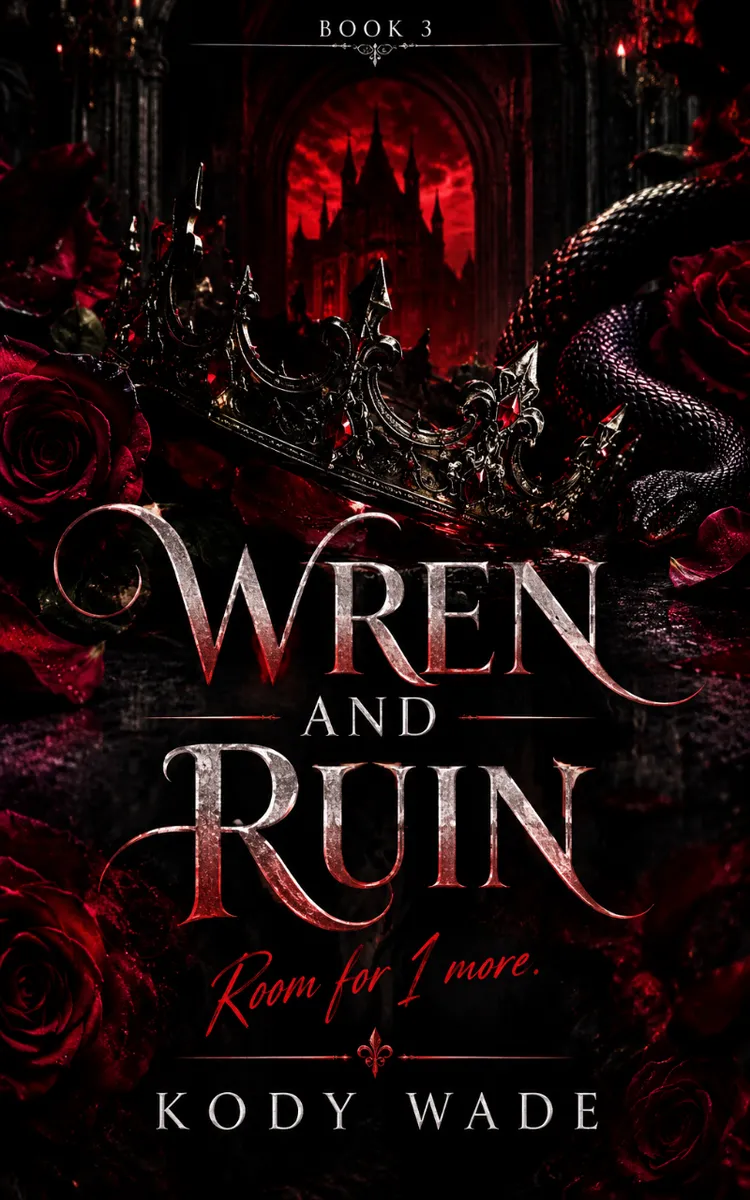
"Wren and Run Book 3" is a general book by Kody Wade with 23 chapters and approximately 159,189 words. It covers key insights and practical takeaways on the topic.
This book was created using Inkfluence AI, an AI-powered book generation platform that helps authors write, design, and publish complete books.
Frequently Asked Questions
What is "Wren and Run Book 3" about?
"Wren and Run Book 3" is a general book by Kody Wade covering key insights and practical takeaways on the topic.
How many chapters are in "Wren and Run Book 3"?
The book contains 23 chapters and approximately 159,189 words. Topics covered include Chapter 1- Wren, Chapter 2- Kaelen, Chapter 3- Dani, Chapter 4- Wren, and more.
Who wrote "Wren and Run Book 3"?
This book was written by Kody Wade and created using Inkfluence AI, an AI book generation platform that helps authors write, design, and publish books.
Write your own book with AI
Describe your idea and Inkfluence writes the whole thing. Free to start.
Start writingCreated with Inkfluence AI


