

Read the first chapter
The whole of chapter one, free. About 8 min. Turn the pages with the arrows, your keyboard, or a swipe.
Chapter 1
The Girl in the Anniversary Photograph
The cursor blinked over the empty title slide while rain ticked against the dining-room windows.
I had chosen a pale gold background for Mum and Dad’s anniversary slideshow, something warm enough to suggest candlelight without making the whole thing look like a hotel brochure. On the table, beside my laptop, lay three boxes of photographs, a pair of scissors, and the cracked blue album Mum kept on the highest shelf of the dresser.
“Thirty-five years,” I murmured, dragging a photograph into place. “That’s a lot of embarrassing haircuts.”
The dining room had not changed much since I was a child. The wallpaper still carried its faded pattern of climbing leaves. The radiator clanged whenever it came on. Even the long table seemed to lean slightly to the left, as though it had spent too many years listening to family arguments and had finally given up trying to stand straight.
I was thirty-four years old. I knew the shape of my family history. I knew where Mum and Dad had met, which summer Dad had proposed, and why my older brother had been christened in a jumper two sizes too large. I knew which photographs would make Mum laugh and which would make Dad complain about his hair.
The slideshow was meant to be a gift. Something finished, polished and harmless.
I opened the blue album.
The plastic sleeves stuck together with a soft, damp crackle. I lifted out a photograph of Mum and Dad beside a hired car, both of them squinting into sunlight. Another showed my brother, Tom, missing his two front teeth. Then came a school sports day, a Christmas tree, my sister Lucy in a paper crown.
I scanned the dates written in Mum’s neat blue handwriting.
“1979. 1984. 1987…”
A photograph slid loose from between two pages and landed face down on the table.
I nearly put it back.
Instead, I turned it over.
The picture had faded to the colour of weak tea. Four children stood in front of a garden fence. Tom was on the left, his arm stiffly around Lucy’s shoulders. I stood beside them in a yellow cardigan, my fringe cut bluntly across my forehead.
And between Lucy and me stood a girl I had never seen before.
She was perhaps seven or eight, with dark hair tied in two uneven bunches. Her dress was pale, though the photograph had bleached most of its colour away. One hand hung by her side. The other rested against my elbow.
I stared at the place where her fingers touched me.
The room seemed to contract around the table. Rain tapped the glass. Somewhere behind me, the radiator knocked twice.
I picked up the photograph and brought it nearer to the lamp.
The girl was smiling, but not at the camera. She was looking at me.
I turned the print over. Nothing. No date. No note. Only a grey smear where something might once have been written.
My first thought was that she must be a cousin. I had cousins, though most lived in Scotland and appeared at family gatherings only in stories. Then I considered one of Tom’s friends, or a neighbour’s daughter who had wandered into the garden.
But why could I not remember her?
I looked again at my own face. I seemed happy. Not politely happy, as I was in school photographs, but open and unguarded. Whatever had happened that day, I had trusted the girl enough to let her stand close.
I placed the photograph beside the laptop and continued searching.
The sleeve before it contained a picture of Mum holding baby Lucy. The sleeve after it was empty.
I frowned and ran my finger along the plastic. The hole was too clean. The page itself had been removed, leaving a narrow strip of torn card near the rings.
I lifted the album and shook it gently.
A loose fragment fell onto the table.
It was no bigger than my thumbnail, pale blue at the edge. On it, in Mum’s handwriting, were the letters:
Els -
I stopped breathing for a moment.
The dining room was suddenly unfamiliar. The table was the same, the wallpaper the same, but the objects around me had lost their ordinary meaning. The blue album no longer looked like a family record. It looked like something that had been opened, searched and altered.
The front door clicked.
I shoved the fragment beneath my palm as Dad came in carrying two paper bags. His coat was wet at the shoulders, and he kicked off his shoes beside the umbrella stand.
“Mum sent me for the bread,” he said. “She says we’re out.”
“Dad.”
He glanced at the table. “How’s the slideshow?”
“Fine.”
“That doesn’t sound fine.”
I lifted the photograph before I could change my mind. “Who is she?”
He stopped unbuttoning his coat.
For half a second, his face was empty. Then recognition moved across it, quick as a curtain being drawn.
“Where did you find that?”
“In the album.”
“Which album?”
“The blue one.”
He put the bags down. One of them tipped, and a loaf rolled against the skirting board.
I held the photograph between us. “Who is the girl?”
Dad looked at the print but did not touch it. “She was a neighbour.”
“Which neighbour?”
“I don’t remember.”
“You recognised the photograph.”
“I recognised the garden.”
“That isn’t what I asked.”
His mouth tightened. “Megan, it was years ago. There were children everywhere when you were little. People came and went.”
“Her name?”
He looked towards the doorway, as if Mum might be standing there. She wasn’t.
“I think it was Elsie.”
The word landed too neatly.
“Elsie what?”
“I don’t know. Just Elsie.”
“Why is there no date?”
“Because your mother probably forgot to write one.”
“And why has a page been cut out?”
Dad’s eyes shifted to the album.
“What page?”
I moved my hand away from the fragment. “This one.”
He did not answer.
The silence stretched until the rain became louder than it had been before.
“Mum said the album was complete,” I said.
“Your mother says a lot of things.”
“That doesn’t explain it.”
Dad picked up the loaf and put it back in the bag. His fingers trembled once, then steadied.
“Put the photograph away,” he said.
“Why?”
“Because it’s nothing.”
“That girl is standing beside me.”
“She was a neighbour.”
“You’ve said that twice.”
“Because it’s the truth.”
The certainty in his voice frightened me more than anger would have done. It sounded practised, worn smooth by repetition.
Mum called from the kitchen. “Is that Megan?”
Dad answered before I could. “She’s found one of the old photographs.”
There was a pause.
Then Mum appeared in the doorway, wiping her hands on a tea towel. Her gaze went straight to the print.
“Oh,” she said.
Not surprise. Not confusion.
Recognition.
I stood. “Who is she?”
Mum’s eyes met mine, and something in them closed.
“Elsie,” she said.
“Elsie what?”
“She lived next door for a while.”
“Which house?”
“Number twelve, I think.”
“We lived at number twelve.”
“No, before that.”
“Where?”
Mum folded the tea towel in half. “You were very young, Megan. You won’t remember every child you met.”
“I remember Lucy’s first bike. I remember Tom breaking the greenhouse. I remember the dog from the house opposite biting Dad’s trousers.”
Dad gave a small, humourless laugh. “That dog had it in for me.”
“But I don’t remember her.”
Mum’s expression softened, though it did not become warmer. “There’s no reason you should.”
“Then why has the page been cut out?”
Her hands stopped moving.
Dad said, “It hasn’t.”
I picked up the album and held it open. “The page is missing.”
“Perhaps it came loose.”
“The card is torn.”
“Megan,” Mum said quietly.
The way she said my name made the room tilt. It carried warning, but also something closer to fear.
I placed the photograph beside the laptop. “I need the date for the slideshow.”
“You don’t need that one,” Dad said.
“Why not?”
“It’s not important.”
“Everything else is important enough to go in.”
Mum crossed the room and reached for the photograph. I moved it out of reach.
Her face changed.
Only slightly. A tightening around the eyes, a thin line appearing beside her mouth. But I saw it.
“Let me have it,” she said.
“No.”
“Megan.”
“Who was Elsie?”
“She was a neighbour.”
“Which neighbour?”
Mum looked at Dad.
The exchange lasted less than a second, but it answered more than either of them had.
They had discussed this before.
I took my phone from the table and photographed the print. Then I photographed the torn edge of the album page and the blue fragment with its half-written name.
Dad stepped towards me. “What are you doing?”
“Keeping a copy.”
“You’re making this into something it isn’t.”
“Then tell me what it is.”
Mum’s voice dropped. “You need to leave it alone.”
The words settled between us.
I looked at her. “Why?”
She did not reply.
I gathered the photographs into a pile, but the girl’s face remained visible beneath them. Her uneven bunches. Her solemn smile. Her hand on my arm.
The memory should have been there. A garden. A summer afternoon. The girl beside me.
Instead, there was only a blank space, smooth and pale, where a memory ought to have been.
I slid the old photograph into my handbag.
Dad’s voice sharpened. “Megan, don’t.”
“I’m taking it home.”
“It belongs to your mother.”
“So does the album.”
Mum gripped the tea towel until her knuckles whitened. “Give it back.”
I almost did. The request sounded less like a mother asking for a photograph than someone trying to retrieve evidence.
Then I looked through the dining-room window.
Beyond the rain-streaked glass, the garden rose in dark, familiar shapes: the crooked apple tree, the brick wall, the narrow strip of lawn where Tom had once dug for buried treasure.
The fence in the photograph had been painted white then. The apple tree stood behind it, bent at the same angle.
I knew the place.
Not a neighbour’s garden. Not somewhere I had visited.
Our old garden.
I turned the photograph over once more. At the bottom edge, beneath the faded grey, the paper was jagged.
It had not come loose from an album.
It had been cut out.
I put the photograph in my bag and walked towards the door while both my parents watched me, silent now, as if they were afraid of what I might remember next.
End of chapter one. 39 more chapters and about 81,590 words in the full book.
Swipe or use the arrows to turn the page


What's inside: 40 chapters
- 1. The Girl in the Anniversary Photograph
- 2. The Neighbour They Remember
- 3. A Name Without a Neighbour
- 4. The Empty Album Pages
- 5. The Memory I Cannot Trust
- 6. The Anniversary Goes Public
- 7. The Fete Register
- 8. The Locked Records Room
- 9. Laura’s Different Summer
- 10. The Warning on My Door
- 11. Peter’s Missing Birthday
- 12. The Registry’s Wrong Date
- 13. The Red Ribbon Memory
- 14. The Slideshow Is Deleted
- 15. The Former Midwife’s Ledger
- 16. The Cottage with No Records
- 17. The Name I Was Given
- 18. The Family Photograph Burns
- 19. The Sealed Envelope
- 20. The Date That Changes Everything
- 21. A Childhood I Borrowed
- 22. The Solicitor’s Refusal
- 23. The School File with Two Children
- 24. The House Behind the Orchard
- 25. The Sister I Might Have Had
- 26. The Anniversary Invitation Vanishes
- 27. The Midwife’s Last Letter
- 28. The Flooded Archive
- 29. Peter’s Confession
- 30. The Family Turns Away
- 31. Ruth’s Address in the Margin
- 32. The Locked Garden Gate
- 33. What My Mother Feared
- 34. The Box Marked Ruth
- 35. The Daughter in the Photograph
- 36. The Child Who Was Sent Away
- 37. Laura Opens the Album
- 38. The Number on the Back
- 39. A Letter Left Unsent
- 40. The Name She Chose
About this book
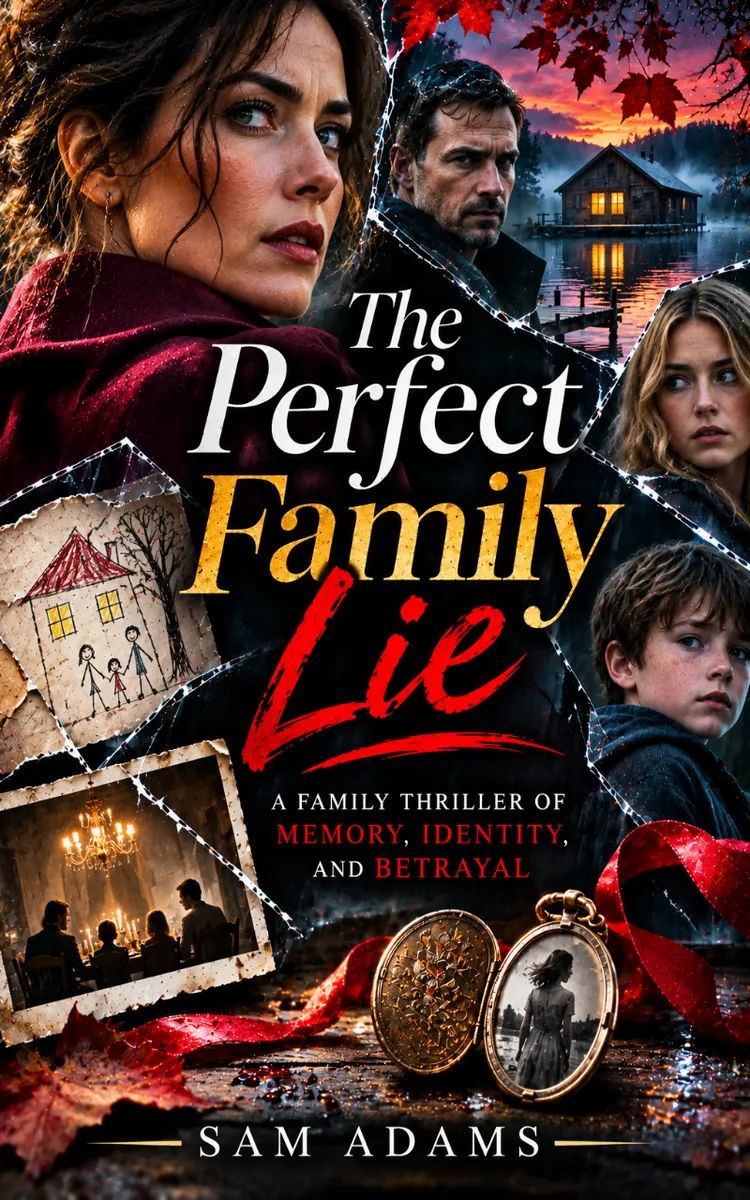
"The Perfect Family Lie" is a fiction book by Sam with 40 chapters and approximately 81,590 words. A woman investigates a forgotten girl hidden in her family’s past.
This book was created using Inkfluence AI, an AI-powered book generation platform that helps authors write, design, and publish complete books. It was made with the AI Novel Writer.
Frequently Asked Questions
What is "The Perfect Family Lie" about?
A woman investigates a forgotten girl hidden in her family’s past
How many chapters are in "The Perfect Family Lie"?
The book contains 40 chapters and approximately 81,590 words. Topics covered include The Girl in the Anniversary Photograph, The Neighbour They Remember, A Name Without a Neighbour, The Empty Album Pages, and more.
Who wrote "The Perfect Family Lie"?
This book was written by Sam and created using Inkfluence AI, an AI book generation platform that helps authors write, design, and publish books.
How can I create a similar fiction book?
You can create your own fiction book using Inkfluence AI. Describe your idea, choose your style, and the AI writes the full book for you. It's free to start.
Write your own fiction book with AI
Describe your idea and Inkfluence writes the whole thing. Free to start.
Start writingCreated with Inkfluence AI


