
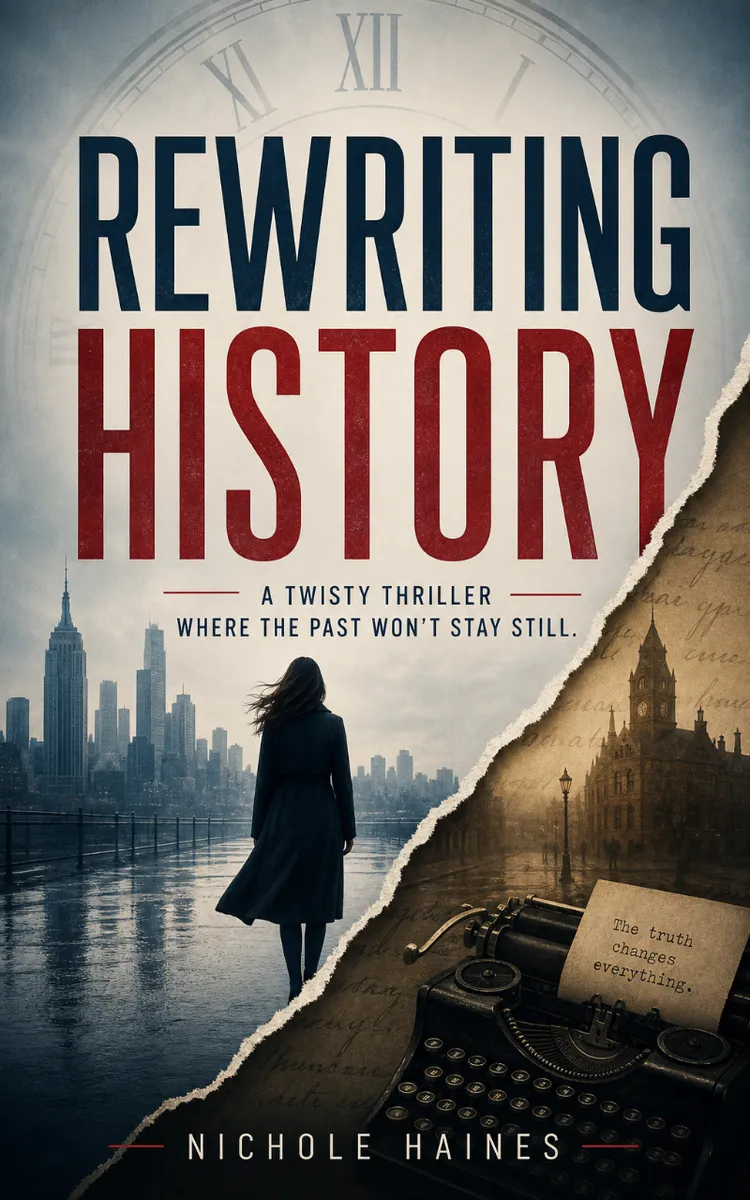

A mind-bending thriller where history books rewrite themselves daily
Table of Contents
- 1. Joyce Finds Tomorrow’s Footnotes
- 2. The Archive Door Opens Daily
- 3. A Map That Updates Every Dawn
- 4. The Librarian Erases Joyce’s Name
- 5. Joyce Chooses to Lie to Survive
- 6. The Badge Prints Her Death Date
- 7. The Footnote That Names a Stranger
- 8. Elias’s Apartment Door Refuses Her
- 9. Joyce Reads a Note From Tomorrow
- 10. The Blank Page Fills With Her Confession
- 11. Joyce Tracks the Rewrite’s Source Code
- 12. The Server Room Changes Its Floorplan
- 13. A Child’s Book Teaches the Trick
- 14. Joyce Misses the Handoff Window
- 15. Joyce Bargains With the Archivist
- 16. The Street Sign Rewrites Her Route
- 17. Joyce Refuses to Become a Footnote
- 18. The Headline Summons a Hidden Society
- 19. The Society Demands Joyce’s Draft
- 20. Elias’s Real Surname Appears Today
- 21. Joyce Chooses a False Memory
- 22. Kestrel Burns the Archive Index
- 23. The Unindexed Rewrite Spreads Fast
- 24. The Classroom Chalk Rewrites Evidence
- 25. Joyce Risks Her Name in Public
- 26. The Witness Vanishes From Records
- 27. Joyce Hears Elias in the Walls
- 28. The Stairwell Door Leads Elsewhere
- 29. Books Freeze When Joyce Touches Them
- 30. Joyce Loses Her Editor’s Key
- 31. Joyce Finds a Hidden Handoff
- 32. The Archive Rebuilds Its Index Wrong
- 33. Joyce Risks Her Life for One Page
- 34. The Saved Page Reveals Kestrel’s Plan
- 35. Kestrel Triggers the Midnight Rewrite
- 36. The Timeline Splinters Into Three Versions
- 37. The City Forgets the Daily Rewrite
- 38. Joyce’s Reflection Lives Tomorrow First
- 39. Joyce Prevents Her Own Death
- 40. The Last Rewrite Becomes a Promise
- 41. The Keeper's Last Sentence
Preview: Joyce Finds Tomorrow’s Footnotes
A short excerpt from “Joyce Finds Tomorrow’s Footnotes”. The full book contains 41 chapters and 112,999 words.
The kettle clicked off with a clean, final sound, like it was fed up with being ignored, and Joyce stood over her kitchen table with the mug warming her palms through the ceramic. The late-night radiator hiss had faded to a steady hum. Morning light slid in through the blinds in thin, bright bars, catching dust motes that drifted like they had nowhere else to be.
Her history textbook lay open where she’d left it - creased spine, coffee ring on the lower corner from a week ago - except the page she’d been staring at the night before didn’t look like the same page anymore. The words were familiar in their layout and typeset, the way a face can be familiar even when it’s slightly wrong. She’d fallen asleep with her cheek against her forearm, the book propped on the edge of the table, and now her eyes snagged on a sentence she didn’t remember reading. Not a typo. Not a misprint. The sentence had been rewritten into a new shape, as if the paper had decided to remember something else.
Joyce set the mug down too hard. It made a dull thump that bounced in her ribs. “No,” she said, and the word came out rougher than she meant. Her apartment was quiet enough that the radiator’s hum felt like an accomplice.
She grabbed her phone with her left hand and flipped on the camera with her thumb. Her right hand hovered over the page, then settled carefully on the margin, not touching the text. The paper felt the same - warm from the light, slightly rough under her fingertips. She could smell the faint, dusty sweetness of old glue and ink. It didn’t smell like anything new. It didn’t feel like anything had been tampered with.
Still, the sentence stared back at her, unblinking. She angled the phone and tried to frame it the way she’d done last night, when she’d thought maybe she was still half dreaming. The screen captured the page. The rewritten line stayed rewritten.
Joyce leaned closer, breath fogging the glass for a moment. “Okay,” she murmured. “Okay. We’re doing this properly.”
Her goal was simple and immediate: confirm whether the overnight rewrite was real and not a prank, not her own memory glitching, not some trick of light. She needed evidence that would hold up when her brain tried to wriggle away from the impossible. She needed proof she could show herself later, when the panic had cooled.
She took three photos in quick succession, changing the angle each time, making sure the sentence and the surrounding paragraphs were included. Then she turned on the voice recorder, because she’d learned - too late - that facts spoken aloud sometimes stuck better than facts trapped in her mind.
“This is Joyce Calder,” she said into the phone, steadying her breathing. “Morning. Kitchen table. History textbook. Page - ”
She stopped herself. The page number looked normal. The chapter title looked normal. The rewritten sentence didn’t. She didn’t want to anchor the recording to something that might shift again mid-sentence.
Instead she read the line out loud, letting the words roll through her mouth like they could be pinned down by sound. “Tomorrow,” she said, and her voice caught on the date embedded in the text, “I will be signing in under Joyce Calder at the city archive.”
The mug’s warmth seeped into her palm again when she picked it up, forgetting she’d set it down. She swallowed coffee that tasted like hot water and regret. The kettle had been clean. Her sink was empty. Her apartment didn’t have the smell of pranksters or spilled chemicals. No one had been here.
Except the book had changed itself overnight.
Joyce stared at the sentence until her eyes watered. Her first instinct was to flip back and check the previous pages, to find some seam in the logic, some telltale sign of editing. She turned a page. The paper rasped softly under her fingers. The paragraph she’d skimmed last night looked right - until it didn’t, until the words shifted by a fraction of a line, like a breath changing the shape of a cloud.
She froze. The next page over was worse. The chapter she’d been studying - about archives, about preservation, about how records could be corrupted and then corrected - had gained a paragraph she didn’t recognize at all. It read like a note written in her own handwriting, except it wasn’t her handwriting. The letters were the same typeface as the rest of the book, but the content had the pointed specificity of something someone had planned around her.
Her phone buzzed once in her hand, a reminder she didn’t remember setting. She glanced at the screen. It wasn’t a notification. It was the camera app showing the last photo she’d taken.
The photo looked wrong.
Joyce tapped to zoom. The rewritten sentence was still there, but the date had changed by a day. Not the same day in the future anymore. Not tomorrow.
Her throat tightened. “No,” she said again, quieter this time, like the book might hear her and get ideas.
She flipped the book closed with more force than necessary....
About this book
"Rewriting History" is a fiction book by Nichole Haines with 41 chapters and approximately 112,999 words. A mind-bending thriller where history books rewrite themselves daily.
This book was created using Inkfluence AI, an AI-powered book generation platform that helps authors write, design, and publish complete books. It was made with the AI Novel Writer.
Frequently Asked Questions
What is "Rewriting History" about?
A mind-bending thriller where history books rewrite themselves daily
How many chapters are in "Rewriting History"?
The book contains 41 chapters and approximately 112,999 words. Topics covered include Joyce Finds Tomorrow’s Footnotes, The Archive Door Opens Daily, A Map That Updates Every Dawn, The Librarian Erases Joyce’s Name, and more.
Who wrote "Rewriting History"?
This book was written by Nichole Haines and created using Inkfluence AI, an AI book generation platform that helps authors write, design, and publish books.
How can I create a similar fiction book?
You can create your own fiction book using Inkfluence AI. Describe your idea, choose your style, and the AI writes the full book for you. It's free to start.
Write your own fiction book with AI
Describe your idea and Inkfluence writes the whole thing. Free to start.
Start writingCreated with Inkfluence AI


