
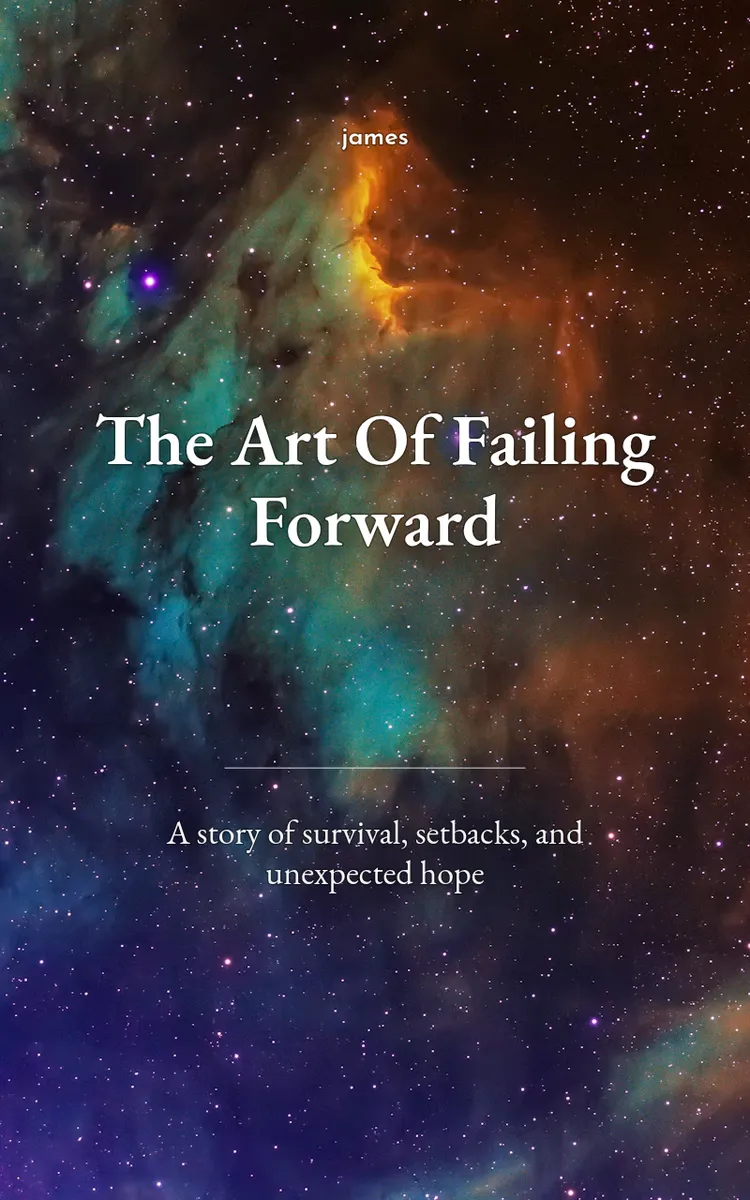
Read the first chapter
The whole of chapter one, free. About 10 min. Turn the pages with the arrows, your keyboard, or a swipe.
Chapter 1
The Rooftop Job Falls Apart
The interview rejection still glowed on Mara Venn’s phone when she pushed through the rooftop door.
The screen had gone dim, but the words remained sharp enough to read without waking it: We’ve decided to move forward with another candidate. Her thumb hovered over the glass. Below, the city dragged its wet tires through the streets, red brake lights smearing across the pavement like fresh cuts.
She stepped onto the roof.
Rain had polished the tar to a black mirror. The soles of her shoes slipped before she caught herself on the rusted doorframe. Behind her, the metal door slammed shut with a heavy click.
Mara turned the handle.
Nothing.
She tried again, harder. The latch shuddered inside the door, refusing her. The stairwell door had locked behind her.
“Of course,” she said.
Her voice disappeared into the rain.
She pressed her forehead against the cold metal. The interview had been on the other side of the city, in a glass office where a man named Paul had nodded at every answer and asked whether she had any questions for him. She had asked about the team. She had asked about the first ninety days. She had smiled until her cheeks hurt.
Then she had taken the train home and read the rejection while standing beneath the broken awning of a laundromat.
Now the rain slid beneath her collar.
Mara stepped away from the door and looked across the roof. The brick parapet rose waist-high along the far edge. Beyond it, apartment windows shone in uneven squares. A woman in a yellow robe moved through one of them, carrying a laundry basket. Somewhere lower in the building, a television audience laughed at something Mara couldn’t hear.
The roof offered no shelter except a low metal shed near the vents. She crossed toward it, arms spread slightly for balance. Water gathered in the seams of the tar. Her left foot skidded, and she dropped to one knee.
Pain flashed through her palm.
She stayed there, kneeling in the rain, phone clenched in her other hand.
The screen woke again. The rejection waited.
She could delete it. She could throw the phone into the drain. She could stand up, find a way down, go home, and discover that the landlord had taped another red notice to her door. She could keep sending applications until the words on them lost all meaning.
Or she could stop.
The thought did not arrive dramatically. It settled beside her, quiet and practical, as if it had been waiting for a chair.
Mara looked toward the parapet.
The city was five stories below. Not high enough to make anything certain, she thought. High enough to make a mistake permanent.
Rain ticked against the metal vent behind her.
Her hand burned where the gravel had cut it. She lifted it and watched diluted blood run pink along her wrist.
“Not tonight,” she whispered.
The words sounded weak. They were still words.
She got to her feet and hurried to the shed. Its door was chained but not locked. She pulled until the chain scraped free from the hasp, then squeezed inside.
The shed smelled of wet cardboard, rust, and old paint. A mop bucket leaned against one wall. Shelves held cracked flowerpots, a coil of orange extension cord, and three cans of roof sealant with their lids buckled shut. Mara pulled the door behind her and sat on an overturned crate.
Her jeans were soaked from the knees down. Water dripped from her hair onto the concrete.
She called the building superintendent.
The phone rang six times before a man answered, his voice thick with sleep. “What?”
“It’s Mara from 4B. I’m locked on the roof.”
“Roof access is restricted.”
“I know. I’m on the wrong side of the door.”
A pause. Pipes groaned somewhere beneath the building.
“You’ll have to wait until morning.”
“Morning?”
“I’m not coming up there in this weather.”
“Can you call someone?”
“I’m someone.”
“You’re not helping.”
He sighed. “There’s a maintenance ladder on the east side. It comes down to the alley. Use that.”
“Is it safe?”
“It’s a ladder.”
The call ended.
Mara held the phone against her knee. The battery icon showed twelve percent. The rain thickened, drumming on the shed roof so loudly she could feel it through the walls.
She knew the ladder. Everyone in the building knew it, though no one talked about it. It ran from the roof to the second-floor fire escape, bolted to the brick beside the old laundry vent. The bottom section had been removed after a child climbed it two summers ago. The superintendent had never replaced it.
Mara pushed open the shed door.
The roof had become a sheet of moving water. Wind drove rain across it in silver lines. She tucked the phone into her coat pocket and walked toward the east wall.
Halfway there, the rooftop door opened.
Mara spun around.
A woman emerged, holding a red plastic bucket over her head. She wore a green raincoat over pajamas and yellow rubber boots. Her gray hair stuck out in wet curls around her face.
“Inez,” Mara said.
Inez Calder blinked at her. “What are you doing up here?”
“Being punished for trespassing, apparently.”
“You live here.”
“The roof disagrees.”
Inez set the bucket down. Rain immediately darkened her shoulders. “The door sticks. You have to lift the handle while you turn it.”
“I tried.”
“Did you lift?”
Mara looked at the door. “No.”
Inez walked over and tested the handle. She lifted it, turned, and shoved. The latch clicked but did not release.
“See?” Inez said. “It’s worse than usual.”
Mara laughed once. The sound came out thin and cracked.
Inez studied her face. “What happened?”
“Nothing.”
“That’s never true when someone is standing in the rain.”
Mara glanced at the parapet. Inez followed her gaze, then looked back. Her expression changed, not into fear exactly, but attention.
“I had an interview,” Mara said.
“And?”
“They hired someone else.”
“Again?”
The word landed harder than it should have.
Mara folded her arms. “Yes. Again.”
Inez picked up the bucket. “Come to the garden.”
“The garden is downstairs.”
“Not from here.”
“There’s a ladder.”
“There’s always a ladder.”
Inez crossed the roof toward the east wall. Mara followed because remaining alone beside the parapet had begun to feel like a decision.
At the wall, Inez pointed down. A fire escape clung to the brick below, its grated platforms slick with rain. The maintenance ladder descended from the roof to the second-floor platform, but the lowest four rungs stopped above it. Someone had wedged a wooden board across the gap.
“The board is new,” Inez said.
“Does that make it safer?”
“No.”
Inez climbed over the parapet onto the narrow ledge. Her yellow boots found the first rung. She lowered herself with both hands and began down.
Mara gripped the parapet.
“Inez.”
“I’m not dead yet.”
“That’s not reassuring.”
“It wasn’t meant to be.”
The ladder trembled beneath Inez’s weight. She reached the fire escape and stepped onto the grated platform. “Your turn.”
Mara looked down.
Rain struck her cheeks. The alley lights below blurred into pale circles. Her stomach tightened, but the feeling was different from the numb pull at the parapet. This was fear with edges. Fear asked her to pay attention.
She swung one leg over the wall.
The brick scraped her thigh. Her fingers closed around the ladder, cold metal biting into her palms. She lowered herself until her shoe found a rung.
“Good,” Inez called.
Mara’s other foot searched. The wind shoved her coat against the wall. She pressed her cheek to the wet brick and descended one rung, then another.
At the fifth rung, her shoe slipped.
She gasped. Her hands clamped down. The ladder groaned against its bolts.
“Stop moving,” Inez said.
“I’m trying.”
“Don’t try. Stay still.”
Mara held herself against the wall. Rain ran into her eyes. Below, Inez stood with both arms raised, though she could not possibly catch her.
“Look at the next rung,” Inez said.
Mara did.
“Not the alley. The rung.”
She lowered her foot. Metal met rubber.
“There,” Inez said. “Again.”
Mara moved down. The world narrowed to the ladder, her hands, the next rung. No interview. No overdue rent. No red notices. Just metal under her shoe and Inez’s voice rising through the rain.
At the fire escape, Mara swung herself over the rail and landed hard. Her knees buckled. Inez caught her elbow.
For a moment neither of them spoke.
The fire escape shook beneath their combined weight. Water streamed through the grating, pattering onto the landing below.
Inez picked up the bucket. “The garden gate blew open.”
Mara stared at her.
“During the storm,” Inez said. “The lock broke. If the gate stays open, the neighborhood dogs will get in and tear up the beds.”
“You brought a bucket to fix a gate?”
“I brought tools in the bucket.”
Mara looked inside. A wrench, a screwdriver, two lengths of wire, and a roll of duct tape knocked against one another.
“I can’t fix a gate.”
“You can hold a flashlight.”
“I don’t have one.”
“Then hold the bucket.”
Inez started down the stairs.
Mara gripped the rail. The sensible thing was to climb to the second floor, knock on Inez’s apartment, and wait until the superintendent woke up. The sensible thing was to go home and sleep until the rejection became less immediate.
But home was four flights up, and the door was locked, and the night had already required too much of her to surrender it without a task.
“Inez,” she called.
The older woman looked up.
“What kind of gate?”
“Wooden.”
“How bad?”
“Bad enough.”
Mara descended.
They reached the alley and crossed to the community garden behind the building. The gate hung crooked from one hinge, banging against the fence whenever the wind caught it. Inside, overturned pots rolled across the muddy paths. The tomato cages rattled. A tarp snapped over the tool shed.
Inez handed Mara the bucket. “Hold this.”
Mara held it.
Inez knelt in the mud and began threading wire through the broken latch. Her fingers shook from the cold, but she kept working.
“You don’t have to stay,” she said.
“I know.”
“You can go upstairs.”
“I know.”
“Then why are you standing there?”
Mara looked at the gate. One side leaned toward the street. The other scraped the ground.
“Because it’s open,” she said.
Inez glanced at her. “That’s a reason.”
They worked beneath the rain. Mara held the bucket, then the flashlight Inez found beneath the shed steps, then the gate itself while Inez tightened the wire. The wood was swollen and rough. A splinter pierced Mara’s thumb.
“Damn it,” she said.
“Good,” Inez replied.
Mara stared at her.
“Means you’re still attached to the world.”
“That’s a terrible standard.”
“It’s a low one. Low standards are useful in bad weather.”
The wire snapped.
The gate swung open and struck Mara in the shoulder. She staggered backward into the fence.
Inez caught the gate before it fell. “You all right?”
Mara rubbed her shoulder. “No.”
“Can you keep holding it?”
Mara looked at the mud on her hands, the broken wire, the rainwater running down the vegetables into the drains. Her phone buzzed in her pocket. The battery warning appeared, bright and final.
She could call a cab, if she had the money. She could walk home, if she had the energy. The last bus left in nineteen minutes.
“I need to go,” Mara said.
Inez nodded toward the gate. “Then help me finish.”
Mara almost laughed. “That’s your solution?”
“It’s the gate we have.”
They found a length of old chain inside the shed. Inez looped it around the posts while Mara braced the sagging wood with her shoulder. The chain scraped her coat. Her shoes sank into the mud.
“Pull,” Inez said.
Mara pulled.
The gate shifted into place. Inez locked the chain through the bars and twisted the wire around the hinge until her knuckles bled.
When she stepped back, the gate still leaned. It did not close cleanly. It would need a new hinge, perhaps a new frame.
But it stayed shut.
Mara released it.
The last bus roared past the end of the block, its windows lit and empty-looking. She heard the brakes sigh at the corner, then the engine climbed away.
Mara watched the red lights disappear.
Inez stood beside her, breathing hard. “There’ll be another in the morning.”
“I know.”
“You can sleep on my sofa.”
Mara looked toward the apartment building. The locked rooftop door, the wet ladder, the dark windows waited above them. She was tired enough to lie down in the mud.
Instead, she touched the broken skin on her palm.
“Tomorrow,” she said, “I’ll come back and fix the hinge.”
Inez handed her the bucket.
“Tomorrow,” Mara repeated.
The word did not solve the rent. It did not change the interview or make another one appear. It did not even get her home.
Still, Mara took the bucket and followed Inez toward the building, carrying the tools through the rain.
End of chapter one. 4 more chapters and about 10,695 words in the full book.
Swipe or use the arrows to turn the page
What's inside: 5 chapters
- 1. The Rooftop Job Falls Apart
- 2. A Promise Small Enough
- 3. The Workshop With No Exit
- 4. The Rejection That Wasn't Final
- 5. The Garden Flood
About this book
"The Art Of Failing Forward" is a fiction book by james with 5 chapters and approximately 10,695 words. A struggling person reframes failure and chooses to keep living.
This book was created using Inkfluence AI, an AI-powered book generation platform that helps authors write, design, and publish complete books. It was made with the AI Novel Writer.
Frequently Asked Questions
What is "The Art Of Failing Forward" about?
A struggling person reframes failure and chooses to keep living
How many chapters are in "The Art Of Failing Forward"?
The book contains 5 chapters and approximately 10,695 words. Topics covered include The Rooftop Job Falls Apart, A Promise Small Enough, The Workshop With No Exit, The Rejection That Wasn't Final, and more.
Who wrote "The Art Of Failing Forward"?
This book was written by james and created using Inkfluence AI, an AI book generation platform that helps authors write, design, and publish books.
How can I create a similar fiction book?
You can create your own fiction book using Inkfluence AI. Describe your idea, choose your style, and the AI writes the full book for you. It's free to start.
Write your own fiction book with AI
Describe your idea and Inkfluence writes the whole thing. Free to start.
Start writingCreated with Inkfluence AI


