
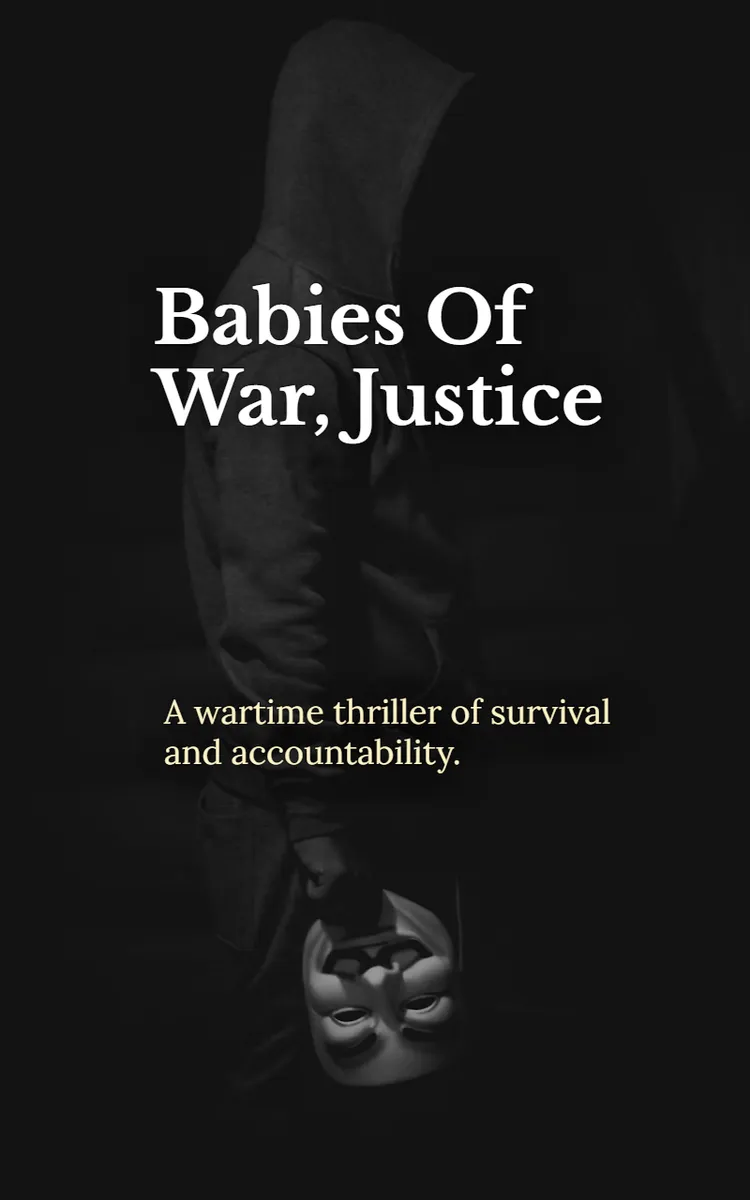
Read the first chapter
The whole of chapter one, free. About 9 min. Turn the pages with the arrows, your keyboard, or a swipe.
Chapter 1
The Night of the Baby Bombing Plan
The first bomb struck while Lina Markovic was still counting the children.
The basement shelter lurched beneath the city hospital. Dust sifted from the ceiling. Somewhere above them, glass burst in a long, glittering cascade, followed by the deeper concussion of masonry giving way. The lamps flickered, recovered, and went dim enough to turn every face into a pale oval.
“Keep low!” someone shouted.
Lina pressed one hand against the wall and held the other over the nearest infant. The baby’s blanket was damp with sweat. Around her, mothers, nurses, patients, and hospital orderlies crowded against the concrete supports. The air smelled of coal dust, disinfectant, wet wool, and fear.
She counted again.
Twenty-three infants in the shelter’s eastern alcove. Eight in a wicker laundry cart. Four wrapped in hospital sheets beside the boiler room. More had been brought down from the maternity ward when the sirens began. Some cried. Others lay unnaturally quiet, their mouths opening without sound as the building shook.
The raid had only begun.
A nurse grabbed Lina’s sleeve. “The west passage is blocked.”
“Then we use the east stairs.”
“They sealed those too.”
Lina looked toward the stairwell. A metal gate had been pulled across it. A strip of paper was fastened to the bars with black thread. The paper carried a stamped code, not a name.
“Who sealed it?” Lina asked.
The nurse shook her head. “An order came down before the first impact. No one was to leave the lower shelter.”
Another explosion rolled through the foundations. The infants began to cry together, a thin, rising sound that seemed to make the ceiling lower.
This was not simply a shelter overwhelmed by war. Someone had closed it deliberately.
The significance of the case lies in that decision. In 1943, beneath a city hospital during World War II, surviving infants were gathered in a place intended to protect them while exits were sealed under coded orders. The bombing plan that surrounded them was not treated as an accident by those who later examined the evidence. A ledger connected the babies to a wartime operation described in shorthand as a “safety” measure, while the destruction around them raised a darker question: had the shelter been chosen to save children, or to conceal a plan that put them in danger?
More than one hundred babies survived the bombing and later grew up to become leaders of nations. The others did not. Their deaths became the central wound of an investigation that would reach beyond the hospital, beyond the wartime authorities who controlled the shelter, and eventually toward weapons marked with United Nations identification. The case remained tied to the dead infants because survival alone could not answer who had placed them there, who had sealed the doors, or why a bombing plan had been written around their lives.
Key Facts:
• Date: 1943, during World War II - Location: Basement shelter beneath a city hospital - Victims: Infants caught in a planned wartime bombing operation; more than 100 survived - Status: Unsolved at this stage of the investigation
The first person Lina trusted was the nurse beside her, though even that trust had limits.
Lina Markovic - Lina had entered the shelter to find the infants and move them out before the raid expanded. She was not looking for a conspiracy. She was looking for a passage through smoke, fallen brick, and locked metal. Her training had taught her to notice practical things: which doors opened inward, where air moved, how many hands were available. That discipline became the first tool of the investigation.
The Hospital Nurse - The nurse had helped bring the infants below from the maternity ward. She knew which children had been moved, which blankets belonged to the hospital, and which babies had arrived without records. Her account established that the doors were sealed before the bombing reached its worst intensity.
The Infants in the Shelter - The babies were the victims and the surviving evidence. Some had hospital tags. Others had only thread, blanket marks, or handwritten numbers. Their presence in the basement was not random; the arrangement of their beds and carts suggested that someone had organized them before the raid.
The Unidentified Officer Who Issued the Order - No confirmed name was available in the shelter. The order to seal the exits carried a code rather than a signature. Whoever sent it had authority over the building’s emergency procedures and understood that the code would be obeyed.
The Later Investigators - Their work began with objects that could be handled: the sealed order, the markings on the walls, the damaged records, and the ledger. They would eventually connect the shelter to a wider operation involving wartime arms, but at this moment their case existed only in fragments.
22:10, 1943 - The air-raid sirens sounded over the city. Hospital staff moved patients and infants into the basement shelter while blackout curtains were checked above.
22:18 - Lina entered the eastern alcove and began counting the infants. The babies had been placed in separate groups, with hospital tags attached to some and coded marks written on others.
22:21 - A written order sealed the west passage and the east stairwell. The order instructed staff to keep the shelter closed until an all-clear signal was received.
22:24 - The first bombs struck nearby buildings. Dust fell through the ventilation grates, and the shelter lights failed briefly.
22:27 - A section of the western corridor collapsed. The remaining route toward the hospital’s service entrance became impassable.
22:31 - Lina found fresh chalk markings along the basement wall: short lines, circles, and numbers repeated near the infant alcove and the boiler room.
22:35 - A hospital orderly reported that a storage room had been locked from the outside. The key was missing, but the door had not been damaged by the blast.
22:39 - Lina forced the storage-room latch with an iron bar. Behind stacked coal sacks, she found a narrow service opening leading toward the old supply tunnel.
22:43 - The tunnel filled with smoke. Several infants began coughing, and the nurse warned that the group could not remain in the alcove much longer.
22:47 - Lina located a second door beneath fallen plaster. Beside it lay a splintered crate bearing a partially visible United Nations arms marking.
22:50 - [TURNING POINT] Inside the crate’s broken packing, Lina found a ledger wrapped in oilcloth. Its pages listed infant numbers beside the phrase “safety babies,” followed by coded references to routes, timing, and the bombing operation.
22:54 - Lina used the service tunnel to move the surviving infants toward an emergency exit. The route opened into a damaged loading bay, but armed personnel arrived before the last group could be carried away.
23:03 - The infants were transferred out of the shelter. Lina retained the ledger for only moments before it was confiscated by the authorities controlling the evacuation.
The physical evidence was small enough to fit beneath Lina’s coat, yet it altered the shape of the entire case.
Physical Evidence:
• A coded sealing order attached to the stairwell gate, showing that the exits were closed by instruction rather than by collapse alone. - Chalk markings near the infant alcove and boiler room, repeated in a pattern connected to the coded records. - A damaged crate bearing a partially visible United Nations arms marking, found among debris near the service tunnel. - An oilcloth-wrapped ledger listing infant numbers and the phrase “safety babies.” - Hospital tags, blankets, and handwritten numbers that indicated the infants had been grouped and recorded before the raid.
Witness Accounts:
• The hospital nurse stated that the exits were sealed before the first major impacts. - A hospital orderly reported that the storage room had been locked from outside and was not blocked by structural damage. - Staff members confirmed that some infants arrived with ordinary hospital records while others had coded numbers instead of names. - Lina observed that the babies had been arranged in separate groups, a detail consistent with the ledger’s numbered entries.
Investigative Leads:
1. The Sealing Order - Investigators pursued the code on the paper and the chain of authority behind it. The document identified an instruction but not the person who issued it. 2. The Wall Markings - The repeated chalk symbols were compared with the shorthand in the ledger. Their exact origin remained uncertain, but their placement connected the infant area to the service route. 3. The Arms Crate - The United Nations marking raised questions about how the crate had entered the hospital basement and whether its contents were connected to the bombing plan. 4. The Infant Numbers - Hospital records were checked against the ledger entries. The records were incomplete, and several numbers could not immediately be matched to names. 5. The Ledger - The document became the central lead, but its seizure prevented Lina from preserving the pages or examining every entry.
What changed was not the discovery of a body or a confession. It was the moment Lina understood that the infants had been documented before the bombs fell.
She had expected confusion: nurses improvising, families separated, records lost in the panic. The ledger suggested preparation. The phrase “safety babies” appeared beside numbered entries, but the surrounding marks referred to movement, timing, and a planned operation. The word safety did not make the arrangement harmless. It made the language more troubling. Someone had chosen it, written it, and placed the babies inside a system that treated their survival as an operational outcome.
The ledger mattered because it joined three things that had seemed separate: the sealed exits, the infant groups, and the damaged arms crate. Until then, Lina had been trying to escape a collapsing shelter. Now she was carrying evidence that the shelter itself might have been part of the crime.
What followed was immediate:
• Lina led the surviving infants through the service tunnel and out toward the damaged loading bay. - Armed personnel took control of the evacuation area and demanded the ledger. - The ledger was confiscated before Lina could copy its entries or identify the authority behind the coded orders.
The legal outcome was not yet a verdict. No trial could begin while the chain of custody remained disputed and the people who controlled the shelter denied responsibility. The ledger was taken into official hands, but its seizure created a second problem: the evidence now depended on authorities who might themselves be connected to the operation.
The impact was already visible:
• More than one hundred surviving babies were removed from the immediate danger and entered a scattered system of wartime care. - The deaths of the other infants became the subject of a developing war-crime inquiry. - The United Nations arms marking introduced an international dimension that local hospital officials could not explain away as ordinary wartime debris.
Several questions remained unanswered:
1. Who issued the coded order sealing the exits? 2. Why were the infants listed as “safety babies” before the bombing? 3. Who brought the United Nations-marked crate into the hospital basement? 4. Which infant numbers matched the dead, and which matched those who survived? 5. Why was the ledger confiscated before Lina could secure a complete record?
Lina stood in the loading bay with smoke clinging to her clothes and the last infant pressed against her shoulder. The baby’s breath warmed the fabric at her collar. Behind her, the basement continued to groan, shedding dust through the broken doorway.
The children were out.
The ledger was gone.
But Lina had seen enough of its page to remember the order of the numbers - and the word written above them, in a hand that had prepared for the night long before the sirens began.
End of chapter one. 39 more chapters in the full book.
Swipe or use the arrows to turn the page
What's inside: 40 chapters
- 1. The Night of the Baby Bombing Plan
- 2. UN Arms Crate Found in Rubble
- 3. Decoding the “Safety Babies” Ledger
- 4. The Missing Key Page at Archives
- 5. Lina’s Choice to Hide Survivors
- 6. Patrol Captain’s Interrogation Trap
- 7. The Black Market Courier’s Confession
- 8. Dockside Raid on the Route Map
- 9. Survivor Names That Don’t Match
- 10. The Protected Family’s False Custody Order
- 11. Comparing Shipment Dates to Raid Dates
- 12. The Warehouse Where Babies Were Counted
- 13. Lina’s Conscience vs. Evidence Theft
- 14. The Guard’s Body and Missing Film
- 15. Following the UN Seal to a Warehouse
- 16. The Future Transfer That Never Happened
- 17. Lina’s Decision to Report to Allies
- 18. The Delay That Lets Suspects Disappear
- 19. The Train Manifest With Infant Codes
- 20. Midpoint: The Code Break That Names Command
- 21. Lina’s Bargain With Officer Vasilenko
- 22. Redacted Pages Trigger a Cover-Up
- 23. The Marginal Note and the Missing Witness
- 24. Boarding House Raid for the Toy
- 25. Lina’s Grief Turns Into a New Lead
- 26. The Postwar Archive That Refuses Lina
- 27. Lina Finds the Survivor Leaders’ Trail
- 28. The Clerk’s Reassignment and Lost Files
- 29. UN Liaison Office Opens a Cold Door
- 30. Lina’s Lowest Point: The Deadline Passes
- 31. Final Approach: Rebuilding Case From Testimony
- 32. The Embassy Basement With Hidden Seals
- 33. Lina’s Confession to a Survivor Leader
- 34. Cross-Examining the UN Liaison Witness
- 35. The UN Custody Handoff Name Revealed
- 36. Arrest Warrant Executes on Command Records
- 37. Public Hearings for the Dead Babies
- 38. Lina’s Final Interview With Marek Dąbrowski
- 39. Diplomatic Pressure Over UN Arms Evidence
- 40. Justice for the Dead Babies Delivered
About this book
"Babies Of War, Justice" is a true crime book by Anonymous with 40 chapters and approximately 92,686 words. A true-crime thriller about wartime baby survival and justice.
This book was created using Inkfluence AI, an AI-powered book generation platform that helps authors write, design, and publish complete books. It was made with the AI True Crime Book Writer.
Frequently Asked Questions
What is "Babies Of War, Justice" about?
A true-crime thriller about wartime baby survival and justice
How many chapters are in "Babies Of War, Justice"?
The book contains 40 chapters and approximately 92,686 words. Topics covered include The Night of the Baby Bombing Plan, UN Arms Crate Found in Rubble, Decoding the “Safety Babies” Ledger, The Missing Key Page at Archives, and more.
Who wrote "Babies Of War, Justice"?
This book was written by Anonymous and created using Inkfluence AI, an AI book generation platform that helps authors write, design, and publish books.
How can I create a similar true crime book?
You can create your own true crime book using Inkfluence AI. Describe your idea, choose your style, and the AI writes the full book for you. It's free to start.
Write your own true crime book with AI
Describe your idea and Inkfluence writes the whole thing. Free to start.
Start writingCreated with Inkfluence AI


