

Read the first chapter
The whole of chapter one, free. About 8 min. Turn the pages with the arrows, your keyboard, or a swipe.
Chapter 1
The Couch Detective’s Oath
The investigation begins when the blanket reaches your knees and the snacks enter evidence protection. Tonight, the couch is headquarters, comfort is protocol, and the remote has jurisdiction.
Thirty Jokes About Settling Into the Couch
#1. I sat down for one documentary and immediately became furniture with opinions.
#2. My couch has three settings: upright, relaxed, and unavailable to the outside world.
#3. The blanket isn’t cozy; it’s my official witness-protection program.
#4. I checked the cushions for clues and found enough crumbs to establish motive.
#5. Settling in takes preparation: pillow, blanket, snacks, and one heroic decision to ignore laundry.
#6. My couch detective uniform is sweatpants, slippers, and confidence unsupported by training.
#7. I don’t claim the best seat. I claim the seat with the clearest view of the remote.
#8. The couch swallowed my phone, but I’m keeping an open mind about inside involvement.
#9. Every cushion has a history, and mine is mostly snack-related.
#10. I adjusted one pillow for comfort and accidentally launched a full headquarters renovation.
#11. The living room became a crime scene when someone asked me to stand up.
#12. I settled into the couch so deeply, even the blanket listed me as missing.
#13. My favorite armchair is technically furniture, but emotionally, it’s a command center.
#14. I brought a notebook for important observations and used it to balance my snack bowl.
#15. The couch creaked suspiciously, so I opened an investigation and blamed my posture.
#16. I sat near the outlet because every serious operation needs power and minimal movement.
#17. The pillow slipped behind me, proving comfort has an accomplice.
#18. My couch has excellent concealment, poor lumbar support, and absolutely no exit strategy.
#19. I took off my shoes before viewing because forensic professionalism starts with clean socks.
#20. The dog left the couch, so I documented the departure as a major lead.
#21. I selected the perfect viewing position after only forty-seven minutes of careful repositioning.
#22. My blanket fell off once, and the entire operation entered a cold-weather emergency.
#23. I keep the lights low for atmosphere and the snacks high for operational readiness.
#24. The couch cushion hid my glasses, confirming that comfort can compromise visibility.
#25. I reserved the corner seat because every investigation needs one place nobody else may touch.
#26. My couch has a remote pocket, which is less storage and more a secure evidence locker.
#27. I checked the floor for hazards and found one abandoned sock with a complicated backstory.
#28. The best seat is never chosen; it is defended through quiet, strategic body language.
#29. I sat down carefully, because the couch had already seen enough questionable decisions.
#30. Once the blanket is tucked, snacks are placed, and posture is acceptable, the case may begin.
Declaring Yourself Lead Investigator
The blanket is secured. The snacks are within reach. Now comes the boldest move: assigning yourself a title nobody requested.
#1. I became lead investigator after locating the remote, which was apparently the entire hiring process.
#2. My credentials include excellent instincts, strong opinions, and three completed documentaries.
#3. I announced myself as chief detective, and the couch immediately promoted me to permanent resident.
#4. The case needed expertise, so I supplied confidence and skipped the expertise.
#5. I don’t solve mysteries from the couch; I conduct high-level investigations with limited standing.
#6. My official badge is a snack receipt, but it opens every drawer in my imagination.
#7. I accepted command because nobody else wanted the responsibility of pressing pause.
#8. The investigation had no budget, no staff, and one investigator wearing mismatched socks.
#9. I created a case file, then misplaced it beneath the casework.
#10. My first order as lead investigator was simple: nobody touch the blanket.
#11. I brought leadership, dedication, and a strict policy against unnecessary trips to the kitchen.
#12. The evidence was complicated, but my conclusion was ready before the opening credits.
#13. I wasn’t overconfident; I was operating under a generous interpretation of “qualified.”
#14. My investigative method is asking, “What if?” until the snack bowl looks concerned.
#15. I gave the couch a briefing, and it responded with one loud, judgmental creak.
#16. A true leader delegates tasks, so I assigned the remote search to my future self.
#17. My theory had no support, but it had excellent posture and a confident tone.
#18. I wore reading glasses for authority, despite reading nothing except the snack packaging.
#19. The case demanded patience, focus, and silence, so I muted every household interruption.
#20. I declared jurisdiction over the living room and immediately lost jurisdiction over my blanket.
#21. My investigative team consists of me, my pillow, and a beverage with no legal training.
#22. I knew I was ready when the documentary paused and I blamed the suspect.
#23. The official oath was brief: protect the snacks, respect the couch, and trust no loose cushion.
#24. I took command because every mystery deserves a detective who can reach the coffee table.
#25. My case notes began, “Something feels suspicious,” followed by an impressive snack inventory.
#26. I solved the leadership question quickly: whoever controls the remote controls the investigation.
#27. The room needed order, so I arranged the cushions and called it chain of command.
#28. I promised to follow every lead, except the one requiring me to stand up.
#29. My detective name is Inspector Recliner, because subtlety is exhausting.
#30. I accepted the role of lead investigator after a rigorous interview with myself.
Treating Snacks as Essential Casework
No investigation survives on clues alone. Snacks provide stamina, emotional support, and the occasional suspicious crunch during a crucial statement.
#1. I labeled the popcorn “evidence” so nobody would question my second serving.
#2. The snack bowl disappeared quickly, proving the case had an inside eater.
#3. I arranged crackers by importance, then ate the entire leadership team.
#4. Every crumb matters, especially when it lands directly on the blanket.
#5. I brought backup snacks because amateur investigators lack resources but never foresight.
#6. My trail mix contains nuts, raisins, and one mystery piece I refuse to identify.
#7. I paused the documentary to investigate a missing cookie and found the culprit in my hand.
#8. Snacks are not distractions; they are edible support staff.
#9. I keep emergency chocolate nearby for breakthroughs, setbacks, and ordinary minutes.
#10. The chips made too much noise, so I questioned them under crunchy conditions.
#11. I opened a bag quietly and achieved the rarest forensic skill: silent snacking.
#12. My snack budget exceeded the streaming subscription, but the snacks offered better evidence.
#13. I divided the treats into portions, then promoted every portion to “necessary.”
#14. The last cookie vanished without witnesses, fingerprints, or any chance of surviving questioning.
#15. I called the crumbs a pattern until hunger revealed the actual pattern: I had eaten everything.
#16. The snack drawer is locked for security, which is impressive because I know the combination.
#17. I selected popcorn for its light weight and strong ability to disappear during suspense.
#18. A balanced investigation requires sweet, salty, and one beverage pretending to be hydration.
#19. I placed snacks within reach, because distance is the enemy of evidence preservation.
#20. The bowl was empty, but I refused to call it a cold case.
#21. I kept one final chip for later and immediately promoted later to now.
#22. The wrapper crackled during a key confession, so I blamed the packaging department.
#23. My snack strategy is simple: prepare for the mystery, overprepare for hunger.
#24. I used the cookie crumbs to map my route from couch to kitchen.
#25. The evidence bag contained pretzels, which made the investigation both secure and delicious.
#26. I offered the dog one cracker and created a witness with questionable loyalty.
#27. The snack bowl had a suspicious dent, but the investigation ended at my stomach.
#28. I inventory every treat before viewing, then conduct surprise audits throughout the episode.
#29. The case required patience, so I opened a bag of patience-flavored potato chips.
#30. By the finale, the snacks were gone, the clues were unclear, and the crumbs had confessed.
Remote Controls As Essential Casework
The remote is not a convenience. It is command authority, emergency equipment, and the only object powerful enough to interrupt a dramatic pause.
#1. I placed the remote beside me because distance creates unnecessary investigative risk.
#2. The remote vanished between cushions, launching the evening’s most solvable mystery.
#3. I pressed pause, rewind, and mute, proving buttons can provide more power than evidence.
#4. The remote has one job, yet it remains the least cooperative member of the team.
#5. I searched every cushion before checking my hand, where the remote had been waiting.
#6. The volume dropped during a crucial sentence, so I questioned my thumb.
#7. I keep the remote covered with a blanket because even technology deserves witness protection.
#8. The batteries died at the dramatic moment, establishing a clear motive for replacement.
#9. I handed over the remote briefly and immediately regretted trusting an outside investigator.
#10. The rewind button is my favorite witness; it always tells the story again.
#11. I pressed the wrong button and accidentally opened a new case: unfamiliar menu navigation.
#12. The remote’s buttons are worn smooth, evidence of extensive couch-based jurisdiction.
#13. I use the mute button whenever someone enters, preserving both suspense and household peace.
#14. The remote fell, and I treated the impact site like a major piece of evidence.
#15. I refused to stand for the remote because principles matter more than television control.
#16. The batteries were weak, but so was my willingness to visit the drawer.
#17. I paused the screen to think, then forgot the thought while protecting the remote.
#18. The remote changed channels by itself, suggesting either a ghost or poor button design.
#19. I placed the remote on a pillow, creating a velvet courtroom for electronic evidence.
#20. Every button has a purpose, except the one that opens a menu nobody requested.
#21. I kept the remote nearby because emergencies include commercials, spoilers, and sudden volume.
#22. The remote survived three couch dives, proving resilience is mostly plastic and stubbornness.
#23. I marked its location mentally, then forgot the location mentally.
#24. The remote is small, powerful, and constantly accused without legal representation.
#25. I searched under the blanket and found the remote beside yesterday’s snack evidence.
#26. The pause button lets me investigate details without admitting I missed them.
#27. I turned down the volume during a tense scene, then blamed the remote for reducing the drama.
#28. The remote controls the screen, the sound, and my willingness to move.
#29. I secured it before standing, because one careless step can reopen the entire case.
#30. With snacks secured, blanket deployed, and remote in custody, the couch detective is officially operational.
The oath is sworn; the next investigation waits beyond the screen.
End of chapter one. 9 more chapters in the full book.
Swipe or use the arrows to turn the page


What's inside: 10 chapters
- 1. The Couch Detective’s Oath
- 2. Podcast Hosts Who Know Too Much
- 3. Armchair Investigators Assemble
- 4. Documentary Dramatic Reenactments
- 5. Forensics, but Make It Television
- 6. The Timeline Is Getting Suspicious
- 7. Interviews, Eyebrows, and Awkward Pauses
- 8. The Evidence Board Has Gone Too Far
- 9. Streaming, Bingeing, and One More Episode
- 10. Case Closed, Snacks Open
About this book
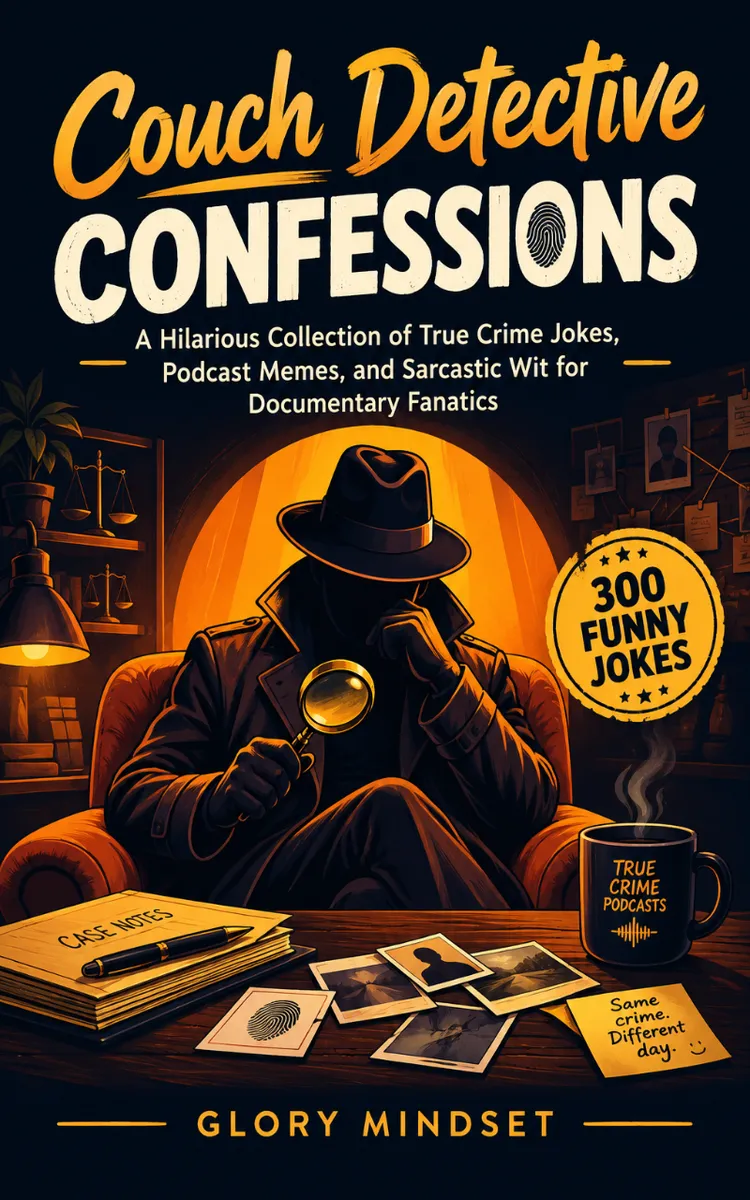
"Couch Detective Confessions" is a list book by Glory Mindset with 10 chapters and approximately 7,897 words. Clean jokes about true crime podcasts, documentaries, and armchair sleuthing.
This book was created using Inkfluence AI, an AI-powered book generation platform that helps authors write, design, and publish complete books.
Frequently Asked Questions
What is "Couch Detective Confessions" about?
Clean jokes about true crime podcasts, documentaries, and armchair sleuthing
How many chapters are in "Couch Detective Confessions"?
The book contains 10 chapters and approximately 7,897 words. Topics covered include The Couch Detective’s Oath, Podcast Hosts Who Know Too Much, Armchair Investigators Assemble, Documentary Dramatic Reenactments, and more.
Who wrote "Couch Detective Confessions"?
This book was written by Glory Mindset and created using Inkfluence AI, an AI book generation platform that helps authors write, design, and publish books.
Write your own list book with AI
Describe your idea and Inkfluence writes the whole thing. Free to start.
Start writingCreated with Inkfluence AI


