
Read the first chapter
The whole of chapter one, free. About 4 min. Turn the pages with the arrows, your keyboard, or a swipe.
Chapter 1
Simple Nutrition and Meal-Planning Guides
Overview
A nourishing meal plan should reduce decisions, not create another full-time job. This chapter presents four ebook ideas for homemakers who want practical ways to plan meals, lower grocery costs, and build eating habits that work on busy weekdays. The ideas are ranked from easiest to create and use to more detailed guides.
Each concept can be built with simple tools such as a weekly calendar, grocery list, pantry checklist, and a few reliable recipes. Ask yourself: which daily food problem takes the most time or money in your home?
The Breakdown
#1: The 30-Minute Weekly Meal Plan
Problem: Many households decide what to eat at the last minute, leading to takeout, repeated grocery trips, or skipped vegetables. Without a plan, five weekday dinners can create hours of daily decision-making and unnecessary spending.
Solution: Create a seven-day planning method that takes 30 minutes each weekend. The ebook can provide a simple grid with spaces for breakfast, lunch, dinner, and snacks, plus a short list of repeatable meals such as bean tacos, vegetable omelets, rice bowls, and baked chicken with frozen vegetables. Include a three-step process: check the family calendar, choose meals based on available time, and write the grocery list from the selected recipes.
Result: Readers finish the week with a clear food plan and fewer last-minute decisions. The guide is easy to create because it can rely on templates, meal combinations, and basic recipes rather than a large recipe collection.
#2: Budget-Friendly Pantry Meals
Problem: Grocery costs rise quickly when ingredients are bought for one meal and then forgotten. A half-used can of tomatoes, a bag of rice, or extra carrots may sit unused while the household buys more food for the next dinner.
Solution: Build an ebook around ten to twelve low-cost meals made from common pantry and freezer items. Organize the meals by base ingredient - for example, rice, pasta, beans, eggs, or potatoes - and show how one ingredient can serve several purposes. Add a “use first” pantry check and a sample shopping list with affordable staples such as oats, lentils, canned tuna, frozen peas, onions, and whole-grain pasta. Include simple storage notes, such as keeping cooked rice refrigerated and using it within three to four days.
Result: Readers waste less food and can prepare filling meals without buying specialty ingredients. The ebook is useful for households that need practical savings rather than strict dieting rules.
#3: The Balanced Plate Meal Guide
Problem: A meal may look filling but still leave someone hungry soon afterward when it contains mostly refined carbohydrates or lacks protein and fiber. Planning balanced meals can feel complicated when nutrition advice uses unfamiliar terms or requires detailed tracking.
Solution: Teach a simple plate guide: half non-starchy vegetables or fruit, one quarter protein, and one quarter grains or starchy foods. Define fiber as the part of plant food that supports digestion and helps meals feel satisfying. Provide mix-and-match examples, such as brown rice with black beans and peppers, or potatoes with eggs and a side salad. Include a one-page checklist readers can use to review each meal: “Where is the protein? Where is the produce? What will make this satisfying?”
Result: Readers gain a clear visual method for improving ordinary meals without counting every calorie. The guide is useful because it works with familiar foods, different budgets, and varied cooking skills.
#4: Small Habits for Healthier Family Eating
Problem: Large food changes often fail because they demand too much time and effort at once. A household may try to remove all sweets, cook every meal from scratch, or plan an entirely new menu, then return to old habits within a week.
Solution: Create a four-week ebook that introduces one manageable habit at a time. Week one might add a fruit or vegetable to one meal each day; week two might replace sugary drinks with water on weekdays; week three could set a regular breakfast option; and week four could establish a ten-minute kitchen reset after dinner. Include habit trackers with seven checkboxes per week and backup options for busy days, such as frozen vegetables, yogurt, whole-grain toast, or a rotisserie chicken. Encourage readers to measure consistency, not perfection.
Result: Families can improve everyday eating without turning meals into a source of conflict. The gradual format makes this ebook slightly more involved to create, but it offers strong long-term usefulness because readers practice each habit before adding another.
Together, these four ideas move from planning meals, to controlling costs, to building balanced plates, and finally to making changes last. A strong ebook in this section should always give readers something they can use at the next grocery trip or dinner.
What Comes Next
The next chapter shifts from meal planning to practical home wellness routines, including simple ways to add movement, rest, and self-care to a busy household schedule. Keep the same useful standard: clear steps, low-cost tools, and habits that fit real days.
End of chapter one. 2 more chapters in the full book.
Swipe or use the arrows to turn the page
What's inside: 3 chapters
- 1. Simple Nutrition and Meal-Planning Guides
- 2. Stress Relief, Rest, and Emotional Well-Being
- 3. Movement, Energy, and Healthy Home Routines
About this book
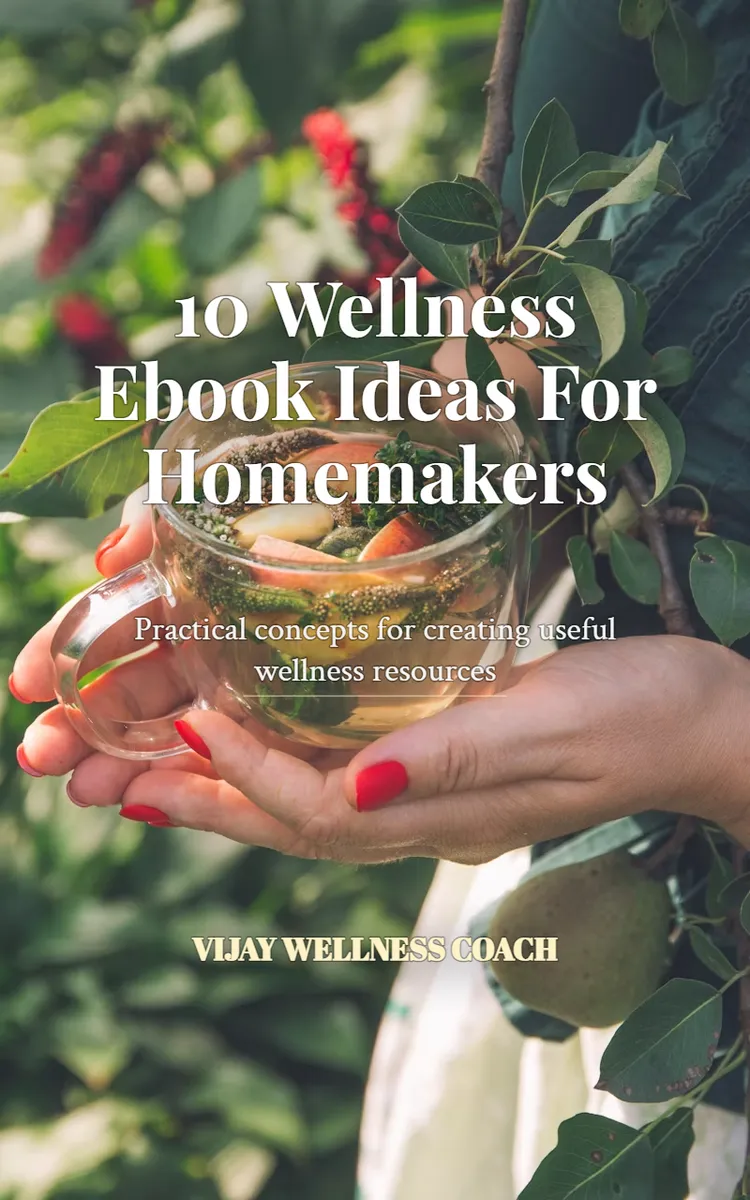
"10 Wellness Ebook Ideas For Homemakers" is a list book by VIJAY WELLNESS COACH with 3 chapters and approximately 2,460 words. Wellness ebook concepts for homemakers, ranked by creation ease and usefulness.
This book was created using Inkfluence AI, an AI-powered book generation platform that helps authors write, design, and publish complete books.
Frequently Asked Questions
What is "10 Wellness Ebook Ideas For Homemakers" about?
Wellness ebook concepts for homemakers, ranked by creation ease and usefulness
How many chapters are in "10 Wellness Ebook Ideas For Homemakers"?
The book contains 3 chapters and approximately 2,460 words. Topics covered include Simple Nutrition and Meal-Planning Guides, Stress Relief, Rest, and Emotional Well-Being, Movement, Energy, and Healthy Home Routines.
Who wrote "10 Wellness Ebook Ideas For Homemakers"?
This book was written by VIJAY WELLNESS COACH and created using Inkfluence AI, an AI book generation platform that helps authors write, design, and publish books.
Write your own list book with AI
Describe your idea and Inkfluence writes the whole thing. Free to start.
Start writingCreated with Inkfluence AI


