
Read the first chapter
The whole of chapter one, free. About 8 min. Turn the pages with the arrows, your keyboard, or a swipe.
Chapter 1
The Prayer Notebook Spill
Mara Al-Farouk pressed both palms against the fresh notebook as if it might try to escape before breakfast.
The kitchen table was barely large enough for the notebook, her Bible, a cup of coffee, three pens, and the small brass spoon she had brought from the drawer for no reason she could explain. Beside the table, the kettle clicked as it cooled. The apartment smelled of dark coffee, toasted bread, and the lemon cleaner Mara had used on the floor after dropping a jar of honey.
“Today,” she told the notebook, “we are going to be organized.”
The notebook offered no objection. Its cream-colored pages waited under the morning light, perfectly unwrinkled and impressively innocent. Mara had written the date at the top of the first page, underlined it twice, and drawn a neat little square beside it for a daily reflection.
Her plan was simple. She would read a passage about God and Jesus, note what stirred her, add a line about Mohammed’s teachings on mercy and patience, and finish with a prayer. The whole thing would take twenty quiet minutes.
That estimate already contained the first mistake.
She opened her Bible to the passage she had marked the night before. A yellow tab stuck out at an angle. Another tab had fallen onto the floor. A third was attached to the sleeve of her robe.
Mara peeled it off and frowned at the paper.
“Not today,” she said.
The kitchen gave a soft refrigerator hum. Somewhere upstairs, a chair scraped across a floor. Mara dipped her pen into the first line of the notebook and began copying a verse.
The words came slowly but neatly. God. Jesus. Mercy. Light. The letters settled into their rows like well-behaved guests. Mara paused to admire them, then reached for her coffee.
She had placed the cup on the far side of the table, beyond the notebook, beyond the Bible, and beyond the brass spoon. It was a sensible distance. It was also directly beneath the loose end of the charger cable.
When Mara lifted her elbow, the cable tightened.
The cup moved one inch.
Mara saw it move.
She had time to think, That is not where it belongs.
Then the cup tipped.
Coffee poured across the table in a shining brown sheet. It struck the notebook first, ran over the date, flooded the little reflection square, and soaked through the page with the confidence of a creature that had been waiting all morning for permission. A dark wave reached the Bible. The brass spoon spun in place and launched a single coffee-colored droplet onto Mara’s nose.
She did not move.
The refrigerator hummed. The kettle clicked again. One drop slid from the tip of her nose to her upper lip.
Mara licked it away.
“No,” she said.
She snatched the notebook up. The wet page clung to the one beneath it. Ink loosened and drifted across the paper in blue-gray clouds. The verse she had copied now looked less like a sentence and more like a weather report from a very small storm.
Mara grabbed a dish towel and pressed it against the page.
The towel absorbed the coffee, the ink, and, apparently, the remaining dignity of the morning.
“Not rub,” she whispered. “Press.”
She pressed harder.
The page tore.
A triangular piece of paper remained attached to the notebook while the rest of the sheet came away in her hand. The torn edge curled upward like a tiny white wave.
Mara stared at it.
The brass spoon rolled off the table and struck the floor with a bright ping.
From the hallway, her neighbor’s cat gave a startled yowl.
“I know,” Mara called. “I’m dealing with it.”
She set the ruined page beside the sink and opened the notebook to the next one. The coffee had seeped through the cover and left a brown outline shaped vaguely like a country no map had ever admitted existed. She turned the page.
The second page was damp.
The third page had a soft brown thumbprint.
The fourth page had absorbed the date so thoroughly that the number looked printed in sepia.
Mara lifted the notebook higher and inspected the damage. Coffee had traveled through the binding in thin, determined lines. It had reached the page where she intended to write her prayer and left a stain directly beneath the word “gratitude.”
“That feels pointed,” she said.
She tried to rescue the Bible next. The cover was wet along the lower edge, and the yellow tab had surrendered. Mara slid a clean towel beneath the pages and lifted them one at a time.
The passage blurred.
She could still read most of it, but the lines nearest the bottom had fused into a brown band. The ink had run around the letters, leaving pale halos. A sentence that had made perfect sense last night now appeared to say that mercy was available only after someone had washed the curtains.
Mara leaned closer.
“No. That cannot be right.”
She fetched a hair dryer from the bathroom. The cord barely reached the table, so she placed the dryer on the counter, aimed it toward the Bible, and switched it on.
The machine roared.
Loose papers flew from the far end of the table. One struck the refrigerator. Another landed in the fruit bowl. The yellow tab lifted from the Bible, sailed through the air, and attached itself to Mara’s sleeve again.
She switched the dryer off.
The silence that followed was enormous.
A strand of her hair stood straight up.
Mara removed the tab from her sleeve and placed it carefully on the counter. Then she looked at the coffee cup, which remained upright and empty, its handle pointing toward her with an almost cheerful accusation.
“You are not helping,” she said.
She considered starting over with a new cup of coffee. The thought lasted three seconds.
“No,” she decided. “That is how this began.”
Instead, she wiped the table, dried the Bible as best she could, and carried the notebook to the cleanest corner. The kitchen had become a narrow obstacle course of towels, loose pages, the hair dryer, and the brass spoon. To reach the chair, Mara had to step over the open drawer where she had dropped the honey jar lid.
Her heel caught the drawer.
The drawer slid shut with a wooden bang.
The brass spoon, which she had placed on the counter, fell into the sink.
Mara closed her eyes.
When she opened them, the Bible had slid half an inch toward the edge of the table.
She lunged for it.
Her hand caught the Bible, but her sleeve caught the hair dryer cord. The dryer tipped off the counter, swung downward, and struck the side of the table. The notebook jumped. Three damp pages lifted and slapped against Mara’s wrist.
She caught the notebook against her chest.
For one breath, everything stayed still.
Then the wet page she had torn loose slid off the counter, drifted downward, and landed face-first in the open sink.
The tap was not running. This was the one mercy available.
Mara retrieved the page with two fingers. It had acquired a faint gray stripe from the sink and a single crumb of toast near the line she had copied. She placed it on the windowsill beside a row of basil plants.
The basil leaned toward it.
“Even the plants are judging me,” Mara said.
She returned to the table and sat down. Her robe sleeve was damp. Her nose still smelled faintly of coffee. The notebook looked wounded but usable.
Mara opened to a dry page and began again.
This time she did not copy the passage. She would write from memory. That seemed safer. Her memory had survived far worse than breakfast.
She wrote the date. Then she wrote the first line, carefully and slowly. She added a sentence about Jesus, another about mercy, and a note beside Mohammed’s name about patience in ordinary troubles.
The pen moved smoothly.
Her confidence returned in small, cautious pieces.
“See?” she murmured. “Meaningful.”
She reached for the Bible, which she had moved to the far corner of the table. The damp pages made a faint sticking sound as she turned them. The passage was still readable above the brown tide. Mara compared the lines with what she had written.
The first sentence matched.
The second was close.
The third had a reference number at the end, but the number was hidden beneath the coffee stain.
Mara tilted the Bible toward the window.
The sunlight revealed a ghostly shape where the ink had run. She could make out a small mark, then perhaps a seven, then nothing. The verse itself continued on the next page, but the reference had vanished.
She turned back to the notebook. Her rewritten passage looked clean except for one crooked word and a pale coffee ring beneath the final line.
Mara read it aloud.
“God gives light through mercy, and Jesus teaches the heart to - ”
She stopped.
The Bible’s blurred line seemed to contain more words than she had remembered. The sentence in her notebook ended too neatly. The damaged page suggested a continuation, but the coffee had erased the reference and half the verse.
She flipped through the surrounding pages. A corner had been folded down near the back. Another page was missing from the notebook, though she could not remember tearing it out. In the Bible, a thin gap appeared between two sections where the binding had loosened.
Mara counted the pages with her thumb.
One page was absent.
She checked the floor. Nothing.
She checked beneath the table. Only a dust ball, a pencil, and the fallen yellow tab.
The notebook’s brown stain spread slightly beneath the paper as the dampness settled.
Mara held the Bible open and looked at the incomplete line.
“So I got what I wanted,” she said. “A meaningful reflection.”
The kitchen offered its usual hum.
“But now it needs a missing verse.”
She wrote the passage again, this time leaving a blank where the lost reference belonged. Then she added a small note beneath it: “Find the rest.”
The words looked less like a failure than a promise, though Mara did not trust promises made before noon.
She placed the notebook in the middle of the table, far from the coffee, the sink, the charger cable, and every object with a history of betrayal. The brass spoon remained in the sink. The hair dryer sat on the floor. The damp Bible rested open beside the basil plant, whose leaves had begun to droop toward the missing page.
Mara lifted the cup and carried it to the counter.
As she set it down, she noticed a folded scrap of paper beneath it.
She pulled it free.
The paper was dry, covered in cramped handwriting, and marked with a verse reference she did not recognize. At the bottom, someone had written one word in a hurried hand:
“Again.”
Mara stared at it.
Then the kettle clicked on by itself.
End of chapter one. 39 more chapters in the full book.
Swipe or use the arrows to turn the page
What's inside: 40 chapters
- 1. The Prayer Notebook Spill
- 2. The Mosque Sign Misprint
- 3. The Lost Key and Quiet Answer
- 4. The Wrong Psalm in the Bag
- 5. The Candle That Won’t Stay Lit
- 6. The Bible Page Torn by Cat
- 7. The Library Shelf That Reorders Itself
- 8. The Umbrella That Flips the Hymn
- 9. The Smartphone Auto-Translate Blunder
- 10. The Potluck Sauce Lands on Shoes
- 11. The Riddle Note in the Teacup
- 12. The Choir Microphone Screeches
- 13. The Handshake That Smudged Ink
- 14. The Street Preacher’s Kite String
- 15. The Scripture Riddle on the Bus
- 16. The Prayer Mat Torn in Rain
- 17. The Hospital Waiting Room Silence
- 18. The Chaplain’s Candle Falls
- 19. The Elevator Stuck Between Floors
- 20. The Comment Section Turns Into Court
- 21. The Flagged Post Reappears as Spam
- 22. The Community Event Power Outage
- 23. The Bible Verses in the Wrong Order
- 24. The Storm Door Slams on Everyone
- 25. The Doubt Prayer on the Rooftop
- 26. The Margin Note Burns in the Wind
- 27. The Missing Line in the Archive
- 28. The Disposal Box Opens Itself
- 29. The Organizer’s Name Is Misread
- 30. The Rooftop Gag Goes Too Far
- 31. The Apology Letter Finally Reaches
- 32. The Integrity Check in the Gym
- 33. The Silent Reading Breaks the Noise
- 34. The Paper Airplane Opens a Trap
- 35. The Live Debate Turns Into Blessing
- 36. The Service Day With Extra Helping Hands
- 37. The Gag Note Returns as a Thank-You
- 38. The Prayer Schedule That Finally Fits
- 39. The Last Missing Verse Gets Found
- 40. Warm Prayer, No More Mishaps
About this book
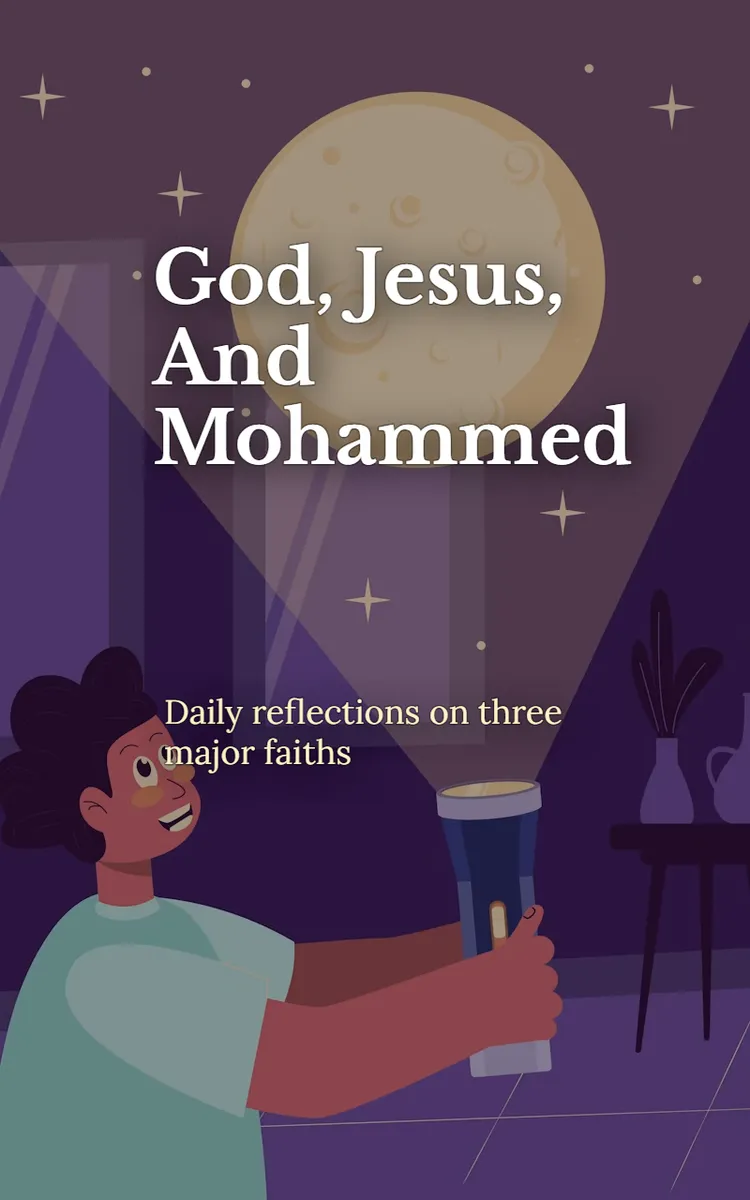
"God, Jesus, And Mohammed" is a comedy book by Anonymous with 40 chapters and approximately 90,387 words. Daily reflections centered on God, Jesus, and Mohammed.
This book was created using Inkfluence AI, an AI-powered book generation platform that helps authors write, design, and publish complete books. It was made with the AI Novel Writer.
Frequently Asked Questions
What is "God, Jesus, And Mohammed" about?
Daily reflections centered on God, Jesus, and Mohammed
How many chapters are in "God, Jesus, And Mohammed"?
The book contains 40 chapters and approximately 90,387 words. Topics covered include The Prayer Notebook Spill, The Mosque Sign Misprint, The Lost Key and Quiet Answer, The Wrong Psalm in the Bag, and more.
Who wrote "God, Jesus, And Mohammed"?
This book was written by Anonymous and created using Inkfluence AI, an AI book generation platform that helps authors write, design, and publish books.
How can I create a similar general book?
You can create your own general book using Inkfluence AI. Describe your idea, choose your style, and the AI writes the full book for you. It's free to start.
Write your own comedy book with AI
Describe your idea and Inkfluence writes the whole thing. Free to start.
Start writingCreated with Inkfluence AI


