

Read the first chapter
The whole of chapter one, free. About 9 min. Turn the pages with the arrows, your keyboard, or a swipe.
Chapter 1
The Woman at the Harbour
The rusted chain at the end of the harbour wall was singing in the wind when Hannah saw the woman beyond it.
It struck the iron post again and again, bright and hollow, while the woman stood with her back to the sea. Spray leapt over the stones below, whitening her dark coat. She had no hat, no gloves, and one hand was pressed against her ribs as though she had run there.
Hannah stopped beside the lifebuoy cabinet.
“Don’t go any further,” she called.
The woman turned.
For one impossible second, Hannah was seventeen again, barefoot on the kitchen lino, watching Sophie twist her wet hair into a knot before running out into the rain.
Then the present returned with the gulls shrieking overhead and the harbour water slamming against the wall.
The woman’s face was older than Sophie’s had been, but not by much. The same narrow chin. The same pale eyes, set a little too close together. A small white mark cut through her left eyebrow.
Hannah had spent fifteen years studying photographs.
“Are you all right?” she asked.
The woman looked past her towards the town. “I thought you’d come alone.”
Hannah’s fingers tightened around the strap of her bag. She had been carrying groceries from the corner shop. Eggs, bread, a tin of soup. The paper bag had begun to soften in the rain.
“Who are you?”
A wave struck the wall. The woman flinched, though she did not move away from the edge.
“Hannah.”
Nobody in town called her that in quite the same way. The woman made it sound like a question and an answer together.
Hannah took one careful step forward. “You know my name.”
“I know more than that.”
“Then tell me.”
The woman’s gaze moved over Hannah’s face, searching for something. Recognition, perhaps. Or a mistake she had not yet decided whether to admit.
“I’m Sophie.”
The paper bag tore.
Two eggs struck the paving stones and broke, yellow spreading between the cracks.
Hannah stared at them. One shell rolled towards the drop and stopped against her boot.
The woman said nothing.
Behind them, a van rattled over the harbour road. Someone shouted near the fish market. The ordinary sounds made the moment worse. They gave it edges. This was not a dream, and it was not a photograph.
“You’re not Sophie,” Hannah said.
The woman’s mouth trembled. “I was.”
“That isn’t an answer.”
“It’s the only one I have.”
Hannah looked at the scar in the eyebrow. Sophie had had it. Hannah remembered the afternoon it happened, or believed she did: Sophie climbing the old watchtower, laughing when Hannah told her to come down, then slipping on the wet stone. Their mother had blamed Hannah for taking her there. Their father had said the cut was nothing.
But the memory had always been strange. In it, the sky was bright. In every photograph from that summer, the sky was grey.
The woman took a step back.
“Wait,” Hannah said.
“I shouldn’t have come here.”
“You came to the harbour wall.”
“I wanted to see it.”
“Why?”
The woman looked down at the water. “Because I remembered it.”
“Then prove it.”
A faint crease appeared between the woman’s brows. “Prove what?”
“That you’re Sophie.”
“I can’t prove fifteen years.”
“You can start with one.”
The woman’s face closed. For a moment she looked frightened, and the fear seemed too real to be acted. Then the wind caught her coat and pulled it open. Her clothes were thin beneath it. Her hands had gone blue.
Hannah glanced towards the end of the wall. “You need to get out of the cold.”
“I’m not cold.”
“You’re shaking.”
“I’ve been shaking for a long time.”
The words landed with a quiet force. Hannah felt them somewhere behind her ribs.
She should have called the police. She should have walked away. She should have asked for a photograph, a birthmark, the name of Sophie’s first teacher, anything that belonged to the girl who had vanished at seventeen.
Instead, she bent and picked up the unbroken tin of soup.
“Come with me,” she said.
The woman did not move.
“My house is five minutes away. You can warm up, and then we’ll call someone.”
“Your parents?”
Hannah looked at her sharply.
The woman’s eyes dropped. “I remember your house.”
“You’ve never been there.”
“I have.”
“No. Sophie lived there. You didn’t.”
The woman swallowed. “There was a crack in the blue tile beside the back door. Your father kept saying he’d mend it.”
Hannah felt the ground shift beneath her.
The tile had been replaced years ago. She had never told anyone about the crack. Not even Sophie. It had been where Hannah hid things: a marble, a silver button, a note she had written to herself and then torn up.
The woman lifted her chin. “Does it still - ”
“Walk,” Hannah said.
They moved along the wall together, Hannah nearest the sea. The woman kept her head lowered. Twice she stumbled, and twice Hannah reached for her arm before remembering she had no right to touch her.
At the gate, a fisherman paused beside his van and stared.
“Everything all right, Hannah?”
“Yes,” she said too quickly.
The woman turned her face away.
The fisherman’s eyes narrowed. “Do I know you?”
“No,” Hannah said.
The woman looked at him then. Something passed across her expression - fear, recognition, or simple exhaustion.
Hannah took her elbow. “Come on.”
The woman allowed herself to be led up the steep road. Rain ticked against the shop awnings. Hannah’s cottage stood at the end of a row of old net lofts, its windows facing the harbour. She found the key with numb fingers and pushed open the door.
Heat and the faint smell of toast met them.
The woman stepped inside and stopped.
Hannah locked the door behind them.
“You can sit there.” She pointed to the chair by the small electric fire. “I’ll make tea.”
“I don’t drink tea.”
“Sophie did.”
“I’m not thirsty.”
“You’re soaked.”
The woman looked down at her coat. Water had darkened the shoulders. A strand of hair clung to her cheek.
Hannah went to the kitchen and filled the kettle. Her hands would not stop trembling. She placed them flat on the worktop until the shaking eased.
In the reflection of the dark window, the woman stood behind her.
“What happened to you?” Hannah asked.
“I was taken.”
“By whom?”
“I don’t know.”
“That’s convenient.”
“I didn’t say it was.”
The kettle clicked on. A small, ordinary sound.
Hannah turned. “Where have you been?”
The woman stared at the fire. “Places.”
“Which places?”
“Safe ones. Then unsafe ones.”
“Did someone hurt you?”
The woman’s expression changed. “Not in the way you mean.”
Hannah picked up two mugs, though she knew the woman had said no. “What do you remember about the night you disappeared?”
“Rain.”
“It wasn’t raining.”
The woman looked at her.
Hannah wished she could pull the words back. “The reports said it was dry.”
“Reports can be wrong.”
“People saw you at the harbour.”
“People see what they’re told to see.”
“Who told them?”
The woman rubbed her hands together. Her nails were cut short, the skin around them raw. “You ask too many questions.”
“I’ve had fifteen years to practise.”
A muscle moved in the woman’s cheek.
Hannah placed a mug on the table. “If you’re Sophie, why come back now?”
“I didn’t decide to.”
“Then who did?”
The woman did not answer.
Outside, a car passed slowly over the wet road. Its headlights slid across the ceiling and vanished. The woman watched the light go.
Hannah sat opposite her. Up close, the resemblance was worse. Sophie’s face lived beneath the woman’s face, not as a memory but as a pattern Hannah could almost touch. The small scar. The slight tilt of the mouth. The habit of pressing one thumb against the side of the other when anxious.
But Sophie had never been anxious in front of strangers. She had been reckless, impatient, impossible to frighten.
Or Hannah had believed she was.
“Tell me something only Sophie would know,” Hannah said.
The woman’s eyes lifted.
“Not the house. Not the scar. Something between us.”
The woman’s lips parted. For several seconds, only the fire clicked.
Then she said, “You used to hide under the stairs when Mum and Dad argued.”
Hannah’s breath caught.
The woman continued, softly. “You’d take the green blanket from your bed. You called it your tent. Sophie was the only one who knew.”
Hannah heard the kettle begin to boil again, though it had already clicked off.
“How do you know that?”
“You told me.”
“When?”
The woman looked towards the hallway. “Before.”
“Before what?”
“Before I left.”
Hannah stood so quickly the chair struck the wall.
“No,” she said. “I never told you that.”
The woman’s face had gone pale.
“I never told Sophie,” Hannah said. “I never told anyone.”
A silence opened between them.
Hannah saw the stairs in her mind: the narrow space beneath them, the dust, the green blanket pulled over her head. She saw Sophie crouching beside her, whispering that the shouting would end soon. She remembered Sophie’s hand covering her mouth when Hannah began to cry.
But the woman had not said what Sophie whispered.
She had said tent.
That word belonged to Hannah alone. She had invented it. She had never spoken it aloud because, even as a child, she had known it sounded foolish.
The woman pushed herself upright.
“I should go.”
Hannah moved between her and the door. “You’re not going anywhere.”
“You don’t believe me.”
“I don’t know what I believe.”
“That’s not the same thing.”
“Who told you about the blanket?”
“No one.”
“Then how do you know?”
The woman’s eyes filled, but no tears fell. “Because I was there.”
Hannah stared at her.
“You weren’t under the stairs,” she said. “You were beside me.”
The woman looked down at her hands.
“Who are you?” Hannah whispered.
The woman’s shoulders folded inwards. “I don’t know how to be her.”
“Be honest, then.”
“I’m trying.”
“Try harder.”
The woman closed her eyes. When she opened them, the fear had returned.
“Sophie called you something,” she said.
Hannah’s skin prickled.
“What?”
The woman looked directly at her.
“Nan.”
The room seemed to tilt.
Sophie had used the nickname when they were little, before Hannah could pronounce her own name properly. Their parents had hated it. They said it made Hannah sound old. Sophie had stopped using it after the disappearance, because there had been no Sophie to use it.
Hannah had never told anyone. Not the police. Not the newspapers. Not the strangers who came to the door asking what Sophie was like.
She had buried the name with the rest of her childhood.
The woman’s voice dropped to a whisper. “You hated it when Mum called you Hannah.”
Hannah reached for the door handle.
The woman flinched. “Please don’t send me away.”
Hannah looked at her face, at the scar that should have been impossible, at the eyes that might have belonged to her sister or to someone who had studied every photograph carefully.
She opened the door.
Cold rain blew into the hall.
For one moment, she almost told the woman to leave.
Then Hannah saw the woman’s bare hands and remembered the harbour wall, the chain striking the post, the sea waiting below.
She shut the door again.
“Sit down,” she said.
The woman obeyed.
Hannah took out her phone and placed it on the table between them. She did not call the police. She did not call her parents. Not yet.
“Tell me everything you remember,” she said.
The woman wrapped both hands around the untouched mug.
“I remember waking up in a room with no windows,” she said. “I remember someone saying my name wasn’t Sophie.”
Hannah felt the old grief stir beneath the hope, sharp as a hook.
“Whose name was it?”
The woman looked towards the locked door.
“I don’t know.”
Then, after a pause, she added, “But I remember the sea caves. And I remember you were there the night it happened.”
End of chapter one. 19 more chapters and about 37,638 words in the full book.
Swipe or use the arrows to turn the page

What's inside: 20 chapters
- 1. The Woman at the Harbour
- 2. A Sister Returned
- 3. The Missing Summer
- 4. The Cave Below the Cliffs
- 5. The Sister She Remembers
- 6. The Photograph in the Paper
- 7. Elise's Version
- 8. The Locked Boathouse
- 9. A Name in the Margin
- 10. The Night the Bell Rang
- 11. The Mother’s Key
- 12. The Father’s Alibi
- 13. Beneath the Tide Mark
- 14. The Confession Interrupted
- 15. The Girl in the Mirror
- 16. The Name on the Ferry List
- 17. The Flooded Passage
- 18. What the Sea Kept
- 19. A Sister’s True Name
- 20. The Last Time I Saw Her
About this book
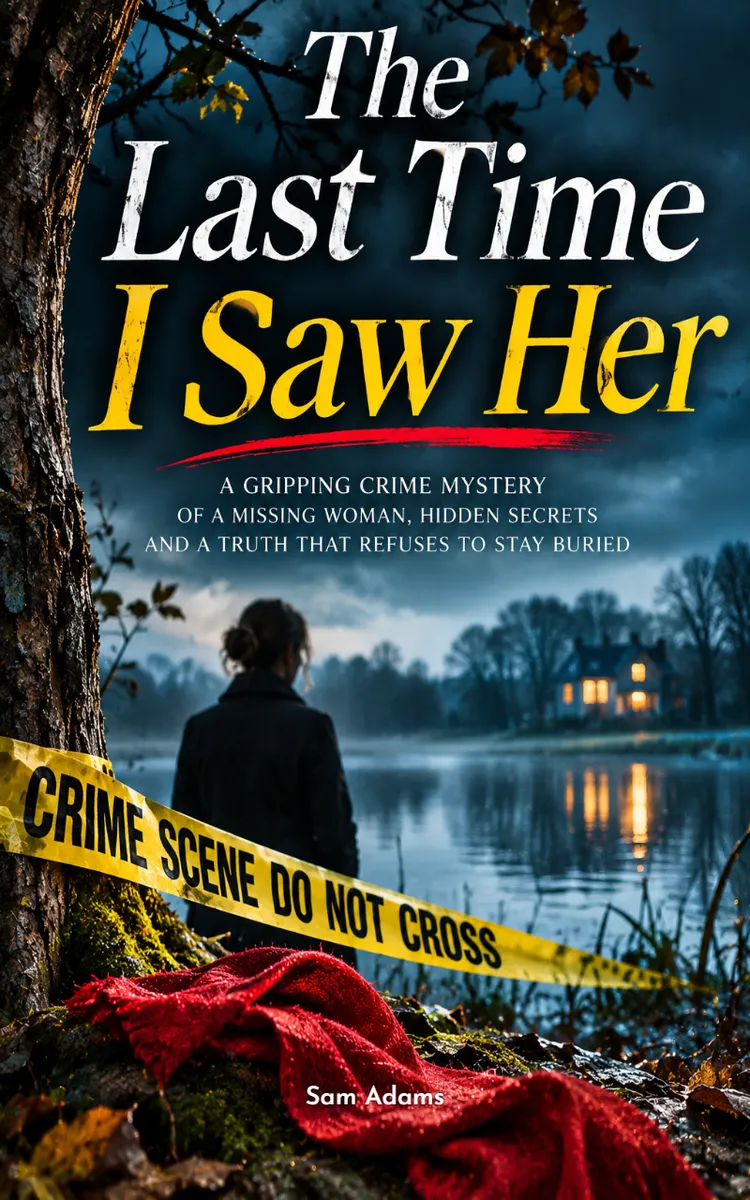
"The Last Time I Saw Her" is a fiction book by Sam Adams with 20 chapters and approximately 37,638 words. A missing girl’s return exposes family secrets and conflicting memories.
This book was created using Inkfluence AI, an AI-powered book generation platform that helps authors write, design, and publish complete books. It was made with the AI Novel Writer.
Frequently Asked Questions
What is "The Last Time I Saw Her" about?
A missing girl’s return exposes family secrets and conflicting memories
How many chapters are in "The Last Time I Saw Her"?
The book contains 20 chapters and approximately 37,638 words. Topics covered include The Woman at the Harbour, A Sister Returned, The Missing Summer, The Cave Below the Cliffs, and more.
Who wrote "The Last Time I Saw Her"?
This book was written by Sam Adams and created using Inkfluence AI, an AI book generation platform that helps authors write, design, and publish books.
How can I create a similar fiction book?
You can create your own fiction book using Inkfluence AI. Describe your idea, choose your style, and the AI writes the full book for you. It's free to start.
Write your own fiction book with AI
Describe your idea and Inkfluence writes the whole thing. Free to start.
Start writingCreated with Inkfluence AI


