

Read the first chapter
The whole of chapter one, free. About 10 min. Turn the pages with the arrows, your keyboard, or a swipe.
Chapter 1
Choose Clothes That Feel Like You
The Outfit You Keep Fighting
Last Tuesday, I put on a blouse I loved in theory. The color was right. The shape was flattering on the hanger. It even worked with my favorite trousers. Then I lifted my arms and the sleeves pulled. I sat down and the buttons strained. Every few minutes, I tugged the hem back into place.
By lunchtime, I wasn’t thinking about the conversation in front of me. I was thinking about the blouse. I crossed my arms to stop the pulling, adjusted the neckline, and checked the buttons in every reflective surface. The outfit had become a small, persistent nuisance - like a fly that keeps landing in the same place.
You know this pattern. You leave home feeling almost put together, then spend the day pulling, smoothing, covering, tightening, or readjusting. You tell yourself the discomfort is normal because the outfit looks good. But if you’re constantly fighting your clothes, they’re not helping you feel confident. They’re asking for your attention. Do you recognize this in yourself?
The Question That Changes the Outfit
What if the clothes you keep trying to “get used to” are simply not right for you?
That question can feel surprisingly uncomfortable. We’re often taught to blame ourselves first. Maybe we need better posture. Maybe we should lose weight. Maybe we’re not stylish enough to wear that shape. Maybe discomfort is the price of looking polished.
It isn’t. A good outfit should support your day, not turn you into its unpaid maintenance crew. Comfort doesn’t mean careless or oversized. Fit doesn’t mean squeezing yourself into a smaller number. It means the clothes sit where they should, move when you move, and let you pay attention to your actual life.
Before I started using the Feel-Good Fit Test, I’d keep pieces because they looked good in one frozen pose. A pair of trousers might look sleek while standing, but pinch when I sat. A dress might photograph beautifully, but require constant neckline checks. Now I test clothes before they earn a place in my regular rotation. I sit, walk, reach, bend, and look at myself from the side. If I’m still adjusting the garment after a few minutes, I listen to that information.
The difference is immediate. Instead of wearing the blouse and spending the day managing it, I chose a softer top with enough room through the shoulders. It wasn’t as dramatic on the hanger. On me, it looked better because I looked relaxed. My shoulders dropped. I stopped touching the hem. I could actually enjoy what I was wearing.
That’s the part people miss: confidence often looks like ease. It’s hard to feel attractive when your clothes are constantly reminding you they’re there.
Follow the Distraction Back to Its Source
The pattern usually looks like this:
• When you choose a piece because it looks impressive on the hanger or on someone else, you overlook how it feels on your body.
• You feel restricted, exposed, sloppy, or unsure once you start moving.
• So you adjust the clothing repeatedly, avoid certain movements, or keep checking your reflection.
• Which leads to distraction, self-consciousness, and the feeling that you’re wearing a costume instead of an outfit.
Now try the alternative chain:
• When you test the fit through ordinary movements before committing to the outfit, you notice what your body is telling you.
• You feel supported because the fabric, shape, and coverage work with your day.
• So you move naturally instead of guarding the garment.
• Which leads to a calmer presence and a more confident outfit, even when the clothes are simple.
This is why I care so much about the Feel-Good Fit Test. It isn’t about chasing perfection. It’s about collecting honest evidence. Can you sit comfortably? Can you raise your arms? Does the waistband dig in after ten minutes? Does the neckline stay where you put it? Do you like what the clothes emphasize, or are they creating a distraction?
Use the test in a fitting room, before removing tags, or at home while you still have the option to return something. Try five movements: sit, reach, walk, bend, and turn sideways in a mirror. Then notice your hands. If they keep going to the same problem area, believe them.
Clothes should make your day easier, not require your constant supervision.
Rate the Relationship Between You and Your Clothes
Use these questions honestly. You’re not grading your style. You’re noticing where your wardrobe supports you and where it asks too much.
• On a scale of 1-10, how comfortable are you in your usual everyday outfits?
A 1-3 suggests that discomfort has become normal in your wardrobe. A 7-10 means comfort is already a useful guide, though specific pieces may still need attention.
• Yes or no: Can you sit, reach, bend, and walk without adjusting your clothes?
“No” points to a fit or coverage problem, not a personal failure. “Yes” suggests the garment is working with your movements.
• On a scale of 1-10, how often do you wear something because you think you should be able to pull it off?
A high number may reveal that approval or trend pressure is choosing your clothes for you. A low number means your own comfort and taste have more influence.
• Yes or no: Do you have at least three outfits you’d happily wear again tomorrow?
“No” may mean your wardrobe has too many experimental pieces and not enough dependable ones. “Yes” gives you a strong base for building more outfits that feel like you.
Here’s a simple interpretation guide: if your comfort score is low and you answered “no” to movement, start with fit before buying anything new. If your clothes fit but you still feel unsure, pay attention to whether the style feels like yours or like an imitation of someone else. If you already have a few easy outfits, study what they share. Similar fabrics, waistlines, necklines, colors, or levels of coverage may be showing you your personal uniform.
The Three-Day Feel-Good Fit Challenge
Build one outfit you can trust.
• Day One: Find the evidence.
Pull out five pieces you wear often. Try each one on for five minutes, not five seconds. Sit at a table, reach for something on a high shelf, walk across the room, bend to pick up a shoe, and turn sideways in a mirror. Write down one sentence per item: “Keep,” “Alter,” “Wear differently,” or “Let go.”
Expected difficulty: Easy.
• Day Two: Create tomorrow’s outfit tonight.
Choose one “Keep” piece and build around it with clothes you already know feel comfortable. Check the small details: socks, underwear, hair tie, shoes, and any visible layers. Aim for coordination, not perfection. Put the full outfit on a chair before bed.
Expected difficulty: Medium.
• Day Three: Wear it through real life.
Wear the outfit for at least six hours. Notice your body, not just the mirror. Did you tug the top? Avoid sitting? Worry about showing too much? Or did you forget what you were wearing because it was doing its job? Write down what worked and one adjustment for next time.
Expected difficulty: Medium.
You’ll know it’s working when:
• You stop checking and readjusting the outfit every few minutes.
• You feel comfortable sitting, walking, and moving through your normal day.
• You’re excited to wear the outfit again instead of relieved to take it off.
Do this with one outfit first. You don’t need to rebuild your entire wardrobe in a weekend. The goal is to learn your own signals. A soft fabric, a steady waistband, enough room across the shoulders, or a neckline that stays put may matter more to you than a dramatic trend. That information is valuable. Keep it.
Let Comfort Become Your Style Filter
Your clothes are allowed to feel good before they look impressive.
• The Feel-Good Fit Test checks whether clothes work while you sit, reach, walk, bend, and turn - not just while you stand still.
• Constant fiddling is useful information. It usually points to a fit, fabric, coverage, or styling problem.
• Confidence grows when your clothes let you move naturally instead of making you monitor yourself.
• The best wardrobe starts with dependable pieces that feel like you, not with someone else’s idea of what you should wear.
Before you buy or keep a piece, ask yourself what it will demand from you. Will you need special underwear, constant steaming, careful sitting, or repeated neckline checks? Some maintenance is fine. But if the garment needs more attention than you can reasonably give, it may not belong in your everyday wardrobe.
Think about your favorite outfit. Not the one that gets the most compliments - the one you reach for when you want to feel like yourself. Maybe it’s a fitted sweater with straight-leg jeans. Maybe it’s a soft dress with boots. Maybe it’s a simple shirt, trousers, and one small detail that makes the whole thing feel finished. Study that outfit. Its comfort is not an accident. It’s a clue.
Start choosing more pieces that share those clues. Keep a neutral base you can rely on, then add color, texture, or an accessory when you want more interest. Match small details when it helps - the socks, hair tie, underwear, or shoes - because those quiet connections can make an outfit feel intentional. And remember: you don’t have to reveal everything at once. If a top shows more chest, balance it with more coverage elsewhere. Feeling secure is part of looking put together.
The more often you trust comfort and fit, the easier it becomes to recognize your own style. You stop asking whether you can force yourself into a look and start asking a better question: what helps me feel most like myself today? From there, how will you use that answer to build a wardrobe that feels as good as it looks?
A Small Habit That Changes Your Morning
You already have the clue: pick the pieces that make you feel like yourself and stop rescuing outfits mid-day. Now add one small, repeatable habit that turns that insight into reality. The night before, lay out the whole outfit you plan to wear - not just the main pieces, but the socks, underwear, hair tie, and one accessory. Put them on a chair or hook by the door so you see them before sleep. This simple move reduces morning friction and gives you a tiny thrill when you wake up: you’re already committed to looking and feeling like you.
Do this for three nights in a row. Notice how making the choice while you’re calm changes what you pick. You’ll be less likely to reach for something that looks impressive but demands constant fiddling because you can’t imagine the garment in real life - bending, reaching, taking public transit. You’ll also begin to notice patterns: maybe your safe outfits include a mid-rise trouser, a soft V-neck, and low-heeled shoes. Those patterns are your personal uniform showing up.
Tweak, Don’t Overhaul
If the chair method reveals a piece that consistently earns an “alter” note, make a tiny fix. Swap a bra for one with a better strap placement. Add a bit of hemming or a simple camisole to stop neckline checks. These are low-cost, low-drama moves that preserve what you like while removing the irritations. If a garment needs more than a one-time tweak - constant tugging at the waist, perpetually slipping straps, or sleeves that bind - treat it like an “experiment” rather than a staple. Wear it when you want to try something different, not when you need to be fully present.
You’ve got this: minor adjustments create major relief. They keep the pieces you love while letting you move through your day without distraction.
Quick Reflection: Your Next Closet Edit
Take five minutes tonight. Pull one item from your “keep” pile and one from your “maybe” pile. Put the “keep” outfit on the chair as described. For the “maybe” piece, do the Feel-Good Fit Test again - sit, reach, bend, and walk for three minutes. If your hands keep finding the same problem, let it go or label it for alteration. If it passes, add it to a rotation plan: wear it twice in the next two weeks and notice how it performs.
This tiny ritual trains your eye and your hands. Over time you’ll stop buying clothes that look great in a photo and start buying things that make you feel relaxed, present, and like yourself.
Carry This Forward
Start tonight: pick one outfit, include the small details, and sleep on it. Tomorrow, pay attention to whether your hands stay still. If they do, you’re wearing the right thing. If they don’t, you’ve learned exactly where to tweak.
You’re building a wardrobe that supports the real you - and that’s worth doing one calm decision at a time.
End of chapter one. 4 more chapters and about 8,028 words in the full book.
Swipe or use the arrows to turn the page
What's inside: 5 chapters
- 1. Choose Clothes That Feel Like You
- 2. Stop Fidgeting, Start Feeling Present
- 3. Build a Wardrobe Around Timeless Favorites
- 4. Use a Neutral Base to Pull Looks Together
- 5. Balance Skin-Baring Details with Intention
About this book
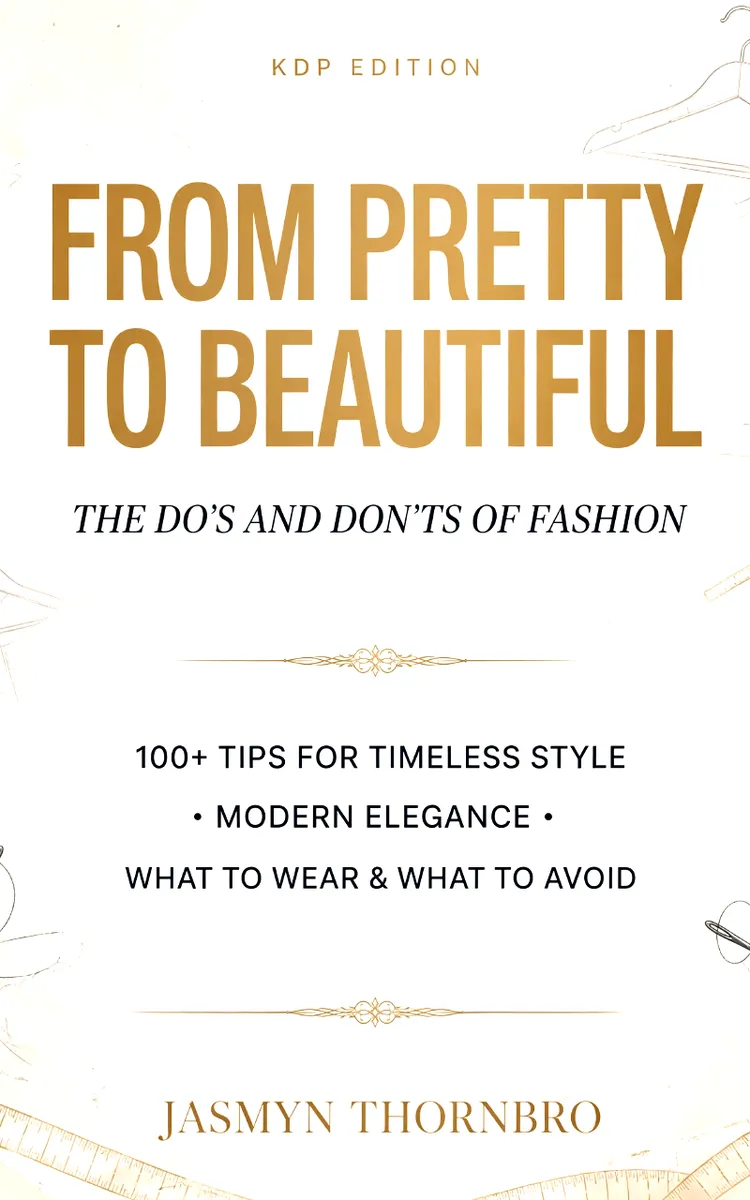
"Dress Like Yourself" is a self-help book by Jasmyn Thornbro with 5 chapters and approximately 8,028 words. Personal fashion choices for comfortable, flattering, and coordinated outfits.
This book was created using Inkfluence AI, an AI-powered book generation platform that helps authors write, design, and publish complete books. It was made with the AI Self-Help Book Writer.
Frequently Asked Questions
What is "Dress Like Yourself" about?
Personal fashion choices for comfortable, flattering, and coordinated outfits
How many chapters are in "Dress Like Yourself"?
The book contains 5 chapters and approximately 8,028 words. Topics covered include Choose Clothes That Feel Like You, Stop Fidgeting, Start Feeling Present, Build a Wardrobe Around Timeless Favorites, Use a Neutral Base to Pull Looks Together, and more.
Who wrote "Dress Like Yourself"?
This book was written by Jasmyn Thornbro and created using Inkfluence AI, an AI book generation platform that helps authors write, design, and publish books.
How can I create a similar self-help book?
You can create your own self-help book using Inkfluence AI. Describe your idea, choose your style, and the AI writes the full book for you. It's free to start.
Write your own self-help book with AI
Describe your idea and Inkfluence writes the whole thing. Free to start.
Start writingCreated with Inkfluence AI


