

Read the first chapter
The whole of chapter one, free. About 3 min. Turn the pages with the arrows, your keyboard, or a swipe.
Chapter 1
Understanding AI in Plain English
What Is AI?
AI is short for artificial intelligence. In this book, we will focus on computer tools you can ask questions and exchange messages with. Two examples are ChatGPT and Claude.
You write a question, and the tool writes an answer. You can then ask another question or ask it to explain something more simply.
People use these tools for things such as:
• Writing a birthday message.
• Thinking of something to cook.
• Explaining an unfamiliar word.
• Getting ideas for a hobby.
• Making a letter clearer.
You do not need to learn how the technology is built to begin using it. We will take each step slowly, including where to type and how to send your first question.
For now, there is nothing you need to open or click.
How Does It Know What to Say?
Tools such as ChatGPT and Claude have been trained using large amounts of writing. This helps them put together answers to questions.
They are not people. They do not have personal experience of cooking a meal, growing tomatoes, or talking to a friend. They can write about those things, but they can also get them wrong.
The most useful thing to remember is:
AI can sound certain even when its answer is wrong.
Clear writing does not guarantee correct information.
A Simple Example
Imagine you have potatoes, carrots, and an onion left in your kitchen. You might ask:
“Can you suggest an easy meal using potatoes, carrots, and an onion?”
The answer might suggest vegetable soup and give you a recipe.
But perhaps the recipe also includes cream, and you do not have any. You can write back:
“I don’t have cream. Can you suggest a version without it?”
You do not have to get your first question perfect. You can add details as you go.
The answer may still need checking. Does the recipe make sense? Does it include something you cannot eat? You decide whether the suggestion suits you.
What If You Do Not Understand the Answer?
Sometimes AI gives an answer that is too long or uses unfamiliar words. That does not mean you have done anything wrong.
You can ask:
“Please explain that in simpler words.”
“Please give me a shorter answer.”
“Please show me one step at a time.”
You can ask again if the explanation is still unclear. There is no need to apologise.
When Should You Check an Answer?
A birthday message is easy to judge for yourself. You can read it and decide whether you like it.
Other answers need more care. AI might give you the wrong opening time for a shop or an incorrect date for an event. Check those details with the shop or organiser before making plans.
For decisions about your health, money, or legal matters, speak to a qualified person. An AI answer should not be the only thing you rely on.
You do not have to spot every mistake yourself. Knowing when to check is part of learning to use the tool.
What to Remember
• You can ask questions in your own words.
• You can ask for a simpler explanation.
• You can correct an answer or add more detail.
• AI sometimes gets things wrong.
• You choose what to use and what to leave.
There is no need to memorise technical words. We will begin with small, everyday tasks and build from there.
End of chapter one. 11 more chapters in the full book.
Swipe or use the arrows to turn the page


What's inside: 12 chapters
- 1. Understanding AI in Plain English
- 2. What AI Can Do-and Where It Fails
- 3. Finding ChatGPT and Keeping Your Details Private
- 4. Your First Conversation with ChatGPT
- 5. Asking Questions and Giving Useful Details
- 6. Keeping the Conversation Going
- 7. Getting Clearer Answers, One Step at a Time
- 8. Simple Everyday Tasks to Practise
- 9. Checking Answers and Knowing When to Ask a Person
- 10. Trying Claude and Using Familiar Skills
- 11. When Something Goes Wrong or Looks Different
- 12. Seven Days of Practice at Your Own Pace
About this book
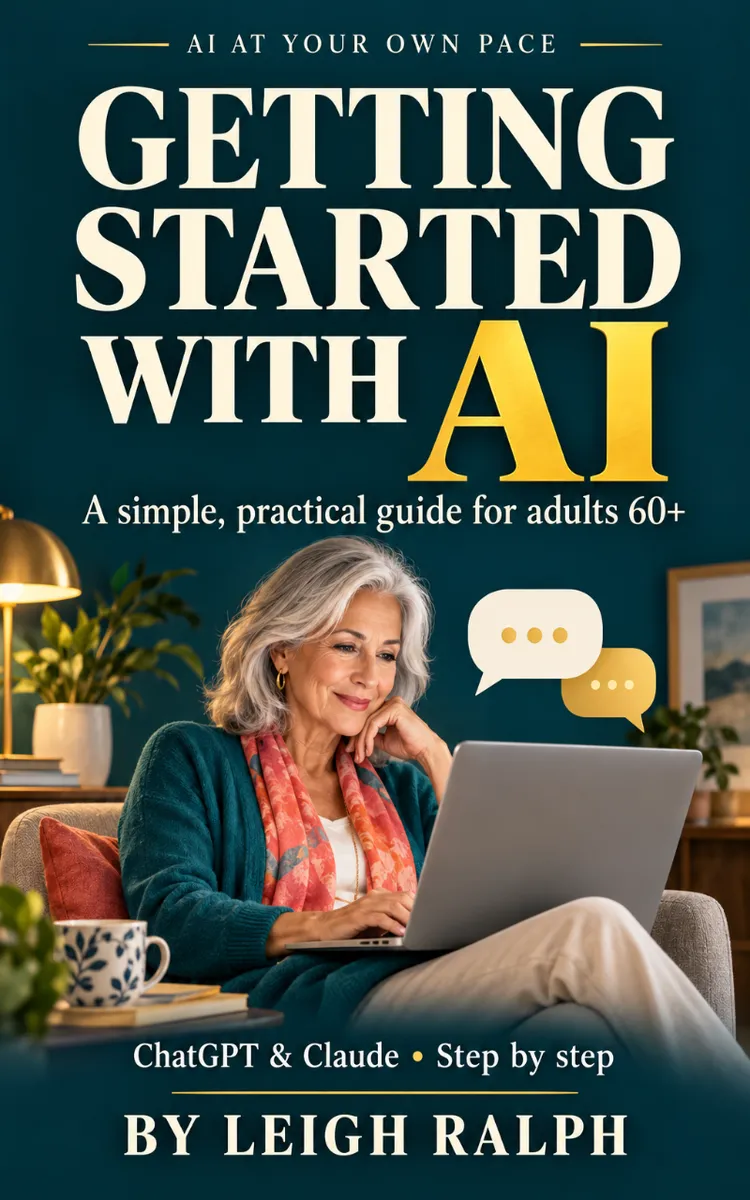
"Getting Started With AI" is a how-to guide book by Leigh Ralph with 12 chapters and approximately 10,449 words. Beginner training for using AI assistants safely and effectively.
This book was created using Inkfluence AI, an AI-powered book generation platform that helps authors write, design, and publish complete books. It was made with the AI Ebook Generator.
Frequently Asked Questions
What is "Getting Started With AI" about?
Beginner training for using AI assistants safely and effectively
How many chapters are in "Getting Started With AI"?
The book contains 12 chapters and approximately 10,449 words. Topics covered include Understanding AI in Plain English, What AI Can Do-and Where It Fails, Finding ChatGPT and Keeping Your Details Private, Your First Conversation with ChatGPT, and more.
Who wrote "Getting Started With AI"?
This book was written by Leigh Ralph and created using Inkfluence AI, an AI book generation platform that helps authors write, design, and publish books.
How can I create a similar how-to guide book?
You can create your own how-to guide book using Inkfluence AI. Describe your idea, choose your style, and the AI writes the full book for you. It's free to start.
Write your own how-to guide book with AI
Describe your idea and Inkfluence writes the whole thing. Free to start.
Start writingCreated with Inkfluence AI


