
Read the first chapter
The whole of chapter one, free. About 10 min. Turn the pages with the arrows, your keyboard, or a swipe.
Chapter 1
The Storm That Steals Her Compass
The buoy’s bell struck every eleven seconds, a dull bronze note rolling across the dawn water.
Mara Ellison counted beneath her breath as she eased the launch beyond the lee of the rocky headland. One, two, three - the swell lifted the bow. Four, five - the hull slid down its back. Six through eleven, the trough opened ahead, dark and smooth as a road laid between breaking reefs.
“Stay with the rhythm,” she murmured.
The launch’s engine answered with a low, steady thrum. Spray tapped the windshield. Behind her, the headland showed its familiar profile: a blunt shoulder of black rock, a pale scar where the winter storms had torn away the grass, and the short white mast of the harbor signal station. Ahead, the buoy rocked on its chain, red paint bright against the iron-colored sea.
Mara wanted one thing before the weather closed in: the marked shipping lane.
It lay beyond the buoy, two miles southeast, where the coastal freighters passed between the shoals and the open water. If she reached it before visibility collapsed, she could follow the lane markers home by their bells and lights. The tide had already begun to turn. She had minutes, perhaps less, before the outgoing current gathered strength around the headland and dragged her west.
She checked the compass mounted beside the wheel. The needle trembled, then settled.
“Southeast,” she said.
The word steadied her. So did the water. The long swell came from the northwest, exactly as the morning forecast had promised, while shorter waves slapped in from the east. Their crossing made a shifting diamond pattern around the buoy. Mara had read these waters for years. The buoy’s bell marked the center. The long swell pointed home. The shorter chop showed the tide beginning to run.
She turned the wheel two degrees and let the launch climb.
A gull appeared above the headland, flying backward in the wind.
Mara noticed it, but did not yet understand.
The first rain struck the windshield in scattered drops. Then the drops multiplied, racing sideways across the glass. The signal mast behind her blurred. The buoy vanished, returned, and vanished again.
She reached for the wiper.
The sky over the sea had gone green-gray. A wall of rain advanced from the southwest, low and ragged at its leading edge. Beneath it, the water changed color by strips. The familiar northwest swell remained, but its backs were darkened by gusts that tore white streamers from their crests.
Mara glanced at the clock. “Not yet.”
The squall had outrun every warning.
She pushed the throttle forward. The launch leaped, its bow rising sharply as the first gust struck. The engine note climbed. Water hammered the hull.
The buoy’s bell rang once, then disappeared beneath the weather.
Mara leaned toward the windshield. “Come on.”
Nothing. No red barrel. No headland. No mast.
The rain thickened until the world narrowed to the bow light, the compass, and the heaving water directly ahead. The launch dropped into a trough. For one instant, the horizon stood above her like a dark wall. Then the next swell lifted her hard enough to throw spray over the windshield.
She wiped it clear and saw the compass needle swing north.
“No.”
The needle shuddered east, spun halfway around, and stopped.
Mara struck the compass housing with two fingers. The needle quivered but did not return. A loose connection, perhaps. The radio crackled from the console.
“Launch Ellison, this is Harbor Control. Report your position.”
She grabbed the microphone. “Harbor Control, I’m just east of the headland buoy, proceeding toward the shipping lane.”
Static swallowed the rest.
A deeper sound rolled through the storm - not thunder, but the sea breaking over something solid.
Mara pulled the throttle back. The launch yawed across the swell. A line of white water burst to starboard, close enough that foam struck the side window.
The reef.
She had drifted toward it faster than she realized.
The outgoing current seized the hull and shoved it west, while the wind drove her southeast. The two forces met beneath the boat, twisting the surface into steep, irregular peaks. The long swell she had trusted no longer carried her straight. It arrived from the northwest, but each crest leaned differently as the current warped it around the rocks.
The buoy was somewhere behind the rain. The headland was gone. The compass was useless.
Mara’s hand tightened around the wheel.
“Think.”
Another breaker rose ahead. She turned into it. The bow struck the face with a heavy crack, and the launch stalled halfway up. Water poured over the foredeck. The engine coughed.
Mara felt the hull slide backward.
She gave it more power. The propeller churned, caught, and drove them over the crest. The launch plunged into the trough so violently that her shoulder struck the cabin frame.
For several seconds she stayed bent over the wheel, listening to the engine and the rain.
Then the radio came alive.
“ - repeat, unidentified vessel near the eastern approach, you are outside the safe corridor.”
Mara seized the microphone. “Harbor Control, this is Ellison. My compass is down. I’ve lost the buoy.”
“Ellison, reduce speed and hold position.”
“Can’t hold here.”
“Your position is - ”
A blast of static erased the coordinates.
She looked through the glass. The storm had erased the coast, but the sea still carried its signatures. Beneath the wind chop, the larger waves arrived in groups. Three close together, then a longer pause. Three, pause. Three, pause.
Mara’s father had called that pattern a broken drumbeat. It meant the swell was reflecting from the headland or shoals. The intervals shortened near rock. Out in deeper water, the groups stretched and smoothed.
She watched the next set pass.
Three waves. A pause.
Three waves. A shorter pause.
The reflected swell was coming from somewhere to her port side. The headland lay there - or the reef. She could not tell which. But the current pushed west, and the wind pushed her southeast. If she turned into the longest faces, she might claw free of the rocks. If she followed the wind, she would be carried toward open water and perhaps the lane.
Perhaps.
Mara checked the depth gauge. The numbers flickered between eleven and eight meters.
Too shallow.
The launch rose on another swell. At its peak, she saw a pale flash through the rain, far to starboard. Not the buoy. A masthead light, low and green, then gone.
A freighter.
The shipping lane was closer than she thought. Or the vessel was somewhere else entirely.
“Hold on,” she said, though no one was aboard to hear her.
She turned the wheel hard to port and advanced the throttle. The launch swung across the waves. One slammed the stern, forcing it sideways. The engine screamed as the propeller came clear, then bit again. Mara corrected, keeping the bow angled toward the incoming swell instead of allowing it to fall broadside.
The maneuver exposed the launch to the current. Water rushed beneath the hull, dragging it west. The headland’s reflected waves grew steeper. Each one struck from a slightly different angle. Mara stopped looking for a fixed horizon and watched the moving faces instead, searching for the direction in which their crests lengthened.
There.
A lane through the disorder opened ahead, narrow but real. The waves ran lower for perhaps fifty yards before rising again.
Mara drove toward it.
The launch climbed. The bow shuddered. She eased the throttle just before the crest, then fed power as the hull began to descend. The stern lifted. The boat surged down the face without burying its nose.
Again.
Up the next swell, power off.
Down the back, power on.
The rhythm returned - not the buoy’s bell, not the compass’s promise, but the timing beneath the storm. Mara felt it through the wheel: the long rise, the brief slackening, the sudden pull of the current. She matched the engine to the water and gained ground.
Visibility collapsed completely.
The windshield showed only gray rain and white foam. The radio muttered fragments. Somewhere outside, a metal object clanged once, then again.
Mara looked at the depth gauge.
Six meters.
She swore and cut the wheel starboard. The launch lurched. A breaker struck the port bow and shoved them sideways. The hull scraped something beneath the surface with a sound like a saw dragged across metal.
Mara’s breath stopped.
The engine faltered.
She pulled the throttle back, waited through one terrible second, then pushed it forward. The engine caught. The launch moved, limping but moving.
A new alarm blinked on the console. The navigation display had gone black.
The last instrument had failed.
She could turn back toward the headland, but the reflected swell and the current had made the shoreline a trap. The buoy might be behind her, or beneath her keel, or already lost in the storm. Ahead lay open water, the lane, and whatever the freighter’s light had meant.
Mara wiped rain from her face with the back of her glove.
“Open water,” she said. “That’s the decision.”
She turned southeast by the waves.
The sea fought her immediately. The wind pressed from the southwest, the current pulled west, and the swell arrived from behind at an angle that threatened to broach the launch. Mara kept the bow just off the largest crests. When the hull began to slide, she corrected before the slide became a turn. The boat rose and fell beneath her like a living thing with an uneven gait.
Minutes passed without shape. The storm made time indistinct.
Then the rain thinned.
Not enough to reveal the headland, but enough to show the sea beyond the bow. A line of black water stretched southeast, smoother than the surrounding surface. The waves there were longer, their crests less broken. A channel.
Mara steered into it.
The launch settled. The engine’s strain eased. For the first time since the buoy vanished, she could see beyond the next swell. A yellow light blinked in the distance, low against the horizon.
The shipping lane.
Relief came so sharply that her hands began to shake.
She brought the launch toward the light, using the wave pattern as her guide. The long swells ran almost parallel now, lifting the boat toward the southeast. The shorter chop struck from the port quarter. It was not the clean alignment she had expected, but it was enough.
The radio crackled.
“Ellison, identify.”
Mara lifted the microphone. “Mara Ellison, launch - ”
A horn sounded through the rain.
Not the buoy. A ship.
The yellow light brightened, then rose above the horizon as the freighter climbed a swell. Its bow emerged from the gray, massive and blunt, cutting across Mara’s path.
She stared at it.
The vessel’s running lights showed red to her port and white ahead. It was crossing from southeast to northwest, directly through the lane she had found.
Mara hauled the wheel to starboard and reduced power. The launch swung away as the freighter’s wake reached them. The first wave lifted the stern. The second broke over the bow. The third twisted the hull so violently that Mara was thrown against the seat.
The freighter passed, its horn booming once, close enough to vibrate through the launch’s frame.
Mara watched its wake spread across the channel. Beyond it, the waves no longer ran southeast. They angled toward the northeast, bending around something submerged or fixed.
Her gaze moved to the broken horizon.
A dark shape surfaced between rain bands.
Not the shipping lane marker.
A buoy, unlit and half-submerged, rolled in the trough. Its paint had been scraped away, but a strip of red showed beneath the gray. The chain dragged from it toward the southwest, straight into the current.
Mara knew that buoy.
It marked the eastern edge of the old dredged channel, abandoned after the shoal shifted.
The lane she had found was wrong.
The realization did not arrive as fear. It arrived as a cold certainty, fitting itself into the pattern she had been reading. The smooth water was not the shipping corridor. It was the lee of the shoal. The longer waves had been bending around it, making a false road through the storm.
Mara looked back at the freighter’s fading stern light. Then at the half-submerged buoy.
Her compass remained dead. The navigation display remained black. The headland was still hidden.
But the waves continued to speak beneath the weather.
Three close crests. A pause.
Three close crests. A pause.
Farther northeast, the pauses lengthened.
Mara turned the wheel toward them, leaving the false lane behind. The launch climbed onto the first swell, damaged hull shivering beneath her boots, and began to search for a passage she could no longer see.
End of chapter one. 14 more chapters and about 29,356 words in the full book.
Swipe or use the arrows to turn the page


What's inside: 15 chapters
- 1. The Storm That Steals Her Compass
- 2. Riding a Swell’s Hidden Backside
- 3. The Buoy Code Only Waves Can Read
- 4. When the Tide Turns the Wrong Way
- 5. Her Fear of Capsize Becomes a Plan
- 6. The Hatch Seal Fails Under Spray
- 7. Finding the Channel Between Wave Trains
- 8. The Lighthouse’s Light Pattern Isn’t Random
- 9. A Fisher’s Map Confirms Her Worst Fear
- 10. The Crew’s Rope Snaps on the Crest
- 11. When the Waves Erase Their Tracks
- 12. Following Foam Lines to a Hidden Inlet
- 13. She Uses the Undertow’s Rhythm
- 14. The Storm Leaves Mara a New Map
- 15. A Last Wave Teaches Letting Go
About this book
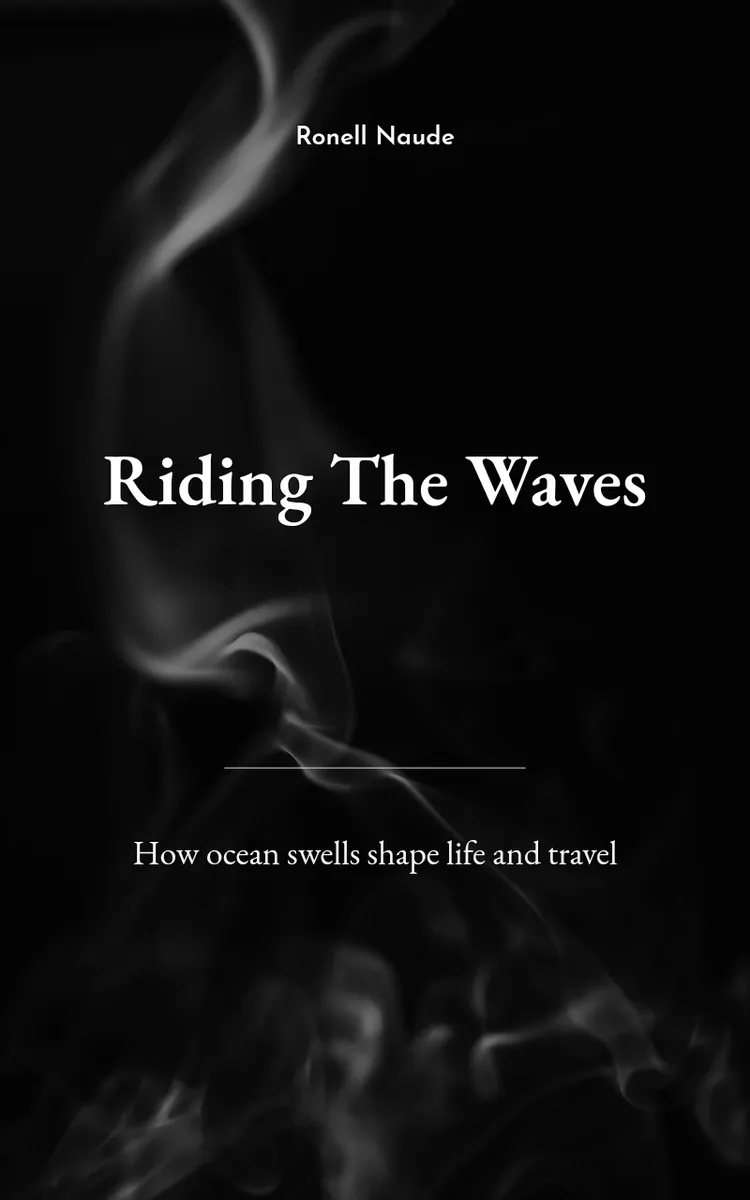
"Riding The Waves" is a fiction book by Ronell Naude with 15 chapters and approximately 29,356 words. Ocean waves, swells, and their effects on nature and navigation.
This book was created using Inkfluence AI, an AI-powered book generation platform that helps authors write, design, and publish complete books. It was made with the AI Novel Writer.
Frequently Asked Questions
What is "Riding The Waves" about?
Ocean waves, swells, and their effects on nature and navigation
How many chapters are in "Riding The Waves"?
The book contains 15 chapters and approximately 29,356 words. Topics covered include The Storm That Steals Her Compass, Riding a Swell’s Hidden Backside, The Buoy Code Only Waves Can Read, When the Tide Turns the Wrong Way, and more.
Who wrote "Riding The Waves"?
This book was written by Ronell Naude and created using Inkfluence AI, an AI book generation platform that helps authors write, design, and publish books.
How can I create a similar fiction book?
You can create your own fiction book using Inkfluence AI. Describe your idea, choose your style, and the AI writes the full book for you. It's free to start.
Write your own fiction book with AI
Describe your idea and Inkfluence writes the whole thing. Free to start.
Start writingCreated with Inkfluence AI


