
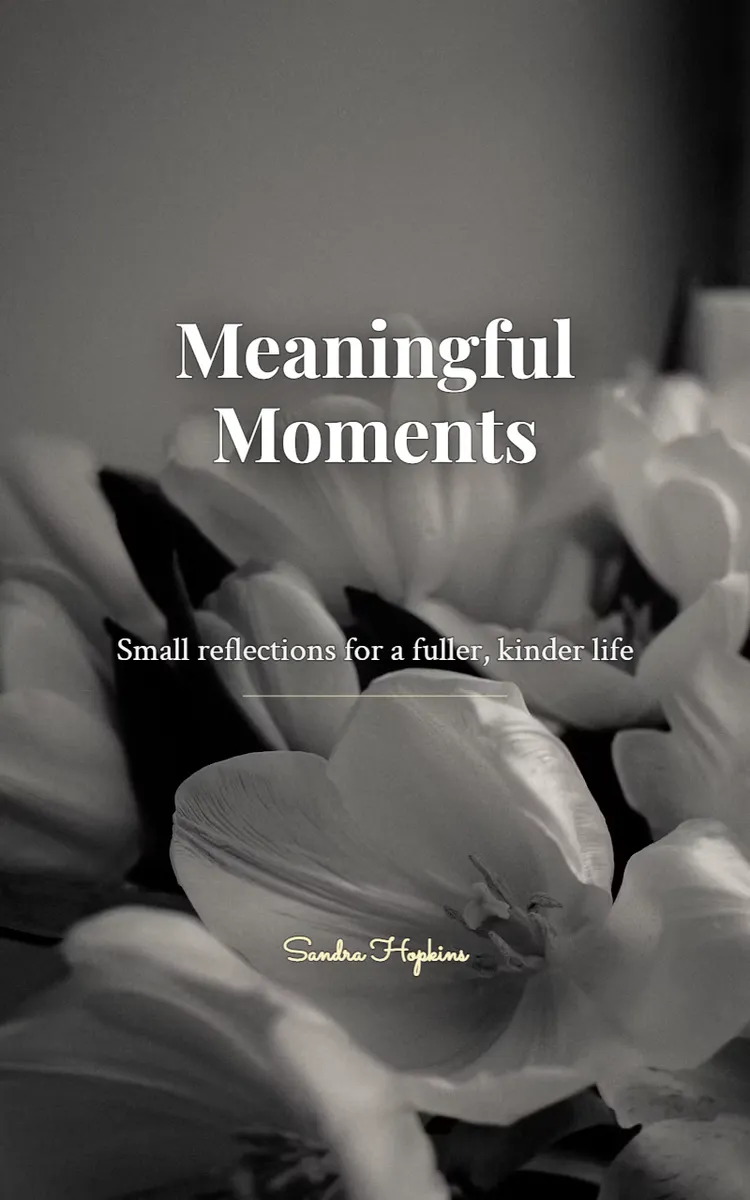
Meaningful Moments
Created with Inkfluence AI
Finding meaning through everyday experiences and reflections
Table of Contents
- 1. Noticing the Ordinary with Wonder
- 2. Turning Gratitude into a Daily Practice
- 3. Reframing Pain into Purposeful Lessons
- 4. Letting Boundaries Protect Your Meaning
- 5. Writing a Meaningful Moment Legacy
Preview: Noticing the Ordinary with Wonder
A short excerpt from “Noticing the Ordinary with Wonder”. The full book contains 5 chapters and 7,805 words.
When the Ordinary Becomes Visible
At 6:40 a.m., Lena, a 34-year-old ER nurse, notices the same small ritual before a shift: the first sip of coffee, the soft click of her locker, the brief quiet before the department fills. On a rotating schedule, morning doesn’t always look like morning. Sometimes it arrives after a night shift, with tired eyes and a paper cup warming her hands.
For years, these moments passed without much notice. Then Lena began taking one deliberate pause before stepping onto the floor. She listened for one sound, noticed one physical sensation, and named one thing that mattered about the moment. It took less than a minute. The shift didn’t become easy, but it stopped feeling like one long blur.
That’s the heart of mindful attention: slowing down enough to receive what’s already here. Meaning doesn’t always arrive through major events. Often, it gathers in repeatable details - the clean towel after a shower, sunlight on the kitchen counter, a familiar voice on the phone, the first deep breath after closing a difficult task.
This Chapter Is For You If...
- Your days move quickly, and you often reach evening without remembering much of them.
- You want to feel more present without adding a complicated routine to your schedule.
- Repeated tasks - commuting, washing dishes, opening a shop, checking equipment - feel empty or automatic.
- You’re ready to notice small moments as sources of steadiness, connection, or gratitude rather than treating them as background noise.
The shift you can expect is simple but useful: instead of waiting for life to feel meaningful, you’ll practice recognizing meaning while ordinary life is happening.
The Wonder Pause Method: Attention Before Interpretation
Meaning grows when you pause long enough to notice what an ordinary moment is offering.
A pause doesn’t need candles, silence, or a clear calendar. The Wonder Pause Method uses three small movements: notice, name, and receive. First, notice one detail through your senses. Then name it plainly. Finally, ask what the detail might be showing you about care, effort, connection, or change.
Consider Lena before a busy shift. She notices the warmth of the coffee cup against her palm. She names the sensation: “Warmth, and a quiet room.” Then she receives the moment by asking, “What does this give me before the noise begins?” The answer isn’t dramatic. It may be, “A reminder that I can begin slowly, even when the next few hours won’t be slow.”
That answer matters because attention changes the shape of time. A repeated action can become proof of care. Washing a lunch container may remind you that you prepared for yourself. Locking the front door may mark the boundary between work and home. Hearing a child laugh from another room may interrupt a stream of worries and return you to the people you love.
Wonder doesn’t mean pretending everything is beautiful. Lena may notice the harsh fluorescent lights, the ache in her shoulders, or the tension in her jaw. Honest attention includes those details too. The pause isn’t about forcing a positive interpretation. It’s about meeting the moment accurately, then choosing what deserves your response.
In Practice, This Means...
- You pause for 20-60 seconds before a repeated transition, such as starting work or getting into bed.
- You name one sensory detail instead of reaching immediately for your phone.
- You ask what the moment reveals about care, effort, connection, or change.
- You let an ordinary moment count without requiring it to become extraordinary.
Turning the Pause Into a Daily Habit
The Wonder Pause Method works best when attached to something you already do. Don’t create a grand new routine that depends on perfect conditions. Choose three ordinary anchors and give each one a little more attention.
1. Morning: pause at the first threshold.
Before you leave your bedroom, pick up your phone, or start the kettle, stop for three breaths. Notice one sound, one sensation, and one fact about the day. You might say, “The floor is cool. The house is quiet. I have one clear task to begin.” This takes about one minute.
2. Midday: pause before the next demand.
Use a transition that already exists: getting into your vehicle, washing your hands, opening a laptop, or returning from lunch. Ask, “What am I carrying into the next hour?” Then ask, “What can I set down for now?” You don’t need to solve the whole day. You’re simply separating the present task from the last one.
3. During a repeated task: find one detail worth keeping.
While making coffee, stocking supplies, walking a familiar route, or cleaning up after dinner, choose one detail to notice fully. It could be the sound of water, the rhythm of your hands, or the way evening light changes a wall. Stay with it for 20 seconds before moving on.
4. Evening: record one ordinary moment.
Write one sentence before sleep: “Today, I noticed…” Keep it concrete....
About this book
"Meaningful Moments" is a inspirational book by Sandra Hopkins with 5 chapters and approximately 7,805 words. Finding meaning through everyday experiences and reflections.
This book was created using Inkfluence AI, an AI-powered book generation platform that helps authors write, design, and publish complete books. It was made with the AI Inspirational Book Writer.
Frequently Asked Questions
What is "Meaningful Moments" about?
Finding meaning through everyday experiences and reflections
How many chapters are in "Meaningful Moments"?
The book contains 5 chapters and approximately 7,805 words. Topics covered include Noticing the Ordinary with Wonder, Turning Gratitude into a Daily Practice, Reframing Pain into Purposeful Lessons, Letting Boundaries Protect Your Meaning, and more.
Who wrote "Meaningful Moments"?
This book was written by Sandra Hopkins and created using Inkfluence AI, an AI book generation platform that helps authors write, design, and publish books.
How can I create a similar inspirational book?
You can create your own inspirational book using Inkfluence AI. Describe your idea, choose your style, and the AI writes the full book for you. It's free to start.
Write your own inspirational book with AI
Describe your idea and Inkfluence writes the whole thing. Free to start.
Start writingCreated with Inkfluence AI


