
Read the first chapter
The whole of chapter one, free. About 6 min. Turn the pages with the arrows, your keyboard, or a swipe.
Chapter 1
Rewriting Your Self-Worth Story
The Story You Repeat When No One Is Listening
What do you tell yourself after you make a mistake and nobody else is around to hear it? Maybe you call yourself careless, awkward, lazy, or simply “not good enough.” The moment passes, but the sentence sticks. Then the next challenge arrives, and that old sentence quietly comes along for the ride.
You might avoid speaking up at work because you believe your ideas aren’t worth much. You might downplay a compliment, replay one critical comment for days, or abandon a goal after one rough attempt. On the surface, these look like separate habits. Underneath, they’re often being directed by the same hidden belief about who you are.
What if your low self-esteem isn’t the truth about you, but a story you learned to mistake for fact?
From a Fixed Verdict to a Truer Story
Old Belief: My mistakes, rejections, and weaknesses prove what I’m worth.
New Reality: My experiences can teach me something, but they don’t have the authority to define my worth.
Low self-esteem often feels convincing because it gathers evidence. You forget an appointment, and the mind says, “See? I’m unreliable.” Someone doesn’t reply to your message, and it says, “Of course they don’t want me around.” You hesitate during a presentation, and the story becomes, “I’m not capable.”
The problem isn’t noticing what happened. The problem is turning one event into a permanent identity. “I handled that badly” becomes “I’m bad at everything.” “That person rejected me” becomes “I’m unwanted.” Your mind is trying to create a simple explanation, but simple doesn’t always mean true.
Consider someone who applies for a new role and isn’t chosen. The old belief says, “I’m not impressive enough. I should stop trying.” The truer narrative says, “This opportunity didn’t work out. I can ask for feedback, improve one skill, and apply again.” The second story doesn’t pretend disappointment feels good. It simply refuses to make disappointment a life sentence.
That’s the heart of the Worth Rewrite Map: notice the story, trace the belief beneath it, test whether it’s fair and accurate, then choose words you can actually live by. Not a shiny slogan. Not a forced claim that feels ridiculous. A steadier sentence with room for growth.
Finding the Belief Beneath the Reaction
A belief usually reveals itself through the speed of your reaction. Something happens, and before you’ve had time to think, you feel shame, panic, defensiveness, or the urge to disappear. The event may be small, but the emotional response feels much bigger. That’s a clue.
Try separating the moment into three parts: what happened, what you told yourself it meant, and what you did next. For example: “My manager asked me to revise my work. I told myself I’m incompetent. I avoided opening the document.” The middle sentence is the belief doing the driving.
You don’t have to argue with every thought. That can become exhausting. Instead, look for repeated themes. Are you always proving you’re behind? Are you trying to earn permission to belong? Are you treating other people’s opinions as a final ruling?
Signs this pattern is running your life
1. You turn specific feedback into a judgment about your whole character. “The report needs clearer details” becomes “I’m terrible at my job.”
2. You dismiss positive evidence almost immediately. A compliment gets explained away as politeness, luck, or someone being unusually generous.
3. You wait to feel confident before taking ordinary risks. Since confidence rarely arrives first, you keep delaying the conversation, application, or decision.
4. You use extreme words when you’re upset. “Always,” “never,” “everyone,” and “nothing” can make a painful moment sound like permanent proof.
A belief loses power when you can name it, examine it, and choose a more honest meaning.
The goal isn’t to replace “I’m worthless” with “I’m amazing at everything.” Your mind will reject a sentence that feels fake. Try something grounded instead: “My worth isn’t measured by perfect performance,” or “I’m allowed to be learning and still deserve respect.” These statements don’t erase responsibility. They put responsibility in the right place.
Questions That Expose the Old Story
1. What exact event most recently made you question your worth? Describe only what a camera would have recorded. “My idea wasn’t used” is more useful than “I embarrassed myself,” because the second phrase already includes your interpretation.
2. What did you decide that event meant about you? Finish this sentence: “Because this happened, I must be…” Your answer might be “uninteresting,” “difficult,” “behind,” or “not capable.” That ending is often the belief you need to examine.
3. What evidence supports that belief, and what evidence doesn’t? Be fair in both directions. If you believe you’re unreliable, include the missed deadline - but also the projects you completed, the people who trust you, and the times you followed through.
4. Would you speak to someone you love using these same words? If a friend made the same mistake, would you call them a failure, or would you help them understand what happened? The difference shows where your inner standard has become unnecessarily harsh.
5. What truer sentence could guide your next action? Keep it believable and practical. “I can learn from this without attacking myself” may be more useful today than “I have unlimited confidence.”
Write your answers by hand if you can. A belief that stays vague can keep controlling you. Once it appears on paper, you can finally look at it instead of simply living inside it.
The Seven-Day Worth Rewrite Map
Challenge: Rewrite One Worth Story a Day
For the next seven days, choose one moment each day when your self-esteem drops. Spend ten minutes using the Worth Rewrite Map.
• Name the event: Write what happened without exaggeration. - Catch the old belief: Record the sentence your mind attached to it. - Check the evidence: List one fact that supports the belief and two facts that complicate it. - Write a truer narrative: Create a balanced sentence that includes responsibility, dignity, and room to grow. - Choose one small action: Send the follow-up email, ask the question, reopen the document, or take a needed rest. - Read the new sentence aloud: Notice whether it feels believable. Adjust the wording until it sounds like something a fair-minded person could say.
Expected difficulty: Medium
You’ll know it’s working when...
• You catch the old belief before it becomes a full spiral. - Your description of the event becomes more specific and less dramatic. - You recover from criticism without making it your identity. - You take one useful action instead of hiding or quitting. - Your new narrative feels steady, even if it doesn’t feel inspiring yet.
On day one, you may write something awkward. That’s fine. You’re not trying to produce perfect wisdom. You’re practicing a different relationship with your own experience. By day seven, look back at all seven entries and circle the belief that appeared most often. That repeated belief is an important target for deeper work.
Your Worth Is Not Up for a Daily Vote
You can be responsible for your choices without making your entire identity the punishment. You can admit that you were unprepared, impatient, distracted, or afraid. None of those admissions require you to declare yourself permanently defective.
• You learned to separate an event from the meaning you attached to it. - You identified common signs that an old belief is directing your choices. - You practiced testing harsh thoughts against the full evidence. - You created truer narratives that support action instead of shame. - You began using the Worth Rewrite Map to interrupt automatic self-judgment.
Your worth doesn’t need a new performance; it needs a truer story you’re willing to practice.
The old narrative may return, especially when you’re tired or disappointed. That doesn’t mean the rewrite failed. It means the old path is familiar. Each time you notice it and choose a fairer sentence, you strengthen a new path - one that can carry you toward confidence, connection, and the next brave step.
End of chapter one. 7 more chapters in the full book.
Swipe or use the arrows to turn the page


What's inside: 8 chapters
- 1. Rewriting Your Self-Worth Story
- 2. Breaking the Perfectionism Loop
- 3. Building Boundaries Without Guilt
- 4. Choosing Evidence Over Inner Critic
- 5. Designing Confidence-Building Micro-Habits
- 6. Communicating Needs With Clear Requests
- 7. Recovering From Rejection Like a Pro
- 8. Living Your Purpose With Self-Trust
About this book
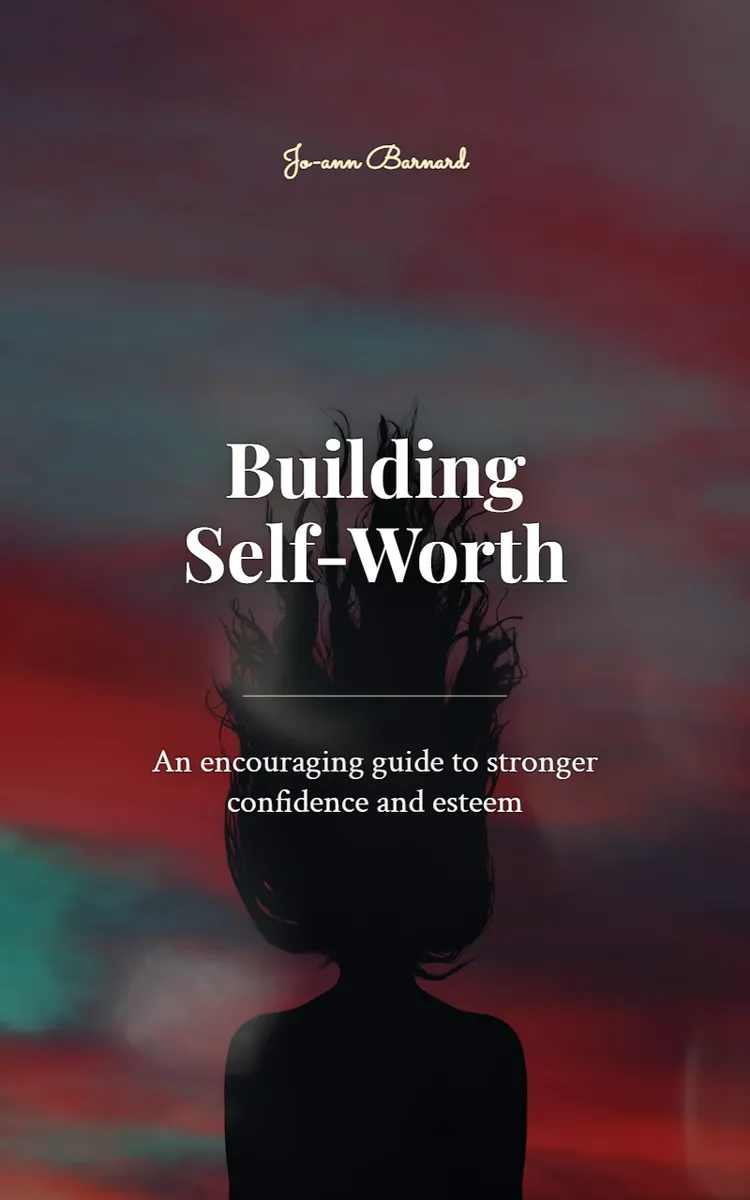
"Building Self-Worth" is a self-help book by Jo-ann Barnard with 8 chapters and approximately 11,313 words. Self-esteem improvement and confidence building for low self-worth.
This book was created using Inkfluence AI, an AI-powered book generation platform that helps authors write, design, and publish complete books. It was made with the AI Self-Help Book Writer.
Frequently Asked Questions
What is "Building Self-Worth" about?
Self-esteem improvement and confidence building for low self-worth
How many chapters are in "Building Self-Worth"?
The book contains 8 chapters and approximately 11,313 words. Topics covered include Rewriting Your Self-Worth Story, Breaking the Perfectionism Loop, Building Boundaries Without Guilt, Choosing Evidence Over Inner Critic, and more.
Who wrote "Building Self-Worth"?
This book was written by Jo-ann Barnard and created using Inkfluence AI, an AI book generation platform that helps authors write, design, and publish books.
How can I create a similar self-help book?
You can create your own self-help book using Inkfluence AI. Describe your idea, choose your style, and the AI writes the full book for you. It's free to start.
Write your own self-help book with AI
Describe your idea and Inkfluence writes the whole thing. Free to start.
Start writingCreated with Inkfluence AI


