
Read the first chapter
The whole of chapter one, free. About 10 min. Turn the pages with the arrows, your keyboard, or a swipe.
Chapter 1
Paris: Metro-First Solo Itineraries
Paris is the kind of city where one good metro plan saves you from an hour of crisscrossing streets - and solo travelers feel that difference fast. If you like walking loops, hate backtracking, and want your day to run on rails (sometimes literally), this “metro-first” approach is your best friend.
This chapter is built for days where you want big sights and breathing room, without stacking transfers. You’ll see how to group neighborhoods by metro lines, pick ticket types that actually match how you’ll move, and build walking routes that start and end at the same station area so you’re not constantly re-planning mid-day.
Quick Facts - Best months: April - June and September - October (comfortable walking temps, fewer crowds than July/August). - Getting there: - From CDG to central Paris: RER B to Gare du Nord / Châtelet - Les Halles / Saint-Michel - Notre-Dame (~60-75 min). About €11.50 one-way. - From ORY to central Paris: Orlyval + connection (~45-65 min). About €12-15 one-way (varies by combo). - Budget per day: Budget $90 / Mid-range $160 / Luxury $320 (solo, one main museum day, mix of casual + one sit-down meal). - Languages: French (English works in most tourist areas, but metro staff may default to French). - Currency: Euro (€). - Time needed: 3-5 days minimum (you’ll feel rushed in 2).
Paris also wins the “different from similar destinations” contest because it’s compact and layered: you can do museum-level culture, river views, and neighborhood food in the same day - if you design it around the metro’s line map instead of bouncing by landmark name.
Paris Metro-First Day Routes (Min Transfers, Max Walking Loops) Before you pick dates, pick a movement style: Paris metro is best when you treat it like a grid of “areas” connected by 1-2 lines. Your goal is simple - one main transfer max per day, and ideally no transfer at all for your big morning block.
Here’s the logic you’ll use again and again: - Start your day at a station that’s easy to reach from your hotel (or at least from your first metro hop). - Pick one “anchor neighborhood” for the morning and one for the afternoon. - Walk a loop between sights that are close to each other, then take the metro only when the walk would turn into a long slog.
A quick example of how this saves you: if you’re doing classic sights like the Eiffel Tower and Musée d’Orsay, you don’t need to bounce all over the map. You can anchor the morning around Gare du Nord → (Metro lines 4/5/7 depending) → Saint-Michel / Musée d’Orsay area, then walk the river loop and end near a station that matches your evening plan. The “metro-first” part is you choose the stations first, and the sights snap into place.
Top Lines/Ticket Choices That Don’t Waste Money - If you’re riding a lot in a single day, consider a day pass (Paris “Ticket Mobilis”). It’s priced by zones; for most solo itineraries staying inside central Paris, you’ll be in Zone 1-2. (If your days are light, single tickets can be cheaper.) - If you’re doing multiple rides over several days, it can be worth comparing a multi-day pass against the number of metro hops you’ll actually take. - The big trap: buying “tourist passes” that look great on paper but don’t match how many rides you’ll do. If your itinerary is mostly walking loops between nearby stations, the cheaper option often wins.
To keep your plan practical, here’s a day-template you can reuse: 1. Morning anchor: pick a line that reaches your first big area directly (or with one change). 2. Midday loop on foot: group sights within ~20-40 minutes walking. 3. Afternoon anchor: switch to a different line only if the transfer saves you a long walk. 4. Evening reset: end near a train stop for an easy return (and a quick meal).
Must-See Attractions (With Metro-Friendly Time Blocks) 1. Eiffel Tower (Tour Eiffel) + Champ de Mars Eiffel Tower area is classic, but you can make it feel like a win instead of a crush. Hours: typically 9:30 AM - 11:45 PM (last entry varies by tower level). Entry: ticketed; expect ~€18 - €30+ depending on level/option. Time needed: 1.5-3 hours. Insider tip: go up later in the afternoon - then you get daylight and city lights without booking a sunrise slot.
2. Louvre Museum (Musée du Louvre) The Louvre is huge, so your best move is to go in with a “small mission.” Hours: usually 9:00 AM - 6:00 PM, with extended hours on Wednesdays until 9:45 PM (check the day you’re going). Entry: ~€22 standard adult ticket. Time needed: 2.5-4 hours. Insider tip: if you’re solo, pick 3 works you’ll actually find and stop there - otherwise you’ll spend the whole day chasing crowds.
3. Musée d’Orsay (Musée d’Orsay) This museum is the sweet spot for solo travelers who want art without the “maze” feeling. Hours: typically 9:30 AM - 6:00 PM, and often open late on Thursdays until 9:00 PM (varies). Entry: ~€16 standard ticket. Time needed: 2-3.5 hours. Insider tip: pair it with a river walk afterward - this is one of those days where the metro gets you close, and your feet finish the job.
4. Notre-Dame area + Île de la Cité walk Even if you’re not going inside every historic site, the riverfront walk is worth it. Hours: the surrounding area is open daily; any specific church/chapel entry hours vary. Entry: exterior views are free; paid sights depend on what you book. Time needed: 1-2 hours. Insider tip: go early morning for photos - then keep walking toward Saint-Michel to set up a clean metro route for later.
5. Montmartre & Sacré-Cœur (Basilique du Sacré-Cœur) Montmartre has that “up on a hill” vibe that feels like a different town. Hours: the basilica is usually open daily ~6:00 AM - 10:30 PM (mass times and dome access vary). Entry: basilica entry is free; dome access is paid. Time needed: 1.5-3 hours. Insider tip: skip the busiest photo spots and walk a few side streets down from Sacré-Cœur - find the quieter viewpoints.
6. Le Marais (Jewish Quarter feel + shopping streets) You’ll get that old Paris texture here - tiny streets, boutiques, and snack stops. Hours: streets are open all day; most shops run ~10:00 AM - 7:00 PM (some later). Entry: free. Time needed: 2-4 hours. Insider tip: build a loop that starts near a metro stop and ends at a bakery - your “shopping” becomes eating without realizing it.
7. Palais Garnier (Opéra de Paris) If you want one interior that feels like a movie set, this is it. Hours: typically 10:00 AM - 5:00 PM with variation by day; sometimes evening openings. Entry: guided/standard tours ~€15 - €30 depending on route. Time needed: 1-1.5 hours. Insider tip: aim for a mid-morning slot so you can roll right into nearby neighborhoods without rushing.
8. Canal Saint-Martin (Stroll + cafés) This is your “solo traveler exhale” zone - less iconic, more lived-in. Hours: the canal walk is always open; cafés vary. Entry: free. Time needed: 1-2.5 hours. Insider tip: go late afternoon and hang around until the evening - light hits the water nicely and you’ll avoid the harsh midday sun.
Skip These Tourist Traps - Eiffel Tower “vibes only” with no booking: instead, do a timed ticket and spend your extra time walking Champ de Mars → river direction. - Overpaying for “fast track” everywhere: pick one priority (like Louvre or Eiffel) and keep the rest on foot. - Trying to do Louvre + everything else in one day: swap one museum for a neighborhood loop (Le Marais or Canal Saint-Martin) and you’ll actually enjoy the city.
Where to Eat and Stay (Metro-Logic Picks) Neighborhood matters because it controls how many times you’ll “hunt” for the right line. If you want fewer transfers, you generally want to stay near a station that sits on multiple lines or near a line that connects cleanly to your top two day areas.
| Budget Tier | Recommendation | Area | Price/Night | Best For | |---|---|---|---|---| | Budget | Hotel ibis Paris Gare du Nord | Gare du Nord / 10th | $110 - $170 | Easy metro access for north/west days | | Mid-range | Hotel Le Six | 6th (near Saint-Germain) | $190 - $280 | Walkable classics + quick hops to museums | | Luxury | Hôtel Plaza Athénée | Avenue Montaigne (8th) | $450 - $900 | High-end stay close to Champs-Élysées + Eiffel side |
If you’re planning your days around metro anchors, the 6th and 8th can be sweet spots because you can reach both Seine-area sights and central museums with fewer “what line is that?” moments.
Restaurant Picks (Easy for Solo, Not Awkward at a Table) - Le Comptoir du Relais (Saint-Germain-des-Prés) - French bistro. Order the steak tartare ($24). It’s popular for a reason - the flavors are punchy and the portions won’t leave you hunting later. - Bouillon Chartier (9th, near Grands Boulevards) - Classic French. Order the pot-au-feu ($18). Old-school dining room, huge comfort, and fast service for solo travelers. - Boulangerie Poilâne (5th, near Saint-Germain/Latin area) - Bakery. Get the Poilâne sourdough loaf ($9 - $20 depending on size). It’s pricey bread - so buy once, enjoy it properly. - Au Pied de Cochon (1st, near Châtelet) - Traditional French. Order the roast pork ($28). It’s hearty, slightly chaotic in a good way, and perfect when you’re walking all day. - Le Progrès (11th) - Modern French / bistro vibes. Order the baked cheese / gratin style dish ($16 - $22). Great for a cozy solo dinner that doesn’t feel like a tourist trap. - L’As du Fallafel (Marais) - Middle Eastern (falafel). Order falafel in pita ($10). One of the most reliable “you’ll remember this” meals in Paris.
Street Food to Try - Falafel (L’As du Fallafel style) - €9 - €12 - Crêpe (butter + sugar or nutella option) - €5 - €9 - Kebab/gyro-style sandwich - €8 - €12 - Baked goods from a neighborhood boulangerie - €3 - €7 each
Know Before You Go (Metro Reality Checks + Planning Tools) Paris is easy once you accept two things: lines get crowded, and walking loops are your cheat code. If you plan with that in mind, you’ll spend less time standing in station tunnels and more time actually doing the stuff you came for.
Packing Checklist - Contactless card or cash for metro vending machines and small purchases - Small daypack (Paris streets are easier with one bag, not a suitcase) - Comfortable walking shoes (you’ll rack up 15k+ steps on loop days) - Light jacket or rain shell (weather flips fast, especially in spring/fall) - Portable phone charger (maps + tickets drain battery) - Reusable water bottle (top up near cafés; it adds up) - Compact umbrella (rain happens without warning) - Medication + blister patches (seriously - solo walking is unforgiving) - A tote bag for groceries/bread/bottles (you’ll buy more than planned)
Useful Phrases 1. “Un billet pour le métro, s’il vous plaît.” (oon bih-yeh puhhr luh meh-troh, sihl voo play) - “A metro ticket, please.” 2. “Où est la station?” (oo eh la sta-ssyon) - “Where is the station?” 3. “À quelle ligne est-ce?” (a kell leeng is-suh) - “Which line is it?” 4. “Je voudrais un ticket journée.” (zhuh voo-dreh oon teek-ay zhoor-nay) - “I’d like a day ticket.” 5. “C’est combien?” (say kohm-byen) - “How much is it?” 6. “Je suis allergique à…” (zhuh swee al-er-jeek ah…) - “I’m allergic to…”
Money-Saving Tips 1. Book only your top 1-2 timed tickets (Louvre/Eiffel). Everything else can stay flexible. 2. Eat one “big meal” + one bakery meal. Example: crêpe for lunch, proper dinner - your budget breathes. 3. Use metro logic to reduce rides. If two sights are 25 minutes apart on foot, walk it and save the transfer. 4. Shop and snack in one neighborhood block instead of bouncing across the city for each craving. 5. Go early for the popular spots. Fewer crowds usually means fewer “I’ll just come back later” detours (and those cost money).
Common Mistakes - Trying to see “everything” by landmark name. Instead, pick stations/lines first, then choose sights near them. - Assuming the fastest route is always the fewest stops. Sometimes one extra stop with no transfer beats a transfer with a long walk. - Skipping the closing-time math. If you enter the Louvre at 5:00 PM, you’ll miss half the day - plan entry earlier. - Overpacking your day with back-to-back museums. Do one museum per day, then switch to neighborhoods and walking loops.
Paris rewards the traveler who plans like a mechanic: check the system, choose the right parts, and don’t force the engine. Once you start building your days around metro lines and walking loops - rather than chasing every landmark - you’ll feel the city’s rhythm instead of fighting it. Next, you’ll use these same anchors to stack an actual day-by-day plan that fits your dates and your pace.
End of chapter one. 4 more chapters in the full book.
Swipe or use the arrows to turn the page
What's inside: 5 chapters
- 1. Paris: Metro-First Solo Itineraries
- 2. Tokyo: Asakusa to Shinjuku Night Plan
- 3. Barcelona: Gràcia Day-to-Beach Route
- 4. New York: Brooklyn to Manhattan Subway Strategy
- 5. Reykjavík: Golden Circle One-Day Solo
About this book
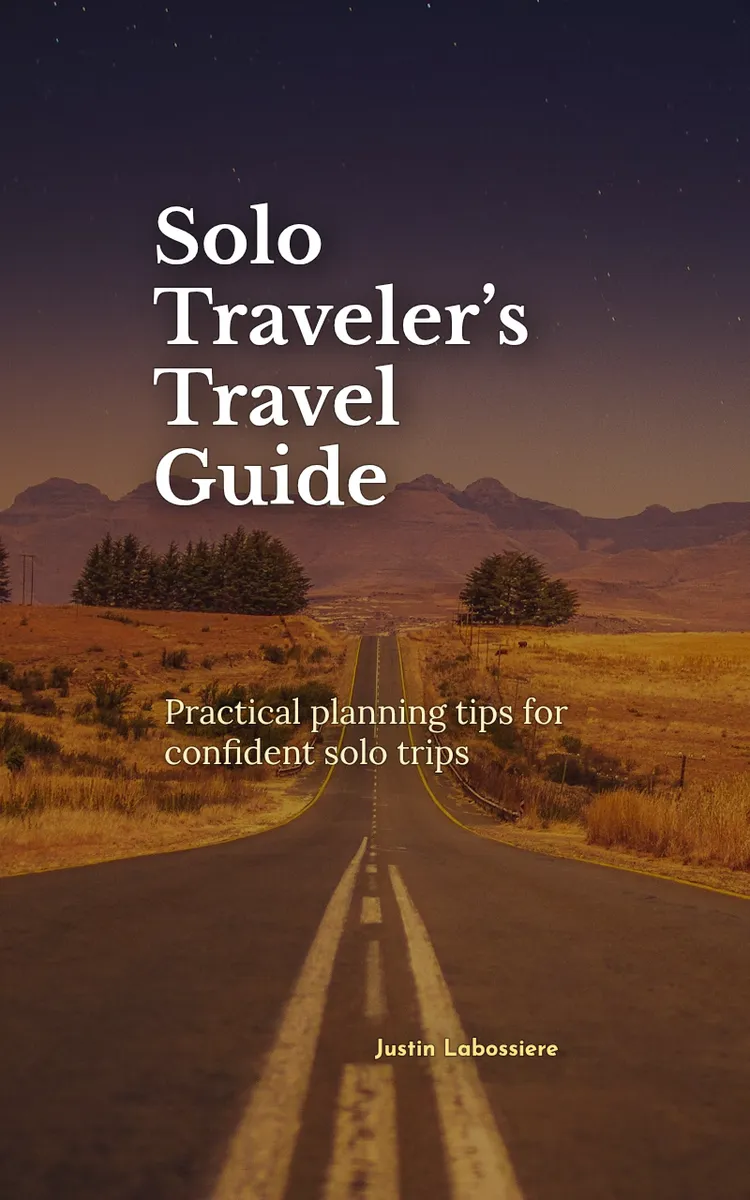
"Solo Traveler’s Travel Guide" is a travel book by Justin Labossiere with 5 chapters and approximately 10,246 words. Travel planning guidance tailored to solo travelers.
This book was created using Inkfluence AI, an AI-powered book generation platform that helps authors write, design, and publish complete books. It was made with the AI Travel Guide Creator.
Frequently Asked Questions
What is "Solo Traveler’s Travel Guide" about?
Travel planning guidance tailored to solo travelers
How many chapters are in "Solo Traveler’s Travel Guide"?
The book contains 5 chapters and approximately 10,246 words. Topics covered include Paris: Metro-First Solo Itineraries, Tokyo: Asakusa to Shinjuku Night Plan, Barcelona: Gràcia Day-to-Beach Route, New York: Brooklyn to Manhattan Subway Strategy, and more.
Who wrote "Solo Traveler’s Travel Guide"?
This book was written by Justin Labossiere and created using Inkfluence AI, an AI book generation platform that helps authors write, design, and publish books.
How can I create a similar travel book?
You can create your own travel book using Inkfluence AI. Describe your idea, choose your style, and the AI writes the full book for you. It's free to start.
Write your own travel book with AI
Describe your idea and Inkfluence writes the whole thing. Free to start.
Start writingCreated with Inkfluence AI


