

Read the first chapter
The whole of chapter one, free. About 5 min. Turn the pages with the arrows, your keyboard, or a swipe.
Chapter 1
Match Basics: Kickoff, Play, and Referee Calls
Overview The whistle goes - then everything moves fast: kickoff, quick passes, and referee decisions that can change the match in seconds. In this chapter, you’ll learn the most common Turkish football commentary words and phrases for the start of play, everyday action, and the main calls you hear from the referee.
You’ll see easy English + Bangla meanings, plus short example sentences you can copy. Ask yourself while reading: “If I hear this phrase, can I picture what just happened on the pitch?”
---
The Breakdown | # | Turkish phrase (English + Bangla) | What it describes | |---:|---|---| | 1-10 | Kickoff + general action + referee calls | The first moments and the most common decisions |
#1: Kickoff (Anlam: Kickoff / “শুরু”) - “Engelsiz başlama!” Problem: Many learners hear “kickoff” but don’t connect it to the exact moment: the ball is placed and play starts. If you miss that, your commentary rhythm feels off in the first 10-15 seconds. Solution: Say this when the match starts or after a goal: “Kickoff!” then mention the team name. Example: “Kickoff for Beşiktaş - now they start building from the back.” In Turkish, you’ll often hear “başladı” (it has started). Result: You’ll sound clear right away, because you describe the exact start moment.
#2: Play Restart After a Goal (Anlam: restart / “গোলের পর আবার শুরু”) - “Devam ediyor!” Problem: After a goal, some people talk like the match is “still the same,” but the tempo and direction change. In 5-10 seconds, viewers expect a restart phrase. Solution: Use a restart marker: “Devam ediyor!” (Play continues!). Example: “It’s 1-0 - play continues, the teams reset for the restart.” In Turkish commentary, “devam” (continue) is very common. Result: Your commentary matches the real match flow after scoring.
#3: The Referee Whistle (Anlam: referee call / “রেফারির বাঁশি”) - “Hakem düdüğü!” Problem: If you don’t name the whistle, listeners don’t understand why action stopped. One wrong sentence can confuse the whole phase: 30 seconds later, people still wonder “why no play?” Solution: When the referee blows, say “Hakem düdüğü!” then give the reason right after (foul, offside, free kick). Example: “Hakem düdüğü! Offside - flag up, play stops.” Result: Your audience instantly knows the pause is official, not just a slow moment.
#4: Foul (Anlam: foul / “ফাউল”) - “Faul!” Problem: Learners sometimes describe it as “contact” only, but Turkish commentary usually calls it “faul” quickly. Missing “faul” makes your call sound unsure. Solution: Use a simple pattern: Faul + who + action. Example: “Faul! The defender clips the attacker - free kick for the other team.” In Turkish, “faul” is short and direct. Result: Your calls become confident and easy to follow.
#5: Offside (Anlam: offside / “অফসাইড”) - “Ofsayt!” Problem: Offside is one of the fastest “stop-and-point” moments. If your explanation comes late, people don’t catch the decision in time. Solution: Say “Ofsayt!” immediately, then add one detail: the forward is ahead of the last defender. Example: “Ofsayt! The striker was in front of the last defender - free kick to the defending team.” Result: You’ll match the speed of the decision and keep listeners locked in.
#6: Free Kick (Anlam: free kick / “ফ্রি কিক”) - “Serbest vuruş!” Problem: After a foul or a handball, players need the correct restart name. If you just say “kick,” it’s unclear which kind - especially for beginners. Solution: Use: Serbest vuruş! + team + direction. Example: “Serbest vuruş for the attacking team, they’ll take it quickly to the right.” Turkish “serbest vuruş” is the standard phrase. Result: Your commentary becomes practical - listeners know exactly what restart happens next.
#7: Yellow Card (Anlam: caution / “হলুদ কার্ড”) - “Sarı kart!” Problem: Yellow cards can happen after 2-3 fouls, or a dangerous challenge. If you don’t label it fast, the match discipline moment gets missed. Solution: Say the card name first: “Sarı kart!” then add the player and reason. Example: “Sarı kart! He stops the counter with a late tackle.” Result: You help viewers understand both the rule and the match mood.
#8: Red Card (Anlam: sending off / “লাল কার্ড”) - “Kırmızı kart!” Problem: Red cards change the whole game plan immediately. If you delay the phrase “Kırmızı kart,” people may think it’s “just another foul.” Solution: Use: Kırmızı kart + who + big reason (serious foul, second yellow, denial of a goal). Example: “Kırmızı kart! Second yellow - he’s off, the team must play with 10 men.” Result: Your commentary stays accurate during the biggest momentum swing.
#9: Advantage (Anlam: play on / “অ্যাডভান্টেজ”) - “Avantaj!” Problem: After a foul, some learners expect “stop” every time. But referees can play advantage - action continues and you must react to what you see. Solution: When the referee allows play, say “Avantaj!” then describe the attacking move. Example: “Avantaj! The attacker gets the ball - one quick pass and a shot!” Result: You sound sharp because you follow the referee’s choice, not the first whistle in your head.
#10: General Action Call (Anlam: pressure + movement / “চাপ + চলছে”) - “Oyun devam ediyor!” Problem: During fast phases, beginners often only say “play” or “ball.” Turkish commentary uses clear action calls like “oyun devam ediyor” (the game continues) to keep the rhythm. Solution: Use this when the ball is moving and no stoppage is happening. Example: “Oyun devam ediyor - midfield is pressing, and the ball keeps moving forward.” If there’s a stoppage, switch to a whistle/call phrase instead. Result: Your commentary becomes smoother and more match-like, especially in 1-2 minute stretches.
Quick check (10 seconds): - If the referee stops play, can you say Hakem düdüğü + the reason (faul / ofsayt / serbest vuruş)? - If play continues after a foul, can you say Avantaj?
---
What Comes Next Now you can label kickoff moments and the most common referee decisions. Next chapter, you’ll learn the big “in-game story” words - like pressing, building attacks, and the most common Turkish attacking phrases you’ll hear again and again.
End of chapter one. 4 more chapters in the full book.
Swipe or use the arrows to turn the page
What's inside: 5 chapters
- 1. Match Basics: Kickoff, Play, and Referee Calls
- 2. Passing & Possession: Short, Long, and Keeping the Ball
- 3. Attacking Moves: Dribbles, Crosses, and Shots
- 4. Defense & Goalkeeping: Tackles, Clearances, and Saves
- 5. Big Moments: Goals, Fouls, Cards, and Match Updates
About this book
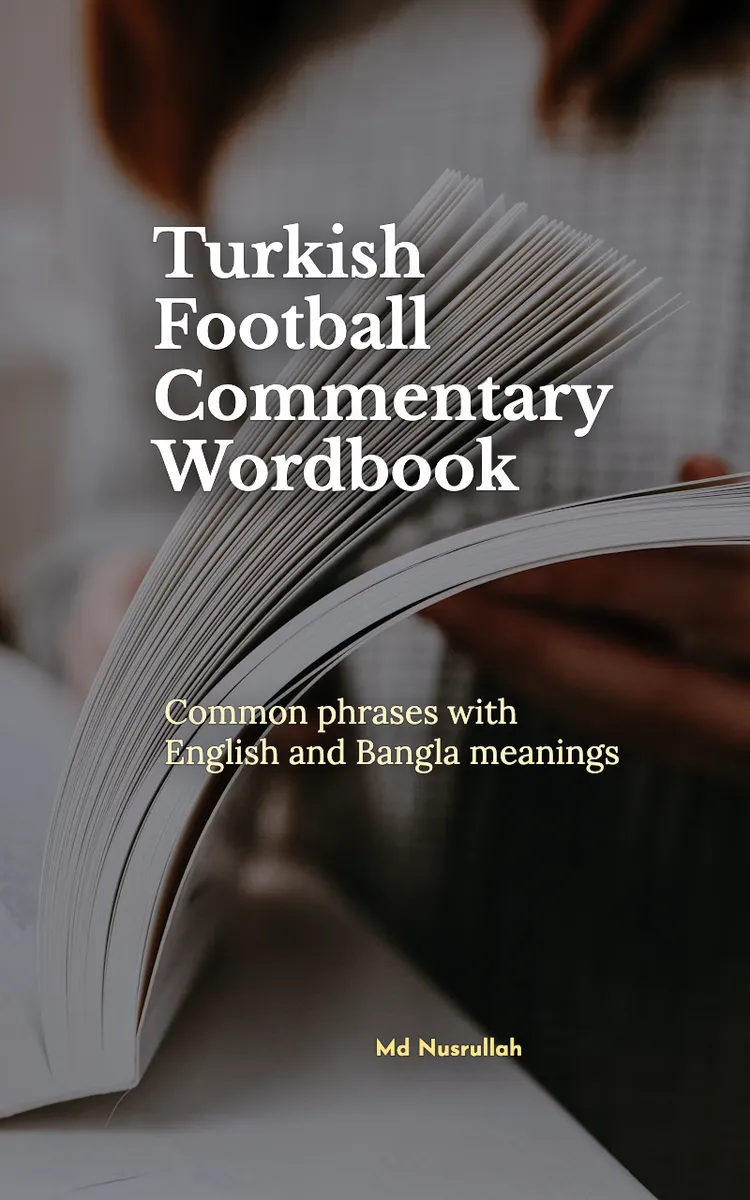
"Turkish Football Commentary Wordbook" is a list book by Md Nusrullah with 5 chapters and approximately 5,807 words. Turkish football commentary words and phrases with translations.
This book was created using Inkfluence AI, an AI-powered book generation platform that helps authors write, design, and publish complete books.
Frequently Asked Questions
What is "Turkish Football Commentary Wordbook" about?
Turkish football commentary words and phrases with translations
How many chapters are in "Turkish Football Commentary Wordbook"?
The book contains 5 chapters and approximately 5,807 words. Topics covered include Match Basics: Kickoff, Play, and Referee Calls, Passing & Possession: Short, Long, and Keeping the Ball, Attacking Moves: Dribbles, Crosses, and Shots, Defense & Goalkeeping: Tackles, Clearances, and Saves, and more.
Who wrote "Turkish Football Commentary Wordbook"?
This book was written by Md Nusrullah and created using Inkfluence AI, an AI book generation platform that helps authors write, design, and publish books.
Write your own list book with AI
Describe your idea and Inkfluence writes the whole thing. Free to start.
Start writingCreated with Inkfluence AI


