
Read the first chapter
The whole of chapter one, free. About 4 min. Turn the pages with the arrows, your keyboard, or a swipe.
Chapter 1
Turning Toward Peace: Trust in the Path
Scripture Focus
Dhammapada 183
> To avoid all evil, > to cultivate good, > to purify one’s mind - > this is the teaching of the Buddhas.
Trust in the Buddha’s teaching begins when we take one clear step: seeing suffering honestly and choosing the path that leads the mind toward freedom.
A busy mind often asks for certainty before it will move. It wants proof that patience will work, that compassion won’t be mistaken for weakness, and that a calmer way of living will hold up when bills, family tension, or a difficult customer arrive. The Buddha’s teaching doesn’t ask us to pretend those concerns aren’t real. It gives us a direction we can test: avoid actions that increase harm, cultivate what brings clarity, and purify the mind through steady attention.
This verse is short enough to remember during an ordinary day. You might repeat its three movements while washing dishes, unlocking your shop, or sitting in your truck before work. It isn’t a demand to become perfect by sunset. It’s a trustworthy compass. When the mind is pulled toward anger, greed, or confusion, the teaching helps us notice. Then we can choose again.
Reflection
Faith in Buddhism is not blind belief. It is a growing confidence formed through practice. We hear the Buddha’s teaching, consider it carefully, and observe what happens when we live by it. If pausing before speaking prevents a harsh exchange, trust grows. If generosity softens the grip of constant wanting, trust grows. If mindful breathing helps us meet pain without adding panic, trust grows.
That kind of trust matters because suffering can make the mind unreliable. A sharp email may seem to prove that someone is against us. A slow week at work may feel like a verdict on our future. A mistake from years ago may return with fresh force at three in the morning. The Buddha invites us to recognize suffering without turning it into an identity. Pain is present; fear is present; disappointment is present. These experiences deserve care, but they don’t have to command every decision.
Steadiness begins with naming what’s happening. “This is worry.” “This is anger.” “This is the wish to control the result.” Naming isn’t cold or distant. It gives us enough space to respond wisely. The Buddha’s path then points us toward a compassionate direction. We can tell the truth without attacking. We can set a boundary without wishing harm. We can admit that we’re tired before our tiredness spills onto someone else.
A practical way to remember today’s teaching is: Trust the path by taking the next harmless, helpful step. Not the perfect step. Not the step that guarantees a certain outcome. Just the next one that reduces harm and supports clarity. If a conversation is heated, that step may be three breaths before replying. If resentment has taken over, it may be acknowledging the hurt in writing instead of rehearsing an accusation. If someone is struggling, it may be offering help without needing praise.
This trust also includes patience with the mind. Purifying the mind doesn’t mean forcing every unpleasant thought away. Pushing thoughts down can make them louder. Instead, we notice them, understand their conditions, and avoid feeding them. Anger may need rest, honest communication, or a firm limit. Greed may need gratitude and a pause before purchasing. Confusion may need wise counsel, silence, or returning to a simple practice.
The teaching becomes real in small places. It appears when you don’t pass along gossip at work. It appears when you repair a mistake instead of defending it. It appears when you notice that winning an argument would leave your heart unsettled. These moments may look ordinary from the outside. Inside, they are turns toward peace.
Practice for Today
1. Use the three-part trust check. Set aside five quiet minutes, perhaps before checking your phone in the morning. Sit comfortably and feel three natural breaths. Then ask: - What action should I avoid because it would increase harm? - What good quality can I cultivate in the next hour? - What thought or feeling needs gentle attention rather than immediate obedience?
Choose one answer and make it specific. “I’ll avoid snapping” becomes “I’ll take one breath before answering a frustrating message.” “I’ll cultivate kindness” becomes “I’ll speak respectfully to the person who handles the next difficult request.”
2. Journal about a present difficulty. Write for seven minutes without trying to sound wise. Begin with, “The suffering I’m noticing is…” Describe the facts, the feelings, and the story your mind is adding. For example: “The customer canceled. I feel worried about money. My mind says this proves the business is failing.” Then write, “A compassionate direction would be…” This might be checking the actual numbers, asking for help, or speaking to yourself without contempt.
3. Practice a three-breath pause before one response. Choose one predictable trigger today: a traffic delay, a critical comment, a child’s repeated question, or a tense work call. Before responding, feel your feet or hands, breathe in, breathe out, and silently remember: “Avoid harm. Cultivate good. Purify the mind.” You don’t need a dramatic transformation. Let the pause keep one unskillful sentence from becoming a larger problem.
At the end of the day, notice what happened. Did the pause change the situation, or did it simply change your participation in it? Both matter. The path is not measured only by pleasant results. It is also measured by whether the mind became a little less captive to anger, fear, or craving.
Closing Prayer
Buddha, guide my mind toward what is harmless and true. When suffering appears, help me recognize it without adding blame. Give me the steadiness to pause, the courage to choose compassion, and the patience to trust each wise step. May my actions bring less harm to myself and to others. May peace grow through practice.
End of chapter one. 4 more chapters in the full book.
Swipe or use the arrows to turn the page
What's inside: 5 chapters
- 1. Turning Toward Peace: Trust in the Path
- 2. Prayer of Awareness: Mindfulness That Heals
- 3. Wisdom in the Heart: Seeing Clearly
- 4. Compassion as Practice: Lovingkindness and Service
- 5. Surrender and Hope: Living in the Way of Peace
About this book
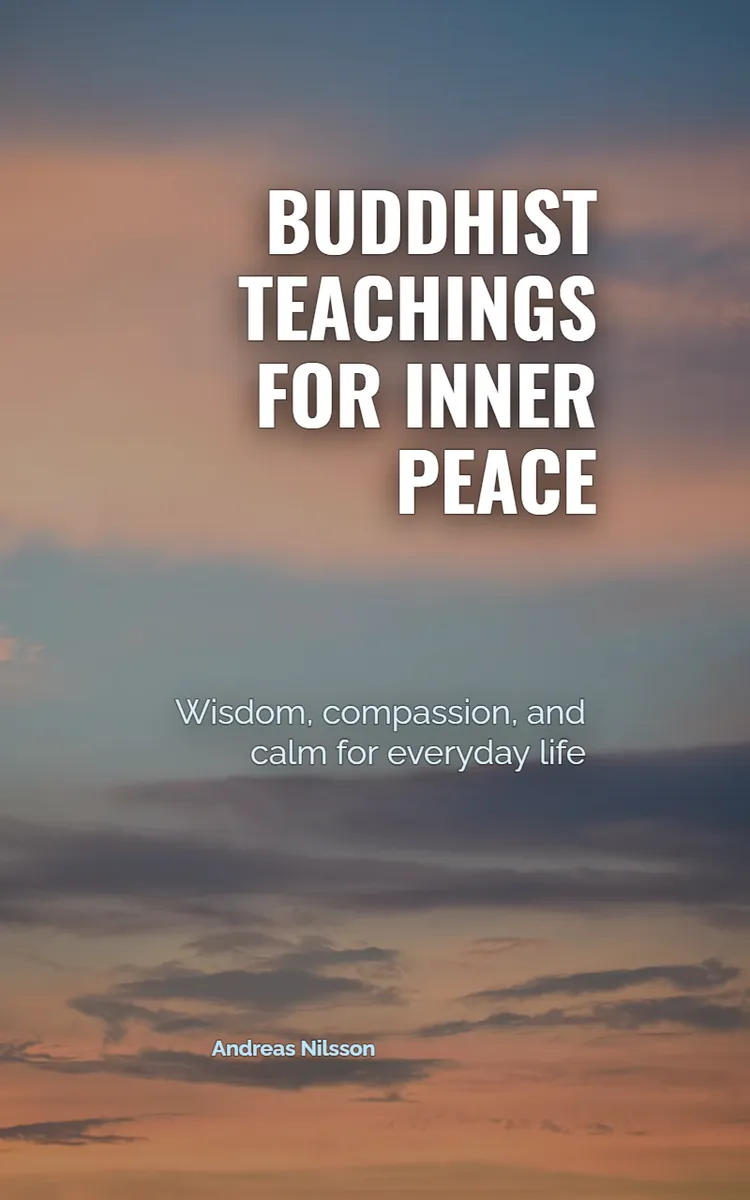
"Buddhist Teachings For Inner Peace" is a religious devotional book by Andreas Nilsson with 5 chapters and approximately 4,686 words. Buddhist teachings on wisdom, compassion, and inner peace.
This book was created using Inkfluence AI, an AI-powered book generation platform that helps authors write, design, and publish complete books.
Frequently Asked Questions
What is "Buddhist Teachings For Inner Peace" about?
Buddhist teachings on wisdom, compassion, and inner peace
How many chapters are in "Buddhist Teachings For Inner Peace"?
The book contains 5 chapters and approximately 4,686 words. Topics covered include Turning Toward Peace: Trust in the Path, Prayer of Awareness: Mindfulness That Heals, Wisdom in the Heart: Seeing Clearly, Compassion as Practice: Lovingkindness and Service, and more.
Who wrote "Buddhist Teachings For Inner Peace"?
This book was written by Andreas Nilsson and created using Inkfluence AI, an AI book generation platform that helps authors write, design, and publish books.
Write your own religious devotional book with AI
Describe your idea and Inkfluence writes the whole thing. Free to start.
Start writingCreated with Inkfluence AI


