
Read the first chapter
The whole of chapter one, free. About 9 min. Turn the pages with the arrows, your keyboard, or a swipe.
Chapter 1
Choosing an Indoor Potty Station
Find a Potty Station Before the First Accident
A puppy circles beside the sofa, squats on the carpet, and finishes before you reach the leash. In an apartment, that short distance between noticing the signal and reaching the elevator can turn into a stain, a smell, and a deposit problem. An indoor potty station gives your puppy a clear place to go when outdoor access takes too long.
The right station also makes training easier. Grass patches, trays, and pads do not feel or smell the same to a puppy, and each option needs a different cleaning routine. A station behind a closed door or across a slippery floor will fail even if the product works well. You need a setup your puppy can reach quickly, your household can clean, and your apartment can safely hold.
By the end of this section, you will be able to compare the three main station types, choose one using the Home Base Selector, and set it in a consistent location. The goal is not to create a perfect-looking corner. The goal is to create one obvious, reachable bathroom spot that protects your carpet and floor.
Ask yourself two questions first: How quickly can your puppy reach the station from where it sleeps and plays? How easily can you clean the area after a missed aim or a full bladder? Your answers should guide the choice more than appearance.
Compare the Three Station Types
Each station has a useful role, but none works equally well in every apartment. Compare the surface, the cleanup needs, and the way your puppy may use it.
A grass patch uses real or synthetic grass over a tray. Real grass feels closest to an outdoor lawn and may help a puppy who refuses smooth surfaces. Synthetic grass lasts longer and avoids replacing sod, but it can hold odor if you do not rinse and clean it. A grass patch usually costs more and takes more space than a pad. Choose it when your puppy already seeks grass, when you want a surface that resembles future outdoor potty areas, or when you can clean a tray regularly.
A tray usually means a plastic pan, sometimes with a grate that keeps paws above the urine. The tray itself does not decide the surface; you can place a pad inside it or use a washable insert. A grate helps prevent chewing and keeps wetness away from paws, but some puppies dislike the hard plastic feel or the sound of claws on it. Choose a tray when floor protection and containment matter most, especially on wood, laminate, or tile.
A pad is a disposable or washable absorbent square. Disposable pads offer the fastest cleanup: fold the soiled pad inward, seal it in a bag, and replace it. They also move easily between rooms during early training. However, a loose pad can slide, bunch up, or teach a puppy that soft rugs have the same purpose. A pad holder or low-sided tray keeps the pad flat and reduces leaks.
Use the Home Base Selector to choose. Score each option from 1 to 3 for the four questions below, then choose the option with the strongest practical fit rather than the highest score alone.
• Surface match: Give 3 points if the surface resembles what your puppy already chooses, 2 points if your puppy can learn it easily, and 1 point if the surface creates a strong mismatch. A puppy who targets grass may adapt quickly to a grass patch but hesitate on a bare grate.
• Cleanup control: Give 3 points if the station contains liquid and solids, 2 points if cleanup takes a few extra steps, and 1 point if leakage or odor seems likely. A tray under a pad often protects a rental floor better than a pad placed directly on it.
• Access: Give 3 points if your puppy can reach it in under 30 seconds from the main sleeping and play areas, 2 points if you must move a gate or cross one room, and 1 point if a closed door, stairwell, or narrow route blocks it. Fast access matters because puppies often give little warning.
• Apartment fit: Give 3 points if the station fits without blocking a walkway, radiator, cabinet, or exit, 2 points if it fits with minor changes, and 1 point if it creates a tripping, odor, or landlord problem. The best station cannot work if people step around it or your puppy knocks it over.
For example, a 24-inch by 24-inch synthetic grass patch may score well for surface match but poorly for cleanup if you cannot rinse it. A 22-inch by 17-inch tray with a disposable pad may score better overall in a small apartment because it catches leaks and fits beside a bathroom door. Select one station and keep the surface consistent for at least several days. Frequent switching makes it harder to tell whether your puppy understands the location.
Place the station on a waterproof mat, not directly on carpet. Leave enough space for your puppy to enter, turn around, and step off without touching furniture. Keep food and the sleeping crate away from the station, because puppies usually avoid toileting beside eating or sleeping areas. Your practical takeaway: choose a surface your puppy can accept, a container your floor can handle, and a location your puppy can reach quickly.
Apply the Home Base Selector in a Small Apartment
Consider a common layout: a puppy sleeps in a crate beside the bedroom, plays in a living room, and the apartment has one bathroom near the entry. The elevator ride to the ground floor takes about four minutes on a quiet day, and the puppy cannot wait that long after waking. A station near the bathroom may work because it sits close to the entry route, but the puppy still needs a clear path from the crate.
Use this setup process:
• Measure the route. Walk from the crate to the main play area to the proposed station without carrying anything. Remove a basket, chair, or shoe rack that narrows the path. Your goal is a route that takes a small puppy less than 30 seconds to cross.
• Test the footprint. Mark a 24-inch by 24-inch square with painter’s tape. Place it beside the bathroom wall, away from the door swing. Confirm that the door opens fully, people can pass, and the station does not touch a heater. Your expected outcome is a station that stays in one place and doesn't become a tripping hazard.
• Compare the surfaces. If the puppy has been choosing the bath mat, start with a washable pad inside a low tray because the soft, flat surface may feel familiar while the tray protects the floor. If the puppy searches for grass on walks, choose a grass patch instead. Expect fewer refusals during the first several attempts.
• Build the station. Put a waterproof mat underneath, set the tray or grass patch on top, and place one clean pad or insert inside. Keep spare pads, waste bags, and cleaner within reach but not beside the station. The goal is a fast replacement after each use, without leaving the puppy unsupervised while you search for supplies.
• Show the route. Carry or guide the puppy to the station after waking, eating, drinking, active play, and crate time. Place all four paws on the surface, wait quietly, and reward immediately after the puppy finishes. Your expected outcome is a clear connection between the station, the act of toileting, and the reward.
• Check performance for three days. Record the time, location, surface, and result. If the puppy reaches the station but misses by a few inches, enlarge the target with a second pad or a larger tray. If the puppy avoids the surface, change the surface type while keeping the location fixed. Your expected outcome is useful information, not guesswork.
For this apartment, a tray with a washable pad may outperform a loose disposable pad. The tray contains the wet area, the pad feels familiar, and the bathroom location stays near the exit for later outdoor trips. Clean solid waste promptly, replace a soaked pad, and wipe the waterproof mat after any spill. Use an enzymatic cleaner, which breaks down odor-causing residue rather than merely covering the smell, on any accident outside the station.
Quick checklist
• Measure the route from the crate and play area.
• Keep the station within about 30 seconds of those areas.
• Use a waterproof mat under every station.
• Leave room for the puppy to turn around.
• Keep the station away from food, bedding, heaters, and door swings.
• Choose one surface and avoid casual switching.
• Keep replacement pads, waste bags, and cleaner nearby.
• Reward immediately after successful use.
• Record misses for three days before changing the setup.
When the station remains in one accessible place, and the surface stays predictable, your puppy gets a simple rule: this spot is the bathroom. Your takeaway: fix the route and location before blaming the product.
Avoid Setups That Confuse the Puppy or Damage the Floor
The station sits too far away
A station in the laundry closet may look tidy, but a puppy who wakes in the bedroom may not reach it in time. A closed door creates the same problem.
Do this: Keep the station on the puppy’s usual route, open and visible, especially during early training. Use a baby gate to limit access to a nearby area if the puppy wanders through the apartment.
Not this: Do not place the station where the puppy needs to cross a hallway, push through a door, or wait for an elevator.
If accidents happen beside the crate or at the edge of the play area, move the station closer before changing the surface.
The pad becomes a second carpet
A loose pad on carpet can slide during scratching, leak through, and teach the puppy that any soft rectangle deserves a squat. Small bath mats and rugs can create the same confusion.
Do this: Put the pad inside a holder or tray on a waterproof mat. Remove nearby rugs during training, and return them only after the puppy reliably uses the station.
Not this: Do not place several pads around the apartment as permanent bathrooms. That spreads the rule instead of making one home base clear.
If your puppy misses the edge, use a larger tray or add a temporary second pad inside the same contained area. Reduce the target later, once the puppy aims consistently.
The surface changes every few days
Switching from a pad to synthetic grass, then to a grate, can make each attempt feel new. A puppy may sniff, paw, or walk away rather than use the station.
Do this: Keep the location fixed and give one surface several days of steady practice. If the puppy refuses it, make one deliberate change based on the Home Base Selector: match the surface to the puppy’s current preference or improve containment.
Not this: Do not move the station and change the surface at the same time. You will not know which change caused the problem.
A grass patch may need rinsing, a tray may need wiping under the grate, and a pad may need immediate replacement. Match the cleaning routine to the station instead of allowing odor to build. A clean, reachable, predictable home base gives your puppy the best chance to choose it before the carpet does.
End of chapter one. 7 more chapters and about 14,632 words in the full book.
Swipe or use the arrows to turn the page


What's inside: 8 chapters
- 1. Choosing an Indoor Potty Station
- 2. Building a Reliable Potty Schedule
- 3. Teaching a Potty Cue
- 4. Managing Long Apartment Trips
- 5. Preventing Accidents Indoors
- 6. Cleaning Carpet and Floor Accidents
- 7. Handling Setbacks and Schedule Changes
- 8. Transitioning Away from Indoor Pottying
About this book
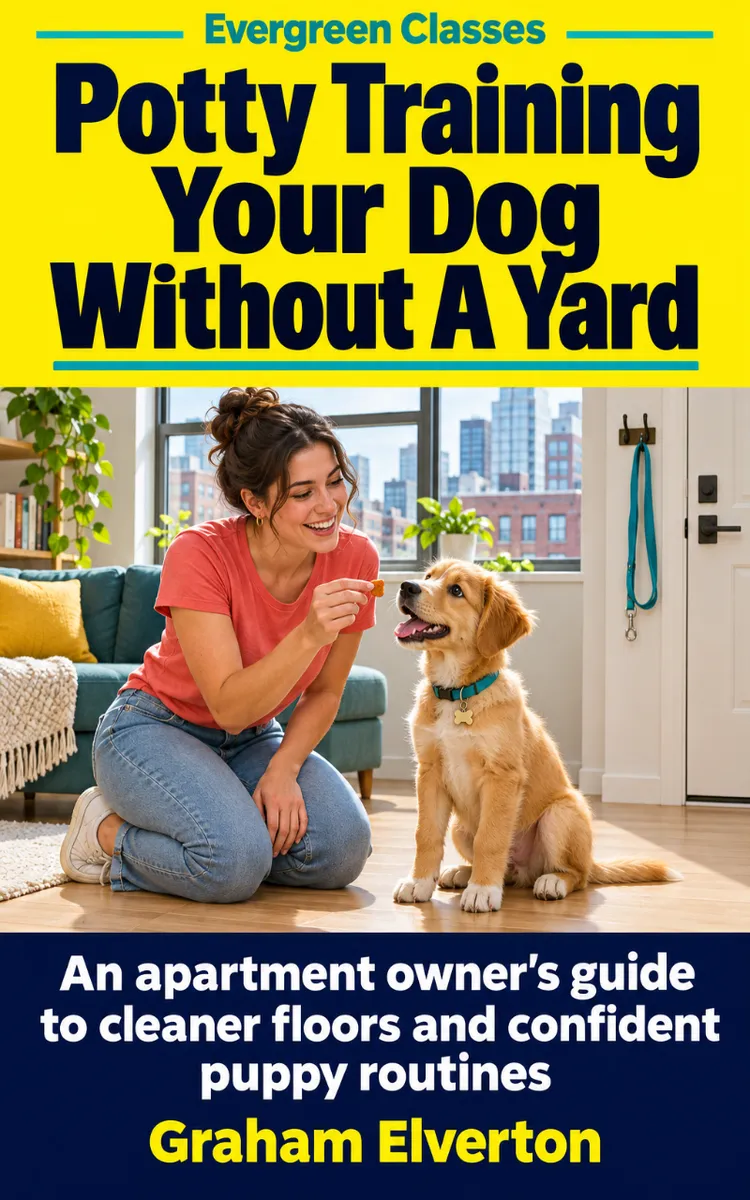
"Potty Training Without A Yard" is a how-to guide book by Graham Elverton with 8 chapters and approximately 14,632 words. Your puppy can finish on the carpet before you reach the elevator. In an apartment, that delay can mean stains, lingering odor, and a deposit at risk.
This book was created using Inkfluence AI, an AI-powered book generation platform that helps authors write, design, and publish complete books. It was made with the AI Ebook Generator.
Frequently Asked Questions
What is "Potty Training Without A Yard" about?
Your puppy can finish on the carpet before you reach the elevator. In an apartment, that delay can mean stains, lingering odor, and a deposit at risk. Potty Training Without A Yard gives you a clear indoor setup and routines built for the time it takes to get outside. Compare grass patches, trays, and pads with the Home Base Selector, then choose a station your puppy can reach and you can clean. Use the Trigger-to-Trip Clock to plan around waking, meals, play, and bedtime instead of waiting for a signal that may come too late. You’ll also learn to pair a consistent potty cue with the right spot and an immediate reward. Eight focused chapters help you build a routine that works in an apartment, from the first station to the next trip outside. The aim is one obvious bathroom spot, and a carpet your puppy can leave alone.
How many chapters are in "Potty Training Without A Yard"?
The book contains 8 chapters and approximately 14,632 words. Topics covered include Choosing an Indoor Potty Station, Building a Reliable Potty Schedule, Teaching a Potty Cue, Managing Long Apartment Trips, and more.
Who wrote "Potty Training Without A Yard"?
This book was written by Graham Elverton and created using Inkfluence AI, an AI book generation platform that helps authors write, design, and publish books.
How can I create a similar how-to guide book?
You can create your own how-to guide book using Inkfluence AI. Describe your idea, choose your style, and the AI writes the full book for you. It's free to start.
Write your own how-to guide book with AI
Describe your idea and Inkfluence writes the whole thing. Free to start.
Start writingCreated with Inkfluence AI


