
Read the first chapter
The whole of chapter one, free. About 7 min. Turn the pages with the arrows, your keyboard, or a swipe.
Chapter 1
Separating Identity from Violence
When Violence Starts Answering for You
After the checkpoint closed, you carried more than a bag home. You carried the sound of boots on the stairs, the sudden silence in your neighborhood, and the habit of checking the window before turning on a light. Months later, the danger may have changed, but your body still reacts as if the next knock could split your life open again.
Then someone asks a simple question: “What are you like?”
You pause. Not because you don’t know your favorite food or what work you used to enjoy. You pause because political violence has become the loudest thing in the room. It has shaped your sleep, your temper, your plans, and the way you see other people. You may start saying, “I’m damaged,” “I’m afraid,” or “I can’t trust anyone,” as if those reactions are your permanent identity.
What happened to you is part of your story - but it is not the whole truth of who you are.
The Story Violence Wrote - and the Self It Couldn’t Erase
Old Belief: Political violence changed me, so the frightened, angry, or withdrawn person I’ve become must be the real me now.
New Reality: Violence affected your nervous system, choices, and relationships, but it did not get ownership of your identity.
This distinction matters because survival reactions can feel personal. If you scan every room, avoid crowds, or snap at a loved one, it’s easy to conclude, “This is who I am.” But a reaction is not a character verdict. It’s information about what your mind and body learned while trying to keep you alive.
Take distrust. Before the violence, you may have been careful but open. Afterward, you check people’s hands, study their tone, and keep conversations shallow. That caution may have protected you in one season. It doesn’t mean you’re naturally cold or incapable of connection. It means your system learned that closeness could carry danger.
The Unbroken Self Map helps you separate these layers. On one side, you name what violence changed: fear, numbness, anger, avoidance, lost work, broken routines. On the other, you name what remains yours: your humor, skills, values, loyalties, curiosity, faith, craftsmanship, or stubborn refusal to abandon the people you love. The map doesn’t deny the damage. It stops the damage from becoming your only address.
When you make this separation, recovery becomes less like inventing a new person and more like finding the person who has been crowded out.
Reading the Pattern Without Blaming Yourself
Political violence often trains the mind to confuse protection with identity. You survived by becoming alert, quiet, compliant, suspicious, or ready to fight. Those responses made sense in a dangerous environment. Trouble begins when the environment changes but the response keeps running the household.
You might be safe in your shop, yet your hand still reaches for the door lock every few minutes. You might be with a trusted partner, yet a delayed reply feels like abandonment. You might want to rebuild your business, but every setback sounds like proof that the future is dangerous. The mind uses old evidence to make present decisions.
Look for these signs:
1. You describe yourself mainly through survival reactions. “I’m an angry person” may actually mean, “I’ve been carrying anger for so long that I can’t remember what ease feels like.”
2. You treat changed behavior as permanent identity. Saying, “I don’t trust people anymore,” closes the door. Saying, “Trust is difficult for me after what happened,” leaves room for movement.
3. You reject parts of yourself that survived. You may dismiss your patience, humor, work ethic, or tenderness because they seem too small beside what happened. They aren’t small. They’re evidence that violence did not erase everything.
4. You feel guilty when an old version of you appears. Laughing at a joke, enjoying a meal, or making a future plan can feel disloyal to people who suffered. That guilt can make you shrink your life to prove you remember.
The Unbroken Self Map names the wound without handing it the pen.
Start with two columns on paper. Title the first “What Violence Taught My Body to Do.” Title the second “What Still Belongs to Me.” Keep the first column honest and specific: “I check exits,” “I avoid political conversations,” “I wake at 3:00 a.m.,” “I expect bad news.” In the second column, write qualities that existed before, survived during, or emerged because of hardship: “I solve problems,” “I notice when others are struggling,” “I keep promises,” “I can learn.”
The goal isn’t to force positive thinking. If you feel numb, write “numbness” without arguing with it. Then ask, “What does this reaction protect?” That question creates distance without shame. Maybe numbness protects you from being overwhelmed. Maybe anger protects a sense of justice. Understanding a reaction is not the same as obeying it.
Questions That Return Your Name to You
1. When you say, “This is just who I am now,” what specific reaction are you talking about? Name the behavior rather than the identity. “I avoid crowded buses” gives you something to understand; “I’m broken” gives you a prison with no door.
2. Which qualities did you have before the violence that still appear in small moments? Perhaps you repaired a neighbor’s generator, made tea for a tired relative, or found a way to make your child laugh. Small evidence counts because identity often returns quietly.
3. Which survival response once protected you but now causes trouble? You might write, “Staying silent kept me unnoticed, but now I don’t speak up at work.” This isn’t an accusation. It’s a clear record of an old tool being used in a new setting.
4. What part of your identity have you allowed violence to claim? Maybe it has taken your confidence as a business owner, your sense of belonging, or your belief that you can plan ahead. Write one sentence beginning, “That was taken from me, but it is not owned by violence.”
5. If a trusted person described you without mentioning the violence, what might they say? Let the answer be ordinary. “He is dependable.” “She notices details.” “They make people feel welcome.” Ordinary strengths are often the beams holding up recovery.
Don’t rush to make the answers inspiring. An honest answer such as “I don’t know yet” is still a beginning. You’re rebuilding a truthful picture, not submitting a polished application.
The Seven-Day Unbroken Self Map Challenge
For the next 7 days, separate one survival reaction from one enduring part of yourself each evening.
• Set aside 10 minutes before bed. - Draw two columns: “Violence Shaped This” and “This Is Still Mine.” - Record one reaction from that day in the first column. - Record one quality, value, skill, or choice in the second. - Add one sentence: “Tomorrow, I can honor what happened without letting it decide everything by ______.” - On the seventh day, read all seven entries aloud or share them with someone you trust.
Difficulty: Medium
You’ll know it’s working when...
• You catch yourself saying “I’m having a fear response” instead of “I am fear.” - You can name at least three qualities that violence did not erase. - You notice a choice point between an old protective reaction and a present-day response. - You allow one ordinary pleasure without treating it as betrayal. - Your past feels more specific - and your identity feels larger.
Some evenings, the second column may contain only one word: “Here.” That counts. Remaining present after your life has been torn apart is not nothing. It is a form of continuity.
You Are More Than What You Had to Become
The violence may have changed your habits, your relationships, and your sense of time. It may have taken people, places, work, and certainty. You don’t have to minimize any of that to reclaim your identity.
You survived by becoming what the moment required, but you are still free to discover what the next season requires.
• You learned to separate survival reactions from permanent identity. - You saw how the Unbroken Self Map holds both damage and enduring strengths. - You identified signs that old protection patterns may be running your present life. - You began a seven-day practice for reclaiming qualities violence did not own.
Recovery becomes steadier when you stop asking, “How do I become who I was before?” and begin asking, “What remains, and what can grow from here?” The next step is learning how to meet your body’s alarms without allowing them to make every decision.
End of chapter one. 39 more chapters and about 58,216 words in the full book.
Swipe or use the arrows to turn the page


What's inside: 40 chapters
- 1. Separating Identity from Violence
- 2. Naming What Happened
- 3. Releasing Self-Blame
- 4. Restoring a Sense of Safety
- 5. Understanding Trauma Responses
- 6. Grounding During Flashbacks
- 7. Calming the Alarm System
- 8. Making Room for Grief
- 9. Handling Anger Without Harm
- 10. Rebuilding Trust at Your Pace
- 11. Setting Boundaries Without Guilt
- 12. Choosing Who Gets Your Story
- 13. Finding Support That Fits
- 14. Asking for Help Clearly
- 15. Navigating Family Differences
- 16. Reconnecting with Your Body
- 17. Sleeping After Threat
- 18. Managing Triggers in Daily Life
- 19. Creating a Personal Safety Plan
- 20. Protecting Digital Privacy
- 21. Building Routines After Displacement
- 22. Reclaiming Small Decisions
- 23. Restoring Confidence Through Action
- 24. Working with Survivor Guilt
- 25. Living with Uncertainty
- 26. Rebuilding Work and Purpose
- 27. Managing Money After Crisis
- 28. Belonging in a New Community
- 29. Keeping Culture Close
- 30. Parenting Through Ongoing Stress
- 31. Responding to Stigma and Misunderstanding
- 32. Choosing Your Relationship with News
- 33. Turning Memory into Meaning
- 34. Honoring Loss Through Ritual
- 35. Choosing Advocacy on Your Terms
- 36. Recognizing Growth Without Pressure
- 37. Preparing for Difficult Anniversaries
- 38. Recovering After Setbacks
- 39. Building a Future Beyond Survival
- 40. Carrying Resilience Forward
About this book
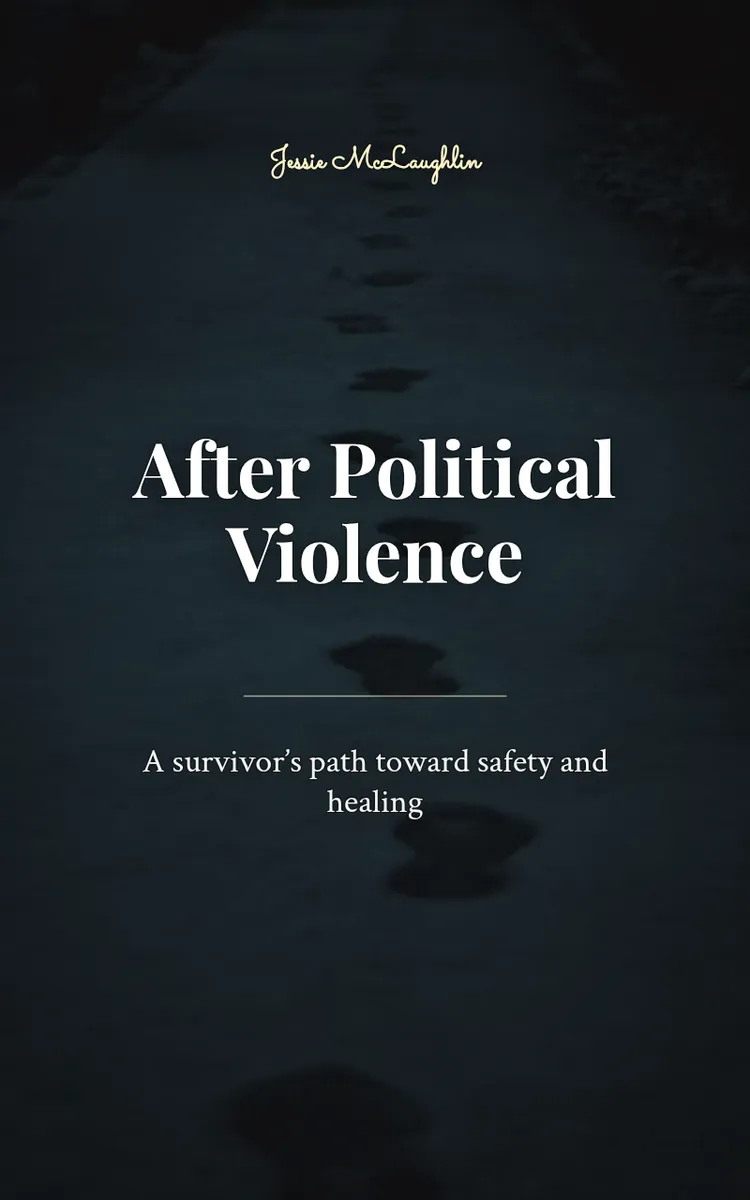
"After Political Violence" is a nonfiction book by Jessie McLaughlin with 40 chapters and approximately 58,216 words. Surviving political violence and rebuilding life after trauma.
This book was created using Inkfluence AI, an AI-powered book generation platform that helps authors write, design, and publish complete books.
Frequently Asked Questions
What is "After Political Violence" about?
Surviving political violence and rebuilding life after trauma
How many chapters are in "After Political Violence"?
The book contains 40 chapters and approximately 58,216 words. Topics covered include Separating Identity from Violence, Naming What Happened, Releasing Self-Blame, Restoring a Sense of Safety, and more.
Who wrote "After Political Violence"?
This book was written by Jessie McLaughlin and created using Inkfluence AI, an AI book generation platform that helps authors write, design, and publish books.
Write your own nonfiction book with AI
Describe your idea and Inkfluence writes the whole thing. Free to start.
Start writingCreated with Inkfluence AI


