

Read the first chapter
The whole of chapter one, free. About 9 min. Turn the pages with the arrows, your keyboard, or a swipe.
Chapter 1
Defining Spiritual Formation Coaching
Why the Coach’s Role Must Be Clear
What happens when a client asks, “Should I leave my marriage?” and you respond with a Bible verse, a personal opinion, or a plan for change? Your answer may sound caring, yet it could cross into counseling, pastoral care, or personal control. Spiritual formation coaching needs clear boundaries because clients bring real pain, serious decisions, and spiritual questions into the coaching relationship.
Spiritual formation means the lifelong work of becoming more like Christ through the Holy Spirit. Romans 12:2 connects formation with the renewing of the mind, while Galatians 5:22-23 describes the Spirit’s fruit. Coaching helps a client notice where God is already working, respond faithfully, and practice obedience. Coaching does not replace therapy, medical care, church leadership, or sound biblical teaching.
This distinction protects both people. It helps you choose the right response, refer a client when needed, and create a coaching agreement that explains your role. By the end of this section, you should be able to identify the difference between coaching, counseling, mentoring, teaching, and pastoral care, then use the Four-Lens Formation Map to guide a client without taking over the work that belongs to the client, the church, or qualified professionals.
Ask yourself: when a client shares a problem, am I helping the client discover and practice a faithful next step, or am I diagnosing, directing, rescuing, or preaching? That question keeps your service honest.
The Four-Lens Formation Map
The Four-Lens Formation Map gives you a practical way to understand a client’s situation before you respond. Each lens asks a different question. Together, they keep coaching centered on Christ, Scripture, the client’s responsibility, and wise boundaries.
1. The Scripture lens asks, “What does God’s Word clearly say?” Use direct biblical teaching when Scripture speaks plainly. For example, Ephesians 4:25 calls believers to put away falsehood and speak truth. Do not use a verse as a shortcut around careful listening. Scripture guides the conversation; it does not give you permission to control the client.
2. The Formation lens asks, “What kind of Christlike growth does this situation require?” A client may need patience, courage, repentance, wisdom, forgiveness, or self-control. James 1:5 points believers toward asking God for wisdom. Your task involves helping the client name the needed response and choose a practice that supports it.
3. The Responsibility lens asks, “What belongs to the client, and what belongs to someone else?” The client can choose to apologize, set a boundary, seek counsel, attend therapy, or establish a prayer routine. The client cannot control another person’s repentance or guarantee an outcome. You also cannot diagnose trauma, prescribe treatment, or decide a church discipline matter.
4. The Safety lens asks, “Does this situation require immediate protection or specialized care?” Abuse, suicidal thoughts, threats, addiction emergencies, psychosis, and serious mental health symptoms require referral and, when necessary, emergency action. Proverbs 11:14 commends wise counsel, and Galatians 6:2 calls believers to carry burdens together. Referral does not show failure; it shows responsible care.
These lenses help you distinguish five related but different roles. Coaching focuses on present choices, growth goals, habits, and accountability. A coach asks questions such as, “What step will you take before our next meeting?” The coach does not diagnose a disorder or promise spiritual results.
Counseling addresses emotional distress, mental health symptoms, trauma, and patterns that require clinical skill. A licensed counselor may assess depression, process abuse, or provide treatment. If a client reports two weeks of severe hopelessness, cannot function at work, or mentions self-harm, stop ordinary coaching and refer to a qualified mental health professional. If the client faces immediate danger, contact emergency services according to local law and your safety policy.
Mentoring offers guidance from experience. A mentor may say, “I handled a similar ministry transition by asking three trusted leaders for feedback.” Coaching usually draws the client’s answer forward through questions. You may mentor within an agreed boundary, but label the shift clearly: “I can share one experience, then you can decide whether it applies.”
Teaching explains biblical truth, spiritual disciplines, or practical skills. Teaching answers, “What should you know?” Coaching asks, “How will you live this out?” For example, you may teach the meaning of Sabbath from Genesis 2:1-3 and Mark 2:27, then coach the client to schedule a two-hour Sabbath practice and review what happened.
Pastoral care provides spiritual care through the life and leadership of a local church. Pastors and trained ministry leaders may offer prayer, visitation, communion, church discipline, crisis care, and congregational oversight. A coach should not present private coaching as church authority. With the client’s permission, coordinate with a pastor when the concern involves church membership, spiritual abuse, major moral failure, or a need for congregational support.
Christian psychology adds another guardrail. It treats people as whole persons made in God’s image, with bodies, minds, emotions, relationships, choices, and spiritual lives. Genesis 1:27 establishes human dignity; Psalm 139:14 recognizes embodied life; and 1 Thessalonians 5:23 speaks of the whole person. This view prevents you from reducing every struggle to sin or every struggle to psychology. A client may need repentance, medical care, grief support, better sleep, relational repair, or several forms of help at once.
Use a written agreement to make these limits visible. Include your service description, session length, price, cancellation policy, confidentiality limits, communication rules, referral process, and emergency instructions. A simple form might state: “Coaching supports spiritual growth and practical action. Coaching does not provide psychotherapy, medical treatment, legal advice, or pastoral authority.” Review the agreement before the first session and obtain the client’s signed consent.
A fair starting price depends on your training, local market, session length, and business costs. For example, a new coach might offer a six-session, 50-minute formation package for $300, or $50 per session, while clearly stating what the package includes: intake form, six sessions, brief between-session check-ins, and a closing review. Do not set a low price to compensate for unclear boundaries. Seek additional training through an established Christian coaching program, supervised practice, biblical counseling education, trauma-informed training, and local church mentorship. Verify the instructor’s qualifications and learn the laws that govern coaching and counseling where you live.
The map gives you a simple test: Scripture directs the work, formation names the growth, responsibility defines the next action, and safety determines whether coaching should continue. Keep those four questions in front of you during every session.
Applying the Map From Intake to Completion
Consider a client who completes an intake form and writes, “I keep losing my temper with my spouse. I pray afterward, but nothing changes.” The client requests six weekly coaching sessions to develop a Christ-centered response to conflict. The following process keeps the work within coaching while leaving room for referral.
1. Review the intake before session one. Ask about the client’s goal, church involvement, medical or mental health support, current crisis, and expectations. If the form mentions violence, self-harm, threats, or severe impairment, pause the coaching intake and follow your referral or emergency plan. Expected outcome: you know whether coaching fits before accepting payment.
2. Explain the roles and agreement in the first 10 minutes. State that you will help the client identify patterns, practice responses, and review progress. Explain that you will not diagnose, provide couples therapy, or decide who is right in the marriage. Review the $300 package, six 50-minute sessions, 24-hour cancellation policy, secure communication method, and confidentiality limits. Expected outcome: both people understand the service.
3. Use the Four-Lens Formation Map to clarify the goal. Scripture may point toward truthful speech, gentleness, and quick listening through Ephesians 4:25, Proverbs 15:1, and James 1:19. Formation may involve self-control and humility. Responsibility may include pausing before answering and requesting a later conversation. Safety may require referral if the anger includes threats or physical harm. Expected outcome: the goal becomes specific rather than “be a better Christian.”
4. Create a measurable practice for week one. Ask the client to record each conflict using four details: trigger, body signal, first thought, and chosen response. Add a two-minute pause practice: step away safely, breathe slowly, pray a brief request for wisdom, and return at the agreed time. Expected outcome: the client gathers three to five real examples instead of relying on memory.
5. Review evidence and adjust the practice in sessions two through five. Ask what happened, what the client controlled, and what the client will try next. Teach the difference between confession and shame. Confession names wrong clearly, as 1 John 1:9 teaches; shame attacks the person and often prevents repair. If the client reports escalating danger, stop the coaching plan and refer immediately. Expected outcome: the client practices a repeatable response and takes responsibility without claiming control over the spouse.
6. Close the package in session six. Compare the original goal with the client’s records. Identify progress, remaining concerns, a 30-day maintenance plan, and any referral. Ask the client to write one sentence describing the next faithful practice. With written permission, you may send a brief progress summary to a pastor or counselor, but do not share private details without consent unless safety or law requires action. Expected outcome: the client leaves with a clear plan rather than indefinite dependence on coaching.
Quick checklist
• Confirm that coaching fits the client’s concern. - Review and sign a written coaching agreement. - Explain coaching, counseling, mentoring, teaching, and pastoral care. - Apply all four lenses before choosing an intervention. - Use Scripture accurately and connect it to a concrete practice. - Record client goals, actions, referrals, and closing outcomes. - Refer safety, clinical, legal, and church-authority matters to the right person. - End each package with a review and a 30-day plan.
A successful coaching process does not mean the client never struggles again. It means the client understands the next faithful action, practices it, evaluates it honestly, and knows when to seek additional help.
Mistakes That Blur the Coach’s Role
Turning every struggle into a spiritual diagnosis
A client’s anger may involve sin, grief, exhaustion, trauma, medication, conflict skills, or several factors together. Calling it “rebellion against God” without careful assessment can deepen shame and hide a need for professional care.
Do this: Ask, “What happened before the anger, what did you notice in your body, and what support do you already have?” Use Scripture to address responsibility while leaving room for medical and psychological factors.
Not this: Say, “You would not feel this way if you prayed more.”
Giving advice when the client needs counseling
Coaches sometimes continue asking goal questions after a client reports panic attacks, abuse, intrusive memories, or thoughts of suicide. Those concerns exceed ordinary coaching.
Do this: Name the limit plainly: “This needs qualified clinical support. I will help you contact a licensed counselor, and we can pause coaching until you have appropriate care.” Follow your written safety policy and local requirements.
Not this: Keep the session going because the client paid for the package.
Acting as the client’s pastor
Prayer and Scripture belong in Christian coaching, but a coach should not claim authority over church discipline, marriage decisions, baptism, or a client’s standing before God. Acts 20:28 shows that church shepherding carries a particular responsibility; coaching does not create that office.
Do this: Ask whether the client has a pastor or trusted church leader, obtain permission before coordinating care, and state your role without apology.
Not this: Tell the client, “God told me you must leave your church,” or make a major decision on the client’s behalf.
Clear role boundaries do not make spiritual formation cold. They create room for honest Scripture, wise psychology, the Spirit’s work, and the client’s responsible response. When you know what coaching can and cannot do, you can serve with greater care - and guide each client toward the next faithful step without pretending to be the Holy Spirit, the therapist, or the pastor.
End of chapter one. 7 more chapters and about 15,282 words in the full book.
Swipe or use the arrows to turn the page


What's inside: 8 chapters
- 1. Defining Spiritual Formation Coaching
- 2. Assessing Readiness and Setting Boundaries
- 3. Building a Safe Coaching Agreement
- 4. Listening Through a Biblical Lens
- 5. Designing a Discipleship Growth Plan
- 6. Coaching Change Through Setbacks
- 7. Completing Sessions and Client Journeys
- 8. Training, Pricing, and Growing Your Practice
About this book
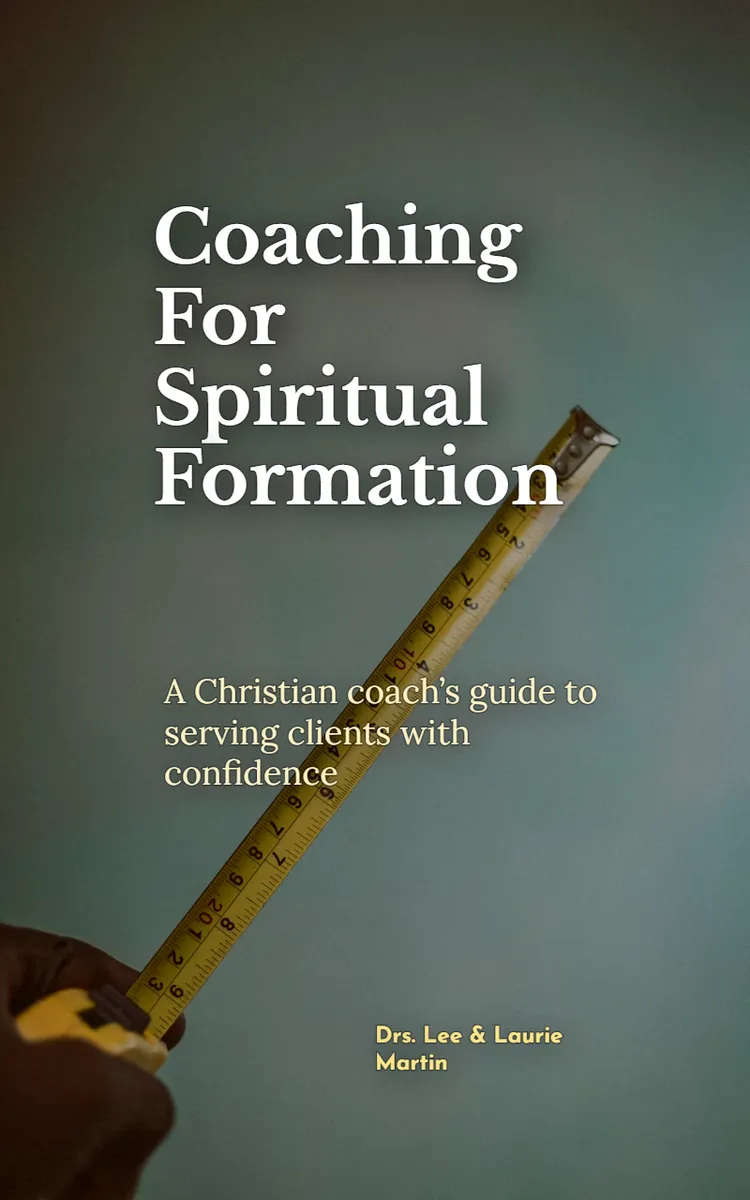
"Coaching For Spiritual Formation" is a how-to guide book by Drs. Lee & Laurie Martin with 8 chapters and approximately 15,282 words. Step-by-step training for Christian spiritual formation and discipleship coaches.
This book was created using Inkfluence AI, an AI-powered book generation platform that helps authors write, design, and publish complete books. It was made with the AI Ebook Generator.
Frequently Asked Questions
What is "Coaching For Spiritual Formation" about?
Step-by-step training for Christian spiritual formation and discipleship coaches
How many chapters are in "Coaching For Spiritual Formation"?
The book contains 8 chapters and approximately 15,282 words. Topics covered include Defining Spiritual Formation Coaching, Assessing Readiness and Setting Boundaries, Building a Safe Coaching Agreement, Listening Through a Biblical Lens, and more.
Who wrote "Coaching For Spiritual Formation"?
This book was written by Drs. Lee & Laurie Martin and created using Inkfluence AI, an AI book generation platform that helps authors write, design, and publish books.
How can I create a similar how-to guide book?
You can create your own how-to guide book using Inkfluence AI. Describe your idea, choose your style, and the AI writes the full book for you. It's free to start.
Write your own how-to guide book with AI
Describe your idea and Inkfluence writes the whole thing. Free to start.
Start writingCreated with Inkfluence AI


