

Read the first chapter
The whole of chapter one, free. About 8 min. Turn the pages with the arrows, your keyboard, or a swipe.
Chapter 1
Defining Christian Grief Coaching
A grieving client may ask, “Can you tell me whether God is punishing me?” That question sounds spiritual, but it may also reveal depression, trauma, guilt, or a crisis of faith. A Christian grief coach must know which part belongs in coaching, which part requires counseling, and which part calls for pastoral care. Without that distinction, a coach can offer too much, too little, or the wrong kind of help.
Grief does not follow one shape. A client may grieve a death, divorce, job loss, infertility, a serious diagnosis, a broken friendship, a change in identity, or a hoped-for future that never arrived. Scripture gives language for sorrow - David’s laments, Job’s questions, Mary and Martha’s tears - while Christian psychology helps coaches notice thoughts, emotions, behavior, relationships, and warning signs. After reading, you should be able to name the kind of support a client needs, use the Three-Lane Scope Map, and refer responsibly when coaching no longer fits.
The Three Helping Lanes
Coaching focuses on present choices, healthy adjustment, and movement toward a client’s goals. A grief coach does not diagnose mental disorders or promise to remove pain. Instead, the coach helps a client identify what has changed, clarify what matters now, and take safe steps toward daily functioning and meaningful living. For example, a coach might help a widower create a morning routine, decide how to handle church invitations, and identify one trusted person to call during difficult evenings.
Counseling addresses emotional and mental health concerns that need clinical assessment and treatment. A licensed counselor, psychologist, or clinical social worker may treat depression, anxiety, post-traumatic stress, complicated grief, or suicidal thinking. Coaching can support a client alongside counseling when the professionals agree and the client understands each role. Pastoral care offers spiritual guidance, prayer, Scripture, church support, and help with questions about God, sin, forgiveness, hope, and community. A pastor may sit with a family after a funeral, help them receive practical church support, or guide them through spiritual doubt.
Use the Three-Lane Scope Map to decide where an issue belongs:
1. Coaching lane: The client can function safely, wants practical support, and can make choices. The coach asks questions, helps set goals, teaches coping practices, and reviews progress. This lane exists because grief often disrupts ordinary tasks, and small planned actions can restore structure without pretending the loss has ended. 2. Counseling lane: The client shows symptoms that require clinical care, such as persistent inability to function, severe panic, trauma reactions, substance misuse, or thoughts of self-harm. The coach pauses or limits coaching and makes a referral because a coach cannot safely assess or treat these conditions. 3. Pastoral-care lane: The client seeks prayer, biblical interpretation, confession, spiritual direction, or help reconnecting with a congregation. The coach may provide agreed-upon Scripture and prayer, but the coach should involve a pastor or trained spiritual caregiver when the question requires church authority or specialized theological guidance.
These lanes can overlap. A client may receive counseling for trauma, pastoral care for spiritual questions, and coaching for rebuilding routines. Ask yourself: “What is the client requesting, what risk signs do I see, and what training do I actually possess?” Keep a written referral list with at least one licensed mental-health professional, one pastor or chaplain, and one crisis resource in your area.
Grief itself means a person’s response to loss. Bereavement usually refers to grief after someone dies, while mourning describes the outward expression of grief, such as tears, prayer, silence, funeral rituals, or wearing a loved one’s clothing. A client can experience grief before a loss occurs, as in an expected death or progressive illness. This is called anticipatory grief. Disenfranchised grief occurs when others do not recognize the loss, such as grief after an estrangement, miscarriage, former partner’s death, or the death of a beloved pet. Complicated or prolonged grief requires careful clinical screening rather than a coaching label. Use these terms to describe the client’s experience, not to diagnose.
Scripture does not require emotional denial. Psalm 34:18 says, “The LORD is near to the brokenhearted.” Jesus wept at Lazarus’s tomb in John 11:35, even though He knew resurrection would follow. First Thessalonians 4:13 does not command Christians not to grieve; it distinguishes grieving “as others do who have no hope.” Hope changes grief’s direction, but it does not erase tears. A coach can honor both truths by asking, “What hurts today?” and “What faithful step can you take today?” The practical takeaway: name the loss accurately, identify the lane, and match the support to the client’s need.
Applying the Scope Map With a Client
Consider a client who lost her mother six months ago. She attends work but avoids church, sleeps poorly, and says, “I do not see the point of praying.” She asks for help deciding whether to return to her small group. Apply the map in this order:
1. Clarify the loss and request. Ask, “What changed after your mother died, and what would you like help deciding?” Record the client’s words. Expected outcome: you identify whether she wants a practical decision, emotional treatment, or pastoral guidance. 2. Check immediate safety. Ask directly, “Have you thought about harming yourself or not wanting to live?” Also ask about severe substance use, inability to care for basic needs, and feeling unsafe at home. Expected outcome: you know whether coaching can continue. If she reports suicidal intent, a plan, or immediate danger, contact emergency or crisis support according to your local procedure and do not leave her to manage the crisis alone. 3. Place the concern in the map. Her decision about returning to the group fits coaching. Her poor sleep may need counseling assessment if it remains severe. Her prayer concerns may fit pastoral care. Expected outcome: you avoid treating every concern as a coaching problem. 4. Create one measurable coaching goal. Agree that she will attend the small group for thirty minutes within the next two weeks, arrange transportation, and tell the leader she may leave early. Expected outcome: she has a specific, limited experiment rather than pressure to “move on.” 5. Offer client-led spiritual support. Ask, “Would you like to include a short prayer or read a psalm together?” If she agrees, use Psalm 13 or Psalm 23 and allow silence. Do not force a lesson about God’s plan. Expected outcome: Scripture supports her process without replacing listening or clinical care. 6. Make referrals and document consent. With permission, give her the name of a licensed counselor for sleep and persistent hopelessness, and offer contact information for her pastor. Record the referral, the client’s response, and your next coaching date. Expected outcome: the client receives coordinated support and you maintain clear professional boundaries. 7. Review after two weeks. Ask what happened, what helped, what felt unsafe, and what she wants next. If she cannot function, reports worsening hopelessness, or rejects basic safety planning, pause coaching and follow up with the appropriate professional. Expected outcome: you base the next decision on current functioning rather than assumptions.
Use a simple intake and session form with these fields: loss description, client goals, current supports, safety answers, referrals, agreed actions, and follow-up date. Explain confidentiality and its limits before collecting details. Your coaching agreement should state that coaching is not counseling, psychotherapy, medical care, or emergency service; describe fees and cancellations; explain communication boundaries; and include permission procedures for contacting a pastor or clinician. These forms protect the client because they make roles visible before distress intensifies.
Quick checklist
• Name the loss without ranking one loss above another. - Ask about safety directly and calmly. - Place each concern in the Coaching, Counseling, or Pastoral-care lane. - Set one measurable action with a date. - Ask permission before prayer or Scripture. - Refer when symptoms exceed your training. - Document the plan, referral, and follow-up. - Review progress instead of assuming improvement.
A successful session does not mean the client feels cheerful. It means the client understands the next safe step, knows who provides each kind of help, and can act without the coach taking control.
Boundaries That Protect Care
Mistaking spiritual struggle for a coaching obstacle
A client may say, “God has abandoned me,” and a coach may rush to correct the statement with Romans 8:38-39. That response can silence honest grief. Scripture offers truth, but the coach must first understand the client’s experience.
Do this: Ask, “What makes God feel distant right now?” Offer Scripture only after permission, and refer spiritual authority questions to a pastor when needed. Not this: Tell the client that stronger faith would end the grief.
Treating every grief response as a disorder
Tears, anger, numbness, trouble concentrating, and changing routines can occur in normal grief. A coach should not diagnose because a client misses someone intensely or has a difficult anniversary. At the same time, do not dismiss danger signs.
Do this: Track functioning, sleep, substance use, safety, and duration. Refer when the client cannot maintain basic care, experiences severe symptoms, or expresses self-harm thoughts. Not this: Label the client with depression or “complicated grief” without clinical authority.
Blurring coaching and pastoral care
A coach may pray with clients and use Scripture, but prayer does not give the coach permission to direct confession, settle church disputes, or replace a pastor. Some clients also belong to traditions with different practices around sacraments, funerals, or spiritual authority.
Do this: Ask what Christian support the client wants, state your role, and obtain permission before contacting church leaders. Not this: Present your personal interpretation as God’s command or promise that a specific outcome will occur.
Keep the Three-Lane Scope Map visible during intake and review it whenever the client’s condition changes. Christian grief coaching becomes trustworthy when compassion and limits work together: Scripture honors the sorrow, psychology clarifies the risks, coaching supports the next step, and pastoral care strengthens the client’s life with God and the church.
End of chapter one. 7 more chapters and about 14,859 words in the full book.
Swipe or use the arrows to turn the page


What's inside: 8 chapters
- 1. Defining Christian Grief Coaching
- 2. Preparing for Ethical Practice
- 3. Assessing Grief and Client Readiness
- 4. Listening Without Fixing
- 5. Mapping Loss and Grief Responses
- 6. Designing Client-Centered Coaching Sessions
- 7. Navigating Complicated Grief and Referrals
- 8. Closing Coaching and Building a Practice
About this book
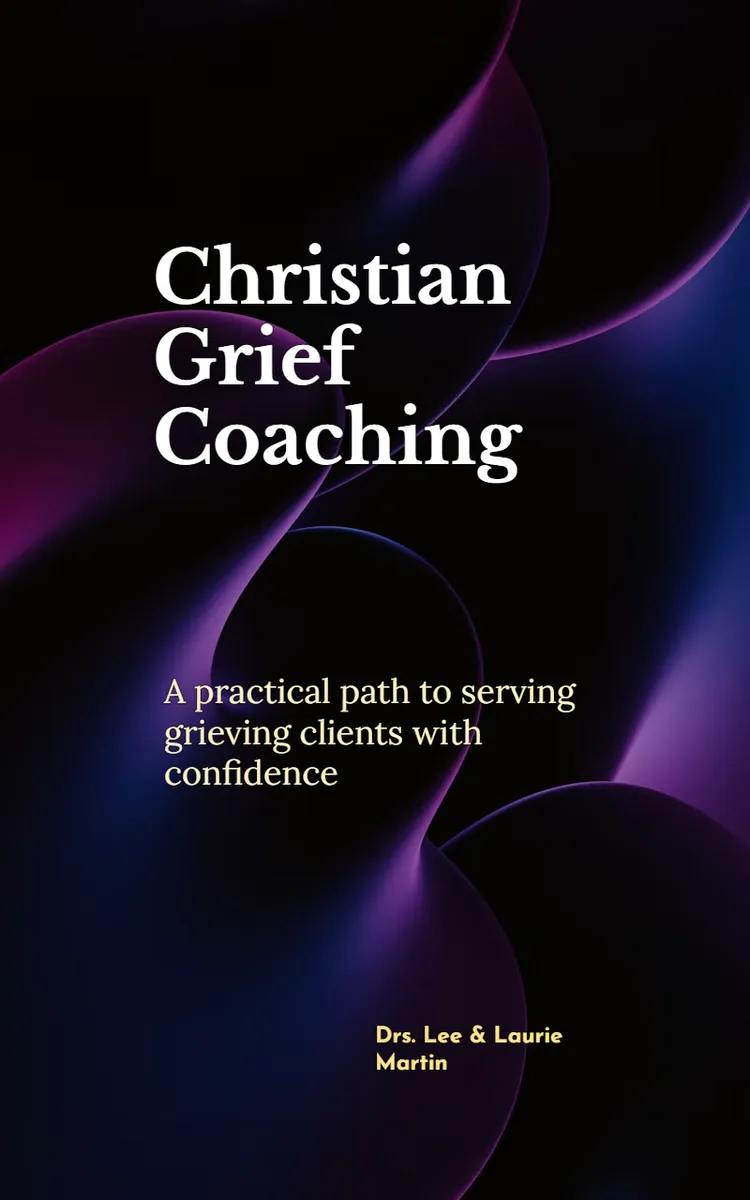
"Christian Grief Coaching" is a how-to guide book by Drs. Lee & Laurie Martin with 8 chapters and approximately 14,859 words. Step-by-step training for Christian coaches specializing in grief and loss.
This book was created using Inkfluence AI, an AI-powered book generation platform that helps authors write, design, and publish complete books. It was made with the AI Ebook Generator.
Frequently Asked Questions
What is "Christian Grief Coaching" about?
Step-by-step training for Christian coaches specializing in grief and loss
How many chapters are in "Christian Grief Coaching"?
The book contains 8 chapters and approximately 14,859 words. Topics covered include Defining Christian Grief Coaching, Preparing for Ethical Practice, Assessing Grief and Client Readiness, Listening Without Fixing, and more.
Who wrote "Christian Grief Coaching"?
This book was written by Drs. Lee & Laurie Martin and created using Inkfluence AI, an AI book generation platform that helps authors write, design, and publish books.
How can I create a similar how-to guide book?
You can create your own how-to guide book using Inkfluence AI. Describe your idea, choose your style, and the AI writes the full book for you. It's free to start.
Write your own how-to guide book with AI
Describe your idea and Inkfluence writes the whole thing. Free to start.
Start writingCreated with Inkfluence AI


