
Read the first chapter
The whole of chapter one, free. About 5 min. Turn the pages with the arrows, your keyboard, or a swipe.
Chapter 1
When It Feels Unfair: The Ache Behind Envy
When the wicked prosper, it doesn’t just feel unfair - it feels personal. It can look like the coworker who cuts corners moving ahead faster than you. It can look like the business owner who plays dirty getting the contracts. It can look like the person who hurts you getting public praise, while you’re still picking up the pieces. And then your heart starts doing that unwanted math: If wrong works, why keep doing right? Psalm 37 doesn’t pretend that ache isn’t real.
So before we talk about trusting God, we have to name the feeling honestly: anger wants to take the wheel, envy wants to compare your life to theirs, and confusion asks, “Where is God in this?” The goal isn’t to bury those emotions. The goal is to bring them into the light and let God reshape what they drive you to do next.
Scripture Focus
Psalm 37:1-2 > “Do not fret because of evildoers; be not envious of wrongdoers. For they will wither like the grass and fade like the green leaf.”
When you feel the ache behind envy, God doesn’t ask you to pretend - He invites you to release it and watch Him steady your steps.
Reflection
Psalm 37 starts with a direct address to the heart: “Do not fret… be not envious.” That means the writer isn’t talking to people who never struggle. He’s talking to real people who have looked at someone else’s life and thought, That isn’t fair. “Fret” is more than worry - it’s that gnawing tension in your chest that won’t settle. “Envy” isn’t always loud and dramatic. Sometimes it’s quiet. It shows up as irritation, resentment, or the creeping thought that God must be asleep.
When the wicked prosper, it can feel like God’s justice is delayed at best and ignored at worst. And yes, there are seasons where it looks like the bad choices of others pay off - at least for a while. That’s why the psalm doesn’t give you a vague “everything will work out” statement. It gives you a picture: “They will wither like the grass and fade like the green leaf.” Grass looks alive in the moment. Leaves look green and healthy until the weather changes. Psalm 37 is teaching you to interpret the timeline God uses, not the timeline your feelings demand.
Here’s the key insight the psalm keeps pressing: Don’t let envy decide what you believe about God. Envy always wants to tell a story about fairness - usually a story where you’re the one losing and God isn’t paying attention. But God’s word refuses that conclusion. It doesn’t deny that evildoers can gain traction. It denies that their prosperity is permanent, or that it proves anything about God’s approval.
Anger and envy are often cousins. Anger says, “They shouldn’t get away with that.” Envy says, “If they can get ahead doing wrong, then what’s the point of doing right?” Confusion joins the group and asks, “So what does God actually do with injustice?” If we don’t name those questions, they start steering the steering wheel. We can end up bitter, reactive, or tempted to fight “the right way” with “the wrong tools.” Maybe you’ve felt it: the moment you just want to lash out, gossip, cut corners, or withdraw from doing good because it seems pointless.
Psalm 37 doesn’t shame you for having the ache. It treats your emotional reality as something God can work with. The psalm’s instruction - “Do not fret… be not envious” - isn’t a command to shut down your feelings. It’s a command to redirect them. God wants your attention, not your performance. He wants you to bring the ache to Him instead of letting it turn into a weapon.
One practical way to feel this truth is to watch what envy does to your daily life. Envy tends to shrink your world. It makes you replay conversations, count “wins” and “losses,” and measure your obedience against someone else’s outcomes. But when you return to Psalm 37’s framing, your world expands again. You start asking, “What does God ask me to do today?” not “What did they get away with?” The psalm is not only about them - it’s about you staying anchored while the world looks unstable.
And because the wicked prosper can be so visible, it’s worth saying plainly: the temptation is real. Even faithful people wrestle with it. The takeaway isn’t “be nicer.” The takeaway is choose God’s perspective over your comparison habit - especially when the comparison feels justified.
Practice for Today
1. Do a 5-minute “timeline check” with Psalm 37 (no spiraling allowed). Set a timer for 5 minutes. Read Psalm 37:1-2 slowly. Then write two sentences only: - “Right now, the thing that feels unfair is ____.” - “Psalm 37 says their success is temporary because ____.” Keep it simple. The goal is to bring your ache under God’s word, not to win an argument with your own mind.
2. Journal one honest envy-thought and exchange it for a God-truth. Grab a pen and answer this prompt: “What am I afraid will happen if I keep doing right?” Then, right under it, write a truth you can hold from Psalm 37 - like: “God’s justice is not stuck; it has a timeline.” If you get stuck, use this example: envy whispers, “They’ll always be ahead.” God’s word replies, “They will wither like grass.”
3. Choose a small act of good today that costs you something. Not a grand gesture - just a concrete step. Pick one: help a neighbor with a task, pay someone promptly when you could delay, tell the truth when it would be easier to bend it, or encourage someone who can’t “repay” you. The service challenge is this: do it before the end of the day, and don’t track whether others notice. Psalm 37 aims at steady obedience, not quick applause.
Closing Prayer
Lord, I bring You the ache behind my envy. When it feels like wrong is winning, keep my eyes from settling on what I can’t control. Teach me Your timeline, and help me choose good with a steady heart. I trust You with what I can’t fix - today and tomorrow. Amen.
End of chapter one. 17 more chapters in the full book.
Swipe or use the arrows to turn the page


What's inside: 18 chapters
- 1. When It Feels Unfair: The Ache Behind Envy
- 2. Stop Fretting: Choosing a Different Response
- 3. The Temporary Nature of Wicked Prosperity
- 4. Do Good Without Waiting for Proof
- 5. Trust the Lord: Resting in God’s Justice
- 6. Be Still and Wait: The Discipline of Patience
- 7. Commit Your Way to the Lord: Prayer That Releases Control
- 8. The Lord Upholds the Righteous: Strength for the Narrow Path
- 9. Hope in God’s Timing: Justice Will Prevail
- 10. Fret Not-Live Free: A New Heart for the Long Run
- 11. The wicked will soon fade
- 12. Releasing outcome while continuing faithful work
- 13. Keep Working, Let Go, Stay Steady
- 14. Steady Hands, Soft Heart
- 15. Bonus Practical Tools
- 16. Resting Hands, Ready Heart
- 17. Quiet Readiness, Faithful Work
- 18. Key Takeaways
About this book
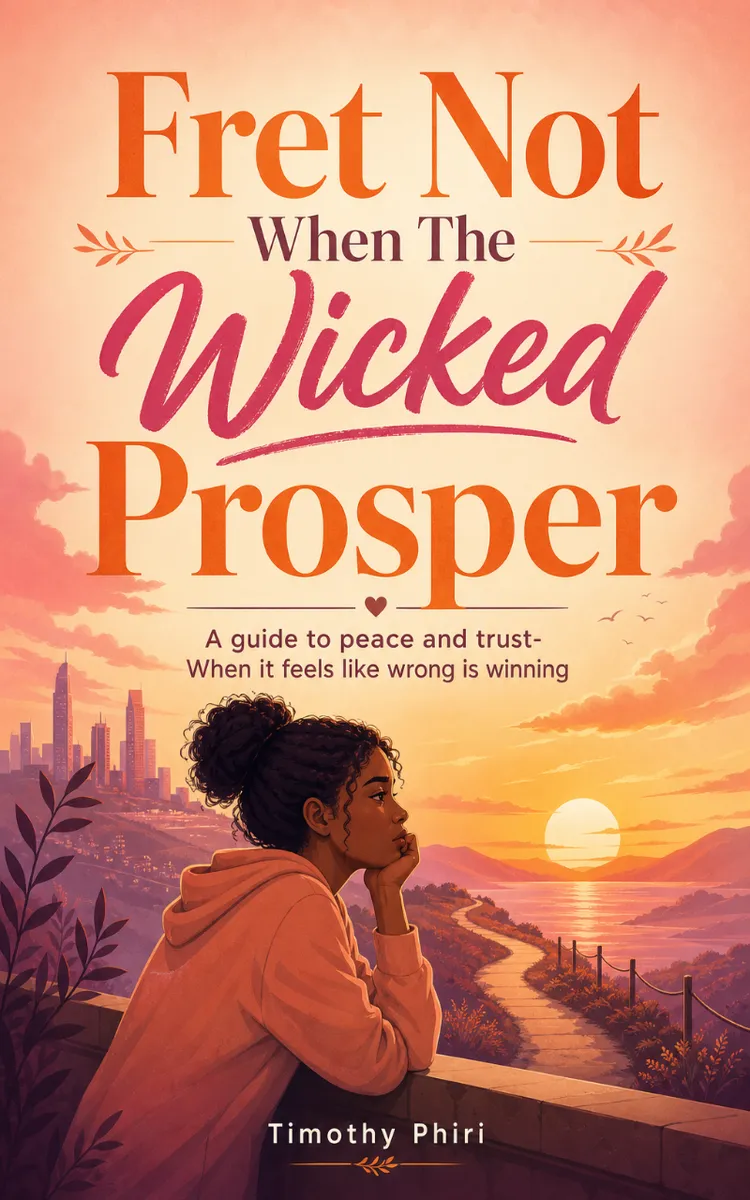
"Fret Not When The Wicked Prosper" is a religious devotional book by Timothy Phiri with 18 chapters and approximately 16,051 words. Using Psalm 37 to overcome anger and envy.
This book was created using Inkfluence AI, an AI-powered book generation platform that helps authors write, design, and publish complete books.
Frequently Asked Questions
What is "Fret Not When The Wicked Prosper" about?
Using Psalm 37 to overcome anger and envy
How many chapters are in "Fret Not When The Wicked Prosper"?
The book contains 18 chapters and approximately 16,051 words. Topics covered include When It Feels Unfair: The Ache Behind Envy, Stop Fretting: Choosing a Different Response, The Temporary Nature of Wicked Prosperity, Do Good Without Waiting for Proof, and more.
Who wrote "Fret Not When The Wicked Prosper"?
This book was written by Timothy Phiri and created using Inkfluence AI, an AI book generation platform that helps authors write, design, and publish books.
Write your own religious devotional book with AI
Describe your idea and Inkfluence writes the whole thing. Free to start.
Start writingCreated with Inkfluence AI


