
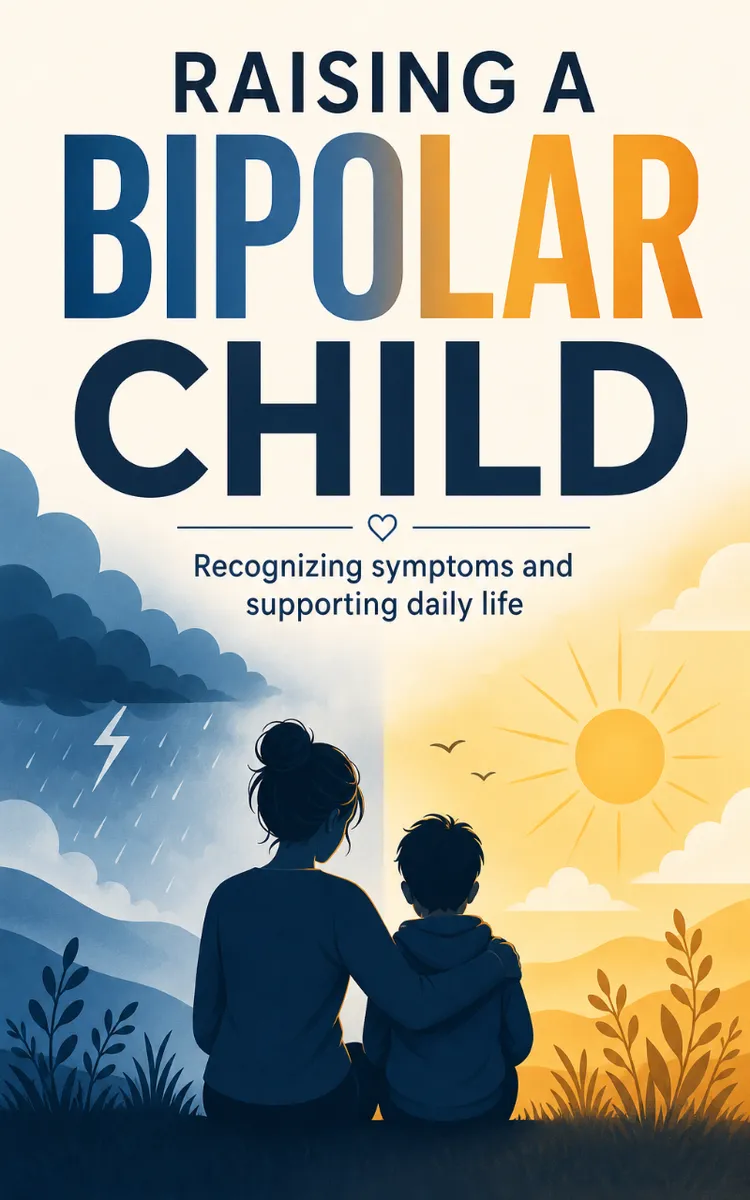
Raising A Bipolar Child
Created with Inkfluence AI
Bipolar disorder symptoms, detection, and parenting support
Table of Contents
- 1. Bipolar Symptoms by Age Stages
- 2. Mania, Hypomania, and Mixed Episodes
- 3. Depression Signals and Irritability Clues
- 4. Screening Tools and Diagnostic Red Flags
- 5. Mood Tracking With a 2-Channel Log
- 6. Sleep Hygiene for Mood Stability
- 7. Medication Adherence and Side-Effect Monitoring
- 8. Therapy Choices: CBT, Family, and Skills
- 9. School Accommodations and Safety Plans
- 10. Relapse Prevention and Crisis De-Escalation
Preview: Bipolar Symptoms by Age Stages
A short excerpt from “Bipolar Symptoms by Age Stages”. The full book contains 10 chapters and 17,803 words.
Seeing the Same Pattern Through Different Ages
Talia, a 35-year-old pediatric nurse manager, noticed that her child’s difficult periods did not look the same from year to year. In early childhood, there were explosive outbursts and unusually little sleep. By the preteen years, the changes appeared more as sharp shifts in energy, irritability, and school functioning. During the teen years, the pattern became harder to separate from ordinary adolescent changes. The behavior had changed, but the need for careful observation had not.
Age affects how children show mood episodes, meaning noticeable periods of changed mood, energy, activity, and behavior. A young child may not describe feeling unusually energized or depressed. A teenager may describe those feelings clearly but may also hide them, minimize them, or connect them to school, friends, or conflict at home. Understanding these differences helps parents notice patterns without labeling every difficult behavior as bipolar disorder.
Who this is for: This guidance is for parents and caregivers trying to understand possible bipolar symptoms across childhood, preteen years, and adolescence while working with qualified health professionals. The Age-Stage Symptom Map can help you:
- Separate age-typical behavior from persistent or unusual changes.
- Record symptoms in a way a clinician can evaluate.
- Recognize when sleep, safety, school functioning, or behavior requires prompt help.
- Adjust parenting support as a child’s communication and independence develop.
The goal is not to diagnose at home. The goal is clearer observation, earlier communication with the care team, and safer support. Ask yourself: “What changed, how long did it last, and was it different from this child’s usual pattern?” That question is more useful than asking whether one behavior “looks bipolar.”
Why Symptoms Change With Development
Bipolar disorder involves changes in mood, energy, activity, and sleep that are more marked than ordinary day-to-day shifts. In children and teens, these changes may occur alongside attention problems, anxiety, trauma responses, developmental differences, substance use, medical conditions, or medication effects. Several conditions can look similar, so a complete evaluation matters.
The brain and body also change across childhood and adolescence. Younger children have fewer words for internal experiences and rely more on behavior. Preteens often become more aware of social judgment and may show symptoms through school refusal, arguments, or withdrawal. Teens gain independence, have changing sleep schedules, and may make choices that resemble mood-related risk taking. These developmental facts do not prove or disprove bipolar disorder; they explain why the same underlying concern may appear differently.
The main factors that shape what parents see include:
1. Developmental communication. A six-year-old may say, “My body is too fast,” while a sixteen-year-old may report racing thoughts or unusually high confidence. Some children cannot explain the experience and instead become loud, restless, or difficult to redirect.
2. Sleep and daily structure. Reduced need for sleep is different from staying up because of screens, homework, anxiety, or household disruption. In a possible mood episode, a child may sleep much less yet remain unusually energetic. This distinction should be documented rather than assumed.
3. Family and biological risk. A family history of bipolar disorder or other mood conditions can increase concern, but it does not determine a child’s future. Risk is one part of the assessment, not a diagnosis.
4. Stress, health, and substances. Major stress, thyroid problems, seizures, sleep disorders, prescribed medicines, and substances such as cannabis or stimulants can affect mood and behavior. A clinician needs this information, including over-the-counter products and energy drinks.
The Age-Stage Symptom Map uses four questions at every age: What is the child’s usual baseline? What changed? How long did it last? What did it disrupt? For example, high energy after a birthday party is usually different from several days of sleeping four hours, speaking unusually fast, and starting multiple risky projects. The map does not decide the cause; it organizes evidence.
A practical comparison can help:
...
About this book
"Raising A Bipolar Child" is a health & wellness book by Anonymous with 10 chapters and approximately 17,803 words. Bipolar disorder symptoms, detection, and parenting support.
This book was created using Inkfluence AI, an AI-powered book generation platform that helps authors write, design, and publish complete books. It was made with the AI Health Book Generator.
Frequently Asked Questions
What is "Raising A Bipolar Child" about?
Bipolar disorder symptoms, detection, and parenting support
How many chapters are in "Raising A Bipolar Child"?
The book contains 10 chapters and approximately 17,803 words. Topics covered include Bipolar Symptoms by Age Stages, Mania, Hypomania, and Mixed Episodes, Depression Signals and Irritability Clues, Screening Tools and Diagnostic Red Flags, and more.
Who wrote "Raising A Bipolar Child"?
This book was written by Anonymous and created using Inkfluence AI, an AI book generation platform that helps authors write, design, and publish books.
How can I create a similar health & wellness book?
You can create your own health & wellness book using Inkfluence AI. Describe your idea, choose your style, and the AI writes the full book for you. It's free to start.
Write your own health & wellness book with AI
Describe your idea and Inkfluence writes the whole thing. Free to start.
Start writingCreated with Inkfluence AI


