
Read the first chapter
The whole of chapter one, free. About 7 min. Turn the pages with the arrows, your keyboard, or a swipe.
Chapter 1
Defining the Survival Reset
When Survival Requires a Reset
What must happen first when normal life stops working - before you repair the damage, replace what you lost, or make long-term plans? The answer is not “everything.” Survival starts with choosing the few actions that protect life, prevent further harm, and create enough stability for the next decision.
A survival reset gives you that order. It applies when a storm cuts power, a fire damages your workplace, a serious injury removes a key worker, a supplier fails, or a household suddenly loses income. These events differ, but they create the same problem: too many urgent demands competing for limited time, money, information, and energy.
The reset separates immediate safety from longer-term recovery. Immediate safety covers the next minutes, hours, and day: stop danger, account for people, secure essentials, and communicate clearly. Recovery begins after those basics have a safe holding point. By the end of this section, you should be able to identify which decisions belong in the first hour, which can wait, and what “stable enough” means before you rebuild.
Ask yourself one question whenever pressure rises: What could seriously harm someone or make the situation worse if I delay it? That question helps you sort real urgency from noise.
The Reset Compass
The Reset Compass is a simple decision tool with four directions. Each direction answers a different survival question:
1. Protect: What danger must stop now? Look for fire, live electrical equipment, unsafe water, violence, structural damage, medical emergencies, or hazardous materials. You protect people before property because damaged equipment can be replaced; an injured person changes every later decision.
2. Account: Who is safe, missing, injured, or responsible for the next task? Count people, confirm their locations, and identify anyone who needs medication, mobility help, translation, or supervision. A written headcount prevents assumptions, especially when phone service fails or several people give conflicting updates.
3. Secure: What must you preserve for the next 24 hours? Secure drinking water, medication, food, shelter, cash, identification, essential tools, fuel, and reliable communication. You do not need to save everything. You need to protect the items that keep people alive, reachable, and able to act.
4. Recover: What needs repair, replacement, or a new plan after immediate danger ends? Recovery includes insurance calls, temporary work arrangements, supplier changes, cleanup, financial triage, and emotional support. These tasks matter, but they should not distract you from an active threat.
Use the directions in order, but return to earlier directions whenever conditions change. A safe building can become unsafe after an aftershock. A working phone can lose power. A person who seemed well can develop symptoms. The Reset Compass does not create one permanent checklist; it gives you a repeatable way to reassess.
A useful dividing line separates safety from recovery: If delaying the task for two hours could cause injury, death, or immediate loss of a basic need, treat it as a safety task. If delay creates cost, inconvenience, or future risk but does not create immediate danger, place it in recovery. For example, shutting off a sparking machine belongs under Protect. Filing the equipment claim belongs under Recover. Moving medication to a cool place belongs under Secure. Comparing replacement suppliers can wait.
Create two written lists when the situation begins:
• Now: actions that protect life, stop danger, or preserve basic needs. - Later: actions that restore normal work, recover money, repair property, or improve the plan.
Keep the Now list short - usually three to five actions. A long list creates false urgency and makes it harder to see what matters. Record the time beside each completed action. This creates a basic timeline for handoffs, insurance records, and later review.
The reset is complete enough to move toward recovery when you can answer four questions: Are people safe? Is the main danger controlled? Can you meet basic needs through the next 24 hours? Can someone else understand the situation from your notes? If you cannot answer one of these, continue the safety reset.
Applying the Reset During a Power and Water Failure
Consider a small workshop that loses power after a severe storm. A damaged service line hangs near the entrance, the water supply stops, two workers remain inside, the refrigerator holding temperature-sensitive materials has shut down, and customers expect orders by the next morning. The business has limited cash and only one working mobile phone.
The correct response does not begin with calling customers or saving inventory. It begins with danger control and a headcount.
1. Leave the danger area and stop entry. The workers move 30 feet away from the hanging line, close the entrance, and place a clear warning sign where others can see it. They do not touch the line or attempt a repair. Expected outcome: no one receives an electrical shock while the utility company handles the hazard.
2. Account for people. The owner checks the workshop, restroom, storage area, and parking lot, then confirms that both workers stand at the safe meeting point. They write “2 workers safe, no injuries, 9:10 a.m.” on paper. Expected outcome: the team knows no one remains inside and has a time-stamped record.
3. Call emergency and utility services. The owner reports the downed service line, gives the exact address, and asks for an estimated response time. If a medical emergency or fire exists, emergency services take priority. Expected outcome: trained responders receive the information needed to control the main threat.
4. Protect the next 24 hours of essentials. The team moves medication and drinking water into a cooler, keeps the refrigerator closed, and gathers flashlights, spare batteries, identification, cash, and phone chargers. They do not open the refrigerator repeatedly because each opening releases cold air. Expected outcome: people have basic supplies, and temperature-sensitive materials stay usable as long as possible.
5. Set a communication point. The owner sends one short message to staff and customers: “Workshop closed today because of storm damage. No one should enter. Update by 4 p.m.” The owner assigns one person to monitor the phone and one person to record incoming information. Expected outcome: fewer confused calls, safer behavior, and a clear next update.
6. Move recovery tasks to a separate list. After the utility company confirms that the line is safe and the building passes inspection, the owner photographs damage, contacts the insurer, checks the order list, and calls two backup suppliers. Expected outcome: the business begins recovery without sending people into an unsafe building.
At 4 p.m., the owner reviews the Reset Compass again. If power remains out but the building is safe, the situation has moved from immediate danger to short-term disruption. If the water line has burst or the structure shows new damage, the owner returns to Protect and Account before continuing.
Quick checklist
• Move people away from the immediate hazard. - Stop entry into unsafe areas. - Count everyone and record injuries or missing people. - Call the correct emergency, utility, medical, or public safety service. - Secure water, medication, food, shelter, light, communication, and identification. - Write a short Now list and a separate Later list. - Send one clear update with the next promised update time. - Recheck conditions when weather, equipment, or information changes. - Begin recovery only after the main danger has a safe control point.
The expected result is not a return to normal in one afternoon. The result is a controlled situation: people are safe, essential needs have coverage, and the next decision has reliable information.
Mistakes That Blur Safety and Recovery
Trying to save property before securing people
A damaged building, flooded stockroom, or failed freezer creates pressure to act quickly. Entering before someone checks the hazard can turn a financial loss into an injury or rescue problem.
Do this: Keep everyone out until the danger receives a clear control - such as utility confirmation, fire-service approval, or a qualified inspection. Photograph damage from a safe location and record what you can without entering.
Not this: Sending one person inside “for only five minutes” to retrieve cash, tools, or records.
Treating every urgent request as a safety emergency
Customers may demand answers, employees may ask about pay, and suppliers may need decisions. Those matters can feel immediate, but they usually come after people, hazards, and basic needs. Acting on every request at once scatters attention and drains the resources needed for survival.
Do this: Use the two-list test. Place a task under Now only when delay could cause serious harm or remove a basic need. Place other tasks under Later and assign a review time.
Not this: Abandoning an evacuation or hazard check to answer routine messages.
Assuming the first safe moment ends the reset
A person may leave a dangerous building but still lack medication, water, shelter, or a way to contact family. A business may stop the immediate hazard but still face a second danger from spoiled materials, unpaid workers, or a locked-out workplace.
Do this: Check the four conditions before moving into recovery: people safe, main danger controlled, basic needs covered for 24 hours, and notes clear enough for another person to follow.
Not this: Declaring the situation “over” because no one has been injured yet.
The Reset Compass keeps the order clear: Protect, Account, Secure, then Recover. That order prevents a common survival failure - using limited time and energy on restoration while danger still controls the situation. Once the immediate ground becomes stable, recovery can become deliberate instead of frantic.
End of chapter one. 39 more chapters and about 70,160 words in the full book.
Swipe or use the arrows to turn the page


What's inside: 40 chapters
- 1. Defining the Survival Reset
- 2. Assessing Your Starting Point
- 3. Recognizing Immediate Danger
- 4. Making Calm Decisions Under Stress
- 5. Setting Survival Priorities
- 6. Building a Personal Risk Map
- 7. Creating a Household Emergency Plan
- 8. Packing a Practical Go-Bag
- 9. Choosing Reliable Emergency Gear
- 10. Finding Safe Shelter
- 11. Staying Warm and Dry
- 12. Managing Heat Exposure
- 13. Securing Safe Drinking Water
- 14. Planning Emergency Food
- 15. Cooking Without Normal Utilities
- 16. Practicing Basic First Aid
- 17. Managing Personal Medications
- 18. Maintaining Hygiene in Disruption
- 19. Navigating Without a Phone
- 20. Choosing When to Evacuate
- 21. Communicating When Networks Fail
- 22. Using Emergency Alerts Wisely
- 23. Handling Power and Lighting Outages
- 24. Protecting Important Documents
- 25. Budgeting for Preparedness
- 26. Supporting Children During Emergencies
- 27. Planning for Older Adults
- 28. Including Pets in Your Plan
- 29. Coordinating With Neighbors
- 30. Reducing Conflict and Staying Safe
- 31. Adapting Plans to Weather
- 32. Responding to Fire and Smoke
- 33. Preparing for Flooding
- 34. Managing Extended Supply Shortages
- 35. Practicing Through Realistic Drills
- 36. Maintaining Gear and Supplies
- 37. Recovering After the Immediate Crisis
- 38. Managing Stress After an Event
- 39. Learning From Near Misses
- 40. Building a Sustainable Reset Routine
About this book
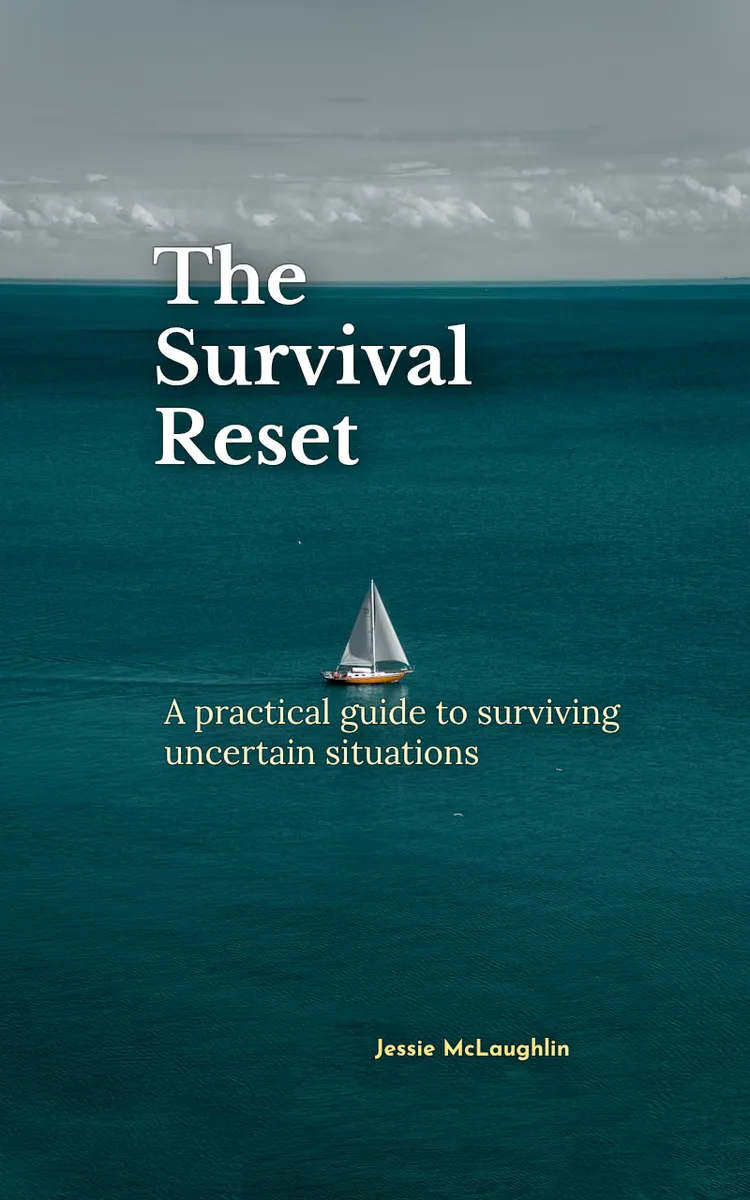
"The Survival Reset" is a nonfiction book by Jessie McLaughlin with 40 chapters and approximately 70,160 words. Key tactics and practical understanding for surviving challenging situations.
This book was created using Inkfluence AI, an AI-powered book generation platform that helps authors write, design, and publish complete books.
Frequently Asked Questions
What is "The Survival Reset" about?
Key tactics and practical understanding for surviving challenging situations
How many chapters are in "The Survival Reset"?
The book contains 40 chapters and approximately 70,160 words. Topics covered include Defining the Survival Reset, Assessing Your Starting Point, Recognizing Immediate Danger, Making Calm Decisions Under Stress, and more.
Who wrote "The Survival Reset"?
This book was written by Jessie McLaughlin and created using Inkfluence AI, an AI book generation platform that helps authors write, design, and publish books.
Write your own nonfiction book with AI
Describe your idea and Inkfluence writes the whole thing. Free to start.
Start writingCreated with Inkfluence AI


