

Read the first chapter
The whole of chapter one, free. About 5 min. Turn the pages with the arrows, your keyboard, or a swipe.
Chapter 1
Understanding Obesity Risk Pathways
A 10% increase in body weight can raise your blood sugar and blood pressure load—then the body has to work harder just to keep you stable. Talia, 34, an ER nurse, notices it in the patterns she sees: people often arrive not because “weight” is the headline, but because the pressure shows up through metabolic, cardiovascular, musculoskeletal, and mental health pathways. Excess body fat doesn’t act like a single switch; it acts like a steady background stressor that can quietly change how your body stores fuel, handles inflammation, and tolerates movement.
This chapter helps you understand how those risk pathways connect, and why early prevention matters even when you feel “fine.” You’ll learn what to watch for (risk markers), how severity tends to shift the odds, and what practical steps you can start using right away—without waiting for a crisis. Who this is for: anyone who wants evidence-aware guidance to prevent obesity, especially if you’ve had recent weight gain, family history, or symptoms like fatigue, breathlessness, or joint pain. Key benefits: clearer cause-and-effect, earlier “signal” recognition, and a prevention protocol you can actually follow.
Health Foundations
Excess body fat increases risk because it changes day-to-day biology. Fat tissue is not just storage—it releases signals that can affect insulin resistance (when your body’s cells don’t respond well to insulin), inflammation (your body’s chronic low-grade immune activation), and hormone signaling. When these systems drift off balance, risk compounds across multiple organs: your blood vessels, your joints and spine, and even your mood and sleep.
Ask yourself this: when you’re carrying extra fat, do you feel “busier,” more restricted, or more drained after normal routines? That lived experience often matches what’s happening internally.
A simple way to separate the main drivers is with the Obesity Risk Map—use it to connect “what you feel” to “why it matters”: 1. Fuel handling: how your body manages blood sugar and insulin resistance after meals. 2. Circulation load: how extra fat affects blood pressure and the strain on blood vessels. 3. Movement tolerance: how weight impacts musculoskeletal stress (knees, hips, low back) during everyday tasks. 4. Mind and sleep: how weight-related stress and disrupted sleep can worsen cravings, energy, and mental health.
Risk factors often stack. For example, less movement can reduce muscle’s ability to use fuel, while high-calorie eating makes it easier to overshoot energy needs. Sleep disruption can push hunger signals in the wrong direction. And once risk markers show up—like rising waist size, persistent fatigue, or increasing breathlessness—severity tends to change the timeline: the longer the overload continues, the harder it is to reverse course.
Takeaway to reflect on: Which part of the Obesity Risk Map feels most “loud” in your body right now—fuel handling, circulation load, movement tolerance, or mind and sleep?
Practical Protocol
Prevention works best when you start with small, repeatable actions that reduce the load on multiple pathways at once. For Talia, the ER schedule teaches this lesson: the plan has to survive real life. So instead of chasing perfection, you’ll build a weekly rhythm you can keep.
Use the Obesity Risk Map to choose your first targets, then follow this progression:
1. Weeks 1–2: Choose one pathway to “nudge” - For fuel handling: after your biggest meal, take a 10–15 minute walk at an easy pace. Do this 5 days per week. - For movement tolerance: add 2 short movement breaks daily (even 3–5 minutes counts) focused on walking, gentle stairs, or mobility work. - Keep it simple: if you miss a day, restart the next day—don’t “make up” with a harder session.
2. Weeks 3–6: Add one consistency lever - Keep the walking frequency, but increase it to 6 days per week, and aim for 15–25 minutes on most days. - Add a single nutrition anchor you can repeat (for example: a balanced plate at your main meal). The goal is steadiness, not restriction.
3. Weeks 7–12: Progress by milestones, not mood - Milestone A (movement tolerance): you can complete 25–30 minutes of comfortable walking on most days without feeling “wrecked.” - Milestone B (fuel handling): you notice fewer “crash” periods—less intense hunger swings between meals. - Milestone C (mind and sleep): you’re getting more predictable sleep timing at least 4 nights per week.
Warning signs—get professional help promptly if you have chest pain, fainting, sudden shortness of breath, rapidly worsening joint pain with swelling, or you’re experiencing severe depression symptoms or thoughts of self-harm. If you’re unsure where you fit, ask a licensed clinician for guidance—especially if you have known blood pressure or blood sugar issues.
| Your signal (risk marker) | Obesity Risk Map pathway | First practical move (start this week) | |---|---|---| | Rising waist size or “tight” clothing changes | Fuel handling | 10–15 minute post-meal walk 5 days/week | | Getting winded sooner than before | Circulation load | Keep walking easy; add 2 movement breaks/day | | Knee/low-back pain during errands | Movement tolerance | Shorten sessions, increase frequency, stay pain-aware | | More cravings with poor sleep | Mind and sleep | Stabilize sleep timing 4 nights/week |
Takeaway to reflect on: Pick one measurable milestone you can hit in the next 2 weeks—then let that be your motivation, not guesswork.
Common Mistakes
Mistake: Waiting until you feel “sick enough” to act - Why it happens: When symptoms are mild, it’s easy to treat weight as a future problem. But risk pathways can build quietly through fuel handling, circulation load, and inflammation. - What to do instead: Start with a small weekly action now—like a 10–15 minute post-meal walk 5 days per week—so your prevention work begins before the timeline gets harder.
Mistake: Trying to fix everything at once - Why it happens: People often aim for a big diet change plus intense workouts plus perfect sleep all at the same time. That’s hard to sustain, and the plan collapses. - What to do instead: Use the Obesity Risk Map and choose one pathway first. Add the second only after you’ve built consistency for weeks 1–2.
Mistake: Ignoring pain or treating it as “just normal” - Why it happens: Musculoskeletal discomfort can lead to skipping movement, which then worsens movement tolerance and fuel handling. - What to do instead: Adjust the dose: shorten sessions, increase frequency, and keep movement easy enough that it doesn’t spike pain. If pain is severe, swollen, or rapidly worsening, seek licensed care.
Momentum matters here: you don’t need a dramatic transformation to reduce risk—you need a plan that keeps working while your life happens. Next, you’ll learn how to spot your personal risk markers earlier and track progress in a way that stays honest, practical, and aligned with the Obesity Risk Map. For more information, visit hhttps://www.UA-Liohk.com
End of chapter one. 7 more chapters in the full book.
Swipe or use the arrows to turn the page

What's inside: 8 chapters
- 1. Understanding Obesity Risk Pathways
- 2. Calorie Balance Without Counting
- 3. Protein, Fiber, and Satiety Nutrition
- 4. Anti-Inflammatory Food Patterns
- 5. Sleep Hygiene for Weight Control
- 6. Strength Training and NEAT Boosting
- 7. Stress, Cravings, and Emotional Eating
- 8. Monitoring, Medication, and When to Escalate
About this book
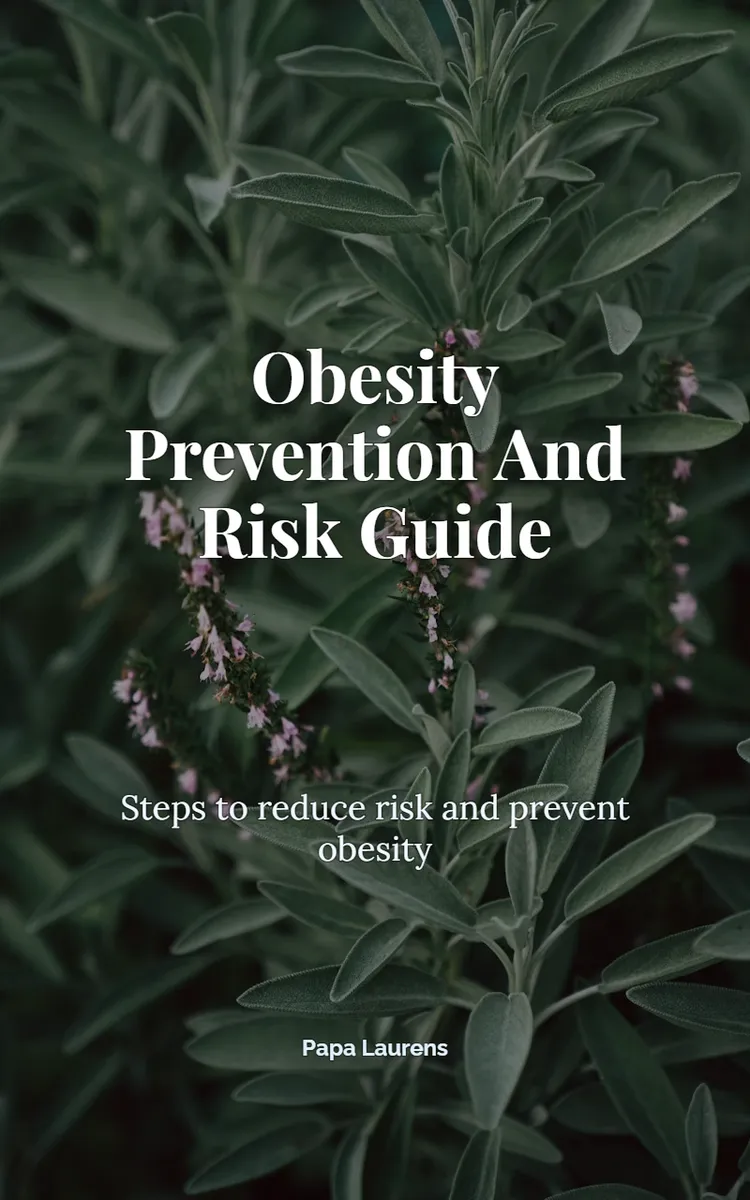
"Obesity Prevention And Risk Guide" is a health & wellness book by Papa Laurens with 8 chapters and approximately 8,765 words. Risks of severe overweight and prevention steps for obesity.
This book was created using Inkfluence AI, an AI-powered book generation platform that helps authors write, design, and publish complete books. It was made with the AI Health Book Generator.
Frequently Asked Questions
What is "Obesity Prevention And Risk Guide" about?
Risks of severe overweight and prevention steps for obesity
How many chapters are in "Obesity Prevention And Risk Guide"?
The book contains 8 chapters and approximately 8,765 words. Topics covered include Understanding Obesity Risk Pathways, Calorie Balance Without Counting, Protein, Fiber, and Satiety Nutrition, Anti-Inflammatory Food Patterns, and more.
Who wrote "Obesity Prevention And Risk Guide"?
This book was written by Papa Laurens and created using Inkfluence AI, an AI book generation platform that helps authors write, design, and publish books.
How can I create a similar health & wellness book?
You can create your own health & wellness book using Inkfluence AI. Describe your idea, choose your style, and the AI writes the full book for you. It's free to start.
Write your own health & wellness book with AI
Describe your idea and Inkfluence writes the whole thing. Free to start.
Start writingCreated with Inkfluence AI


