
Read the first chapter
The whole of chapter one, free. About 9 min. Turn the pages with the arrows, your keyboard, or a swipe.
Chapter 1
The Orchard Road Washout
Rain had fallen through the night, but by breakfast the sound beneath the kitchen window had changed. It was no longer the steady tapping Caleb Mercer knew from spring storms. Water rushed along the yard, carrying twigs, leaves, and bits of fence straw toward the orchard road.
Caleb stood at the back door with one hand on the latch and watched the lower pasture disappear in strips beneath the gray water. He was thirty-four that spring, old enough to know the difference between a wet morning and a dangerous one. The fields around the Mercer farm had taken hard rains before. This one had found every hollow in the ground and filled it.
“Caleb,” his wife called from the stove, “the creek is over the bank.”
He looked toward the orchard. The road that led down to the pasture had become a brown ribbon, then a broad sheet. Near the wagon bridge, the current struck the posts and curled around them with a force that made the timber shudder.
“The cattle are still down there,” he said.
She came to the doorway, drying her hands on her apron. “You cannot take the wagon.”
“I won’t.”
“You cannot cross that road on foot, either.”
Caleb did not answer. Beyond the orchard, a low bawling carried through the rain. The herd had begun to gather near the lower fence, where the rising water pressed against the pasture. The sound was familiar, but its distance was not. It reached him through rain and wind as though the farm had been divided in the night.
He pulled on his boots and coat. The leather was still damp from the day before. At the edge of the yard, two neighbors appeared through the rain: Amos Rupp from the next farm and young Walter Keeny, who had been helping with spring work. Both men had come on foot, their hats dark with water.
“Bridge won’t hold a wagon,” Amos said. “Maybe not a man.”
“Then we go around,” Caleb replied.
“There is no around,” Walter said. “The lane by the orchard is running like a ditch.”
Caleb looked again toward the lower pasture. The cattle had moved away from the creek bank, but the ridge above them was still dry. It was not far in ordinary weather. That morning, the distance lay behind water, broken fencing, and a road that no longer served as a road.
“Get the upper gate open,” Caleb said. “If we can bring them along the ridge, we can keep them out of the low ground.”
Amos nodded and turned toward the barn. Walter followed him. Caleb went down the orchard slope alone, using the fence posts for balance. Cold water pushed around his boots and soaked through his trousers. The smell of wet earth rose from the ground, sharp with apple leaves and mud. Somewhere beneath the current, the roadbed had begun to give way.
At the first bend, he stopped. The flood had cut across the road and widened toward the pasture. A section of rail fence floated against a tree. Beyond it, the cattle pressed together, their dark backs shining beneath the rain.
Caleb cupped his hands around his mouth. “Come on, girls. Up the hill.”
The nearest animals shifted but did not move. A red cow turned her head toward him, then backed away as another surge of water struck the fence. Caleb stepped into the pasture. The water reached above his ankles, cold enough to numb his feet. He kept one hand on the rail and advanced slowly, testing each step before putting his weight down.
Amos reached him from the other side of the fence. “We need to open the lower gap.”
“It’s under water.”
“Then we open it under water.”
Together they worked at the gate. The swollen wood resisted them. Caleb found the latch by feel, pulled once, and lost his footing. The current caught his leg and twisted him against the fence. Amos seized the back of his coat and held him until he found the rail again.
“You all right?” Amos asked.
“I’m standing.”
“That was not what I asked.”
Caleb looked at the brown water flowing past his knees. “I’m all right. Help me with the gate.”
The latch broke free with a sudden jerk. The gate swung inward, and the cattle began to move, not toward the ridge but sideways, away from the men and the open gap. Walter had reached the upper fence and was waving his arms.
“Drive them left!” he shouted. “They’ll follow the fence!”
Caleb climbed onto the lower rail and called to the herd. Amos moved behind the animals, splashing and striking the water with a length of board. The cattle turned a little at a time. Their hooves struck hidden stones beneath the flood. One calf stumbled, and its mother stopped, lowing until it regained its footing.
The work took patience. Every movement had to be made without frightening the herd into deeper water. Caleb kept his voice level, though his coat grew heavier and his hands stiffened around the fence rail. He had moved cattle in heat, snow, and darkness. He had never moved them through a pasture that was changing under their feet.
A section of fence broke loose downstream and swung toward the animals. Walter ran along the ridge and caught it before it reached the calf. Amos waded in beside him. Caleb saw the two men brace themselves against the current, one holding the wire while the other dragged the calf toward higher ground.
“Leave the fence!” Caleb called. “Get the calf up!”
Walter released the wire. It spun away, taking a length of post with it, and vanished beneath the water. He lifted the calf by its shoulders while Amos pushed from behind. Together they brought it onto the ridge.
The rest of the herd followed. Caleb walked along the side of the group, directing them toward the upper pasture, where the ground rose above the flood. The ridge was narrow, bordered by orchard trees on one side and the washed-out field on the other. Apples from the previous season lay soft beneath the grass. Water dripped from the branches and ran down Caleb’s neck.
When the last cow climbed onto the high ground, Caleb counted them twice. The calf stood close to its mother, trembling but upright. No animal had been lost.
For a moment, Caleb let his hand rest against the wet back of the red cow. Her hide was warm beneath his palm. Below them, the pasture had become a wide brown expanse broken by fence posts and the tops of grass. The ordinary boundaries of the farm had been erased.
Amos came up beside him, breathing hard. “They’re safe for now.”
“For now,” Caleb said.
Walter looked toward the orchard road. “We still need to reach the county road.”
The three men stood in the rain and studied the way back. The bridge had been built for wagons, not floods. It crossed the creek at the narrowest point, where the banks rose only slightly above the water. Caleb had used it since childhood. It was part of the farm’s daily order: cattle down one way, milk and feed out the other, neighbors coming and going without thought.
Now the bridge shifted beneath the current.
A timber cracked. The sound carried clearly across the pasture.
Amos shook his head. “We ought to stay here.”
“If the water rises higher, the ridge won’t be enough,” Caleb said.
“And if we go to the bridge?”
Caleb looked at the cattle. He thought of the barn, the feed, the deliveries due later in the week, and the county road beyond the creek. He had always understood the farm as a place that could provide for itself if a man worked steadily. That morning, the water made another truth plain: a farm could be well kept and still be cut off from everything it needed.
“We do not cross it,” he said. “We reach the road by the orchard bank and send word for the county crew.”
The men started back, keeping to the higher ground. They moved slowly, stopping where the road had collapsed and climbing around the washouts through the trees. Caleb’s boots filled with water. Mud pulled at each step. Branches struck his shoulders, and the rain blurred the fence lines he knew by memory.
At the bridge, they found the crossing in worse condition than it had appeared from the pasture. One side had dropped several inches. The wagon floor sagged toward the creek, and the posts leaned downstream. Water struck the beams and carried away chips of wood.
Walter stepped forward.
“Not another foot,” Caleb said.
“I was only looking.”
“Look from there.”
The boy stopped. Caleb heard the sharpness in his own voice and saw Walter lower his eyes. The danger had made every man impatient, but impatience would not bring the bridge back.
Amos pointed toward the far bank. “The county road is clear beyond the rise. If somebody can get there, they can send a truck.”
“Somebody will,” Caleb said.
As he spoke, a heavy section of the bridge broke loose. The wagon bridge lifted, twisted, and dropped into the creek. The current took it downstream in pieces. One beam struck the bank near Caleb’s boots and rolled into the mud.
No one spoke. The rain filled the space where the bridge had been.
Caleb looked at the gap, then at the road beyond it. The cattle were safe, but the farm was no longer connected to the county by any crossing it could trust. Feed could not come in by wagon. Milk could not go out. A man could not simply hitch a team and make the trip as he had done the day before.
Amos rubbed water from his face. “That is the only bridge.”
“It was,” Caleb said.
By midday, the herd had settled along the ridge. Caleb and the others had strengthened the temporary fence with rails carried from the upper field. The work was rough, but it held. His wife brought coffee and bread as far as the flooded yard would allow, and the men ate standing beneath the barn overhang, their clothes steaming faintly in the warmer air.
“We’ll need the county road crew,” she said.
“We’ll need more than them,” Caleb answered. “Until they can get here, we need a way across.”
She looked toward the creek. “Can you build one?”
Caleb did not pretend to know. He had repaired fences, mended wagons, and raised barns with neighbors. A crossing was different. It had to bear teams, wagons, and the weight of ordinary farm life. The flood had shown him that the old bridge had not merely failed in a storm. It had left the farm dependent on a structure no one had questioned for years.
“I can find men to help,” he said. “That is where we begin.”
Looking back, Caleb understood that the flood did more than threaten the cattle. It changed the scale of his responsibility. Before that morning, he had thought of the Mercer farm as a place whose troubles could be handled within its fences. After the bridge went downstream, he saw how closely the farm depended on neighbors, road crews, surveyors, and the county itself.
The lesson was not that a man could stand alone against bad weather. It was the opposite. Hardy work in Adams County had always been shared work, though people did not always name it that way. A farmer might guide the herd, but another man held the gate. One man might know the fields, while another knew timber, grades, tools, or roads. When the crossing failed, those kinds of knowledge would have to meet.
That evening, Caleb walked to the ridge once more. The cattle stood above the flooded pasture, their bodies dark against the wet grass. Below them, the creek carried the last pieces of the wagon bridge toward the lower fields. He could hear water moving through the orchard and, beyond it, the distant rumble of a county truck unable to reach the farm.
The herd was safe. The road was gone.
Caleb rested both hands on the top rail of the temporary fence and studied the broken crossing until the light faded from the water. The next morning would not begin with ordinary chores. It would begin with finding a way through.
End of chapter one. 39 more chapters and about 98,312 words in the full book.
Swipe or use the arrows to turn the page


What's inside: 40 chapters
- 1. The Orchard Road Washout
- 2. Neighbors Raise the Bridge
- 3. Who Took the Bridge Plans?
- 4. Across the Mudflat
- 5. A Farmer or a Fixer
- 6. The Mill's Timber Shortage
- 7. The Millwright's Missing Part
- 8. The Ridge Track
- 9. The Engineer's Measure
- 10. The Survey Stakes Fall
- 11. The Old Flood Ledger
- 12. The County Culvert Walk
- 13. The Cost of Asking
- 14. The Barn Roof Collapse
- 15. The Missing Flood Marker
- 16. The Quarry Footpath
- 17. The Farmer's Measure
- 18. The Firehouse Callout
- 19. The Orchard Shed Crossing
- 20. The Ledger's Second Entry
- 21. Trusting the New Survey
- 22. The Harvest Wagon Breaks
- 23. Where the Beams Went
- 24. The Creekside Work Camp
- 25. The Harvest Promise
- 26. The County Crane Fails
- 27. The Stone Yard Receipt
- 28. The North Bank Detour
- 29. The Blacksmith's Clamp
- 30. The Empty Farmyard
- 31. The Fire Crew's Logbook
- 32. The Orchard Lane Slope
- 33. Choosing the Crew Again
- 34. The Survey Copy Disappears
- 35. The Creek Rises at Hearing
- 36. The First Abutment Stone
- 37. The Narrow Timber Walk
- 38. The Harvest Returns
- 39. The Firehouse Beam Returned
- 40. The County Flood Record
About this book
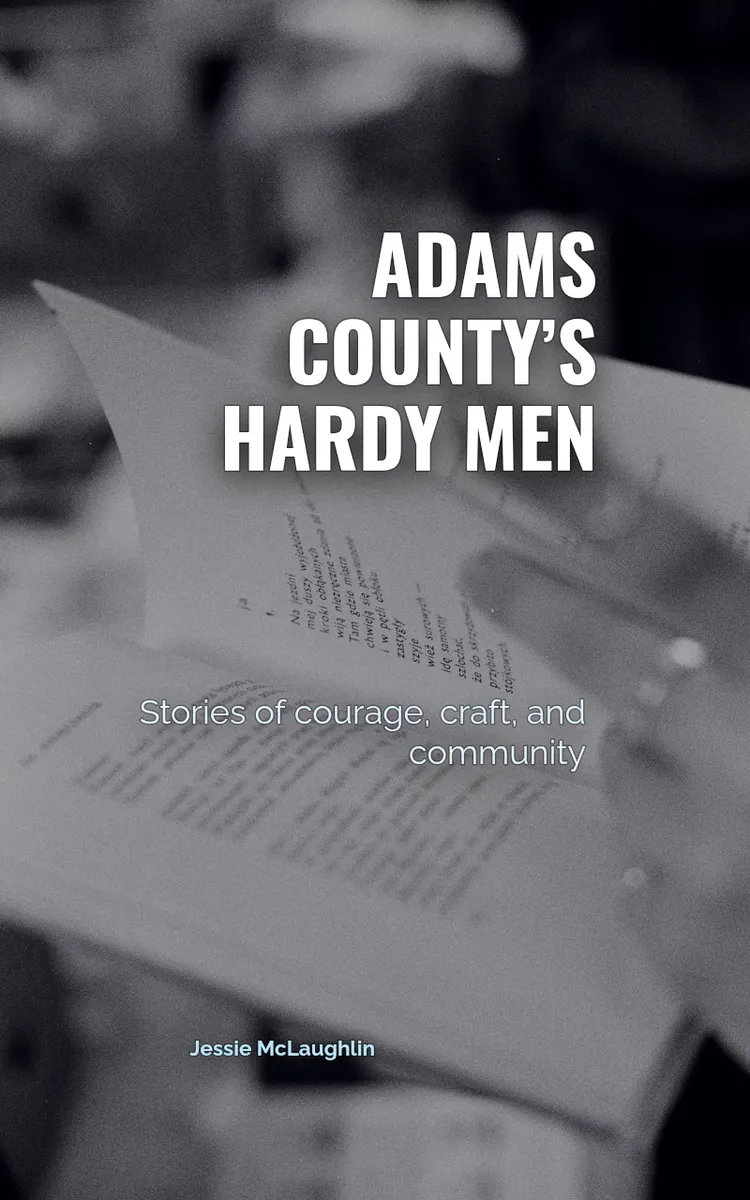
"Adams County’s Hardy Men" is a nonfiction book by Jessie McLaughlin with 40 chapters and approximately 98,312 words. The lives and contributions of notable men from Adams County, Pennsylvania.
This book was created using Inkfluence AI, an AI-powered book generation platform that helps authors write, design, and publish complete books.
Frequently Asked Questions
What is "Adams County’s Hardy Men" about?
The lives and contributions of notable men from Adams County, Pennsylvania
How many chapters are in "Adams County’s Hardy Men"?
The book contains 40 chapters and approximately 98,312 words. Topics covered include The Orchard Road Washout, Neighbors Raise the Bridge, Who Took the Bridge Plans?, Across the Mudflat, and more.
Who wrote "Adams County’s Hardy Men"?
This book was written by Jessie McLaughlin and created using Inkfluence AI, an AI book generation platform that helps authors write, design, and publish books.
Write your own nonfiction book with AI
Describe your idea and Inkfluence writes the whole thing. Free to start.
Start writingCreated with Inkfluence AI


