
Read the first chapter
The whole of chapter one, free. About 6 min. Turn the pages with the arrows, your keyboard, or a swipe.
Chapter 1
Welcome to a Calmer Way of Parenting
Scripture Focus
Philippians 4:6-7
Do not be anxious about anything, but in every situation, by prayer and petition, with thanksgiving, present your requests to God. And the peace of God, which transcends all understanding, will guard your hearts and your minds in Christ Jesus.
God’s peace doesn’t ask you to ignore parenting concerns; it teaches you where to carry them before you respond.
Fear-based parenting often begins in a split second. Your child doesn’t answer right away, and your mind races. A teacher sends a short message, and you assume the worst. Your teenager makes a poor choice, and you picture a future filled with consequences. The moment feels urgent, so your voice becomes sharp, your questions come quickly, and your fear takes the lead.
Paul’s words offer a different pattern. He doesn’t pretend that “anything” means nothing difficult will happen. Parenting includes real concerns: safety, friendships, health, school, online influences, and the choices children make when we aren’t watching. The invitation is to bring each concern to God instead of allowing anxiety to become our parenting strategy.
Reflection
Fear-based parenting can look responsible on the outside. We may call it being prepared, staying alert, or protecting our children. Sometimes it sounds like repeated warnings: “Don’t trust anyone.” “You’ll ruin your life.” “What were you thinking?” Other times, fear becomes overchecking, constant correcting, or trying to control every outcome. We may react before we understand what happened. We may discipline the behavior while missing the heart beneath it.
The problem isn’t that we care too much. We care deeply because God has entrusted these children to us. The problem is that fear can make us believe everything depends on our immediate reaction. When that belief takes over, we parent from alarm rather than wisdom. A child’s mistake feels like a threat to the whole family. A delayed text feels like a crisis. A difficult season feels like proof that we’re failing.
Philippians 4 gives us a pause button - not a way to avoid responsibility, but a way to regain perspective. “In every situation” includes the school meeting, the messy bedroom, the unanswered phone, and the conversation about a poor choice. Prayer moves us from panic to presence. Thanksgiving reminds us that the problem in front of us isn’t the only truth about our child or our family. God is still at work, even when we can’t see the full picture.
Try noticing the difference between a fear-based question and a faith-filled one. Fear asks, “How do I stop this from ever happening again?” Faith asks, “Lord, what does love and wisdom require from me right now?” Fear says, “If I don’t control this, everything will fall apart.” Faith says, “I can guide my child faithfully, and I can trust God with what I cannot control.”
That doesn’t mean you become passive. A calm parent can still set a firm boundary. You can remove a phone for the evening, address dishonesty, contact a teacher, or seek professional help when needed. The difference is the spirit behind your action. Panic rushes to punish discomfort. Faith slows down long enough to pursue truth, correction, and restoration.
Here’s today’s key insight: A steady parent is not a parent without concerns; a steady parent carries concerns to God before carrying them into the conversation. That small shift can change the temperature of your home. Your child may still need correction, but correction no longer has to come wrapped in dread.
Transformation usually begins with noticing. Before you can replace a fear-based reaction, you need to name it. Perhaps your pattern is catastrophizing - turning one mistake into a prediction about the next ten years. Perhaps you withdraw, give the silent treatment, or use sarcasm because you feel powerless. Maybe you try to solve every problem immediately, even when your child needs to think, confess, or learn.
Naming the pattern isn’t an accusation. It’s an act of honesty before God. You can say, “Lord, when I fear losing control, I lecture. When I feel uncertain, I check and check again. When I’m tired, I respond as if every problem is an emergency.” God already knows. Honest prayer simply brings your hidden reactions into the light where grace can meet them.
A faith-centered alternative is steady, prayerful, and present. Steady means you don’t let the latest problem define the whole relationship. Prayerful means you ask God for wisdom before you reach for your preferred reaction. Present means you listen to the child in front of you instead of arguing with every frightening possibility in your mind. These three practices won’t make parenting easy, but they can make your home less ruled by fear.
Practice for Today
• Name one fear-based pattern without defending it. Set a timer for five minutes and write this sentence: “When I feel afraid about my child, I tend to…” Finish it honestly. You might write, “I raise my voice,” “I assume the worst,” “I demand an answer immediately,” or “I threaten consequences before hearing the whole story.” Then add: “God, meet me in this pattern and teach me a steadier way.”
Don’t use this exercise to criticize yourself. The goal is clear awareness. A pattern you can name is a pattern you can place before God.
• Use the three-breath prayer pause. The next time your child’s behavior triggers fear, don’t begin with a lecture. Take three slow breaths. With the first breath, pray, “God, You are here.” With the second, pray, “Give me wisdom.” With the third, pray, “Help me listen.” Then ask one calm question before making a judgment: “Tell me what happened,” or “What were you thinking at that moment?”
This pause may take less than thirty seconds, but it creates room for the peace described in Philippians 4. You’re not surrendering authority. You’re refusing to let alarm speak first.
• Write a faith-centered response for one real situation. Choose a concern that is active today - a missed assignment, a tense friendship, a screen-time argument, or a child who has been unusually quiet. Divide a page into two short columns:
• Fear says…
• Faith invites me to…
For example, fear may say, “If my child is struggling socially, life will always be painful.” Faith may invite you to say, “I can listen, offer support, and seek wise help without predicting the future.” Fear may say, “If I don’t punish this immediately, my child will never learn.” Faith may invite you to set a clear consequence while keeping the door open for honest conversation.
End your page with one action you can take today. Keep it specific: pray before pickup, listen for ten minutes without interrupting, apologize for your tone, or schedule a needed conversation when both of you are calm.
As you practice, pay attention to what changes inside you. The situation may not resolve immediately. Your child may still push back. But you may notice that you’re no longer treating uncertainty as an emergency. That is meaningful growth. Peace often begins quietly, in the space between what happened and what you choose to do next.
Closing Prayer
Father, You see the fears I carry for my children and the ways those fears shape my reactions. Teach me to bring each concern to You before I bring it to them. Make me steady when I feel rushed, prayerful when I feel uncertain, and present when my child needs my attention. Give me courage to set wise boundaries without anger, listen without assuming, and trust You with what I cannot control. Let Your peace guard my heart and guide my words today. Amen.
End of chapter one. 20 more chapters in the full book.
Swipe or use the arrows to turn the page


What's inside: 21 chapters
- 1. Welcome to a Calmer Way of Parenting
- 2. When Anxiety Speaks Louder Than God
- 3. Trusting God With the Unknown
- 4. Prayer Before Panic
- 5. God’s Peace for Your Home
- 6. Surrendering Your Need to Be Perfect
- 7. Hope for Hard Days
- 8. Guidance for the Moments You Don’t Know What to Do
- 9. Listening to Your Child’s Heart
- 10. Correcting Without Crushing
- 11. The Power of a Soft Answer
- 12. When Your Child Is Anxious
- 13. Letting Go of Outcomes
- 14. Prayerful Boundaries for a Peaceful Home
- 15. Repairing After You Fail
- 16. Guarding Your Mind and Heart
- 17. Faith-Filled Routines That Train the Heart
- 18. Letting God Be Your Strength
- 19. Raising Children With a Hopeful Future
- 20. A Life of Parenting Without Panic
- 21. Key Takeaways
About this book
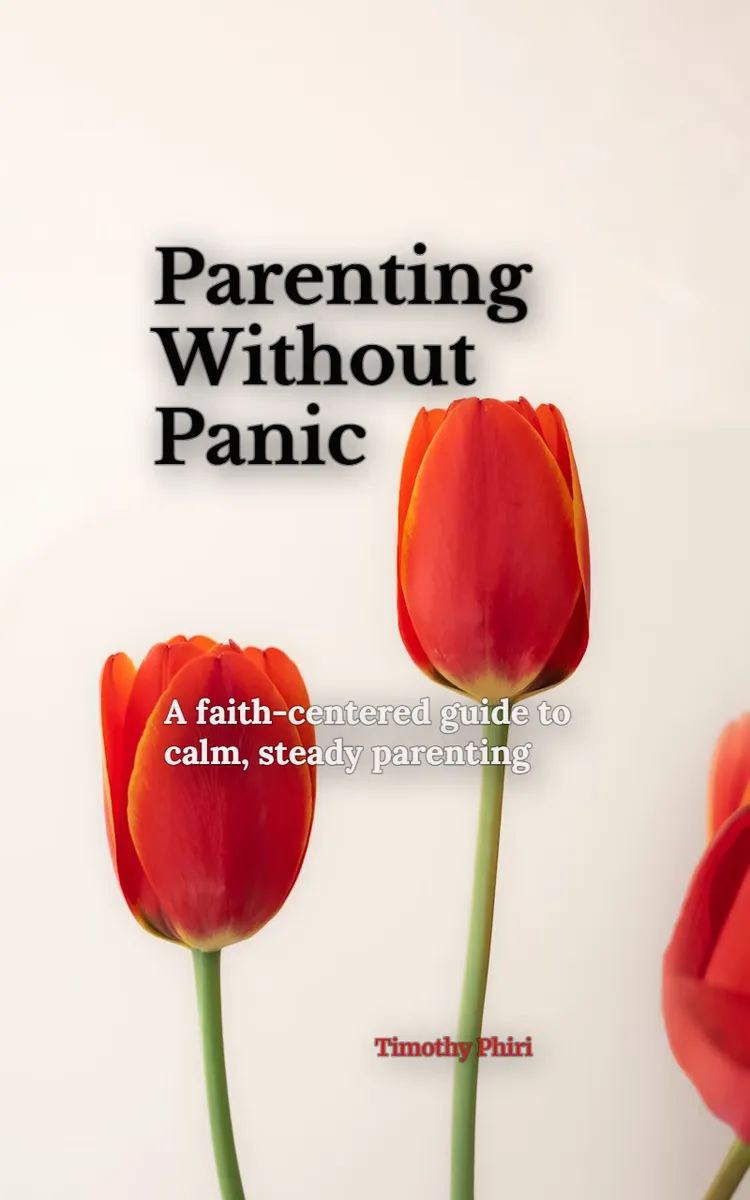
"Parenting Without Panic" is a religious devotional book by Timothy Phiri with 21 chapters and approximately 22,667 words. Faith-based parenting guidance to reduce fear-based reactions.
This book was created using Inkfluence AI, an AI-powered book generation platform that helps authors write, design, and publish complete books.
Frequently Asked Questions
What is "Parenting Without Panic" about?
Faith-based parenting guidance to reduce fear-based reactions
How many chapters are in "Parenting Without Panic"?
The book contains 21 chapters and approximately 22,667 words. Topics covered include Welcome to a Calmer Way of Parenting, When Anxiety Speaks Louder Than God, Trusting God With the Unknown, Prayer Before Panic, and more.
Who wrote "Parenting Without Panic"?
This book was written by Timothy Phiri and created using Inkfluence AI, an AI book generation platform that helps authors write, design, and publish books.
Write your own religious devotional book with AI
Describe your idea and Inkfluence writes the whole thing. Free to start.
Start writingCreated with Inkfluence AI


