
Read the first chapter
The whole of chapter one, free. About 6 min. Turn the pages with the arrows, your keyboard, or a swipe.
Chapter 1
Day 1 - Begin With Gratitude
Before the day gets crowded, notice what is already holding you up. The warm cup in your hands. The person who answered your message. The roof over your head. Gratitude begins when you stop long enough to recognize what you might otherwise rush past.
That doesn’t mean pretending everything is easy. A hard day can still contain one good thing. You can be worried about money and still appreciate a friend’s honesty. You can feel tired and still notice the sunlight on the kitchen floor. Gratitude isn’t a way to erase problems. It’s a way to see the whole picture.
A Short Teaching
Haudenosaunee perspectives on gratitude place importance on recognizing the gifts and relationships that make life possible. This guide does not ask you to copy or perform traditional Haudenosaunee ceremonies, prayers, or practices. Instead, today offers a simple personal exercise: pay attention, name what you appreciate, and let that awareness shape one choice.
Appreciation is more than saying “thanks” out of habit. It asks you to look closely. Who made your morning easier? What skill helped you finish a task? What part of your body carried you through the day? What ordinary thing would you miss if it disappeared?
These questions can change the pace of a busy day. When you notice the work behind something, you’re less likely to treat it as automatic. A clean workspace may reflect someone’s effort. A meal may include planning, growing, shopping, cooking, and cleaning. A working vehicle, a reliable tool, or a quiet place to rest may represent time and care you don’t usually see.
You don’t need a perfect morning routine or a special notebook. Gratitude can happen beside the sink, in your truck before a job, at the front desk of your business, or while waiting for the kettle to boil. The point is not to collect impressive thoughts. The point is to become more awake to your actual life.
Awareness also helps gratitude stay honest. If you’re frustrated, name that frustration. Then look for one thing that is still supporting you. Maybe a coworker took one task off your plate. Maybe you learned something from a mistake. Maybe you have enough information to decide what to do next. Small recognitions count because daily life is mostly made of small moments.
Appreciation can also guide responsibility. When you value something, you tend to handle it with more care. You may maintain a tool instead of replacing it too quickly. You may thank a person specifically instead of offering a rushed “good job.” You may notice that your time, energy, and attention are limited, and choose where to place them with greater care.
Try not to turn gratitude into another chore you can fail at. If three things don’t come to mind, begin with one. If your first answer feels ordinary, that’s fine. Ordinary is where most of our support lives.
Reflection Question
What is supporting you today that you usually overlook?
Sit with the question for a few minutes. Let your answer be specific. “My life” is too broad to hold onto. Try “the neighbor who brought my package inside,” “the body of knowledge that helped me fix the leak,” “the employee who noticed the customer was waiting,” or “the ten quiet minutes before the phone started ringing.”
You might also ask:
• Who contributed to something I used today? - What effort, skill, or care made my day a little easier? - What ordinary part of my life deserves more appreciation? - Where have I been receiving support without acknowledging it?
You don’t have to share your answer unless you want to. This is a chance to notice, not a test of how grateful you are.
Be careful with the pressure to find a silver lining in serious pain. Gratitude should never be used to dismiss grief, anger, unfairness, or exhaustion. You can appreciate one good thing and still need help. You can be thankful for a person and still set a boundary with them. You can value your work and still admit that your schedule needs to change. Clear awareness makes gratitude stronger, not weaker.
Simple Action
Set aside five minutes today. Use paper, your phone, or the back of an old receipt. Write down three specific things you appreciate from the last twenty-four hours.
For each one, add a short note about why it matters. For example:
• “I appreciate the early quiet because it helped me think clearly.” - “I appreciate the coworker who checked the measurements because it prevented a mistake.” - “I appreciate having clean water because it supports every part of my day.”
Then choose one person, place, object, or source of support connected to one of your answers. Offer a direct expression of appreciation. Send a message. Make a call. Say it face to face. If the support came from an object or place, care for it in a practical way. Clean the tool. Put away the equipment. Pick up litter near the place you use. Make the appreciation visible through your behavior.
Keep the words simple and specific: “I noticed what you did, and it helped.” That sentence can land more deeply than a general compliment. If you’re thanking someone at work, name the result. “You caught that detail before we sent the order. That saved us a lot of trouble.” If you’re thanking someone at home, name the effort. “You handled dinner when I was worn out. I really appreciated that.”
At the end of the day, look back at your three notes. Did noticing them change how you moved through the day? Maybe you were more patient. Maybe you caught yourself complaining and remembered the support you had already received. Maybe nothing dramatic happened, but you felt less hurried for a moment. That’s enough. The practice is attention.
There’s another small step you can take tomorrow morning. Before reaching for your phone, name one thing you appreciate about being here today. Keep it grounded. Your breath. A safe place to sleep. A chance to repair something. A person you can contact. Then let that thought accompany you into the first task of the day.
Gratitude also works when it leads to better questions. Instead of asking only, “What do I want?” you might ask, “What do I already have that deserves care?” Instead of, “How can I get through this faster?” you might ask, “What is this moment asking me to notice?” These questions don’t solve every problem. They can help you respond with more balance.
If you run a shop, manage a crew, care for a household, or work alone, appreciation can easily get lost under the next demand. You may notice what went wrong because it needs fixing. That’s part of responsibility. Still, make room to notice what went right and who helped make it happen. A balanced view includes both the repair and the recognition.
Don’t wait for a major milestone to be grateful. The repaired hinge, the shared lunch, the customer who returned, the friend who listened, and the body that got you through a long shift all belong to the story of your life. They may not look dramatic. They are still real.
As you continue through the full ebook, you’ll have opportunities to look more closely at your awareness, your relationships, your responsibilities, and the choices that help you live with greater balance. Today begins with a simple habit: seeing what is here before reaching for what is next. The companion workbook gives you room to record your reflections and actions, and the ebook/workbook bundle keeps both parts together if you prefer writing as you go.
For now, pause once more. Name one thing. Name the effort behind it. Then let your appreciation become an action, however small. A grateful life isn’t built from perfect days. It’s built from paying attention to the good that is present - and treating it with care.
End of chapter one. 6 more chapters and about 9,251 words in the full book.
Swipe or use the arrows to turn the page
What's inside: 7 chapters
- 1. Day 1 - Begin With Gratitude
- 2. Day 2 - Cultivate a Good Mind
- 3. Day 3 - Remember Your Relationships
- 4. Day 4 - Reconnect With Mother Earth
- 5. Day 5 - Remember Those Who Came Before You
- 6. Day 6 - Think Beyond Yourself
- 7. Day 7 - Carry the Wisdom Forward
About this book
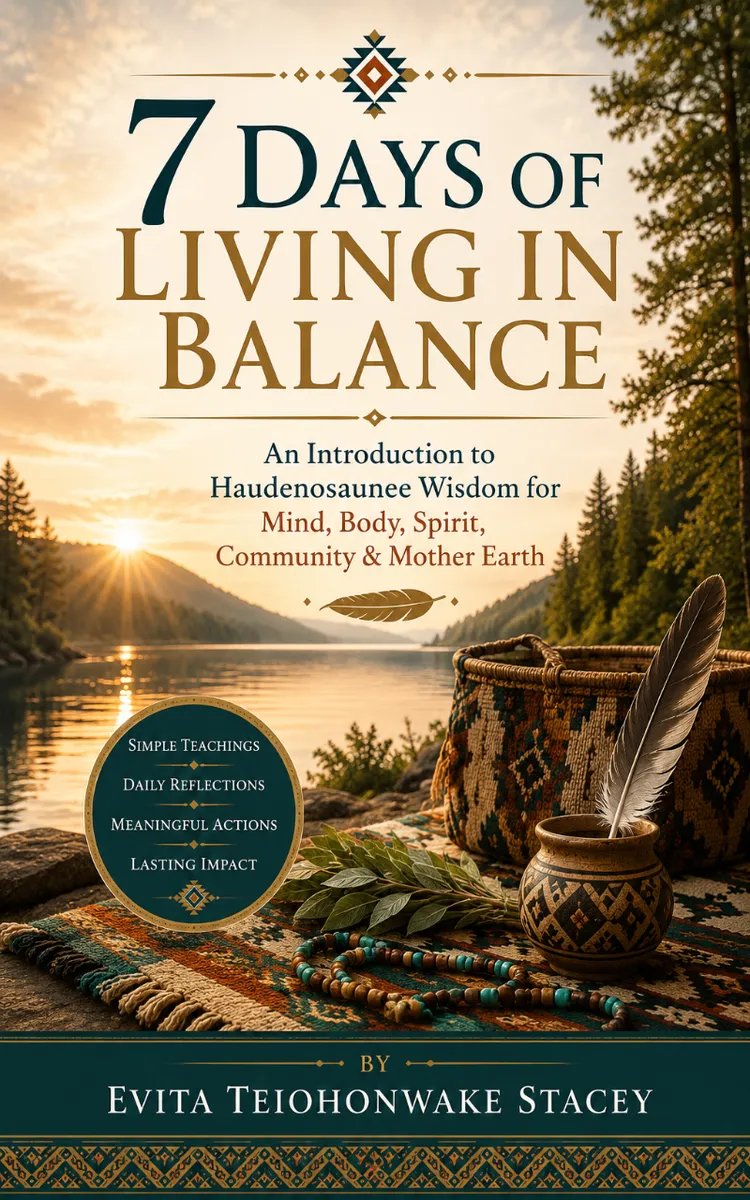
"7 Days Of Living In Balance" is a day challenge book by Anonymous with 7 chapters and approximately 9,251 words. Seven-day reflective guide using Haudenosaunee perspectives on balance.
This book was created using Inkfluence AI, an AI-powered book generation platform that helps authors write, design, and publish complete books.
Frequently Asked Questions
What is "7 Days Of Living In Balance" about?
Seven-day reflective guide using Haudenosaunee perspectives on balance
How many chapters are in "7 Days Of Living In Balance"?
The book contains 7 chapters and approximately 9,251 words. Topics covered include Day 1 - Begin With Gratitude, Day 2 - Cultivate a Good Mind, Day 3 - Remember Your Relationships, Day 4 - Reconnect With Mother Earth, and more.
Who wrote "7 Days Of Living In Balance"?
This book was written by Anonymous and created using Inkfluence AI, an AI book generation platform that helps authors write, design, and publish books.
Write your own day challenge book with AI
Describe your idea and Inkfluence writes the whole thing. Free to start.
Start writingCreated with Inkfluence AI


