
Read the first chapter
The whole of chapter one, free. About 8 min. Turn the pages with the arrows, your keyboard, or a swipe.
Chapter 1
Pennsylvania’s Child Welfare Mandate
The Public Duty Behind Every Case
A county children and youth services worker stands in a courtroom with a file, a timeline, and a child’s safety depending on clear facts. The judge needs more than a concern. The court needs to know what the agency learned, what it did, why it acted, and what still requires attention. That responsibility begins long before testimony.
Pennsylvania’s county children and youth agencies carry a public mandate: protect children from abuse and neglect, support safe families, and make decisions under state law rather than personal preference. The mandate solves a difficult problem. Families have rights, children need safety, and agencies must act carefully when those interests collide. After learning the foundation of that duty, you should be able to explain your agency’s role, connect your actions to legal authority, and describe your decisions with confidence.
Your daily work may involve a hotline referral, a home visit, a safety plan, placement, court paperwork, or reunification services. Each task connects to the same public question: what action best protects the child while respecting the family’s rights and working toward a safe, stable home? Keep that question in view as you build your case record and prepare to testify.
The Keystone Mandate Map
The Keystone Mandate Map gives you a practical way to connect Pennsylvania’s child welfare mission to your work. “Keystone” points to Pennsylvania, and “mandate” means the public duty created by law. The map has four connected parts:
1. Protect the child. Identify immediate danger, unmet basic needs, abuse, neglect, and conditions that could place the child at risk. You protect the child by gathering facts, assessing safety, and taking action that matches the danger.
2. Respect the family. Treat parents and caregivers as people with legal rights, not as obstacles to case progress. Explain concerns, provide notice when required, offer services, and record the family’s response. Respect matters because fair process strengthens the accuracy and defensibility of your decisions.
3. Use lawful authority. Base each intervention on the authority available to your county agency, such as Pennsylvania’s Child Protective Services Law, Juvenile Act requirements, court orders, and agency policy. Authority does not mean that every action requires a court order; it means you know what permits the action and what limits it.
4. Build a safe permanency plan. Permanency means a safe, stable long-term home for the child. That home may involve reunification, adoption, permanent legal custody, or another court-approved arrangement. You support permanency by setting clear objectives, reviewing progress, and addressing barriers instead of allowing a case to drift.
These parts work together. A safety decision that ignores family rights may damage cooperation and create legal problems. A service plan that ignores danger may leave a child exposed. A court filing that lacks a clear factual record may fail to show why the agency acted. Ask yourself, “Which part of the map explains this action, and where did I record the facts supporting it?” If you cannot answer, pause and strengthen the record.
Pennsylvania’s counties run local child welfare services, but county practice operates within state law and court oversight. The Child Protective Services Law, often called the CPSL, governs reports and investigations of suspected child abuse. The Juvenile Act guides court involvement when a child may be dependent, meaning the child lacks proper parental care or control, is without necessary care, or faces conditions that require court protection. Federal requirements also influence safety, permanency, and family connections, but your immediate task remains practical: follow current county policy, confirm the governing law, and ask a supervisor or solicitor when authority is unclear.
A strong case record shows the link between fact, decision, and result. For example, “The mother missed three medical appointments” gives only part of the picture. A stronger entry identifies the child’s medical need, the appointment dates, the mother’s explanation, the transportation offered, the agency’s response, and the child’s current safety. That detail helps the next worker, the supervisor, and the court understand what happened without guessing.
Use the Keystone Mandate Map whenever you make a major decision. Write one sentence for each part that applies. For a temporary placement, you might record the immediate safety threat, the parent’s position, the legal authority or court direction, and the plan for review and permanency. This practice turns broad responsibility into a record you can explain under questioning.
Applying the Map to a Court-Ready Decision
Consider a referral received by a county agency on Monday at 9:10 a.m. The referral alleges that a six-year-old child has been left alone overnight twice in one week while the parent works a night shift. The report also states that the child has asthma medication but may not know how to use it. The following steps show how to apply the mandate without jumping to conclusions.
1. Screen the report and identify the immediate questions. Confirm the child’s location, the alleged dates, who lives in the home, the child’s medical needs, and whether an adult can provide care that night. The expected outcome is a clear starting safety picture, not a final conclusion.
2. Begin the investigation within required time frames. Review the report, check agency records, consult a supervisor, and make the required contact with the child and caregivers. Record the time, method, participants, and information learned. The expected outcome is a documented investigation that follows Pennsylvania law and county procedure.
3. Separate facts from statements and conclusions. Write, “The child stated that no adult was present from 10:30 p.m. until 5:45 a.m. on Tuesday,” rather than “The parent abandoned the child.” The first sentence identifies the source and details. The second states a legal conclusion that may require further findings.
4. Assess present danger and protective capacity. Determine whether the child can remain safely at home, whether the parent understands the risk, and whether a safe adult can provide care. If the parent arranges for a verified grandmother to stay overnight and agrees to a medical teaching appointment, record those actions and verify them. The expected outcome is a safety plan tied to actual protection, not a promise with no follow-up.
5. Connect the action to the Keystone Mandate Map. Identify the danger to the child, the parent’s rights and response, the authority for the agency’s action, and the permanency or review plan. If the agency seeks court involvement, prepare facts that explain why voluntary protection does not adequately address the risk.
6. Set a short review point. Schedule a home visit within 48 hours, confirm the overnight arrangement, contact the child’s medical provider as permitted, and review the parent’s work and child-care plan within seven days. The expected outcome is a tested safety arrangement with a clear next decision.
If the agency later files a petition, the caseworker should be able to explain the timeline in order: when the report arrived, what the child and parent said, what the worker observed, what services or alternatives the agency offered, why the safety plan did or did not work, and what protection the court should consider. The worker should avoid exaggeration. A court does not need dramatic wording; it needs reliable facts connected to the requested action.
Quick checklist
• Confirm the child’s immediate location and safety. - Identify the specific allegation, date, and source. - Contact the child and caregivers as required. - Record observations separately from statements. - Check medical, school, placement, and prior agency information when relevant. - Explain the concern and requested cooperation to the family. - Identify a lawful basis for each major action. - Test every safety plan instead of accepting promises alone. - Set a review date, responsible person, and expected result. - Prepare to explain how the decision protects the child and respects the family.
The practical test is simple: could another worker or the judge follow your decision from the record without filling in missing facts? If not, revise the entry while the information remains fresh.
Mistakes That Weaken the Public Mandate
Treating agency policy as the law
County policy helps you perform your duties, but policy and legal authority are not always the same. A worker may state that “the agency always removes children when a parent misses a visit,” even though the actual decision requires an individualized safety assessment and court authority when removal occurs without consent.
Do this: Identify the safety facts, review the applicable law and policy, and ask a supervisor or county solicitor when the authority remains uncertain.
Not this: Cite a general office practice as the only reason for a major intervention.
The fix protects both the child and the agency. It ensures that the action responds to the actual risk rather than to habit.
Confusing cooperation with safety
A parent may agree to services and still lack the ability to protect the child. Another parent may speak angrily but take effective protective steps. Cooperation can help a case, but it does not replace a safety assessment.
Do this: Verify what the parent will do, who will help, when the protection begins, and how you will confirm it.
Not this: Treat a signed plan as proof that the danger has ended.
For example, if a parent signs a supervision plan but the named caregiver works during the same hours, the plan does not provide protection. Record the conflict, revise the plan, and set a prompt review.
Writing conclusions without the facts underneath
Terms such as “neglectful,” “uncooperative,” or “unsafe” may summarize your concern, but they do not show the court what happened. Conclusions without details can make your testimony sound uncertain and can hide information that supports a fair decision.
Do this: Describe dates, times, observations, statements, records reviewed, services offered, and results. Then explain the safety conclusion that those facts support.
Not this: Use a label as a substitute for investigation.
A useful review question asks, “What would I point to if the judge asked me how I know?” If the answer is not in the record, add the missing source or explain the limit of your knowledge.
The Keystone Mandate Map keeps the public duty visible: protect the child, respect the family, use lawful authority, and pursue safe permanency. When those four points appear in your decisions, your casework becomes easier to explain and your testimony becomes more grounded. The work still carries pressure, but the law, the facts, and your careful preparation give that pressure a clear direction.
End of chapter one. 39 more chapters and about 74,212 words in the full book.
Swipe or use the arrows to turn the page


What's inside: 40 chapters
- 1. Pennsylvania’s Child Welfare Mandate
- 2. Navigating Pennsylvania’s Agency System
- 3. Applying Child Welfare Law
- 4. Recognizing Child Safety Threats
- 5. Receiving and Screening Reports
- 6. Conducting First Family Visits
- 7. Building Trust with Families
- 8. Interviewing Children Safely
- 9. Engaging Parents Without Judgment
- 10. Working Across Cultural Differences
- 11. Using Trauma-Informed Practice
- 12. Assessing Family Strengths
- 13. Writing Clear Case Notes
- 14. Building Evidence-Based Case Plans
- 15. Coordinating Services Effectively
- 16. Facilitating Family Team Meetings
- 17. Making Safety Plans Work
- 18. Responding to Crisis Calls
- 19. Managing Confidential Information
- 20. Maintaining Professional Boundaries
- 21. Consulting Supervisors Wisely
- 22. Prioritizing a Heavy Caseload
- 23. Preventing Documentation Backlogs
- 24. Channeling Fear Before Action
- 25. De-escalating Volatile Encounters
- 26. Recovering After Difficult Cases
- 27. Preparing for Court Testimony
- 28. Organizing Case Evidence
- 29. Answering Questions on the Stand
- 30. Handling Cross-Examination Calmly
- 31. Explaining Professional Decisions
- 32. Correcting Errors Transparently
- 33. Supporting Placement Stability
- 34. Planning Family Reunification
- 35. Supporting Youth Transition Planning
- 36. Advocating for Children’s Needs
- 37. Using Data to Improve Practice
- 38. Receiving Feedback Without Defensiveness
- 39. Building a Personal Growth Plan
- 40. Sustaining Excellence Over Time
About this book
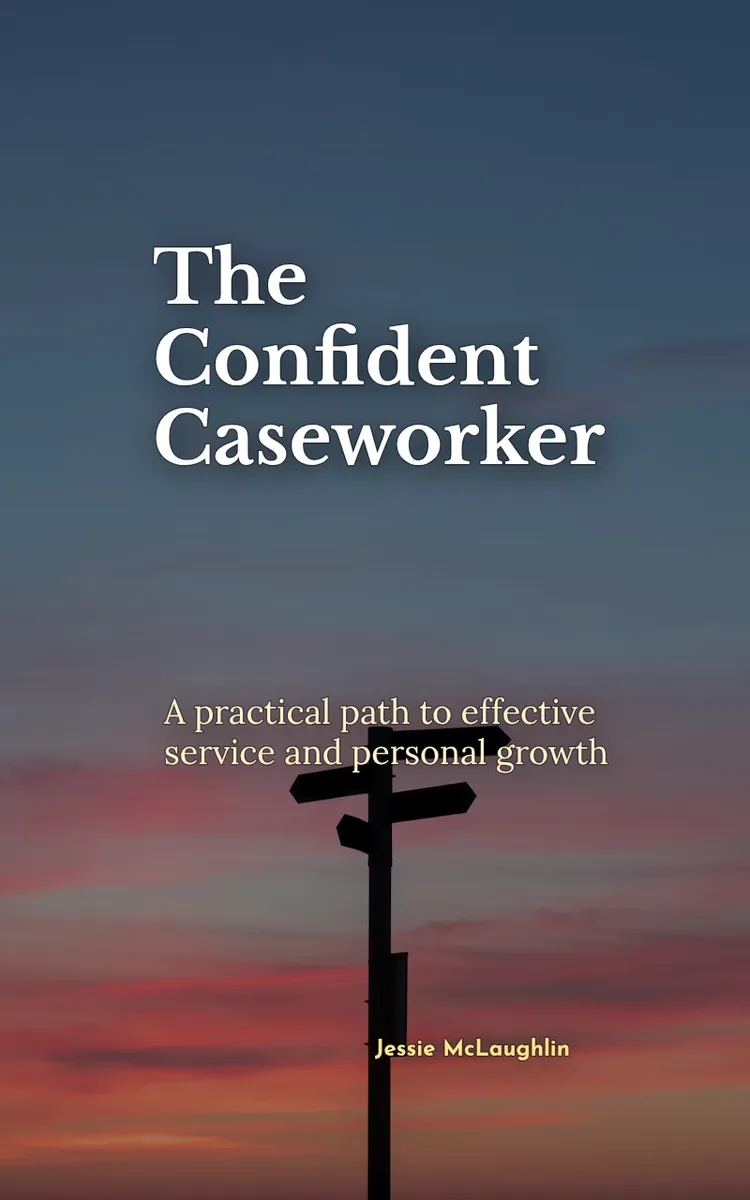
"The Confident Caseworker" is a how-to guide book by Jessie McLaughlin with 40 chapters and approximately 74,212 words. Caseworker skills, courtroom testimony, managing fear, and professional growth in Pennsylvania youth services.
This book was created using Inkfluence AI, an AI-powered book generation platform that helps authors write, design, and publish complete books. It was made with the AI Ebook Generator.
Frequently Asked Questions
What is "The Confident Caseworker" about?
Caseworker skills, courtroom testimony, managing fear, and professional growth in Pennsylvania youth services
How many chapters are in "The Confident Caseworker"?
The book contains 40 chapters and approximately 74,212 words. Topics covered include Pennsylvania’s Child Welfare Mandate, Navigating Pennsylvania’s Agency System, Applying Child Welfare Law, Recognizing Child Safety Threats, and more.
Who wrote "The Confident Caseworker"?
This book was written by Jessie McLaughlin and created using Inkfluence AI, an AI book generation platform that helps authors write, design, and publish books.
How can I create a similar how-to guide book?
You can create your own how-to guide book using Inkfluence AI. Describe your idea, choose your style, and the AI writes the full book for you. It's free to start.
Write your own how-to guide book with AI
Describe your idea and Inkfluence writes the whole thing. Free to start.
Start writingCreated with Inkfluence AI


