
Read the first chapter
The whole of chapter one, free. About 9 min. Turn the pages with the arrows, your keyboard, or a swipe.
Chapter 1
The Weaver in the Great Oak
Golden leaves trembled above Webster’s head as he hurried along a shining strand of silk.
“Left foot, right foot,” he sang, scurrying across the web. “Stretch, twist, tie!”
The Great Oak Tree was full of busy sounds. Leaves rustled high above. Tiny wings hummed nearby. Acorns bumped softly against the branches as they rolled in the breeze. Webster loved every sound.
He was the busiest little weaver in the whole Great Oak Tree.
All summer long, Webster had spun strong, shiny silk between the high green leaves. He scurried up the trunk, scurried down again, and crossed from branch to branch with a happy wiggle of his eight little legs. Wherever he went, a fresh web seemed to appear.
And wherever Webster went, his little red beanie went, too.
The beanie sat snugly between his bright eyes. It had a tiny loop on top that bounced whenever he moved. Webster liked to say it helped him think. Whether that was true or not, he never worked without it.
“This one needs a little sparkle,” he said.
He pulled one silk thread across a gap in the leaves. It caught the sunlight and shone like a silver line. Webster added another thread, then another. Soon, his web curved between two green leaves in a lovely round shape.
A small beetle stopped nearby.
“That’s a fine web,” said the beetle.
“Thank you,” said Webster. “I’m making it strong enough to hold three raindrops and one very proud spider.”
The beetle chuckled, and Webster gave a little bow. His red beanie tipped forward and covered one eye.
“Oh!” he said. “Pardon me, hat.”
He pushed it back and got to work again.
The days stayed warm for a while. Sunlight rested on the leaves, and the oak tree smelled of bark, dust, and summer air. Webster spun webs in the morning, repaired them after the afternoon breeze, and admired them when the sky turned pink.
His weaving place felt like a wonderland.
But one morning, the leaves did not look quite as green.
Webster climbed to his favorite branch and stopped. Gold had begun to spread along the edges of the leaves. A few had already let go. They drifted past him with a soft, papery flutter.
“Good morning,” Webster called to one leaf as it floated down.
The leaf spun in a circle and landed on a lower branch.
Webster watched it go. Then he looked at his web.
The silk still shone. The shape was still round. But the air felt cooler against his legs.
He rubbed two feet together. “Perhaps the morning is simply being chilly.”
A breeze slipped through the branches.
The web trembled.
Webster held on to the silk and waited. When the breeze passed, he reached for a loose strand. It felt cool and thin beneath his feet.
He pulled it tighter. Then he pulled again.
Snap!
The strand broke.
Webster blinked at the small piece of silk resting on the leaf below. Nothing terrible had happened. The web was still there, and he was safe on the branch. Still, his smile faded.
“My web feels chilly,” he whispered.
He hurried to another web, one he had made between two strong branches. There, too, the silk felt cold. He tried adding a new strand, but the breeze made his legs wobble. The thread slipped from his foot and floated away.
“Come back,” Webster called.
The thread drifted lower and lower until it vanished among the leaves.
Webster sat very still. His red beanie drooped to one side.
All summer, his silk had been just right. It had been strong and shiny. It had made beautiful webs. But the season was changing, and the cold was finding its way into every little space.
He pulled his beanie down over his ears.
“That helps a bit,” he said.
Then he looked at the wide branches around him. There were so many places to weave, but none felt warm. The Great Oak Tree was still his weaving wonderland, yet it no longer felt quite as cozy as it had before.
Webster decided to try one more thing.
He scurried down the trunk to a hollow between two roots. Fallen leaves had gathered there in a soft brown pile. Webster tucked himself beneath them.
“Ah,” he said. “This might do.”
For a moment, the leaves kept the cool air away. Webster curled his legs beneath him and closed his eyes.
Then a leaf slid from the pile.
A little breeze slipped in.
Webster opened one eye. Another leaf slid away.
“Oh, dear.”
He pushed the leaves back into place. He added a few more. He even tucked one over the top of his beanie.
The breeze returned.
The leaves rustled and shifted until Webster sat in a small, untidy pile with only his red hat showing.
He climbed out, leaf by leaf.
“This is not a blanket,” he said. “It’s a leaf sandwich.”
That made him smile, but only for a moment.
Webster scurried back up the trunk. He stopped beneath a branch where the leaves were thickest and looked at his silk threads. They were lovely. They were useful. They were part of him.
But perhaps, he thought, lovely and useful were not the same as warm.
He tried to make a web closer to the trunk, where the branches blocked some of the breeze. He worked carefully, tying one strand to the bark and stretching another to a nearby twig.
A gust brushed through the tree.
The new web shivered. One corner pulled loose.
Webster grabbed it quickly. His feet slipped, but he found the bark and held on. The web swung gently beside him.
“I’m all right,” he said, taking a slow breath. “The web is all right, too.”
He fixed the loose corner. Then he sat beside it.
For the first time all summer, Webster did not know what to weave next.
A warm voice rose from below.
“Webster?”
Webster leaned over the branch. Barnaby the Bear stood at the foot of the tree. He wore a green scarf around his neck, and a few golden leaves rested on his broad head.
“Hello, Barnaby,” Webster called. “What brings you here?”
“I was walking past,” Barnaby said. “I saw your hat before I saw you.”
Webster touched the red beanie. “It is a very noticeable hat.”
“It is,” said Barnaby. “But you look quieter than usual.”
Webster glanced at the loose silk beside him. “My webs feel cold. I tried making one near the trunk. I tried hiding under leaves. I tried pulling the silk tighter, but it broke.”
Barnaby listened without interrupting. He did not hurry Webster or tell him not to worry. He simply sat beneath the oak and looked up.
“That sounds like a tricky change,” he said.
“It is,” Webster replied. “Silk is what I know. I can make it strong and shiny. I can make it round or wide or full of little loops. But I don’t know how to make it warm.”
Barnaby rubbed his chin.
“What about wool?” he asked.
Webster tilted his head. “Wool?”
“Soft wool,” Barnaby said. “It keeps me warm when the air turns cold. Maybe you could weave some wool into your silk.”
Webster looked at his web. Then he looked at Barnaby’s green scarf.
“Would wool stay in a web?”
“Perhaps not the way silk does,” Barnaby said. “But you might find a way. You’re the busiest little weaver in the Great Oak Tree.”
Webster’s beanie lifted as his head perked up.
“I could try,” he said.
Barnaby smiled. “Trying is a good beginning.”
Webster climbed down a little way. Barnaby gently unwound a small piece of wool from the end of his scarf. It was soft and green, with tiny fuzzy fibers that tickled Webster’s feet.
“Ooh,” Webster said. “This feels like a cloud that learned to wiggle.”
Barnaby laughed. “That’s a fine description.”
Webster carried the wool to a low branch. He tied one end to a sturdy twig and began to weave it through his silk.
The wool bent.
The silk stretched.
Webster worked slowly, guiding the soft strand over one thread and under the next. He pulled it a little too hard.
The silk snapped.
The small web sagged.
Webster stared at it. His cheeks felt warm beneath his beanie.
“I did it wrong,” he said.
Barnaby shook his head. “You found one way that didn’t work.”
“That feels a lot like doing it wrong.”
“It can feel that way,” Barnaby agreed. “But you learned something. The wool needs room to bend.”
Webster looked closely at the broken web. The silk had been pulled too tight. The wool had nowhere to rest.
He touched the loose strand. “Room to bend,” he repeated.
He tried again. This time, he made a wider shape with larger spaces. He placed the wool across the silk instead of pulling it straight. At first, the wool slipped down.
Webster caught it.
He made a small loop.
The wool stayed.
He made another loop beside it. Then another.
Barnaby watched from below. “That looks promising.”
“It looks lumpy,” Webster said.
“Warm things are sometimes lumpy.”
Webster considered this. Then he smiled. “My blanket can be lumpy.”
He kept working.
The afternoon light softened. Gold leaves drifted past the branches. The air grew cooler, but Webster did not rush. He tried a green strand, then a blue one Barnaby found caught on a low bush. He added a little yellow thread from a dry flower stem. Each piece was different. Some were thick. Some were thin. Some curled in funny ways.
The first small square did not hold together.
The second leaned to one side.
The third stayed in place.
Webster rested beside it, pleased. It was not a perfect web. It was not meant to be. It was the beginning of something new.
Barnaby looked up at the little patch of wool and silk.
“You made a warm place from two different kinds of thread,” he said.
Webster touched the colorful patch with one foot. The wool felt soft. The silk held it steady. Together, they made a gentle layer that blocked the breeze.
“It’s not only my work,” Webster said. “You brought the wool.”
“And you knew what to do with it.”
Webster’s red beanie bobbed as he nodded. “Then we both helped.”
The sun slipped lower, and the oak tree filled with a quiet amber glow. Webster carried the small patch to a sheltered spot between two branches. He tied it there with strong silk and curled beneath it.
The wool rested over his back like a tiny quilt. It was green, blue, and yellow, with a few uneven loops that made Webster grin.
A cool breeze moved through the leaves.
The colorful patch fluttered.
It did not come loose.
Webster tucked his feet beneath him. For the first time that day, he felt warmth settle around his little body.
“Barnaby?” he called.
“Yes?”
“I think I know what I’ll weave tomorrow.”
“What will you make?”
Webster looked at the soft wool, the shining silk, and the wide, welcoming branches of the Great Oak Tree.
“A blanket,” he said. “A real one.”
Barnaby’s voice was warm below him. “Then tomorrow, we’ll begin.”
Webster rested beneath his small patch of color. The tree creaked gently. Leaves brushed together overhead. His red beanie stayed snug, and his new weaving stayed firm.
He had not solved the whole winter yet, but he had found a way to begin: with patience, kindness, and a little help from a friend.
End of chapter one. 5 more chapters and about 9,844 words in the full book.
Swipe or use the arrows to turn the page
What's inside: 6 chapters
- 1. The Weaver in the Great Oak
- 2. Frost on the Silk
- 3. Barnaby’s Woolly Idea
- 4. Wool, Needles, and a New Plan
- 5. A Rainbow Blanket Takes Shape
- 6. Snug Through the Snowy Night
About this book
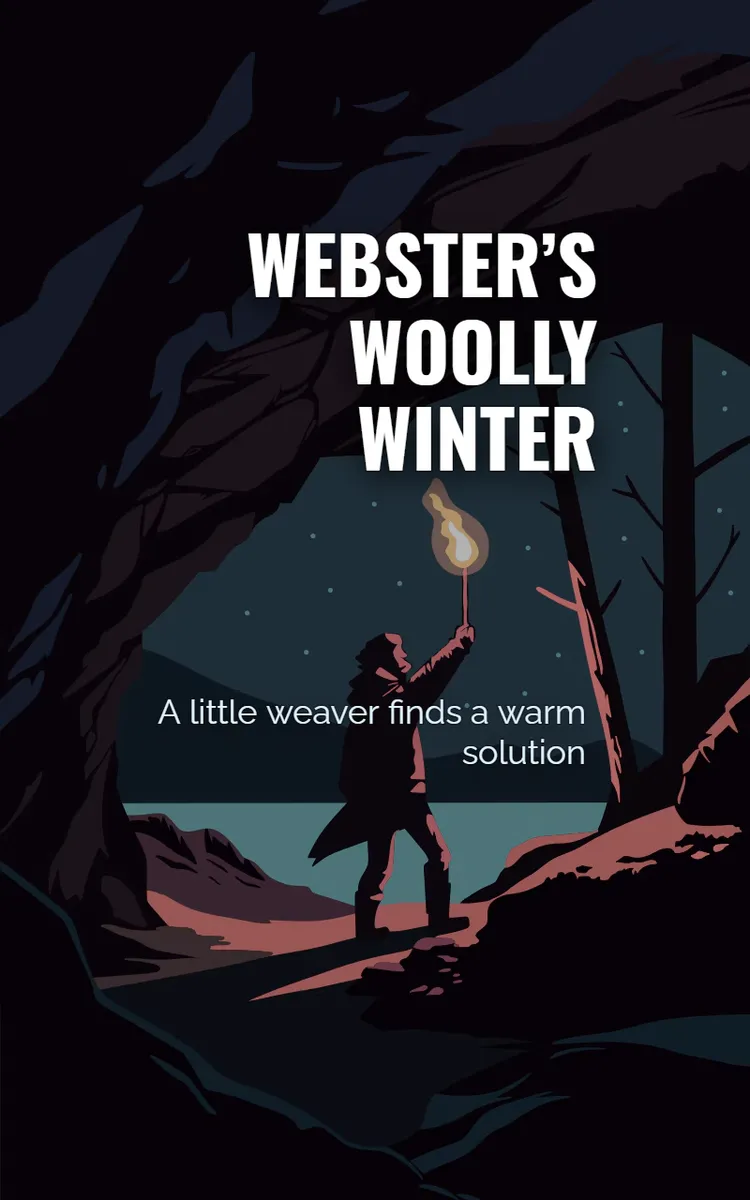
"Webster’s Woolly Winter" is a children's book by Anonymous with 6 chapters and approximately 9,844 words. When winter makes his delicate webs feel too chilly, Webster turns a worry into a colorful blanket with a little help and a lot of patience..
This book was created using Inkfluence AI, an AI-powered book generation platform that helps authors write, design, and publish complete books. It was made with the AI Children's Book Creator.
Frequently Asked Questions
What is "Webster’s Woolly Winter" about?
When winter makes his delicate webs feel too chilly, Webster turns a worry into a colorful blanket with a little help and a lot of patience.
How many chapters are in "Webster’s Woolly Winter"?
The book contains 6 chapters and approximately 9,844 words. Topics covered include The Weaver in the Great Oak, Frost on the Silk, Barnaby’s Woolly Idea, Wool, Needles, and a New Plan, and more.
Who wrote "Webster’s Woolly Winter"?
This book was written by Anonymous and created using Inkfluence AI, an AI book generation platform that helps authors write, design, and publish books.
How can I create a similar children's book?
You can create your own children's book using Inkfluence AI. Describe your idea, choose your style, and the AI writes the full book for you. It's free to start.
Write your own children's book with AI
Describe your idea and Inkfluence writes the whole thing. Free to start.
Start writingCreated with Inkfluence AI


