
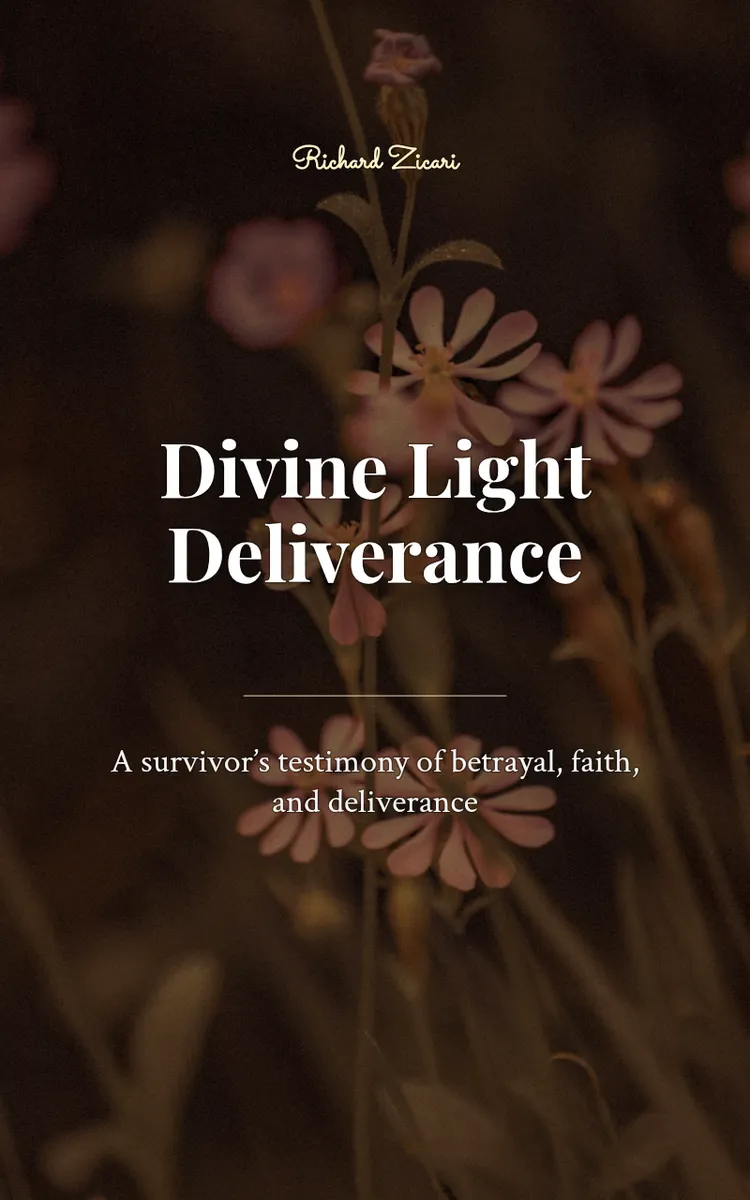
Read the first chapter
The whole of chapter one, free. About 7 min. Turn the pages with the arrows, your keyboard, or a swipe.
Chapter 1
The Parking-Lot Warning in Phoenix
The Arizona heat rose from the parking lot in wavering sheets, carrying the smell of hot pavement and dust into the open car door. I had been moving through an ordinary day in Phoenix, trusting the familiar rhythm of my life and the friendship that had stood beside me for sixteen years. Nothing in me was prepared for what I heard there.
I was not looking for danger. I was not suspicious of my best friend. That relationship had been part of my life for so long that trust had become automatic. I had shared years, memories, and personal matters with this person. I believed I knew who stood with me. I believed the bond was secure.
Then God warned me that my best friend was planning to murder me.
The warning did not arrive as an argument or a rumor. No one approached me with evidence. There was no visible sign that could be pointed to and explained. In that Phoenix parking lot, surrounded by the glare of the sun, the parked cars, and the dry heat pressing against my skin, I received a clear spiritual warning. God made me understand that my life was in danger and that the danger was connected to the person I trusted most.
At first, I struggled to take the message seriously. The mind resists what the heart cannot bear. Murder was not a word that belonged in the story I thought I was living. Betrayal on that level did not fit with sixteen years of friendship. I had known this person too long. I had trusted too deeply. The warning seemed impossible because accepting it meant questioning the foundation of my own understanding.
I remained there, trying to process what had been revealed. The parking lot felt unfamiliar in a way it had not before. The ordinary details became sharp: the hard brightness reflecting from windshields, the dry air in my throat, the heat beneath my feet. Cars came and went, but I felt separated from the normal life moving around me. People continued with their errands while I stood carrying knowledge I did not know how to speak aloud.
I wanted an explanation that would make the warning easier to accept. I wanted God to show me a reason, a plan, or some detail I could place in another person’s hands. Instead, I was left with the warning itself and the responsibility to respond.
The first response was denial. I told myself there had to be another meaning. Perhaps I had misunderstood. Perhaps fear had entered my thoughts and made them seem spiritual. Yet the more I tried to dismiss what I had received, the more firmly it remained with me. It was not a passing feeling. It had weight. It returned whenever I tried to reason it away.
I remember the conflict inside me. One part of me wanted to protect the friendship and preserve the life I recognized. Another part understood that God was calling my attention to something I could not safely ignore. Trust had been my normal position. Now I had to consider whether trust had made me vulnerable.
The warning also carried a time frame. I understood that the danger would come one week later. That knowledge changed the nature of every hour that followed. A week had once been an ordinary stretch of time. Now it became a measure of distance between the warning and what God had shown me was coming.
I left the parking lot with no outward sign of what had happened. The heat still pressed down. The pavement still gave off its bitter smell. The world had not changed in any visible way, but my place in it had changed. I was still the same person who had arrived trusting a sixteen-year friendship. I left knowing that trust alone could not keep me alive.
I began to consider whom I could tell. The thought of speaking about it brought its own fear. How could I say that God had warned me my best friend intended to murder me? The words sounded unbelievable even inside my own mind. I imagined the questions that would follow. What proof did I have? What had my friend done? Why would someone who had known me for sixteen years want me dead?
Those questions were reasonable, but they did not erase the warning. I knew what I had received, even though I could not present it like a document or a witness statement. I was being asked to act on faith while standing in the middle of circumstances that demanded proof.
When I began telling people, nobody believed me. Their disbelief added another layer of isolation to the fear. I understood why they questioned it. They saw the friendship as I had seen it for most of those sixteen years. They did not feel the weight of the warning. They had not stood in that parking lot with the heat rising around them while God brought an unseen danger into clear view.
Some responses made me feel as if I were creating a problem where none existed. Others treated the warning as an expression of fear that would pass. I listened, but inside I remained troubled. I did not want to accuse my friend falsely. I also did not want to ignore God and place my life in greater danger.
“Why would they do that?” was the question I encountered in different forms.
I did not have an answer. I could not explain the motive, and I could not make anyone see what I had seen spiritually. All I could say was that I had been warned. The more I tried to communicate the seriousness of it, the more alone I felt.
That loneliness was painful because the threat was connected to someone who had once represented safety. I had not expected to defend myself from a stranger. I had not prepared to question the intentions of my best friend. The warning forced me to look again at the relationship and at my own understanding of loyalty.
I searched my memories for signs I might have overlooked. I thought about conversations, decisions, and moments that had seemed ordinary at the time. I wondered whether danger had been present without my recognizing it. Yet memory did not give me a simple answer. Years of friendship could not be reduced to one moment, and betrayal did not become easier to understand because it had been preceded by a long history of trust.
The week began, and with it came the knowledge that I could not return to ordinary life. I continued carrying out what needed to be done, but the warning remained near me. Every familiar place had to be considered differently. Every plan involving my friend carried a question I had never asked before. Was I safe? Was I being watched? Was the danger already moving toward me?
Fear affected more than my thoughts. It changed the way I entered places and the way I noticed the people around me. Sounds that I might once have ignored drew my attention. The heat of Phoenix, already familiar, seemed harder to escape. I felt the distance between myself and other people, especially when I tried to speak and found that my words were not believed.
Still, beneath the fear was a certainty I could not dismiss. God had not warned me to torment me. The warning had been an act of mercy. I did not understand why I had been shown the danger or how I would be protected, but I believed the warning had a purpose.
That belief did not remove the cost. I had wanted someone to stand beside me and confirm that I was not imagining what had happened. Instead, I faced the coming week with people questioning me and a friendship that could no longer be viewed through the eyes of the past. The warning had given me information, but it had not given me an easy path.
Looking back, I now understand that the parking lot was where my old understanding of safety ended. Before that moment, I believed danger would be recognizable. I thought it would come from an obvious enemy or from circumstances that announced themselves plainly. God showed me that danger could be hidden behind familiarity, and that divine protection might begin with a warning that others could not verify.
I also learned that being warned did not mean being spared every painful consequence. The warning gave me time to recognize the threat, but it did not make the days that followed simple. I still had to face disbelief. I still had to wrestle with fear. I still had to decide how to move forward when the person connected to the danger had been my best friend for sixteen years.
By the time I left that parking lot, I knew two things. The danger was real, and I could not depend on people to believe me. The first truth frightened me. The second left me isolated. Yet I was not abandoned. Even when no one else understood, God had seen what was coming and had chosen to tell me.
I carried that knowledge into the week ahead. The friendship I had trusted remained part of my history, but it could no longer govern my decisions. The life I had known had been interrupted by a warning from heaven, and the countdown had begun.
End of chapter one. 4 more chapters and about 8,648 words in the full book.
Swipe or use the arrows to turn the page
What's inside: 5 chapters
- 1. The Parking-Lot Warning in Phoenix
- 2. A Week of Unbelieved Warnings
- 3. The Ambush One Week Later
- 4. Surviving the Attack’s Aftermath
- 5. Faith After Betrayal and Loss
About this book
"Divine Light Deliverance" is a biography book by Anonymous with 5 chapters and approximately 8,648 words. Surviving a planned murder ambush after a divine warning.
This book was created using Inkfluence AI, an AI-powered book generation platform that helps authors write, design, and publish complete books. It was made with the AI Biography Writer.
Frequently Asked Questions
What is "Divine Light Deliverance" about?
Surviving a planned murder ambush after a divine warning
How many chapters are in "Divine Light Deliverance"?
The book contains 5 chapters and approximately 8,648 words. Topics covered include The Parking-Lot Warning in Phoenix, A Week of Unbelieved Warnings, The Ambush One Week Later, Surviving the Attack’s Aftermath, and more.
Who wrote "Divine Light Deliverance"?
This book was written by Anonymous and created using Inkfluence AI, an AI book generation platform that helps authors write, design, and publish books.
How can I create a similar biography book?
You can create your own biography book using Inkfluence AI. Describe your idea, choose your style, and the AI writes the full book for you. It's free to start.
Write your own biography book with AI
Describe your idea and Inkfluence writes the whole thing. Free to start.
Start writingCreated with Inkfluence AI


