
Read the first chapter
The whole of chapter one, free. About 8 min. Turn the pages with the arrows, your keyboard, or a swipe.
Chapter 1
The Library Card That Changed Everything
The Card in the Drawer
In 1933, the poet Robert Frost lost his son Elliott to illness after years of family strain and private grief. Frost was already a celebrated writer, yet fame did not make disappointment legible. Some kinds of failure remain shapeless until a person finds the right words, history, or question to hold them.
A library can provide that first shape. Not through a grand revelation, but through an ordinary card, a quiet room, and a book chosen almost by accident. The visit may begin with embarrassment, boredom, or the feeling that one’s life has narrowed. It can end with a question that refuses to leave.
That change is the subject here: the small movement from private disappointment to public knowledge, and the strange way libraries make it possible without asking who the visitor is or what has gone wrong.
Why does a failed expectation sometimes become the doorway to a larger world?
The Open-Door Discovery Method
The Open-Door Discovery Method begins with a simple fact about libraries: they do not require a person to know exactly what they are looking for. A bookstore usually depends on preference. A search engine depends on language. A library permits wandering.
That distinction matters most when disappointment has made language difficult. Someone who has failed an examination, lost a job, abandoned a project, or discovered that a carefully planned life will not unfold as expected may not be able to name the subject that could help. They may only know that the familiar explanations have stopped working.
The library’s shelves offer a different kind of search. A book on bridge engineering stands beside one on river ecology; a biography of Ada Lovelace may be near a history of computing; a volume about sleep can lead to one about dreams, memory, or the architecture of the brain. The arrangement is not random, but it is not tailored to a visitor’s private distress either. That impersonal quality can be liberating. The reader is not being diagnosed. They are simply encountering the world in its many compartments.
Libraries also turn knowledge into a physical experience. The weight of a book, the label on its spine, the date stamped on a card, and the long shelves extending beyond the first subject all suggest continuity. A personal failure feels singular. The collection quietly contradicts that feeling. Human beings have been confused, defeated, fascinated, and wrong for centuries, and they have left records behind.
The first spark of curiosity often arrives before understanding. A title catches the eye. A diagram appears. A sentence raises a question that is more interesting than the problem that brought the reader through the door. The disappointment has not vanished; it has been given competition.
Before the Card, There Was the Public Shelf
The modern public library grew from older traditions of shared reading. In the ancient world, collections such as the Library of Alexandria gathered texts for scholars, though access was shaped by power, geography, and status. Medieval monasteries preserved manuscripts through copying, while early modern subscription libraries allowed groups of readers to pool money for books.
The public library as a civic institution developed more fully in the nineteenth century, especially in Britain and the United States. The Public Libraries Act of 1850 enabled English local authorities to establish libraries funded through local taxation. In the United States, Benjamin Franklin’s Library Company of Philadelphia, founded in 1731, demonstrated an earlier model in which members shared access to books that would have been expensive to own individually.
These institutions changed the meaning of reading. A book no longer had to belong to a household in order to belong, temporarily, to a person. That distinction is easy to overlook now, when digital information appears to float freely across the world. Yet ownership and access still feel different. A borrowed book carries the quiet knowledge that it has passed through other hands and will pass through more.
The library card formalized this temporary belonging. It was a small object, often made of paper or thin plastic, but it represented entry into a system larger than the individual. A person did not need to be wealthy, accomplished, or certain of their interests. The card recognized them as a reader before they had selected a book.
One surprising feature of libraries is that their usefulness often increases when the visitor’s purpose is unclear.
That uncertainty is not a defect in the system. It is the condition that allows accidental connections. A reader who searches only for a solution may find one narrow answer; a reader who wanders can discover an entire field. The difference resembles the contrast between following a road map and walking through a city with no fixed destination. One is efficient. The other reveals what efficiency leaves out.
Failure, Attention, and the Hungry Mind
Disappointment changes attention. When an expected result fails to appear, the mind begins comparing the plan with the outcome: What was assumed? What was missed? Was the failure caused by a lack of skill, bad timing, hidden conditions, or an unrealistic goal? These questions can become painful, but they also contain the beginnings of inquiry.
Scientists often describe curiosity as a response to an information gap. A person notices that they know enough to recognize a question but not enough to answer it. The gap creates tension. A book, lecture, conversation, or observation may reduce that tension, although the answer frequently produces new gaps in its place.
This helps explain why a library visit after disappointment can feel different from ordinary reading. The visitor is not merely collecting facts. They are testing explanations. A failed business owner might borrow a history of markets and discover that collapses once described as personal incompetence were also shaped by credit, regulation, and timing. A student who has failed an exam might encounter the history of the subject and realize that its “obvious” principles were once disputed. A parent facing a child’s diagnosis might begin with a medical handbook and move toward neuroscience, ethics, or the history of care.
The new knowledge does not excuse every mistake. It does something more precise: it enlarges the field in which the mistake can be understood.
In 1974, the American psychologist George Loewenstein later described what became known as the information-gap account of curiosity: people become curious when they perceive a gap between what they know and what they want to know. The important point is not that ignorance automatically produces interest. Ignorance can remain invisible. Curiosity appears when a person notices the distance.
A library is unusually good at making that distance visible. Its shelves place unfamiliar subjects within reach. The catalogue reveals connections that a person would not have thought to search for. Even the classification system - whether the Dewey Decimal System or another arrangement - turns the unknown into neighboring territory.
The Unexpected Direction of the First Spark
The counterintuitive finding is this: disappointment can narrow a person’s life and broaden their curiosity at the same time. The event reduces confidence in one explanation, but that loss may make other explanations visible.
This matters because curiosity is often treated as a cheerful trait, something people possess in stable amounts. In practice, it can emerge from disturbance. A failed plan interrupts the smooth story a person tells about cause and effect. The interruption creates room for questions about systems, history, chance, and human limits.
The library does not transform failure into success. It changes the scale of attention. A person who has been staring at one painful outcome begins to notice centuries of experiments, errors, discoveries, and revisions. Their own disappointment remains real, but it is no longer the only evidence in the room.
That is the deeper function of the Open-Door Discovery Method. It does not begin by solving the original problem. It begins by allowing the problem to open outward, toward subjects that may not have seemed relevant when the visitor first entered.
A Room in Manchester
The Manchester Free Library, opened in 1852, is often described as the first free public library in England established under the new legislation. Its opening represented more than the availability of books. It marked a civic decision that knowledge should be accessible through a public institution rather than restricted to private collections or membership societies.
Manchester was an industrial city shaped by factories, trade, migration, and sharp differences in wealth. Its library stood within a culture of practical learning, political debate, and technological change. Workers, clerks, students, and residents with different backgrounds could encounter the same shelves, though they did not necessarily read the same books or draw the same conclusions.
The setting makes the library’s social meaning concrete. A person disappointed by work, education, or circumstance could enter a building created amid the pressures of industrial life and find records of chemistry, engineering, poetry, exploration, economics, and natural history. The city’s problems did not disappear at the library door. But they could be examined alongside the larger history of how people had tried to understand and alter the world.
That is why the library card matters as more than a borrowing device. It is evidence of a relationship between an individual and a shared store of human attention. The card does not promise that every question will be answered. It grants permission to ask questions whose value is not yet obvious.
A private disappointment becomes intellectually fertile when it stops being treated as a final verdict. The shelf beside the chosen book may contain the first hint of that change: another title, another field, another account of what happened. Curiosity rarely announces the precise form it will take. It waits in the neighboring volume, where the next question has already begun.
What the Shelves Keep Open
Libraries preserve more than information. They preserve the possibility that an experience can be reconsidered from another angle, in another language, or across a longer stretch of time. A failed attempt may feel like an ending when it is still only an unanswered question.
The library card is powerful because it records no victory. It simply marks an entrance into a world larger than the self. Somewhere among its shelves, disappointment may meet a subject it never knew it needed - and wonder may begin there.
End of chapter one. 39 more chapters and about 63,708 words in the full book.
Swipe or use the arrows to turn the page


What's inside: 40 chapters
- 1. The Library Card That Changed Everything
- 2. What Failure Makes Us Ask
- 3. The Pleasure of Not Knowing
- 4. How Libraries Make Serendipity
- 5. The Book You Didn't Seek
- 6. Why Curiosity Survives Embarrassment
- 7. The Librarian as Quiet Guide
- 8. A Search That Changes Shape
- 9. The Courage to Read Slowly
- 10. When the Index Becomes a Map
- 11. The Shame of Starting Over
- 12. Knowledge Without a Finish Line
- 13. The Marginal Note's Second Life
- 14. Learning From the Wrong Answer
- 15. The Library as a Public Promise
- 16. What Silence Lets Us Hear
- 17. The Failed Exam's Hidden Curriculum
- 18. Reading Across Opposing Shelves
- 19. The Body in the Reading Chair
- 20. When Knowledge Hurts First
- 21. The Archive of Ordinary Lives
- 22. A Question Worth Keeping
- 23. The Joy of Changing Your Mind
- 24. The Search Box Is Not a Library
- 25. Failure as a Reading List
- 26. The Book That Refuses Comfort
- 27. Teaching What You Just Learned
- 28. The Catalog's Hidden Language
- 29. Who Gets to Be Remembered
- 30. The Discipline of Wonder
- 31. A Library After the Loss
- 32. The Limits of Knowing
- 33. The Reader Who Became a Maker
- 34. When the Library Leaves the Building
- 35. The Price of Knowing Everything
- 36. Libraries Against Loneliness
- 37. The Knowledge We Owe Others
- 38. Making Peace With the Unfinished
- 39. The Library You Carry Within
- 40. Love Is the Will to Learn
About this book
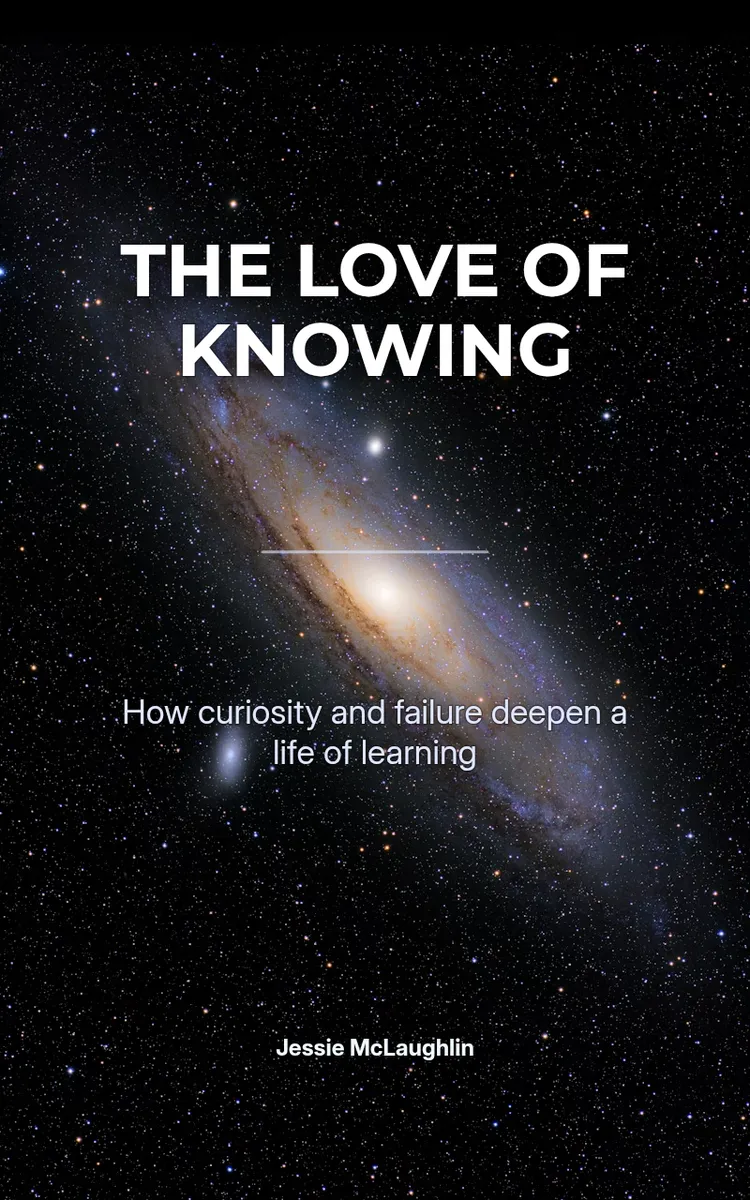
"The Love Of Knowing" is a curiosity book by Jessie McLaughlin with 40 chapters and approximately 63,708 words. The transformative love of knowledge shaped by libraries and personal failure.
This book was created using Inkfluence AI, an AI-powered book generation platform that helps authors write, design, and publish complete books.
Frequently Asked Questions
What is "The Love Of Knowing" about?
The transformative love of knowledge shaped by libraries and personal failure
How many chapters are in "The Love Of Knowing"?
The book contains 40 chapters and approximately 63,708 words. Topics covered include The Library Card That Changed Everything, What Failure Makes Us Ask, The Pleasure of Not Knowing, How Libraries Make Serendipity, and more.
Who wrote "The Love Of Knowing"?
This book was written by Jessie McLaughlin and created using Inkfluence AI, an AI book generation platform that helps authors write, design, and publish books.
Write your own curiosity book with AI
Describe your idea and Inkfluence writes the whole thing. Free to start.
Start writingCreated with Inkfluence AI


